28 Best Things To Do In Athens At Night In 2026

Looking for things to do in Athens at night? So was I!
I am a Greek-American. I have wanted to go to Athens my entire life. I only get a limited number of vacation days. So when I travel I research things to do at night in advance, so I can get the most out of every minute.
Athens is one of the oldest cities in the world. And it is one of the top cities to explore after dark. Whether you’re a history buff or just looking for a fun evening out, there is something for everyone.
In this post I discuss the 28 Best Things to do in Athens at night in 2024. And answer some frequently asked questions about exploring Athens at night.
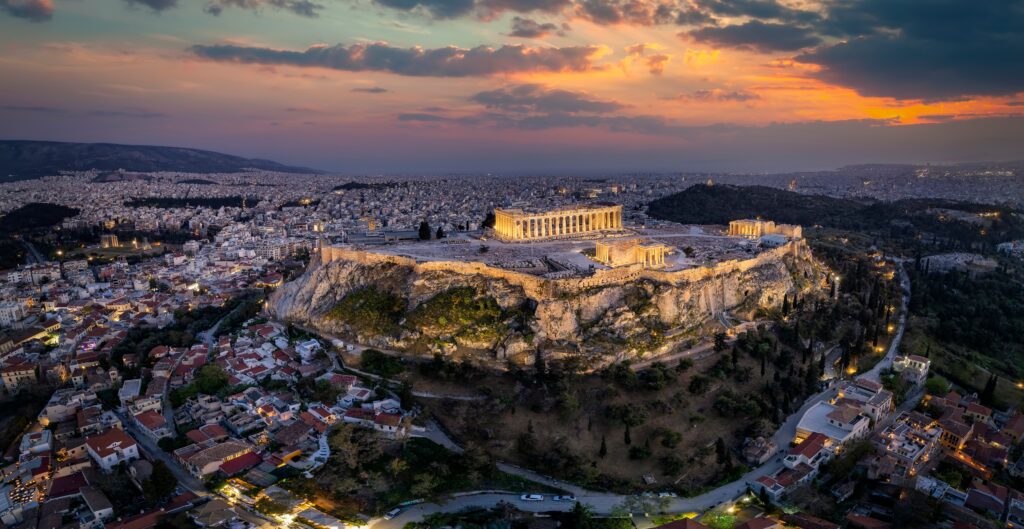
Short on Time?
Here’s Where to Stay in Athens
💸 Budget – Plaka Hotel
Acropolis views + central location near Syntagma & Monastiraki.
✨ Mid-Range – Acropolis View Hotel
Balconies with Parthenon views, steps from the Acropolis Museum.
💎 Luxury – Sofitel Hotel Airport
5-star spa hotel right at Athens Airport – ultimate convenience.
Athens History
One of the world’s oldest cities, Athens has a rich history that spans over 3,400 years. It began as a small Mycenaean settlement on the Acropolis and evolved into a powerful city-state by the 5th century B.C. During this Golden Age, Athens became the birthplace of democracy and a cultural hub.
Following its decline after the Peloponnesian War, Athens was absorbed into the Roman Empire. It continued to thrive as a center of learning and culture. And later became part of both the Byzantine and Ottoman Empires.
After Greece gained independence in the 19th century, Athens was named the capital. Since then, Athens has grown into the vibrant, modern city we know today.

28 Things To Do In Athens At Night
As night falls, Athens becomes a vibrant place to explore. The city’s famous landmarks glow under the stars, and the lively streets buzz with energy. From historical sites to charming neighborhoods, there’s so much to see and do. Here are some of the best things to do in Athens at night.
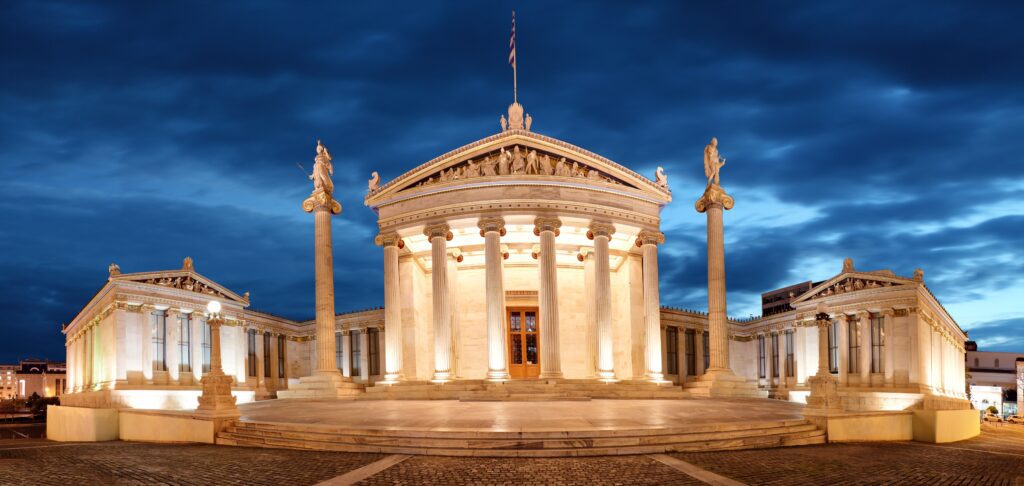
1. Visit the Acropolis at Night
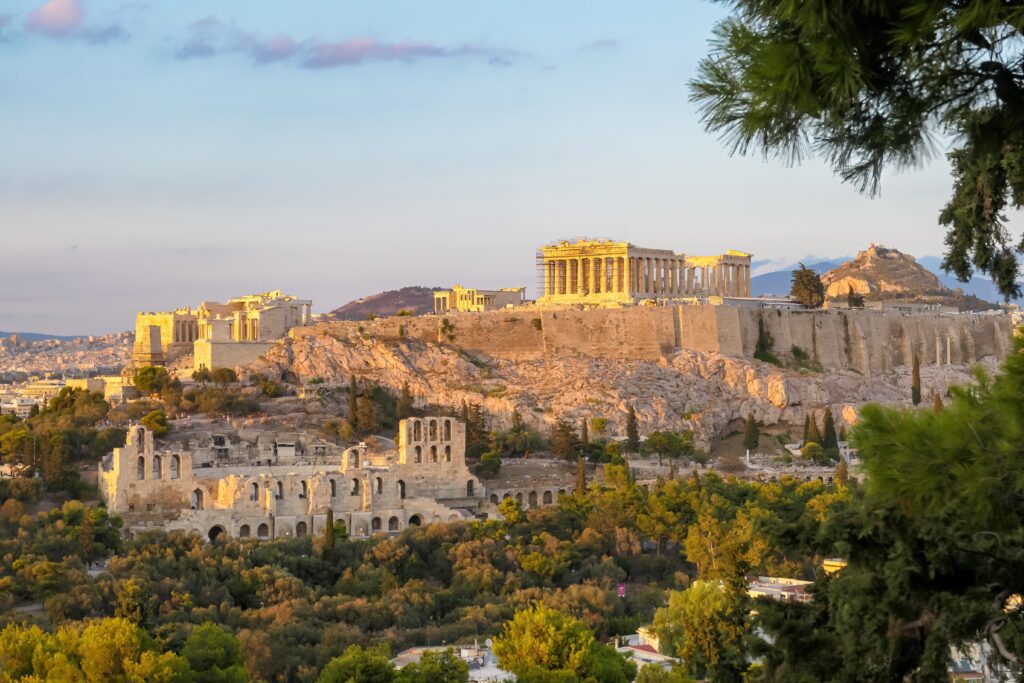
No visit to Athens is complete without stopping by the Acropolis. In my opinion, the best time to visit the Acropolis is in the late afternoon. By visiting it closer to sunset, you can experience the monuments in the soft evening light. This is also a good way to avoid the long lines during busy times.
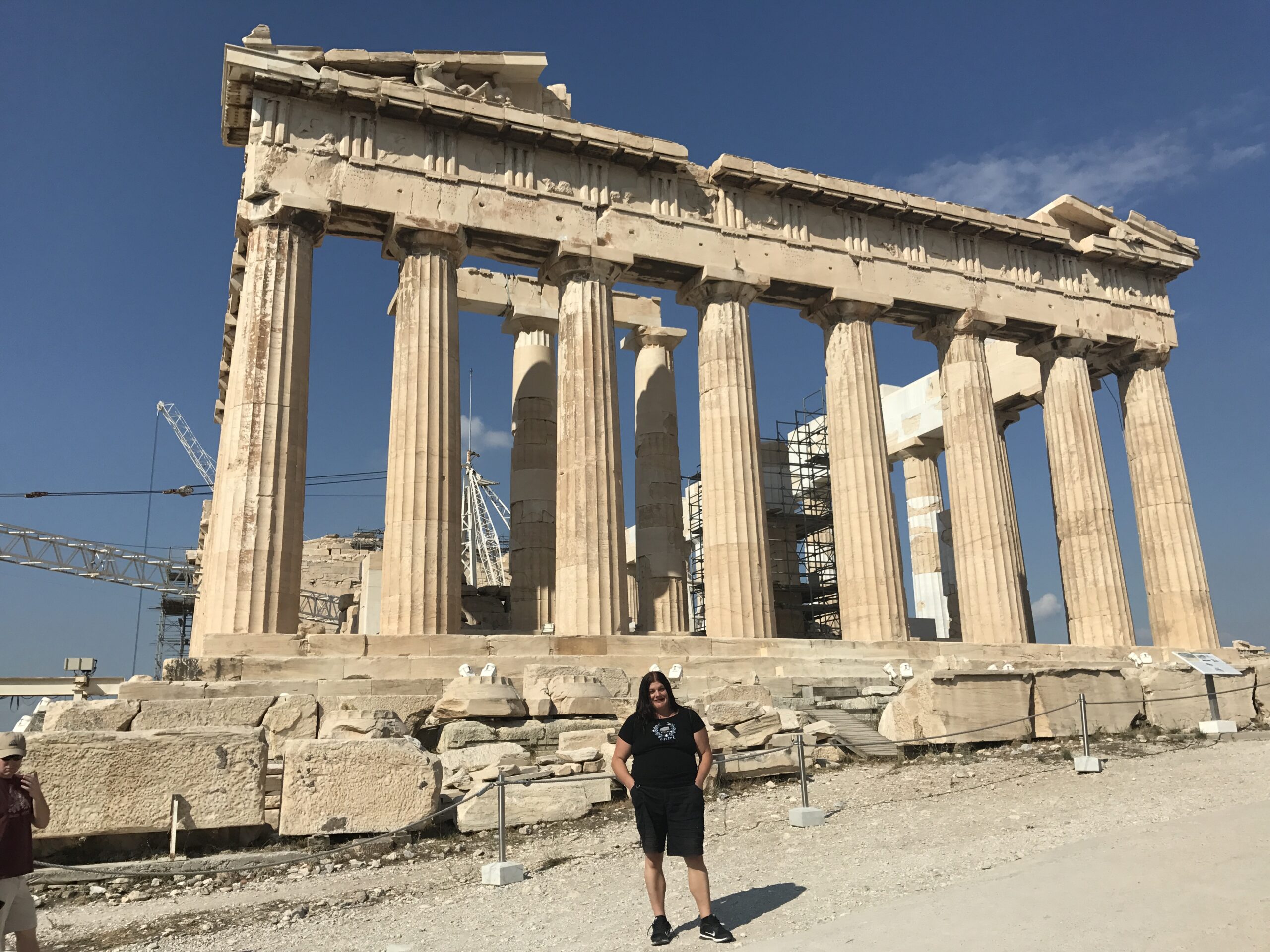
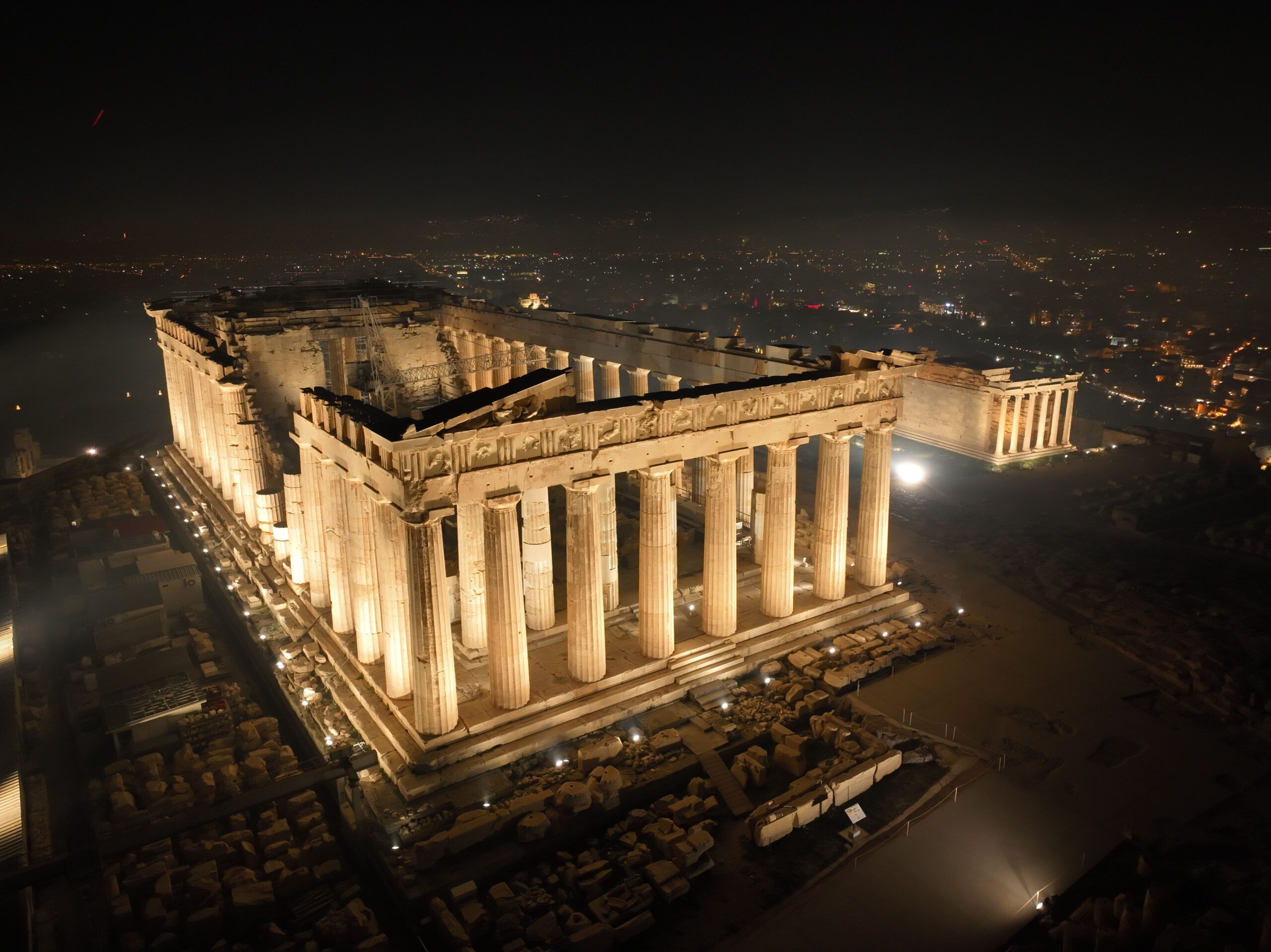
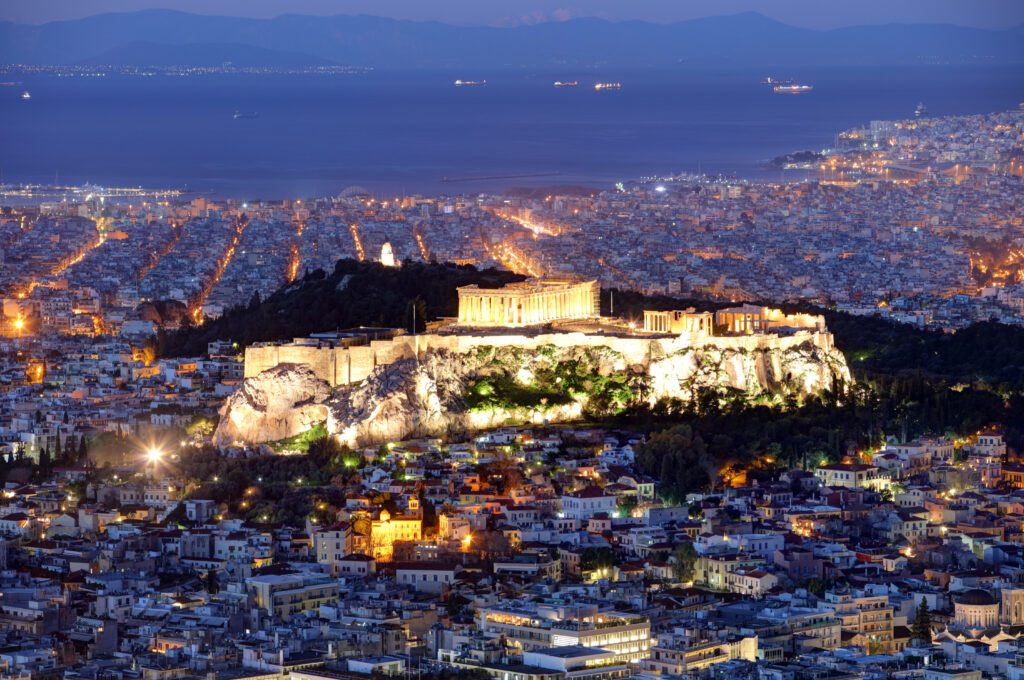
Visiting the Acropolis at night lets you see this ancient landmark beautifully lit up against the Athens skyline. The Parthenon is the most iconic structure on the Acropolis. Its glowing marble creates a stunning contrast against the dark sky, offering an entirely different perspective from a daytime visit.
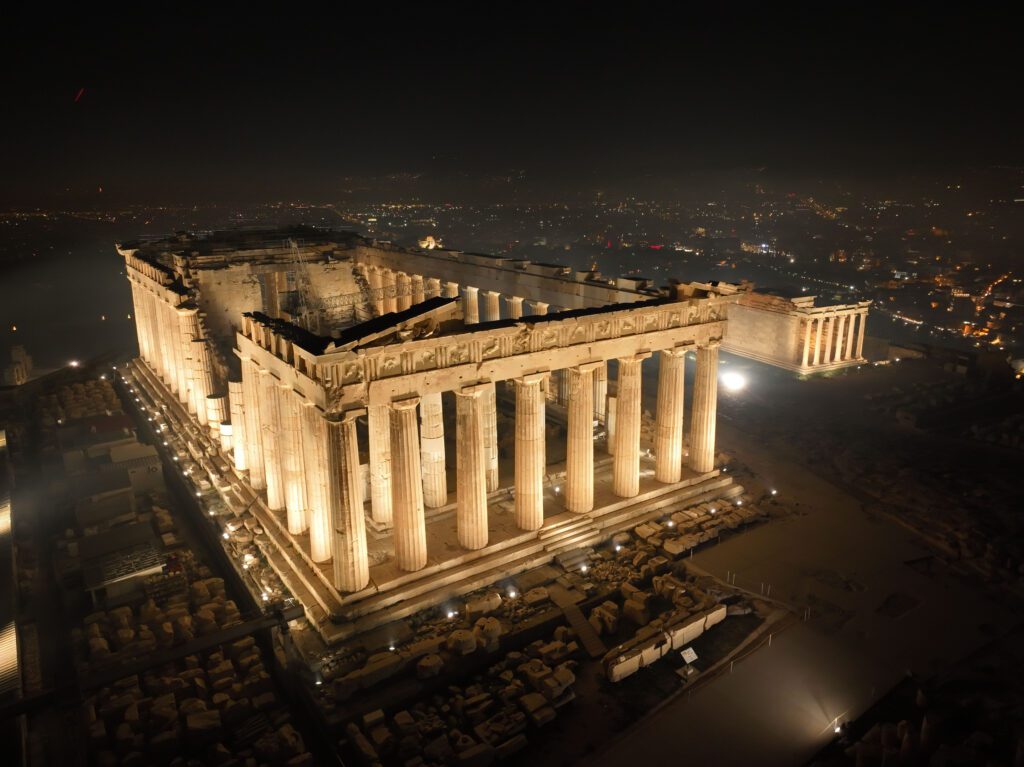
How to Get to the Acropolis
Getting to the Acropolis is easy due to its central location. From Acropoli Station, it’s a 10-minute walk to the entrance. You can also take a bus, tram, or taxi. If using a taxi, request the Acropolis public car park, which is a four-minute walk from the entrance.
The Acropolis has two main entrances: Main Entrance (Western Entrance) is located at the top of the western side, near the Propylaea (the monumental gateway). The Southeast Entrance (Dionysiou Areopagitou Street) is less crowded and is located near the Theater of Dionysus.
Check out my blog How to visit the Acropolis.

Best Vantage Points
While night tours within the Acropolis complex are not available, the illuminated Parthenon can be viewed from various vantage points around the city.
- Filopappou Hill: A peaceful spot where both locals and tourists can enjoy a great view of the Acropolis lit up at night.
- Areopagus Hill (Mars Hill): Close to the Acropolis entrance, it offers a close-up view of the monument and stunning views of Athens.
- Anafiotika and Plaka: These charming neighborhoods offer lovely views of the Acropolis. You can even dine at a rooftop restaurant with the Acropolis in the background.
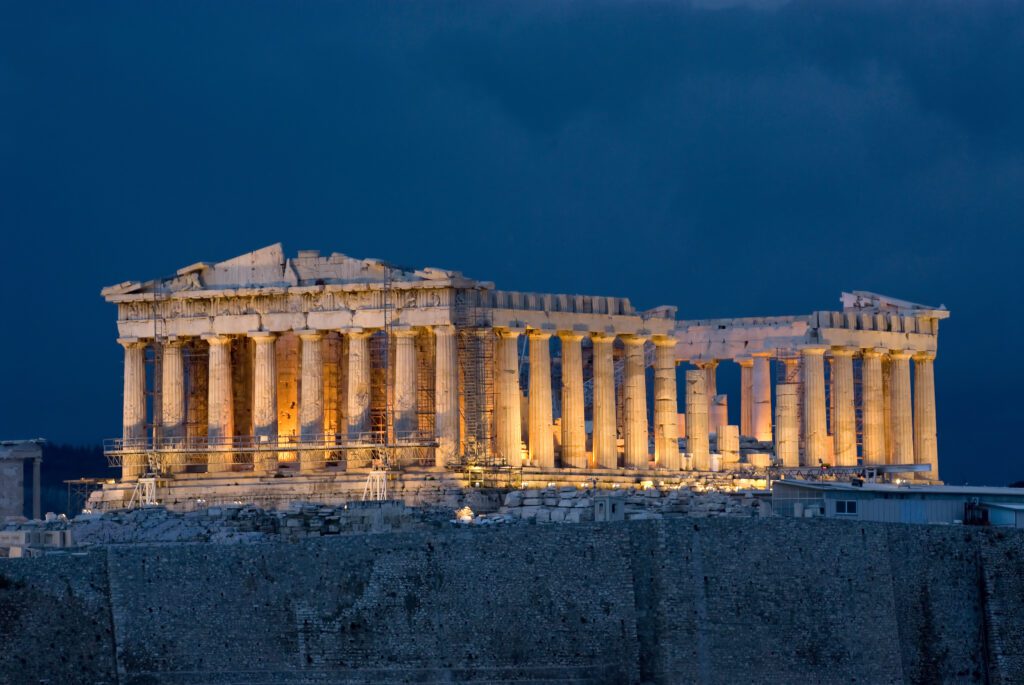
Check out the Acropolis and Parthenon Guided Walking Tour!
The Acropolis
Opening Hours: Open Daily 8:00am to sunset
Tickets: Starts from €13 and can be purchased online
Location: Located in the center of Athens, , a 15-minute walk from Syntagma Square
2. Explore the Acropolis Museum
The Acropolis Museum in Athens displays artifacts from the Acropolis site, including sculptures and pottery from the Archaic to Roman periods. The museum was officially opened to the public on June 20, 2009. Its modern design by Bernard Tschumi enhances the historical exhibits.

Acropolis Museum Exhibits
The Acropolis Museum is divided into three main floors and two intermediate levels. The Museum’s exhibits are organized across four levels:
- Building Base (The Archaeological Excavation): The Acropolis Museum integrates an ancient Athenian neighborhood into its design, showcasing daily life from the 4th millennium B.C. to the 12th century A.D. Located on the Acropolis Rock’s south slope, it includes roads, houses, baths, workshops, and tombs.
- Ground Floor: Displays artifacts from the sanctuaries and the settlements that evolved on the slopes of the Acropolis, spanning all historical periods.
- First Floor: Follows a circular path, showcasing the history of the Acropolis summit from the 2nd millennium B.C. through the end of antiquity.
- Third Floor: Features the sculptural decorations of the Parthenon, the Acropolis’s largest and most significant temple.

Museum Highlights
- Parthenon Frieze: A continuous sculpted band depicting the Panathenaic procession. It’s a masterpiece of classical Greek art.
- Caryatids of the Erechtheion: Sculpted female figures that served as columns for the Erechtheion temple.
- Moschophoros (Calf Bearer): Early Greek statue of a man carrying a calf on his shoulders as a religious offering.
- Kritios Boy: Early Classical statue of a young athlete; marks realism in Greek sculpture.
- Sandalbinder: The sculpture depicts the goddess Nike (Victory) in a graceful pose, bending down to adjust her sandal.

How to Get There
- Bus: Nearest stop Makrigianni, Routes 24, 40, 57, 103, 106, 108, 111, 126, 134, 135, 136, 137, 155, 206, 208, 227, 230, 237, 790, 856, Α2, Α3, Α4, Β2, Β3, Β4, Ε2, Ε22
- Metro: Nearest station Akropoli, Line 2 Anthoupoli – Elliniko
- Trolley: Nearest stop Makrigianni, Lines 1, 5, 15
- Tram: Nearest station Leoforos Vouliagmenis
- Tourist Coach: A bus drop-off point for groups is available on Hatzichristou Street

Check out the Acropolis, Parthenon and Acropolis Museum Guided Tour
The Acropolis Museum
Winter Hours: Mon-Thu 9:00am-5:00pm, Fri 9:00am-10:00pm, Sat-Sun 9:00am-8:00pm
Summer Hours: Mon 9:00am-5:00pm, Tue-Sun 9:00am-8:00pm, Fri 9:00am-10:00pm
Tickets: General admission 10€ Winter 15€ Summer
Phone #: +30 210-900-0900
Location: Dionysiou Areopagitou 15, Athens
To purchase tickets or get more information, check out the Acropolis Museum website!
3. Take a Nighttime Walking Tour
You can experience Athens in a new light with a nighttime walking tour. As the sun sets, ancient landmarks like the Acropolis are beautifully illuminated, creating a stunning contrast against the dark sky.
The cooler evening temperatures make for a more comfortable and enjoyable walk. You’ll get a chance to stroll through historic neighborhoods and admire illuminated ancient landmarks.
I recommend taking the Athens at Night Small-Group Walking Tour with Dinner!
4. Visit the Temple of Olympian Zeus
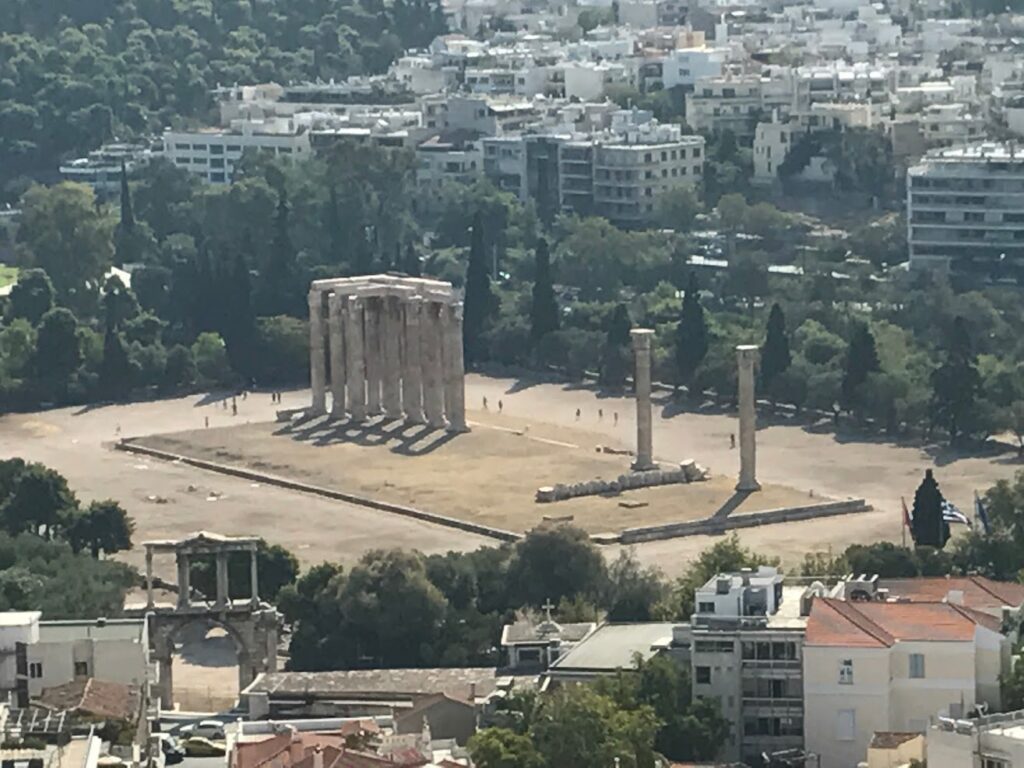
Discover the grandeur of the Temple of Olympian Zeus under the night sky. The temple is dedicated to Zeus, the king of the Greek gods.
It was originally one of the largest temples in ancient Greece, with 104 columns, each standing about 56 feet tall. The temple was partially destroyed by earthquakes and looting, and only 15 columns remain standing today.
History of the Temple of Olympian Zeus
The construction of the temple began in the 6th century B.C. under the tyrant Pisistratus. It was completed in the 2nd century A.D. by Emperor Hadrian.
The temple suffered significant damage from earthquakes in the 3rd and 4th centuries A.D. It was further looted during the Byzantine and Ottoman periods.

Temple of Olympian Zeus
Opening Hours: Open Daily 8:00am-8:00pm
Tickets: €6
Location: To the east of the Acropolis, between Syngrou Avenue and Vasilissis Olgas Avenue
5. Wander Through the Plaka
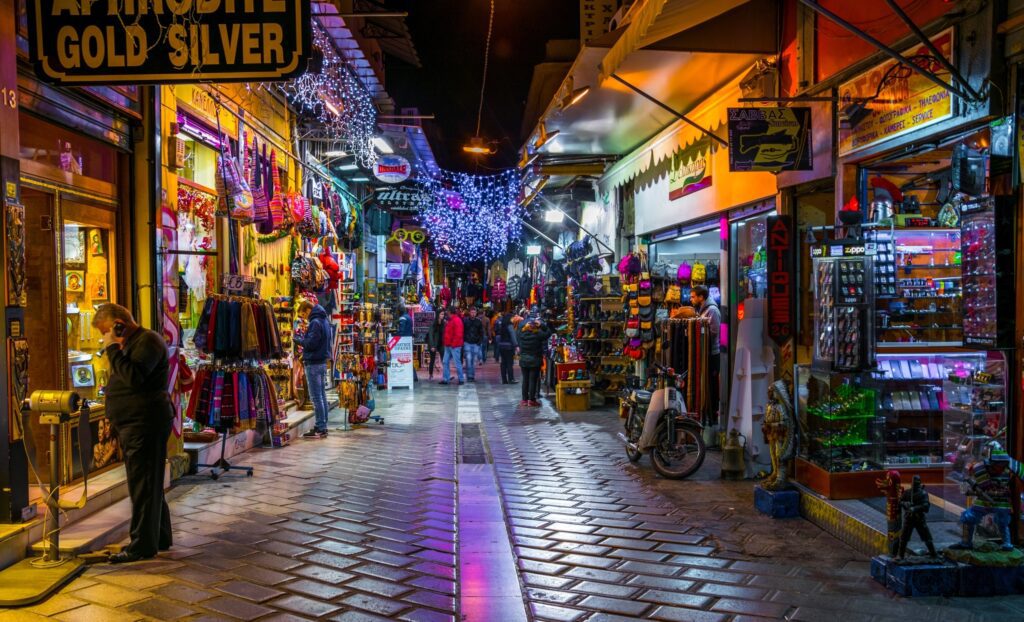
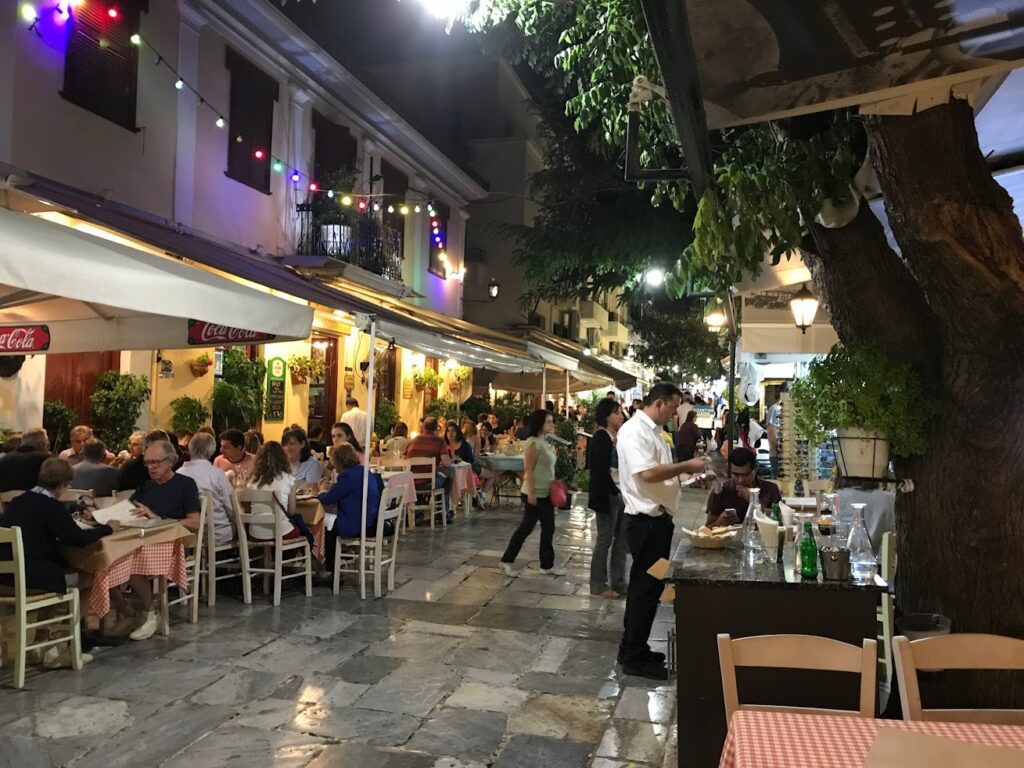
Plaka, known as the Neighborhood of the Gods, lies beneath the northeastern slope of the Acropolis and stretches toward Syntagma Square. The area is a maze of narrow streets lined with shops, antiquities, and colorful neoclassical buildings. The charming pedestrian-only streets are perfect for an evening walk.
Plaka Highlights
Plaka
Opening Hours: Open Daily, opening hours vary for different shops
Tickets: Free
Location: Located at the foot of the Acropolis
6. Take a Night Tour of the National Archaeological Museum
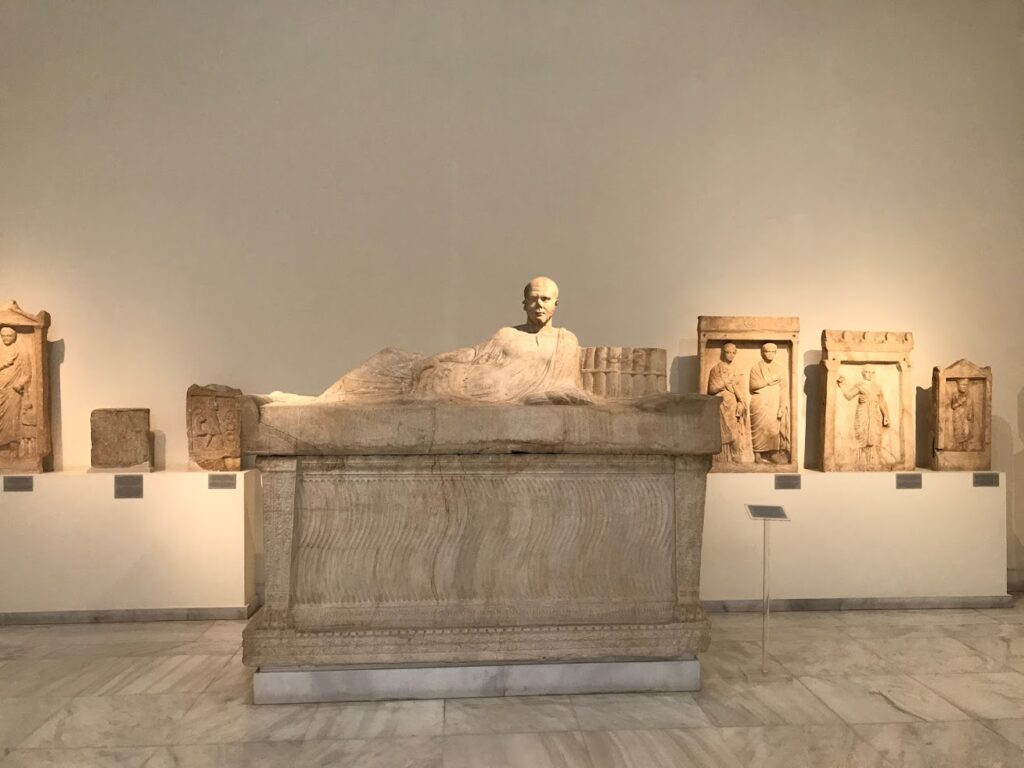
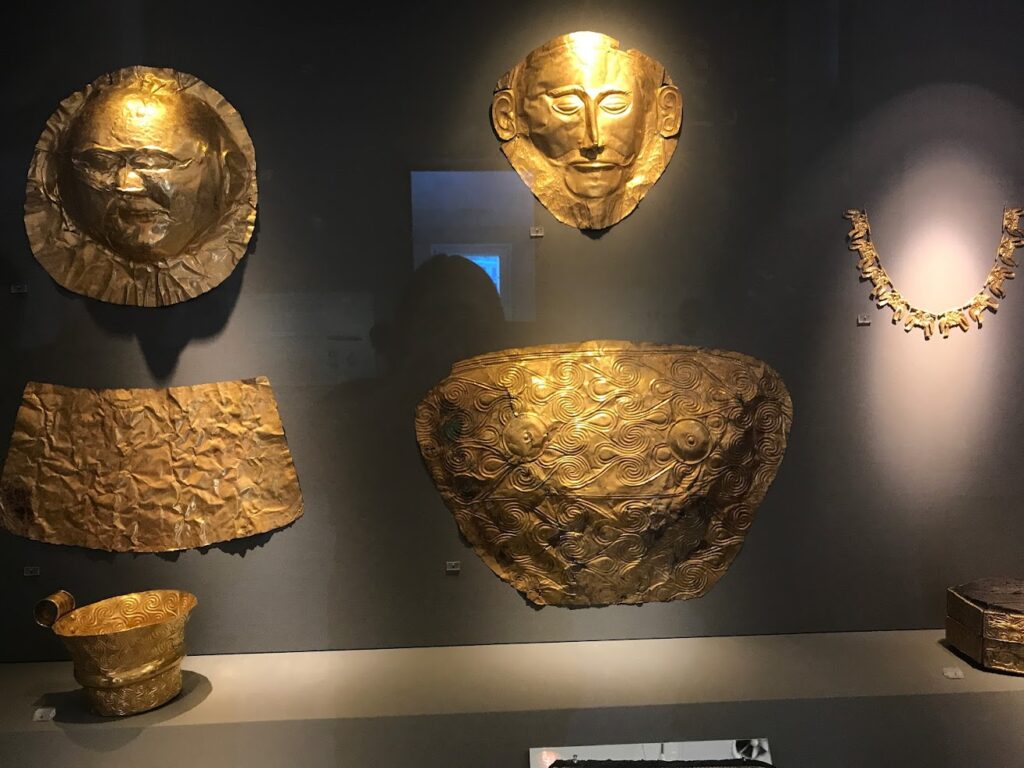
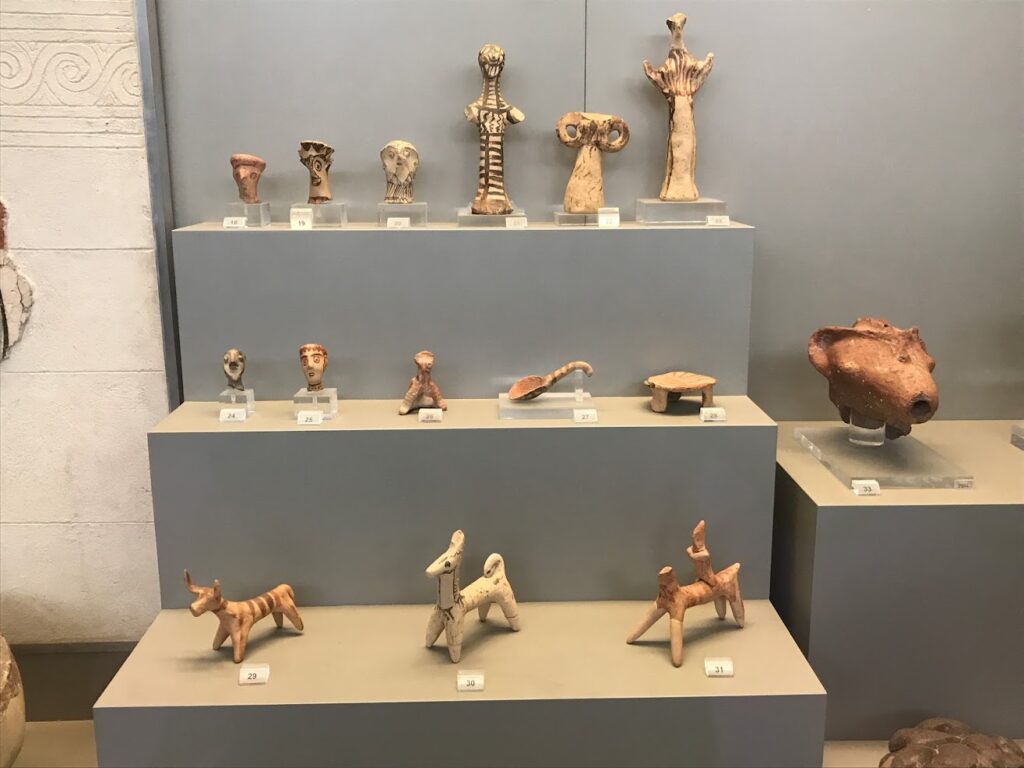
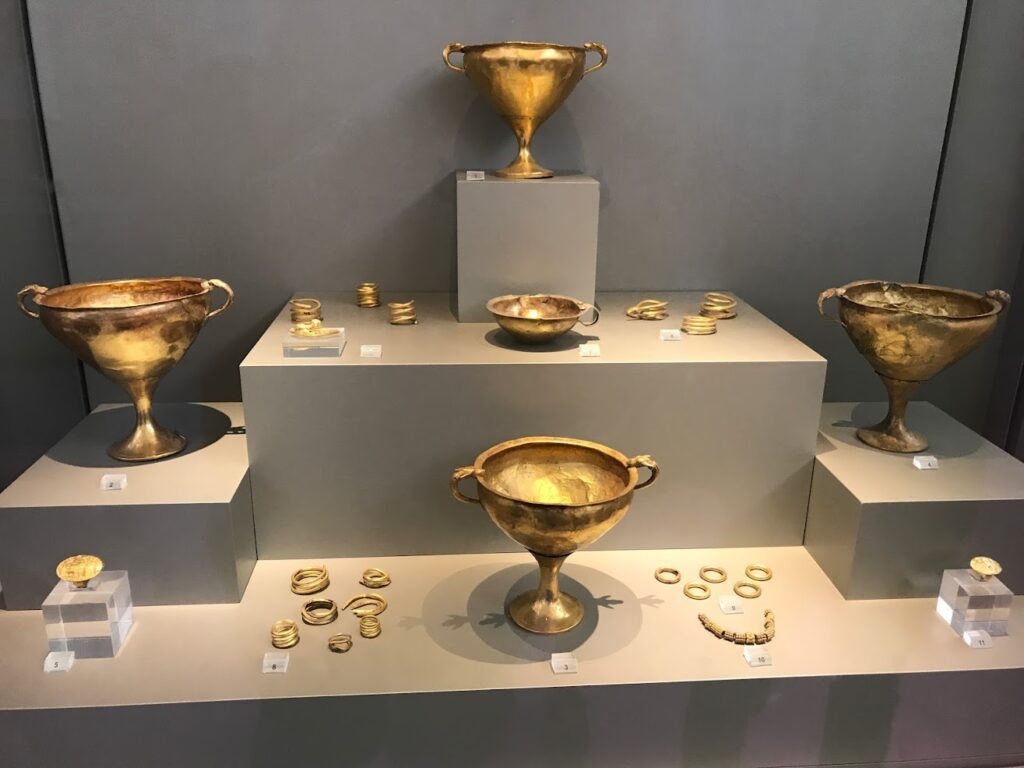
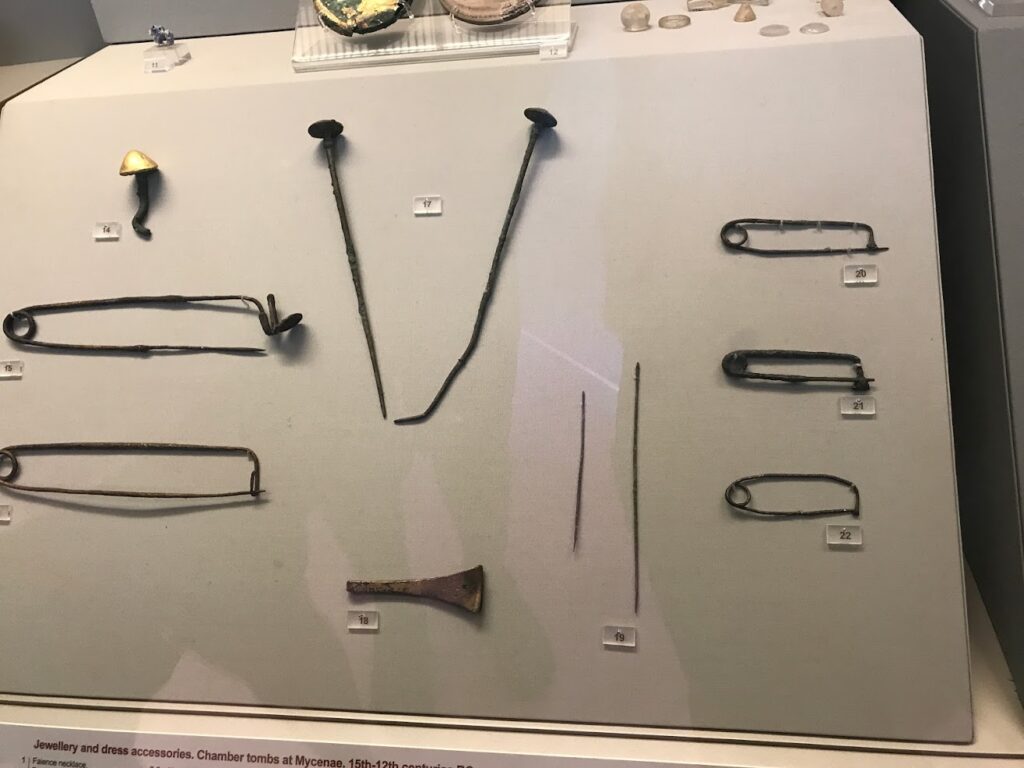
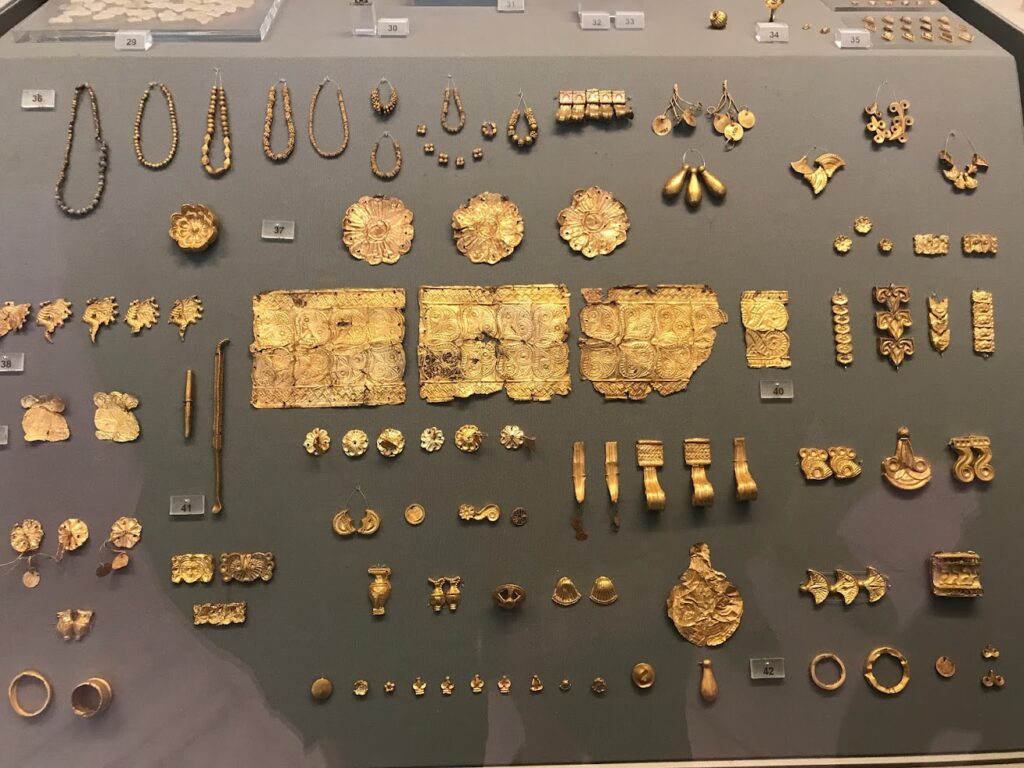
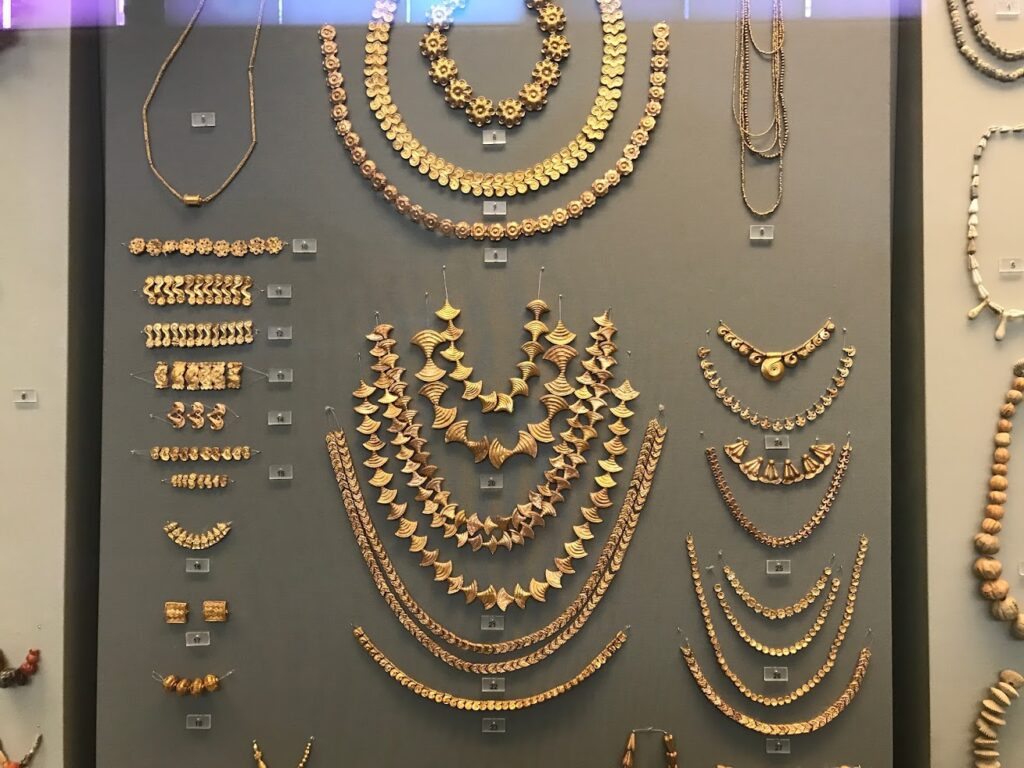
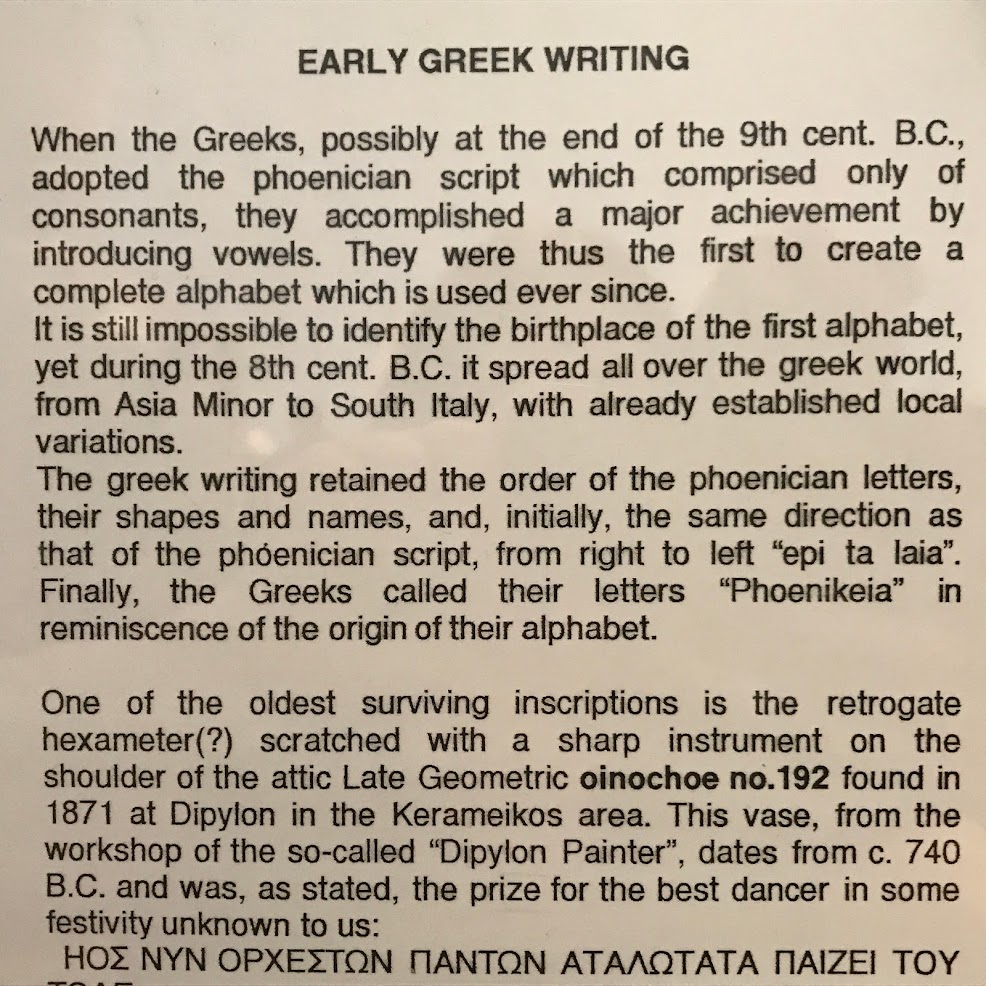
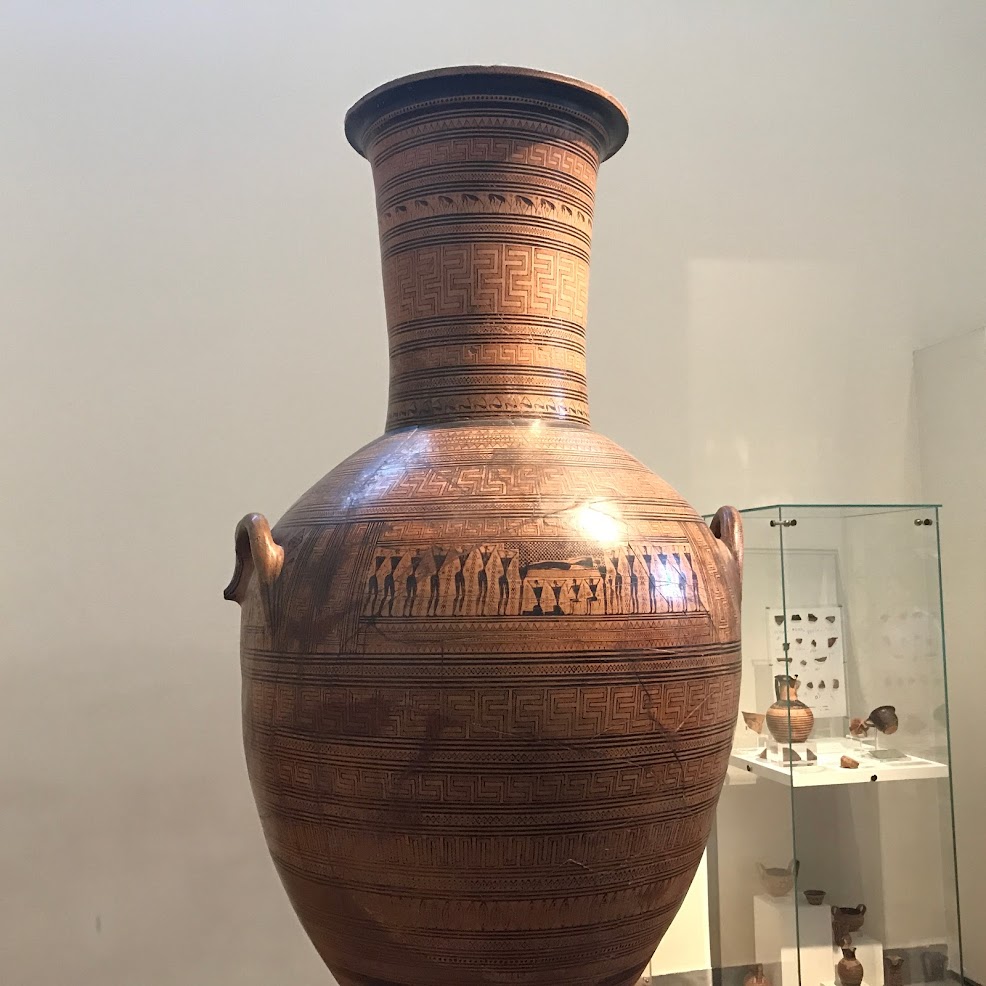
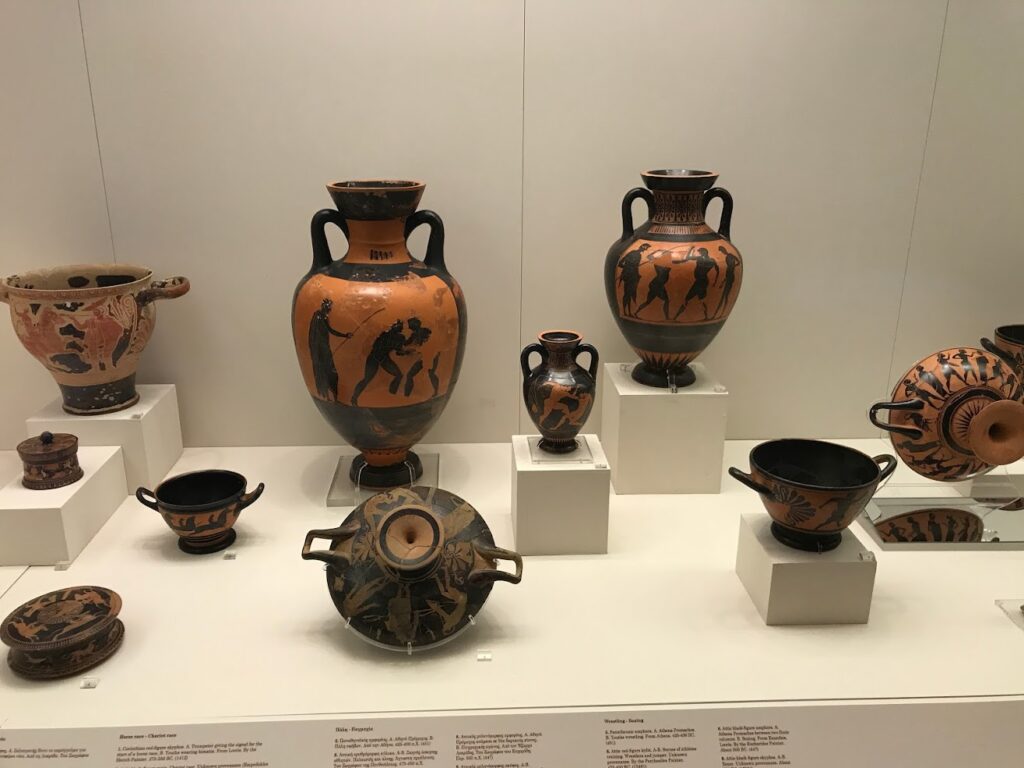
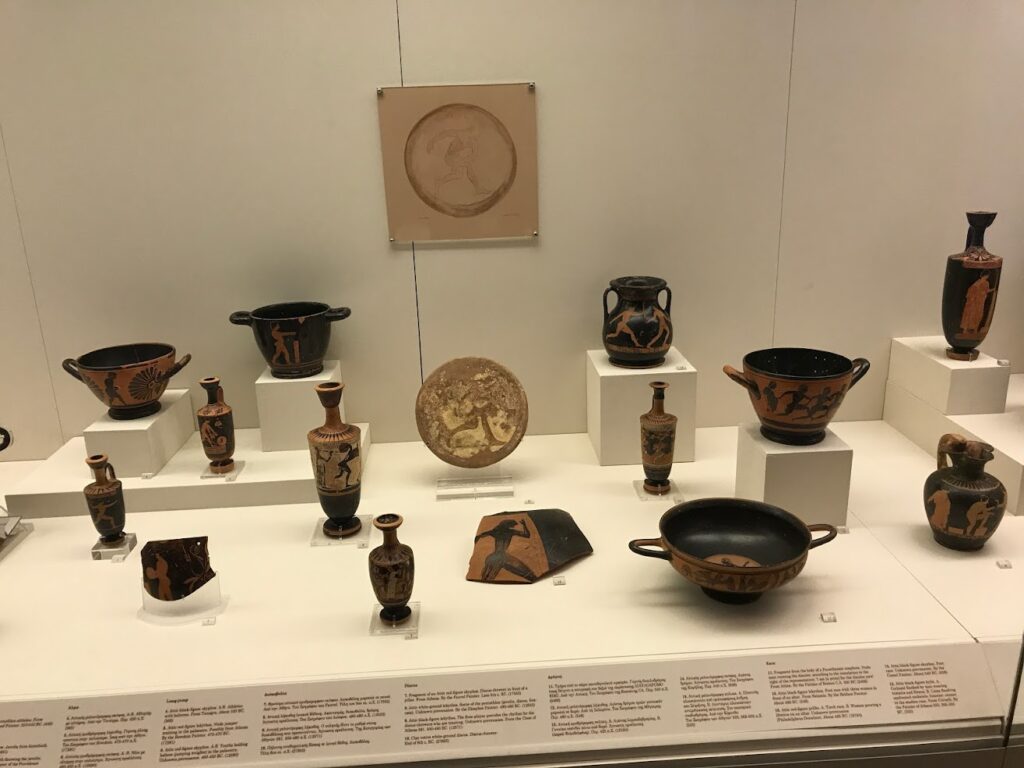
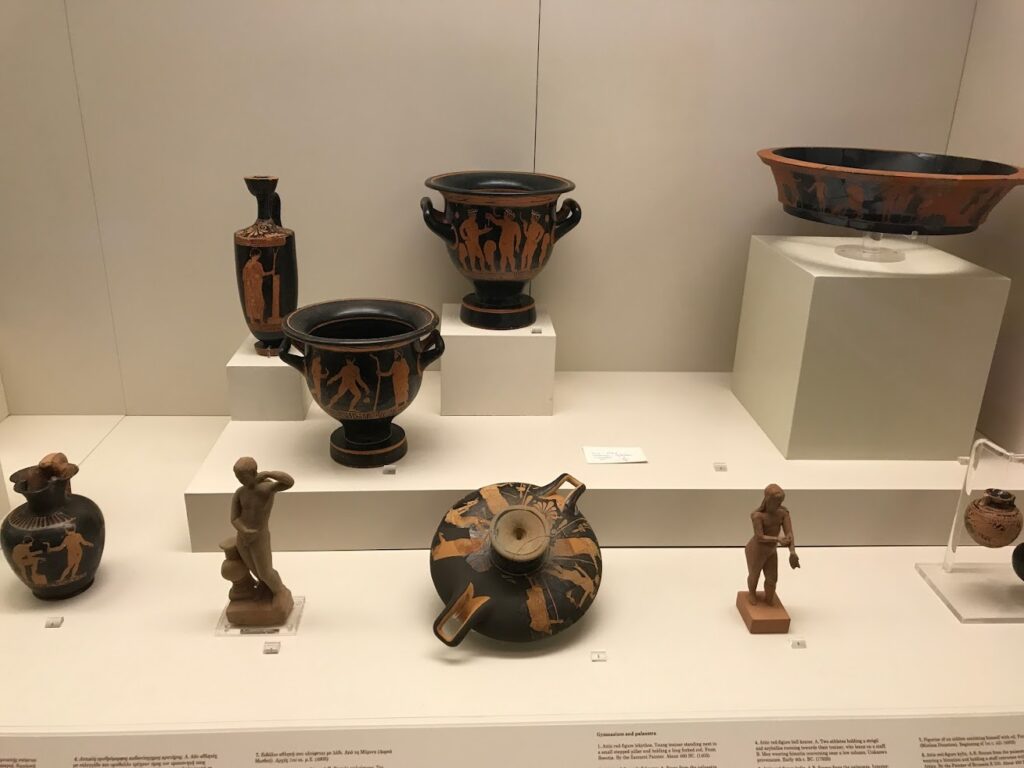
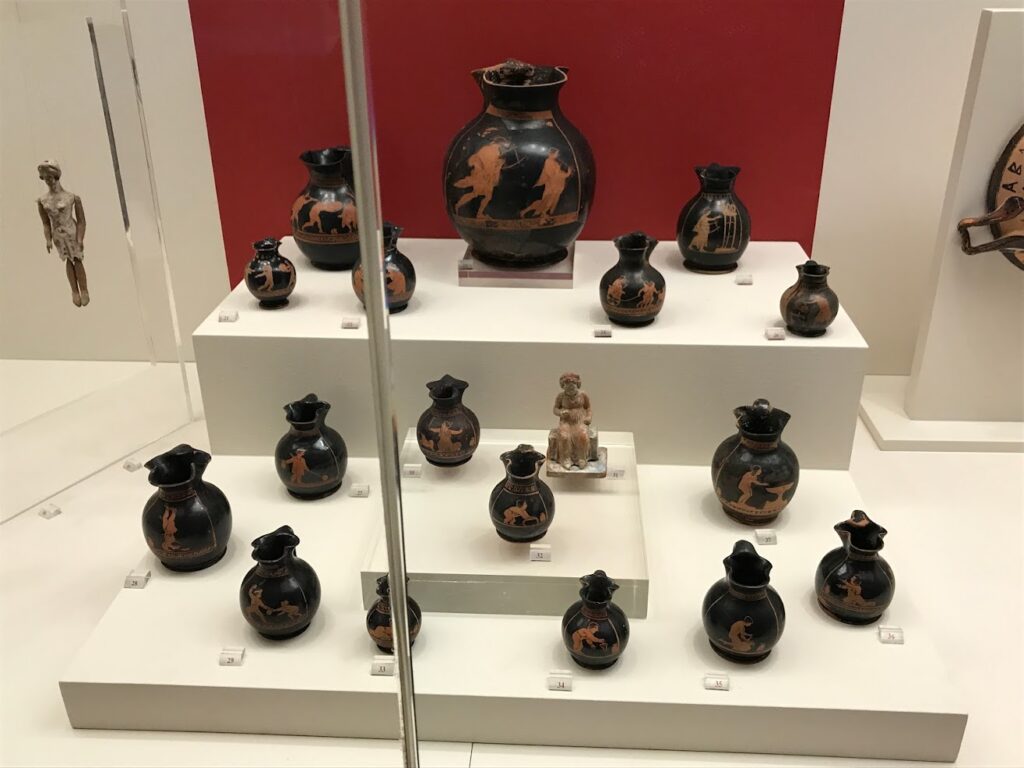
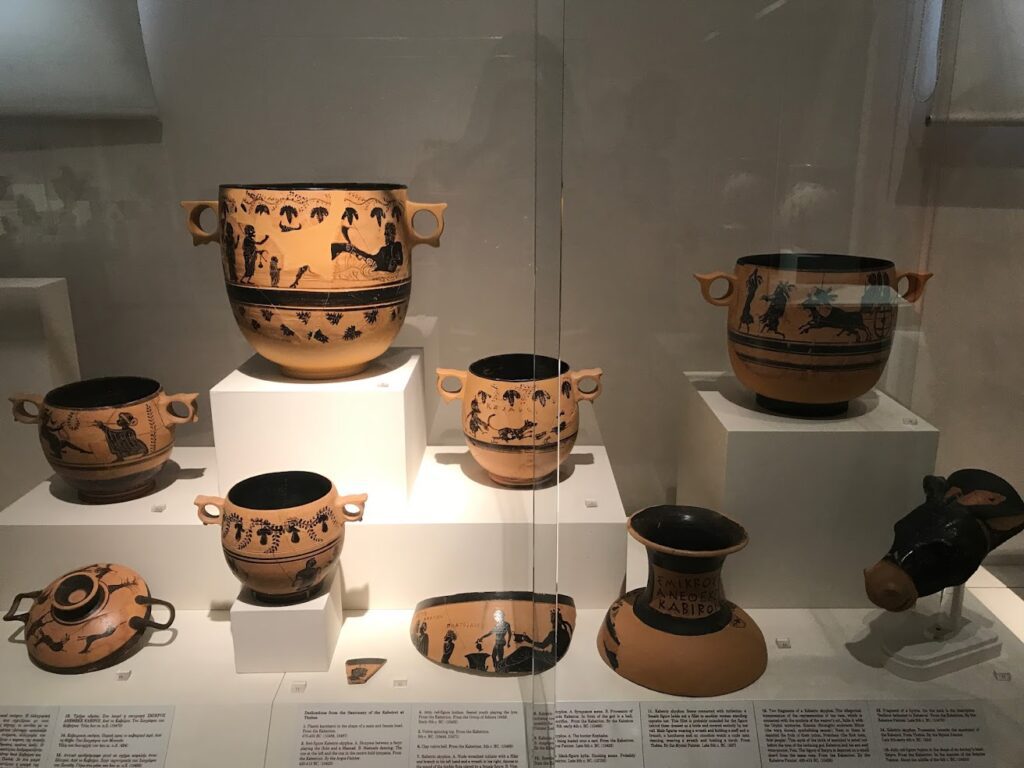
The National Archaeological Museum of Athens is the largest archaeological museum in Greece. It boasts one of the finest collections of Ancient Greek art in the world. The artifacts include carved pots, bronze objects, jewelry, mummies, small ceramics, ivory, marble, glass objects, and notable gold funerary masks.
Museum History
Built between 1866-1889, the museum showcases artifacts from Prehistory to Late Antiquity discovered in Athens and its vicinity.
Over the years, its scope expanded to include artifacts from across Greece. During World War II, the museum’s neoclassical building was closed, and many pieces were placed in wooden boxes and buried to protect them from potential looting by German troops. After the war, the museum reopened in 1945.
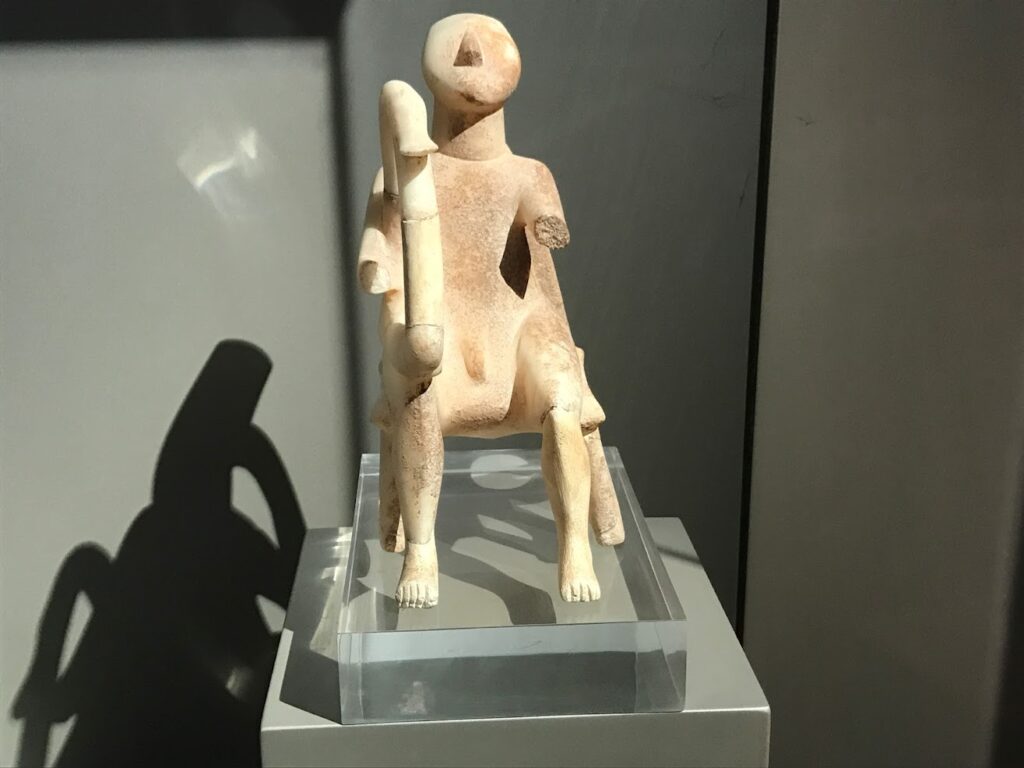
Museum Highlights
- Mask of Agamemnon: A gold funerary mask dating to the 16th century B.C., discovered in Mycenae. It is believed to represent the legendary king Agamemnon.
- Antikythera Mechanism: An ancient Greek analog device, often referred to as the world’s first computer.
- Horse and Jockey of Artemision: A bronze sculpture from the Hellenistic period (2nd century B.C.), depicting a young boy riding a horse.
- Zeus or Poseidon Bronze Statue: A stunning bronze statue from the Classical period (5th century B.C.), representing either Zeus or Poseidon.
- Thera Wall Paintings: Exquisite frescoes from the Minoan civilization, discovered in the ancient settlement of Akrotiri on the island of Santorini.
- Statue of Aphrodite of Knidos: A marble statue of the goddess Aphrodite, crafted by Praxiteles.
- Vapheio Cups: A pair of intricately designed gold cups from the 15th century B.C., found in a tholos tomb near Sparta.
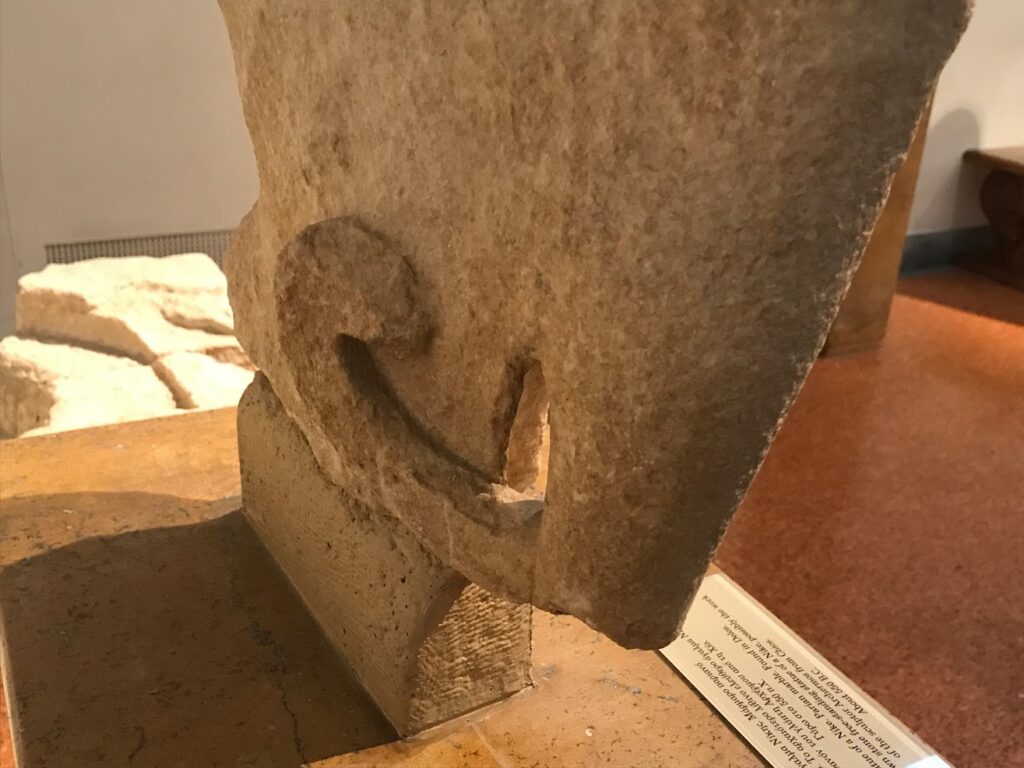
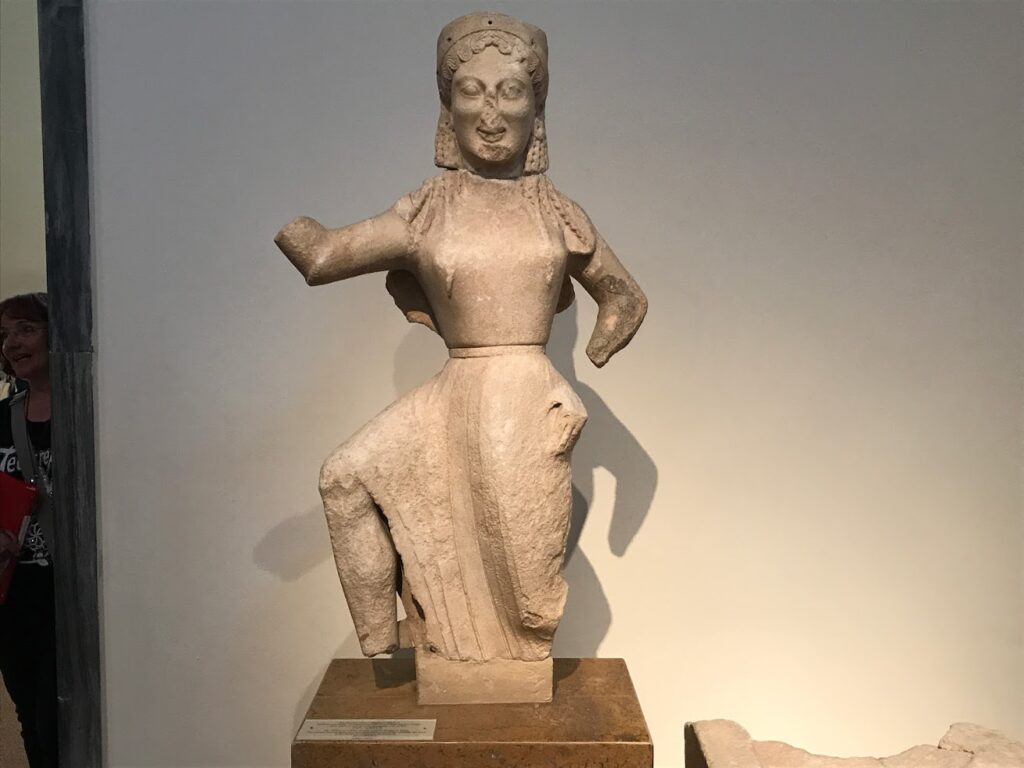
- Kouroi and Korai Statues: These are life-sized marble statues of young men (kouroi) and women (korai) from the Archaic period.
- Statuette of Zeus and Ganymede: A terracotta statuette from the 5th century B.C., showing Zeus carrying the young Ganymede to Mount Olympus.
- Bronze Statue of a Youth (Ephebe of Marathon): A well-preserved bronze statue from the 4th century B.C.
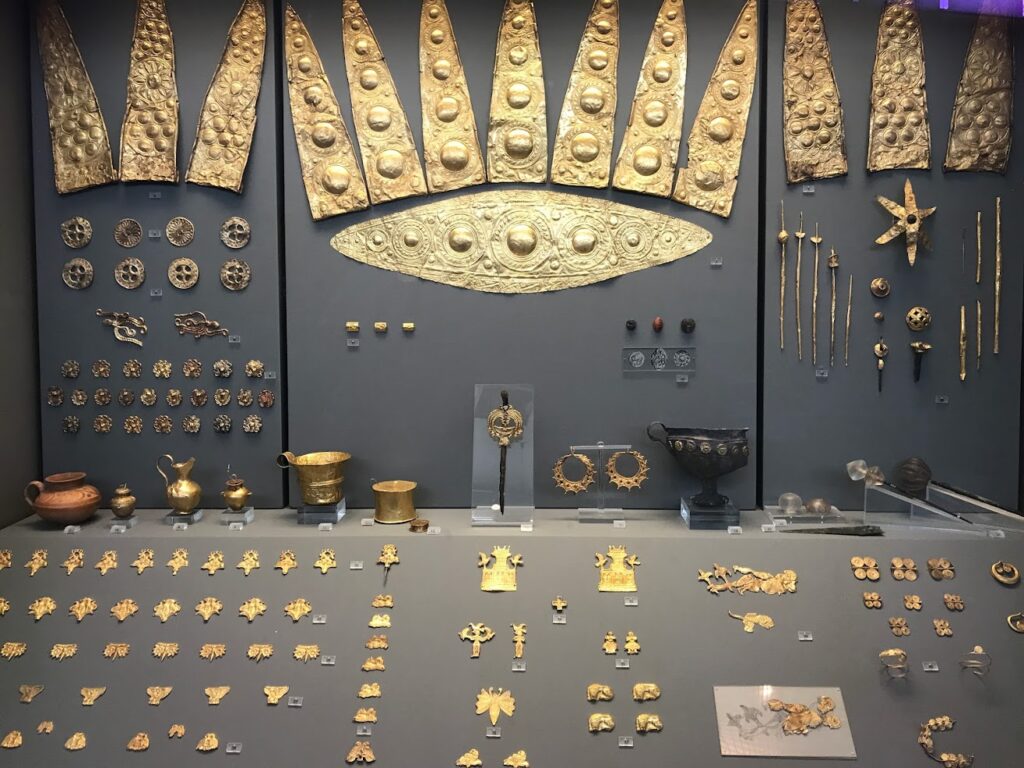
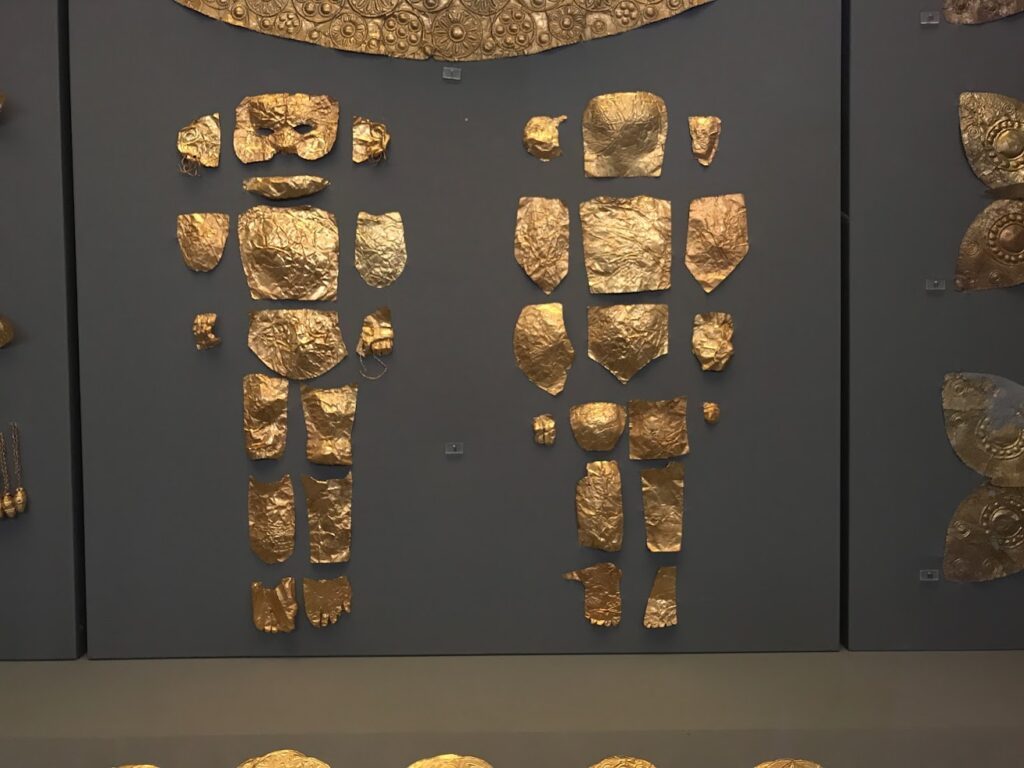


Museum Exhibitions
- Prehistory Collection
- Sculpture Collection
- Vase and Minor Objects Collection
- Metallurgy Collection
National Archaeological Museum Private Tour with Licensed Expert Guide
National Archaeological Museum
Opening Hours: Open Daily 8:00am-8:00 (Wednesday-Monday) and 1:00pm-8:00pm on Tuesdays
Tickets: €6 (USD 6.70), Ages 25 and under: Free admission
Phone#: +30 21 3214 4800
Location: 28is Oktovriou
Metro: Viktoria (Line 1); Omonoia (Lines 1 and 2).
7. Visit the Panathenaic Stadium
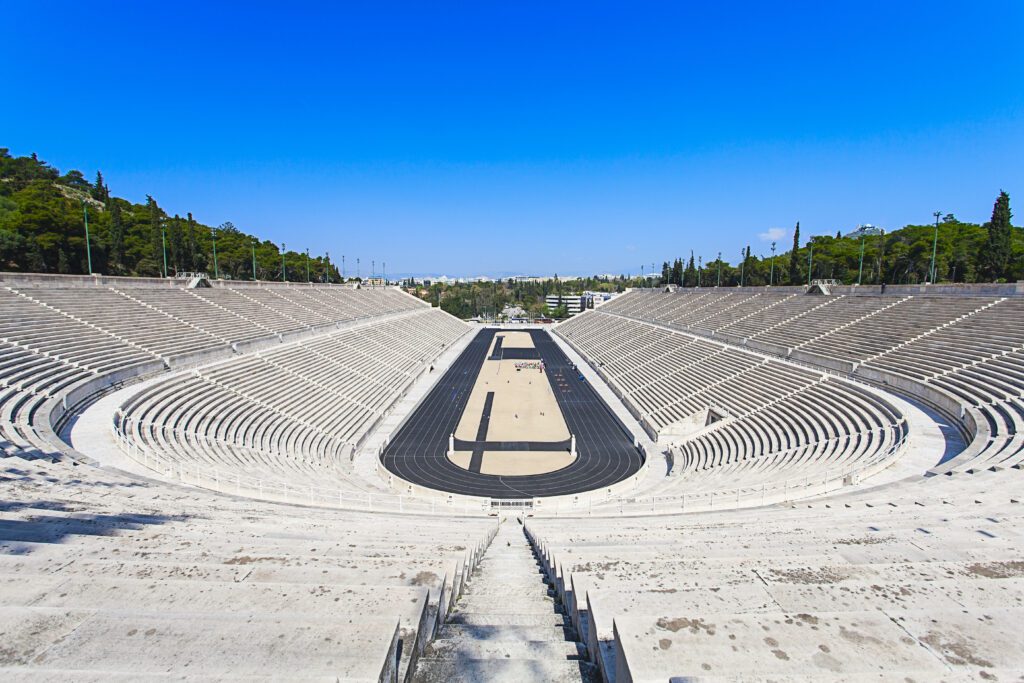
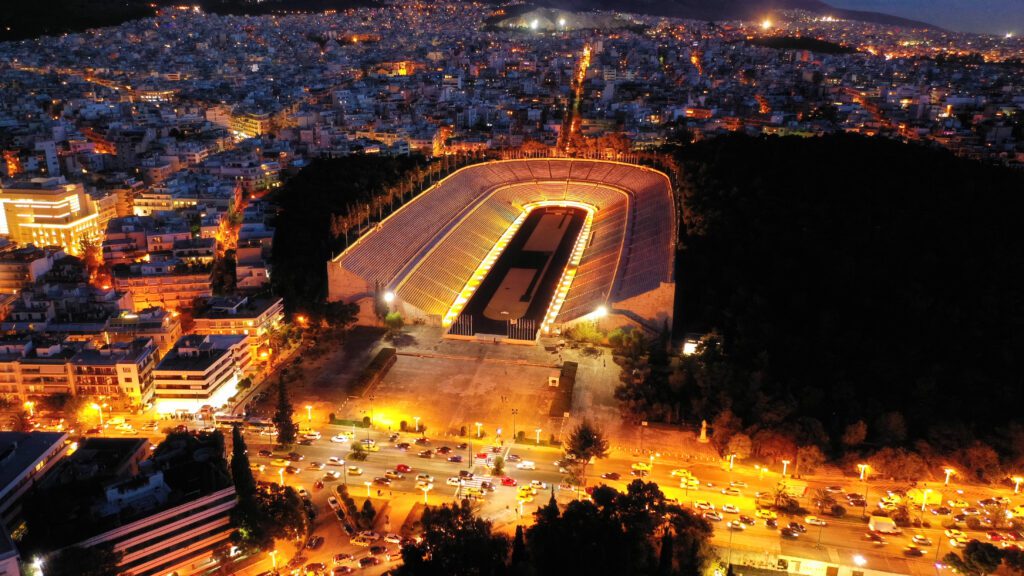
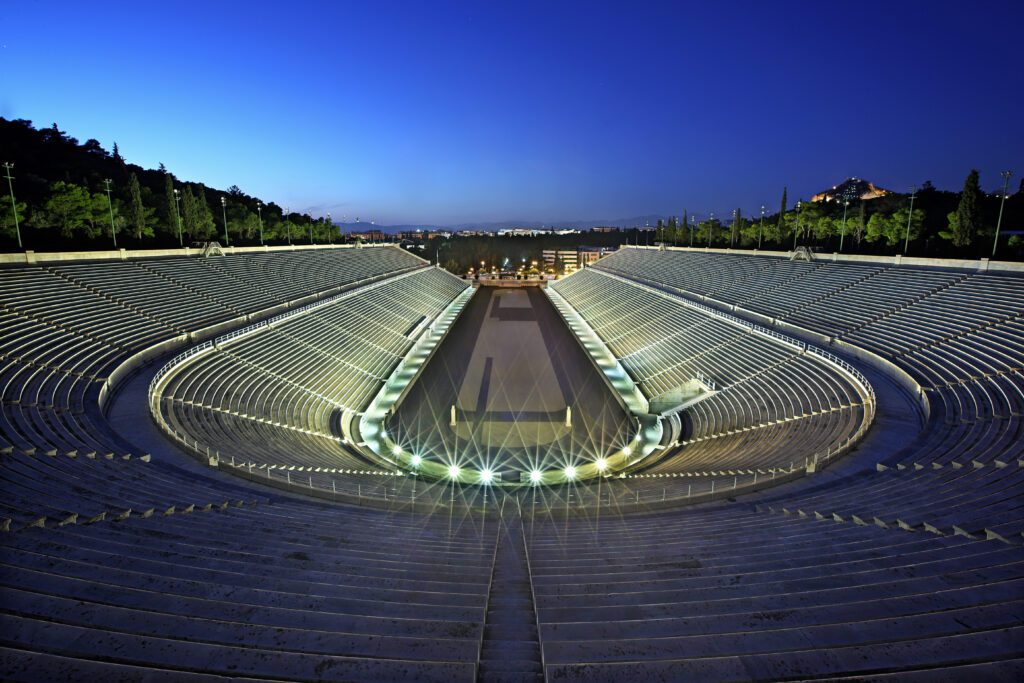
The Panathenaic Stadium (also known as Kallimarmaro) is one of Athens’ most iconic landmarks. Used for the games of the Panathenaea, it is the only stadium in the world made entirely of marble.
The best time to visit the stadium is early morning or late afternoon to avoid crowds and the midday heat.
History
Originally built in 330 B.C., the Panathenaic Stadium hosted the Panathenaic Games, an ancient festival in honor of the goddess Athena. The stadium was rebuilt in marble by Herodes Atticus in 144 A.D., making it one of the few stadiums in the world entirely made of marble.
After centuries of neglect, it was restored in the 19th century for the first modern Olympic Games in 1896. It has since been a symbol of both ancient and modern athletic achievements.
How to Get There
- By City Bus: Routes 2, 4, 10, 11, 90, 209, 550; Bus stop: Stadium
- By Metro: Lines M2, M3; Metro stops: Akropoli, Syntagma, Evangelismos
- By Trolley: Lines 2, 4, 10, 11; Trolley stop: Stadium
- By Tram: Line 6; Tram stop: Zappeio
Check out the Athens By Night 4 Hours Open Tour!
Panathenaic Stadium
Opening Hours: Open Daily 8:00am-7:00pm
Tickets: €10
Location: Located between Ardittos Hill and the National Garden
8. Explore the Benaki Museum
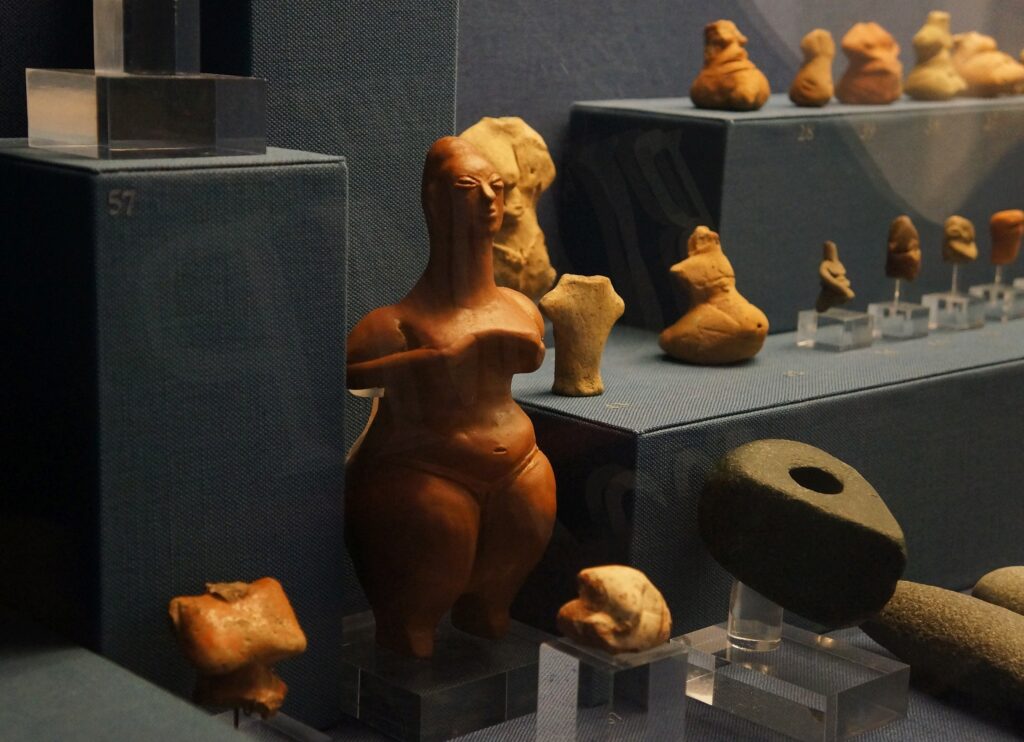
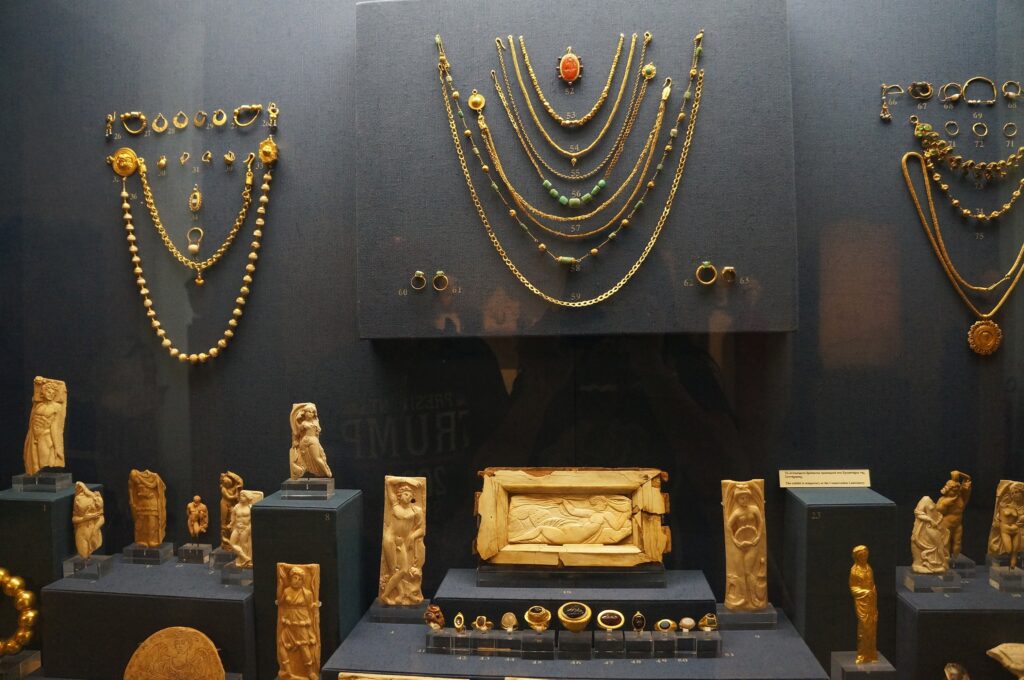
The Benaki Museum is one of the most important museums in Athens that you should definitely visit. It showcases 120,000 artifacts from the Paleolithic to the present day. Around 895 artifacts from the museum’s collections travel around the world.
It was converted into a museum in 1930 to showcase the collections of Antonis Benakis, donated by him and his sisters. The museum maintains a dynamic relationship with ongoing cultural developments in Greece and beyond.
Museum Highlights
The Benaki Museum features a diverse range of collections, including:
- Prehistoric, Ancient Greek, and Roman Art: Artifacts from Greece’s early civilizations.
- Byzantine Art: Religious and cultural artworks from the Byzantine period.
- Islamic Art: A collection showcasing the rich heritage of Islamic culture.
- Historic Heirlooms: Important historical items reflecting Greece’s past.
- Chinese and Korean Art: Works that represent the artistic traditions of East Asia.
- Coptic Art: Art from the early Christian communities in Egypt.
- Post-Byzantine and Neo-Hellenic Art: Works from the post-Byzantine period to modern Greek art.
- Collection of Paintings, Drawings, and Prints: A wide variety of visual art pieces.
- Nikos Hadjikyriakos-Ghika Gallery: Dedicated to the works of this renowned Greek artist.
- Yannis Pappas Studio: Showcasing the works of the influential Greek painter.
- Childhood, Toys, and Games: Artifacts related to childhood and play throughout history.
- Pre-Columbian Art: Art from ancient civilizations of the Americas.
- Library: A resource center for research on Greek culture and history.
Benaki Museum
Opening Hours: 10:00am-6:00pm (Wednesday-Monday), Closed on Tuesdays
Tickets: €9 and can be purchased online
Phone#: +30 21-0367-1000
Location: 1 Koumpari, St. & Vas. Sofias Ave
Metro: Take the M3 (blue line) to Syntagma Station. It’s a short walk.
9. Watch the Changing of the Guard Ceremony
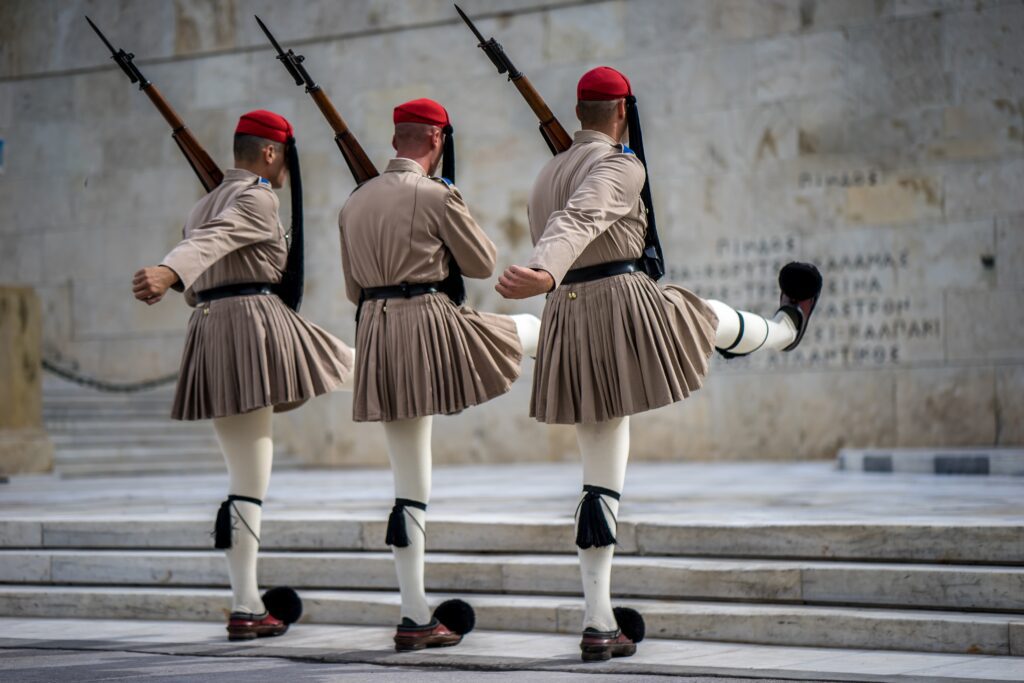
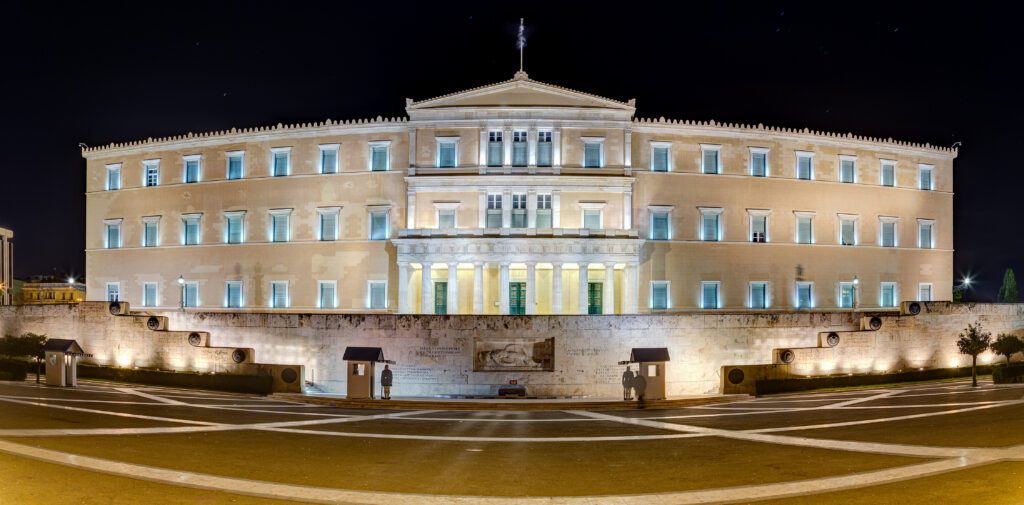
Watching the changing of the guard ceremony at Syntagma Square is a must-see tradition in Athens. The ceremony occurs every hour day and night at the Tomb of the Unknown Soldier in front of the Greek Parliament. It’s unique and fascinating to watch.
The ceremonial event features the Evzones, an elite unit of the Greek Presidential Guard. The guards are dressed in their iconic uniforms, complete with pleated skirts, pom-pom shoes, and tasseled hats. They perform precise and slow-motion steps as they exchange duties.
The grandest ceremony takes place every Sunday at 11:00am. So, if you find yourself in the city at that time you should definitely make an effort to witness it.
Syntagma Square
Operating Hours: Open Daily 24/7
Tickets: Free
Location: The Tomb of the Unknown Soldier in front of the Greek Parliament
10. Check out the Temple of Hephaestus
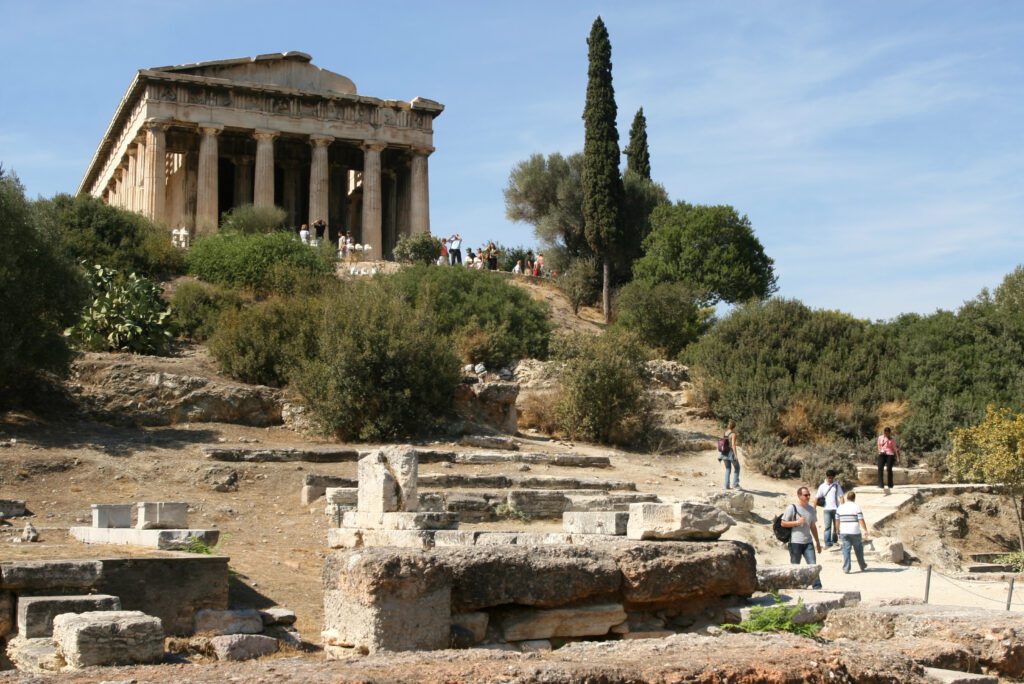
The Temple of Hephaestus (also known as the Hephaisteion) is one of the best-preserved ancient temples in Greece. It was dedicated to Hephaestus the god of fire and craftsmanship, and Athena the goddess of wisdom.
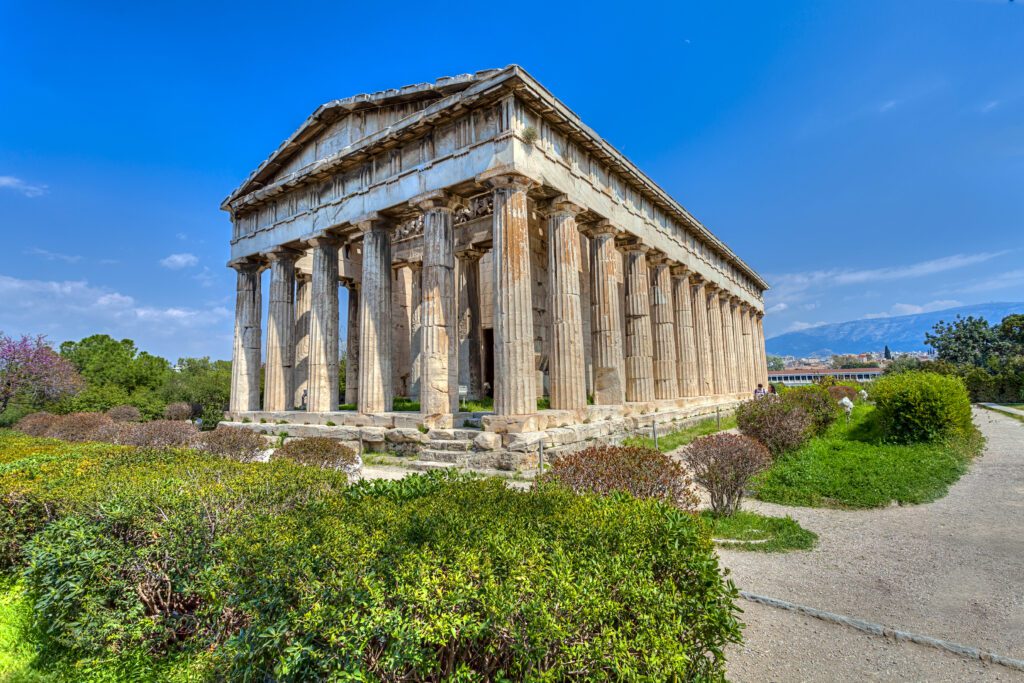
History
The Temple of Hephaestus was built after the battle of Plataea as part of Pericles’ plan to rebuild Athens. It originally housed bronze statues of Hephaestus and Athena.
In the 7th century the temple was turned into a church. Then in 1834 it became a museum and an important ancient site for research.
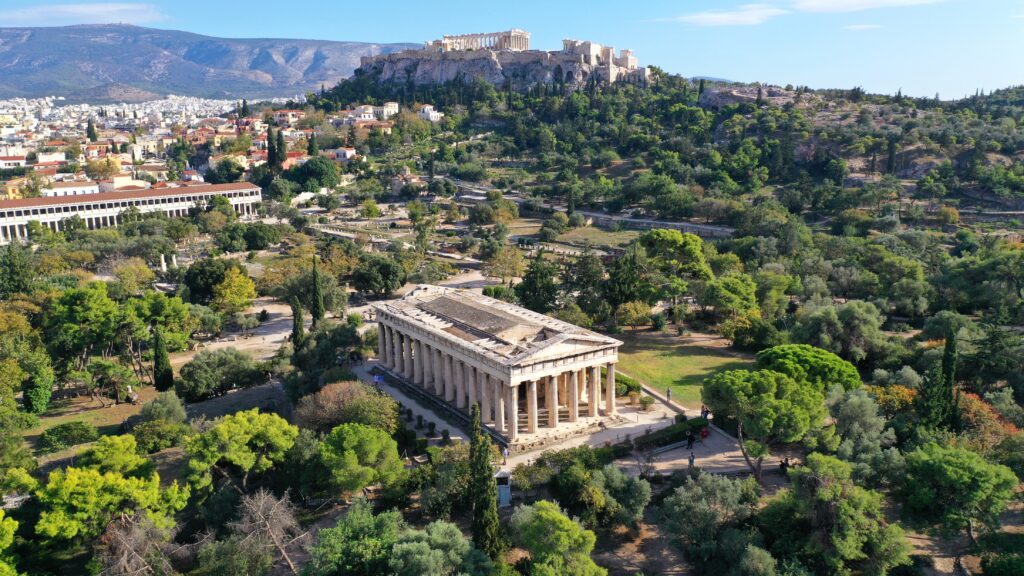
Architecture
The temple features six columns on the east and west sides and thirteen on the north and south. It is built with Pentelic marble, while its sculptures are made from Parian marble.
The temple has a pronaos (front porch), a central cella (where the statues were housed), and an opisthodomos (back porch). The pediments feature detailed sculptures, depicting scenes like the Birth of Athena and the Return of Hephaestus to Olympus. Many friezes and sculptures have been damaged over time.
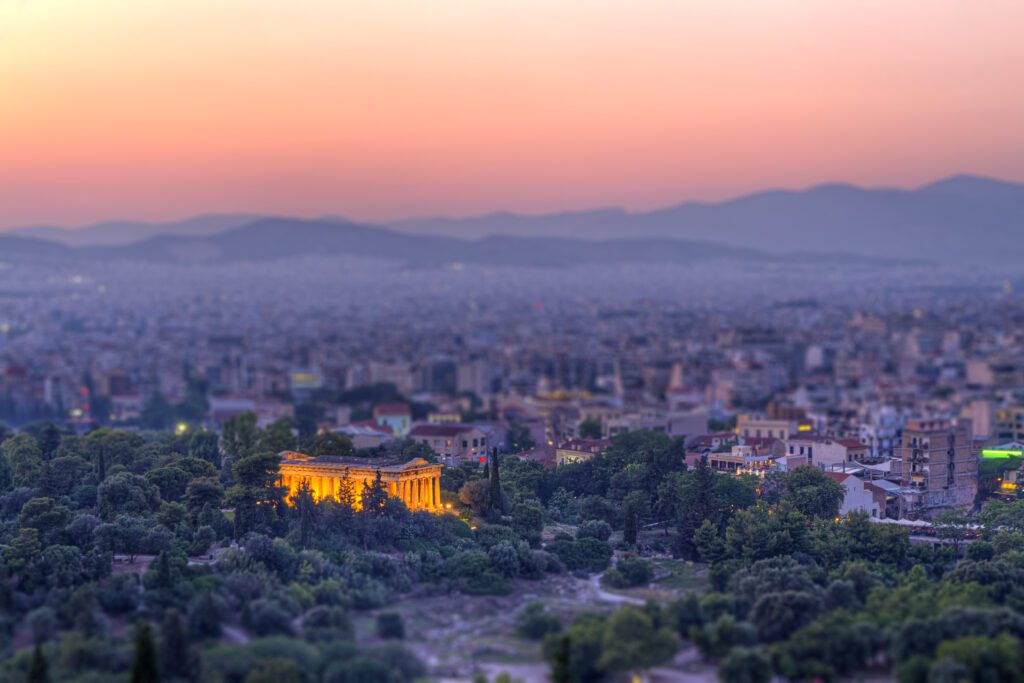
Temple of Hephaestus
Opening Hours: Open Daily 8:00am-8:00pm
Tickets: Admission to the Temple of Hephaestus is included in the Agora ticket.
Location: Stirieon 3, Ancient Agora
Metro: Thissio (Green Line) and Monastiraki (Green Line and Blue Line).
Bus: Monastiraki
11. Take a Night Tour of the Ancient Agora
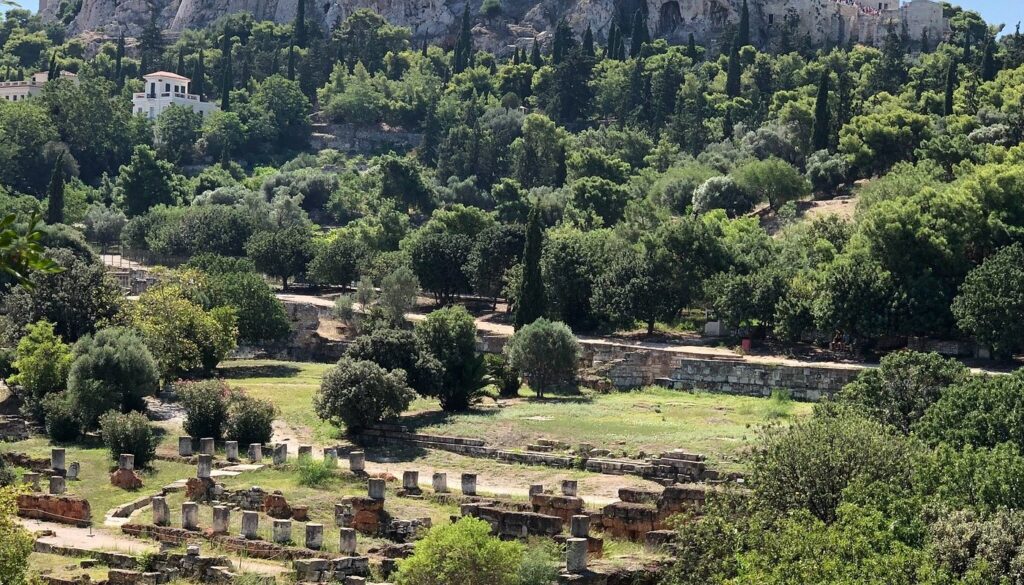
The Ancient Agora of Athens was the central meeting place in ancient Greece. It was the hub for social, political, and commercial activities.
Surrounding the Agora were temples dedicated to various Greek gods, highlighting its spiritual significance.
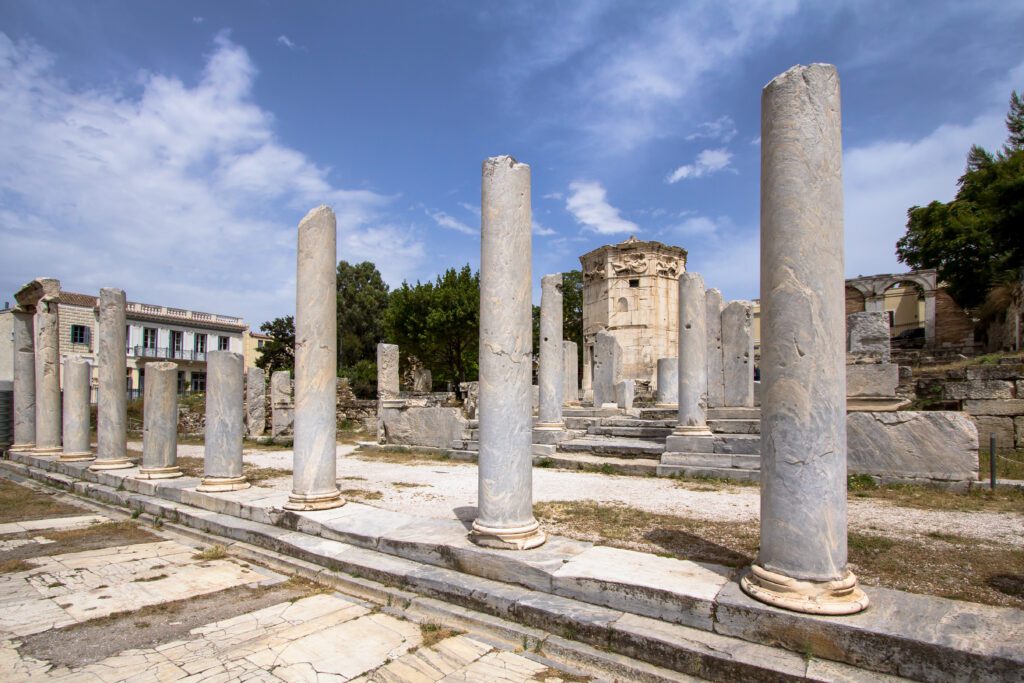
Key Highlights
- Stoa of Attalos: Built in the 2nd century B.C. by King Attalos II, this two-story building now houses the Museum of the Ancient Agora. Its columned architecture and stonework showcase ancient Athenian life.
- Temple of Hephaestus (Hephaestion): One of the best-preserved Doric temples, dedicated to Hephaestus and Athena Ergane. It offers insights into ancient religious practices and Hellenistic architecture.
- Altar of the Twelve Gods: Served as a central reference point in the Agora, dedicated to the Olympian gods. It was a major religious site and focal point of the Agora.
- Bouleuterion and Metroon: The Bouleuterion was the city council’s meeting place, while the Metroon housed city archives and was dedicated to the goddess Cybele (or Rhea).
- Odeon of Agrippa: Built in the 1st century B.C. and later modified by the Romans, this large concert hall highlights the importance of music and performance in Athenian culture.
- Middle Stoa: A long building that divided the Agora, serving various functions and adding to the site’s architectural significance.
- Byzantine Church of the Holy Apostles: Built in the 10th century A.D., this church reflects the Byzantine era and features distinct frescoes and architectural design.
Excavation History
The first excavations at the Agora began in 1859, revealing significant artifacts and structures. Major excavation efforts – including the demolition of 360 modern buildings – exposed the full extent of the Agora.
The Stoa of Attalos was reconstructed based on its original design, allowing visitors to experience a piece of ancient architecture.
The Ancient Agora is located near the Plaka and Monastiraki districts, making it easily accessible. For an in-depth visit, it’s best to explore the site during regular daylight hours.
Ancient Agora
Opening Hours: Open Daily 8:00am-8:00pm
Tickets: Adult: €10; Student: €5
Location: Adrianou Street, to the west of Monastiraki
Metro: Monastiraki Lines 1 and 3. Thiseio Line 1.
12. Take a Sunset Tour of the Temple of Poseidon
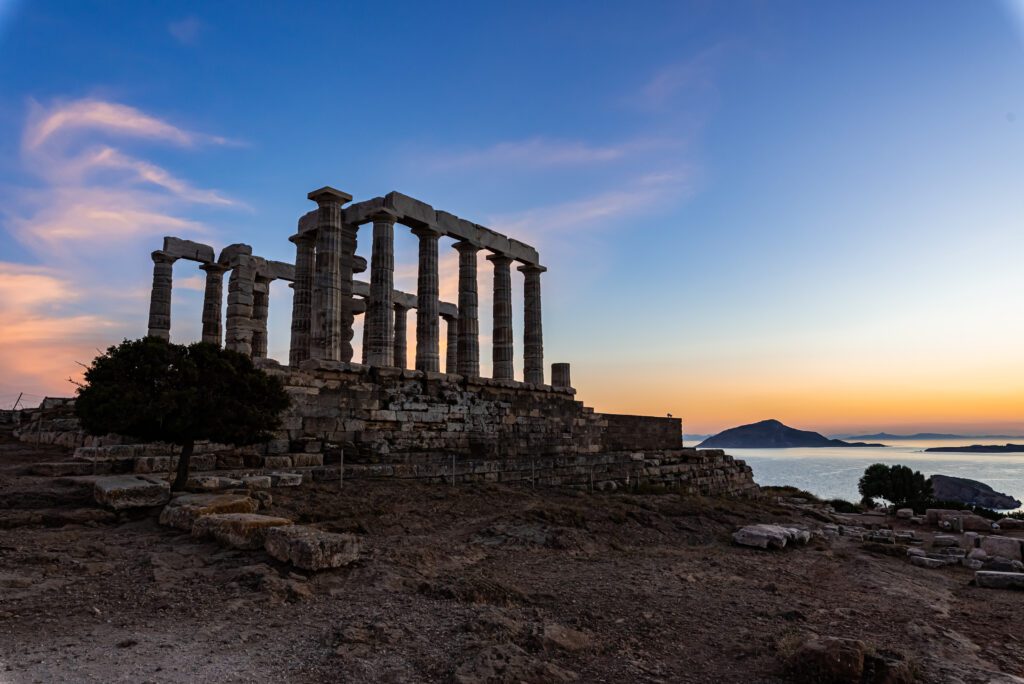
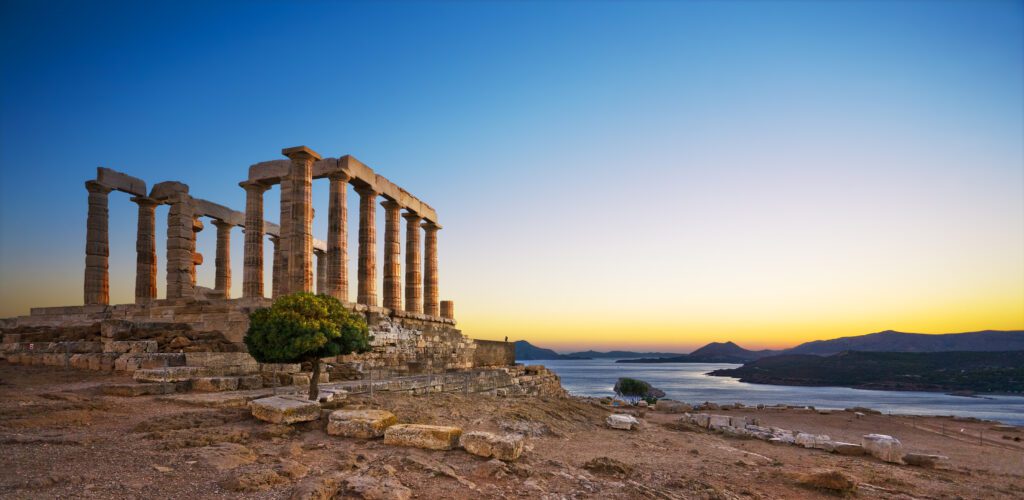
The Temple of Poseidon was built in the 5th century B.C. during Athens’ Golden Age. It was dedicated to Poseidon, the sea god. The temple was a place of worship for Poseidon and served as a landmark for sailors navigating the Aegean Sea.
The panoramic views of the Aegean Sea are breathtaking at any time of day, but especially during sunset.
While exploring, remember to respect the site’s historical significance by not climbing on the ruins. Wear comfortable shoes for exploring, use sun protection, and carry a water bottle to stay hydrated.
Myths Associated with the Temple of Poseidon
King Aegeus and Theseus: Aegeus awaited his son Theseus’s return from slaying the Minotaur. When he saw a ship with black sails, he believed Theseus had died and jumped into the sea, which became known as the Aegean Sea.
Poseidon vs. Athena: In their competition for Athens’ patronage, Poseidon created a saltwater spring by striking the ground with his trident, while Athena offered an olive tree. The Athenians chose Athena as their protector.
Temple of Poseidon
Opening Hours: Open Daily 9:30am-7:00pm
Tickets: €10
Location: Sounion 195 00
13. Visit the Museum of Cycladic Art
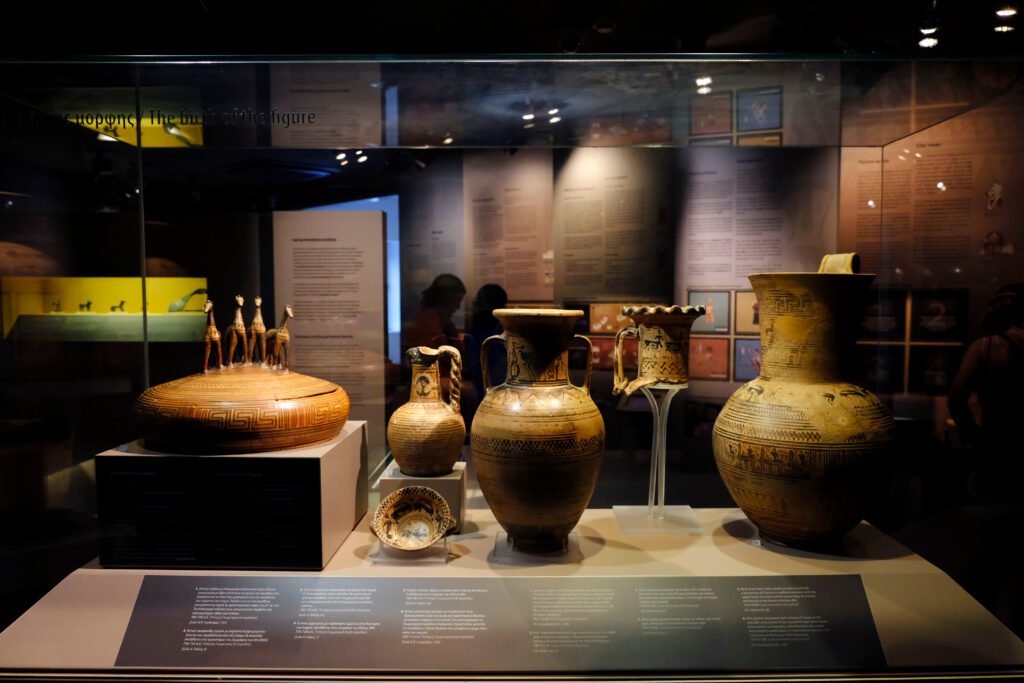
The Museum of Cycladic Art showcases the ancient cultures of the Aegean, particularly the Cycladic civilization. The Museum’s collections include 3,000 objects of Cycladic, Ancient Greek and Ancient Cypriot Art. This includes marble figurines, pottery, and tools from the Neolithic to the Hellenistic periods.
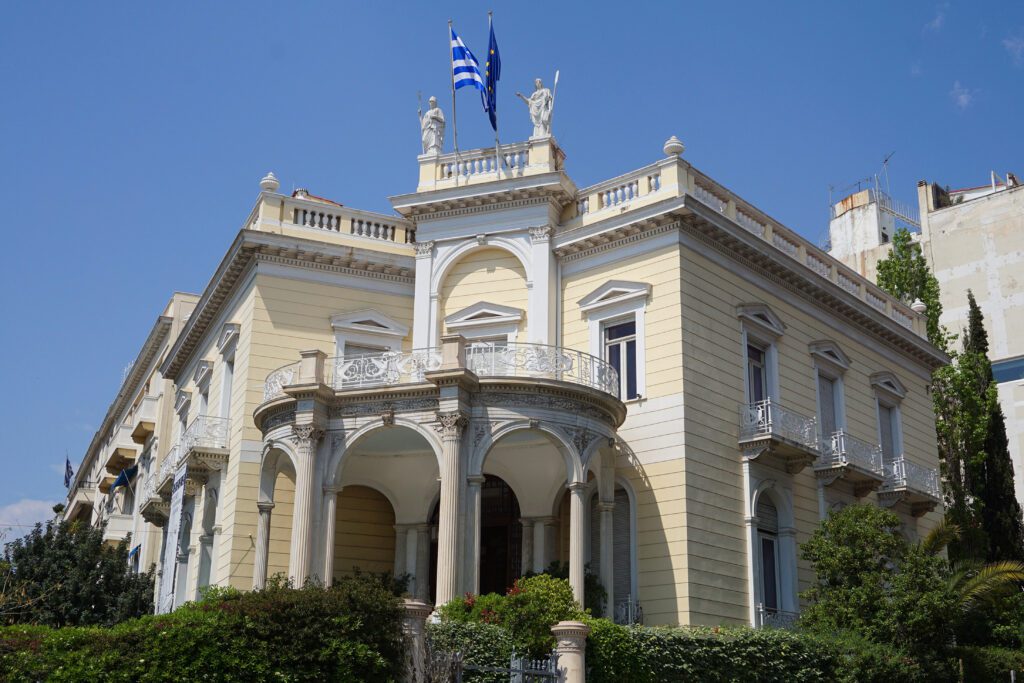
Museum Highlights:
- Cycladic Art Collection: The museum houses artifacts, with a focus on Cycladic figurines, which date from 3300 to 1100 B.C. These figures are known for their abstract shapes and minimalistic designs.
- Ancient Greek Collection: This collection includes pottery, jewelry, and everyday objects from the Geometric to the Hellenistic periods, highlighting the evolution of ancient Greek art.
- Cypriot Collection: Featuring artifacts from ancient Cyprus, this collection includes sculptures, pottery, and coins, showcasing the island’s rich history and culture.
- Museum Shop: Visitors can explore a shop offering replicas of Cycladic artifacts, books, and unique gifts inspired by ancient Greek culture.
Museum of Cycladic Art
Opening Hours: Thursdays 10:00am-8:00pm Wednesday, Friday, Saturday, Sunday 10:00am-5:00pm. Closed on Tuesdays
Tickets: General Admission €16. Discounted Admission €12
Phone#: +30 21 0722 8321
Location: Neophytou Douka Street 4
Metro: Evangelismos Line 3. Syntagma Lines 2 and 3.
14. Stroll through Anafiotika
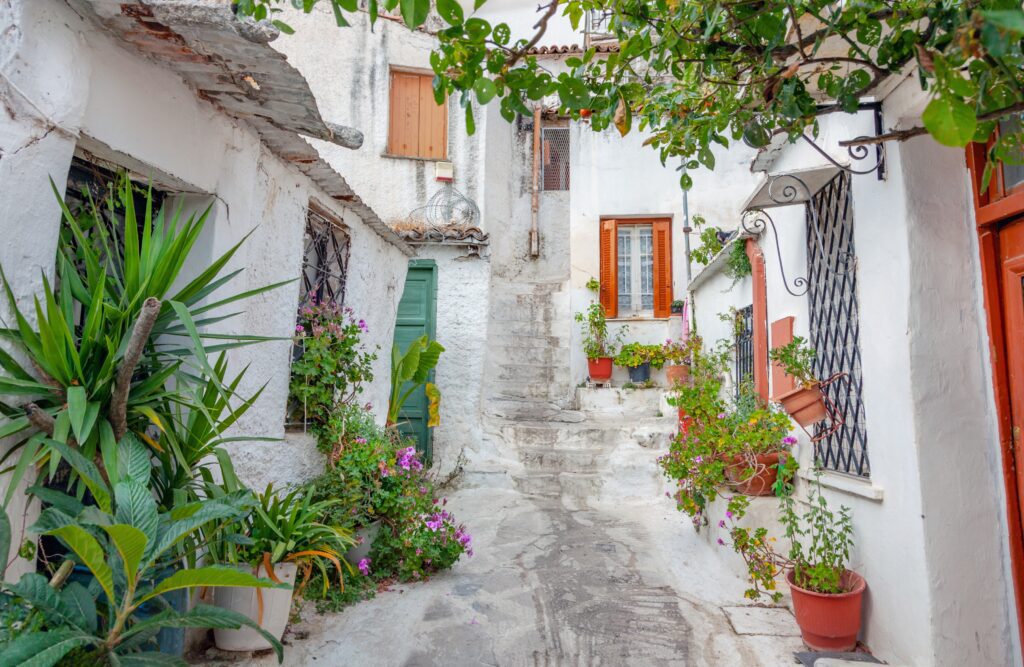
Anafiotika is a charming neighborhood located at the foot of the Acropolis. It was established during the reign of King Otto of Greece in the 19th century.
The area features picturesque whitewashed cubic houses, narrow alleys, and vibrant bougainvillea. The area has retained its charm, offering a taste of the Greek islands within the city. Only 45 houses remain, as parts of the neighborhood were destroyed for archaeological research in 1950.
As you stroll through Anafiotika, enjoy stunning views of the Acropolis and the surrounding city. The elevated position offers excellent vantage points for photography. The neighborhood has no street signs or formal streets, encouraging visitors to wander and discover its charm. The main strip leads to a small church and various alleyways adorned with street art.
Anafiotika
Opening Hours: Open Daily 24/7
Tickets: Free
Location: Located on the northeast side of the Acropolis hill
15. Marvel at Monastiraki Square
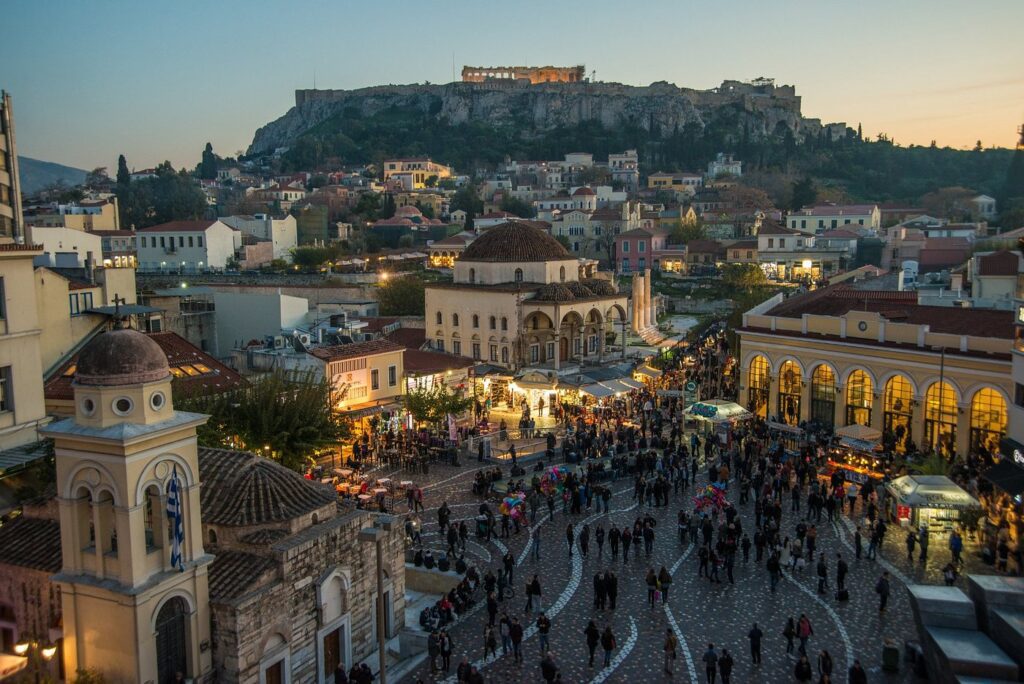
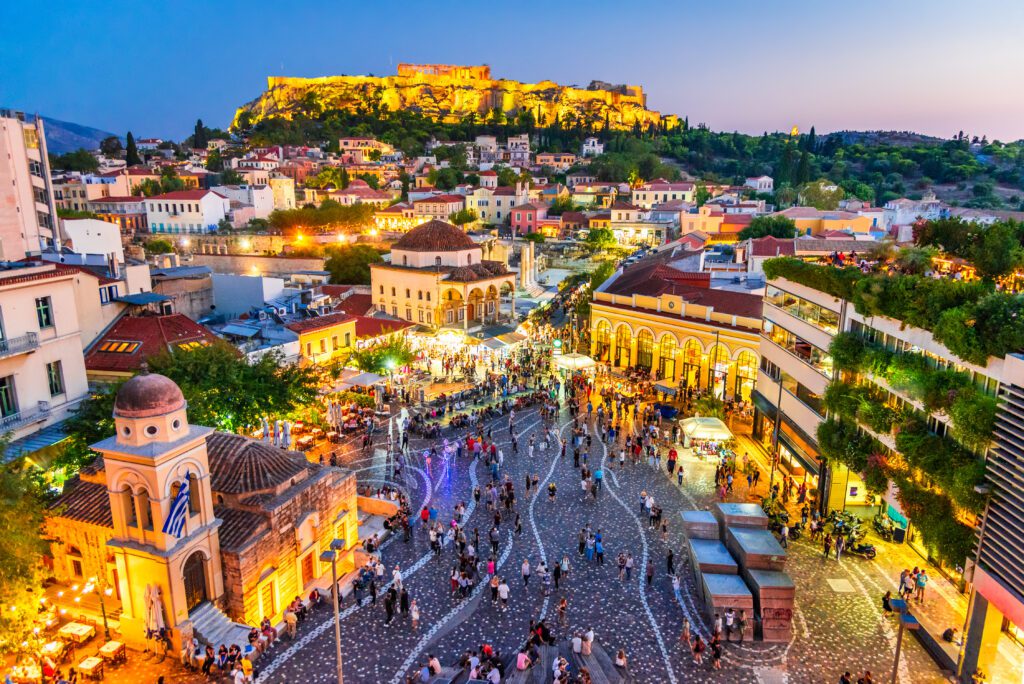
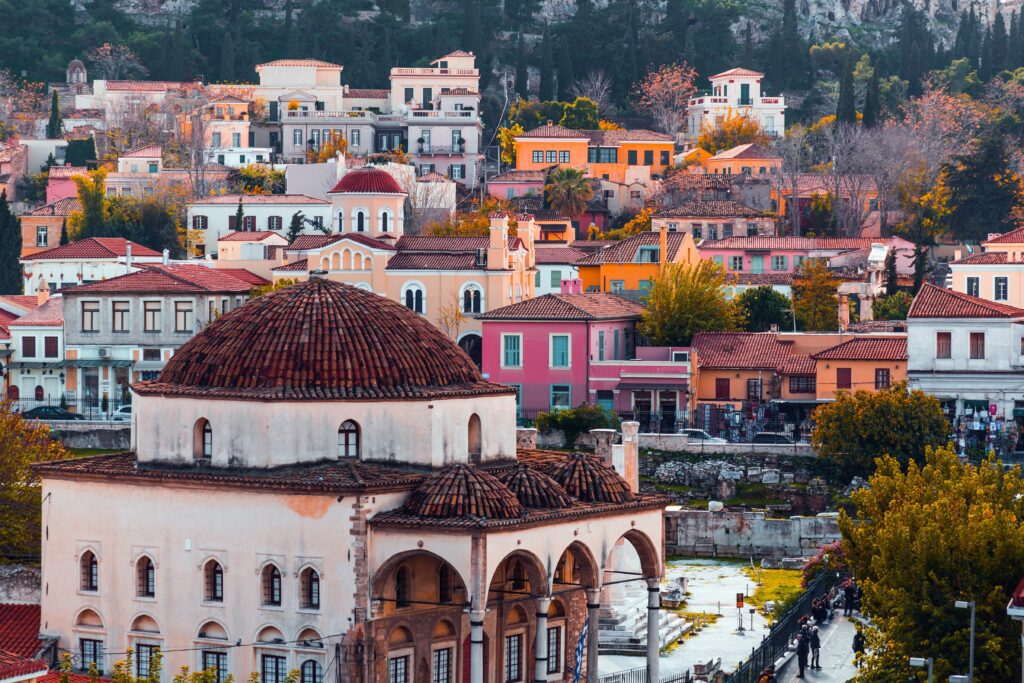
Monastiraki Square is a bustling public square, surrounded by ancient ruins, including the Roman Agora and the Temple of Hephaestus. The square is named after the Monastiraki Monastery, which dates back to the 17th century.
As night falls, Monastiraki Square transforms into a lively gathering spot, with locals and tourists alike enjoying the ambiance. The recent restoration features multi-colored stone paving.
Architectural Highlights
- Tzisdarakis Mosque: Built in the 19th century during the Ottoman Empire, this mosque now serves as a museum. It is beautifully illuminated at night.
- Pantanassa Church: A notable landmark of the square, showcasing Byzantine architecture.
- Hadrian’s Library: An ancient site located nearby, highlighting Athens’ classical heritage.
If you are in Syntagma square or Plaka, you can walk to Monastiraki since it is just 10-15 minutes away by foot.
Check out the Private Sightseeing Tour in Athens By Night!
Monastiraki Square
Opening Hours: Open Daily 24/7
Tickets: Free
Location: Apollonos 21
16. Pray at the Church of Agios Eleftherios
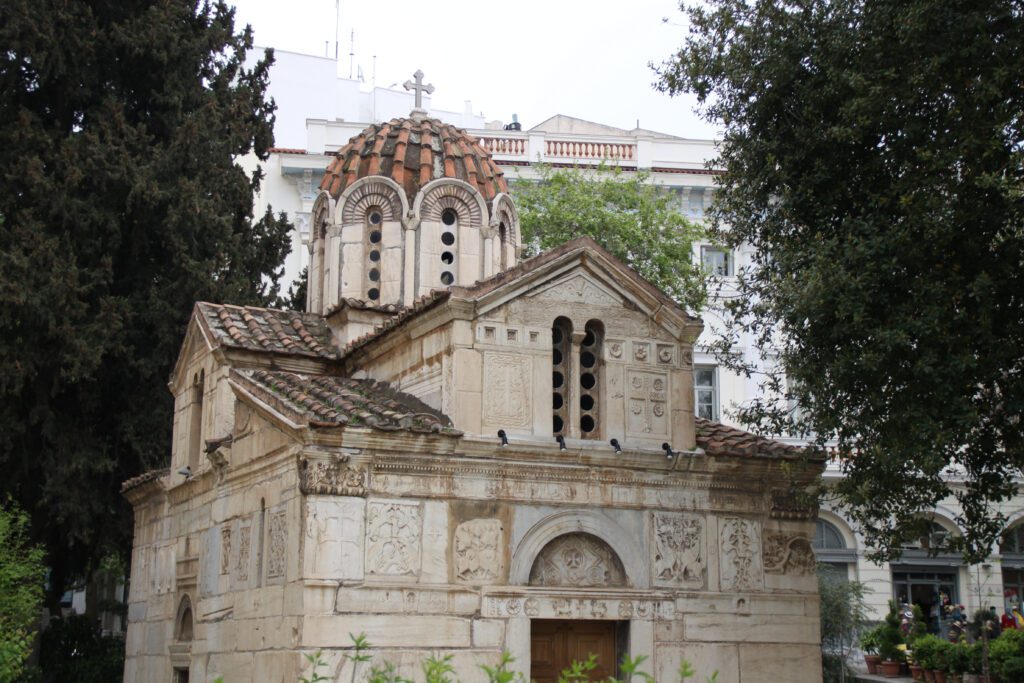
The Church of Agios Eleftherios, also known as the Little Metropolis, is a small 12th-century Byzantine church. It is located next to the Metropolitan Cathedral of Athens in the city center.
The chirch was built on the ruins of a temple dedicated to Eileithyia, the goddess of childbirth. It was initially dedicated to the Panagia Gorgoepikoos, later re-dedicated to Saint Eleftherios.
The church is composed almost entirely of spolia (reused materials) from older structures, including Classical, Roman, and Byzantine pieces. After the Greek War of Independence, it briefly housed Athens’ public library (1841-1863) before being restored as a church.
Church of Agios Eleftherios
Opening Hours: Open Daily 6:30am-9:00pm
Tickets: Free
Location: charnon 384
17. Visit the National Garden of Athens
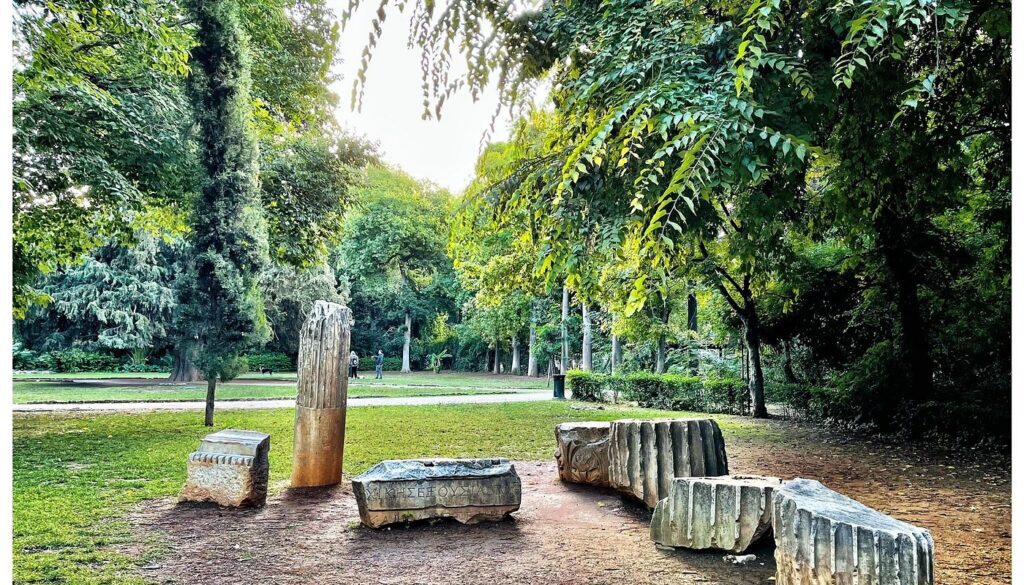
The National Garden of Athens is a serene oasis, situated near Syntagma Square. It features a maze of softly lit paths, lush greenery, ancient ruins, tranquil ponds, and a small zoo. The garden was created in the mid-1800s and opened to the public in 1927.
The main entrance is step-free. Paths are paved with stones and fine gravel; some areas have steps, but there are also step-free paths.
The garden takes on a tranquil, almost magical ambiance at night, with fewer visitors and the soft glow of city lights in the distance. It is well illuminated at night, except for some parts near Zappeion.
National Garden of Athens
Opening Hours: Open Daily 6:30am-7:00pm
Tickets: Free
Location: Leof. Vasilisis Amalias 1
18. Watch the Sunset at Filopappou Hill
Watching the sunset at Filopappou Hill is a must-do experience when visiting Athens. The hill offers breathtaking panoramic views of the city, the Acropolis, and the Aegean Sea in the distance. Filopappou Hill is surrounded by pine trees and offers shaded walking trails
Historically, Filopappou Hill was known as Mousion Hill, named after the ancient Athenian poet Musaeus, who lived and was buried there. There is a beautiful small church on the hill called Church of Agios Dimitrios Loubardiari. It’s often chosen for weddings and baptisms due to its romantic atmosphere.
Monument of Philopappos
The hill is named after Gaius Julius Antiochus Philopappos, a Roman prince from the Kingdom of Commagene. He was an esteemed Athenian citizen and benefactor. After his death in 116 A.D., Athenians, alongside his sister Julia Balbilla, built a grand marble monument in his honor.
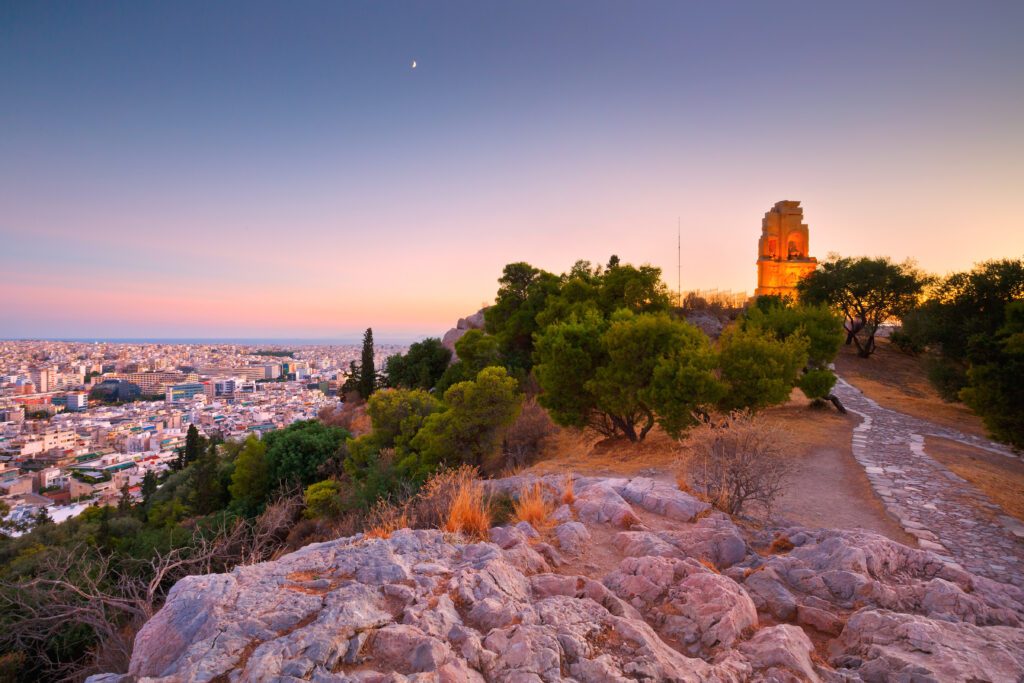
Filopappou Hill
Opening Hours: Open Daily 24/7
Tickets: Free
Location: Located southwest of the Acropolis
19. Take Pictures at the Panagia Kapnikarea Church
The Church of Panagia Kapnikarea is a fascinating stop for history lovers and architectural enthusiasts alike. This Greek Orthodox church, built in the 11th century, is one of the oldest churches in Athens. It was constructed on the site of an ancient Greek temple, likely dedicated to Athena or Demeter.
The church’s unique architectural structure consists of three interconnected parts: the main church, dedicated to the Virgin Mary, a northern chapel dedicated to St. Barbara, and the exonarthex (outer vestibule) on the western side. Its Byzantine design, cross-in-square layout, and dome have made it a treasured monument.
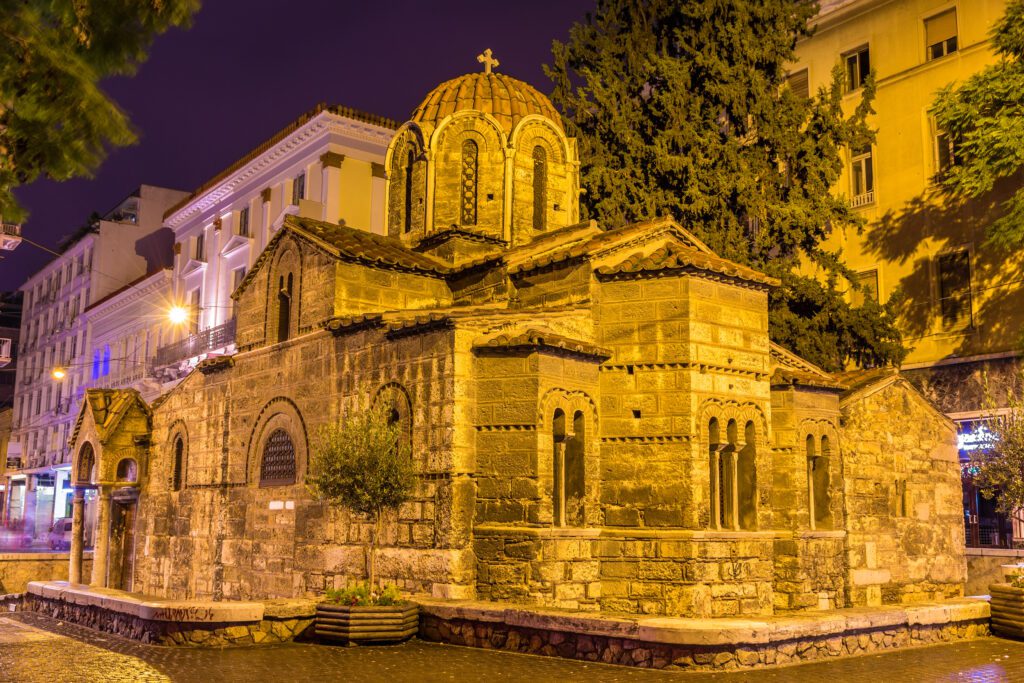
Panagia Kapnikarea Church
Opening Hours: Open Daily 11:00am-9:00pm
Tickets: Free
Location: In the middle of Ermou Street
20. Visit the Athens Riviera
The Athens Riviera at night is quite a spectacle! As the sun sets, the coastline from Glyfada to Vouliagmeni transforms into a dazzling stretch of lights and activity.
The waterfront promenades along Glyfada, Vouliagmeni, and the nearby areas are lined with restaurants, bars, and clubs. You can relax at waterfront cafés and stroll through picturesque pedestrian streets. Nightlife enthusiasts can enjoy great music and energetic atmospheres at bars and lively dance clubs.

Highlights of Different Areas Along the Athens Riviera
- Faliro: A chic spot near Athens with a stunning view of the Saronic Gulf. The marina is famous for mega-yachts, while Flisvos Park is perfect for strolls and bike rides. Free bike rentals are available Wednesday to Saturday evenings.
- Glyfada: Known for its elegant vibe, sandy beaches, and cosmopolitan clubs. Enjoy clear waters, upscale dining, and the Glyfada Golf Club. Don’t miss the refreshing frappé coffee!
- Voula: Two miles south of Glyfada, Voula features organized beaches and vibrant beach clubs. Enjoy modern beach bars, waterslides, and nightlife. Voula A’ beach is family-friendly with a blue flag certification.
- Vouliagmeni: Boasts luxurious Astir beach, a public beach, and a scenic marina. Vouliagmeni Lake offers a unique, therapeutic swim. The area has vibrant nightlife and elegant dining options.
- Varkiza: A lively resort with beautiful coves, azure beaches, and excellent windsurfing. You can enjoy water sports or fresh seafood at seaside tavernas.
- Cape Sounio: The southeastern tip of Attica, home to the stunning Temple of Poseidon. Watch breathtaking sunsets that paint the sky and sea in vivid colors.
Getting There: You can reach the Riviera by tram lines T1, T2, or T3, or by bus routes Α3, E22, or 171.
Check out the Athens Riviera Sunset Cruise with Snacks and Drinks Included.

21. Visit the War Museum
The Athens War Museum, opened in 1975, offers a comprehensive insight into Greece’s military history. It preserves and displays relics from conflicts throughout the centuries. The museum is divided into four floors, with exhibits ranging from the Stone Age to the Turkish Occupation, and more recent military history, such as World War II and the Greek Expeditionary Corps in Korea.
Key Highlights
- Stone Age: Features obsidian tools, fire-starting materials, and prehistoric weapons.
- Bronze Age: This area highlights the Aegean civilizations, particularly the Minoan and Mycenaean cultures.
- Archaic – Classical Period: Highlights Persian Wars with ancient Greek weaponry and warship models, some original artifacts.
- Alexandrian – Hellenistic Period: Covers Alexander the Great’s battles and Hellenistic kingdoms with weapons and siege engine models.
- Byzantine Period: Covers the Byzantine Empire from its founding in 330 A.D. until its fall in 1453. It shows the empire’s expansion and decline through replicas of weapons, ship models, and maps.
- Latinokratia – Turkishokratia: Depicts foreign rule through maps, engravings, and the original Charter of Riga.
- Greek Revolution of 1821: Showcases weapons, uniforms, and artwork detailing Greece’s fight for independence.
- Greek State (19th Century): Focuses on King Otho’s reign, territorial expansion, and the Greco-Turkish War.
- Macedonian Struggle: Displays photos, weapons, and objects from the 1904-1908 fight for Macedonia (Greek rebel forces against the Ottoman Empire)
- Balkan Wars: The exhibit features modern weaponry used by Greek forces, alongside art, photos, and models of ships and aircraft.
- World War I: Features paintings, flags, and military models showing Greece’s role in WWI.
- Asia Minor Campaign: Highlights weaponry, photos, and artifacts from the 1919-1922 campaign.
- Greek-Italian War: Displays armaments, photos, and dioramas of battles from the 1940-1941 conflict.
- German Invasion – Battle of Crete: Focuses on the German invasion and Battle of Crete with special tributes to the resistance.
- Middle East Operations: Covers Greek forces’ participation in Allied operations during WWII.
- Occupation – Resistance: Documents the German occupation and Greek resistance movements with photos and documents.
- Korean War: Exhibits photos, uniforms, and weapons from Greece’s role in the Korean War.
- Cyprus: Presents the island’s history, with tributes to the EOKA struggle and 1974 Turkish invasion.
- Uniforms and Flags: Displays a collection of historical uniforms and flags from various Greek military divisions.
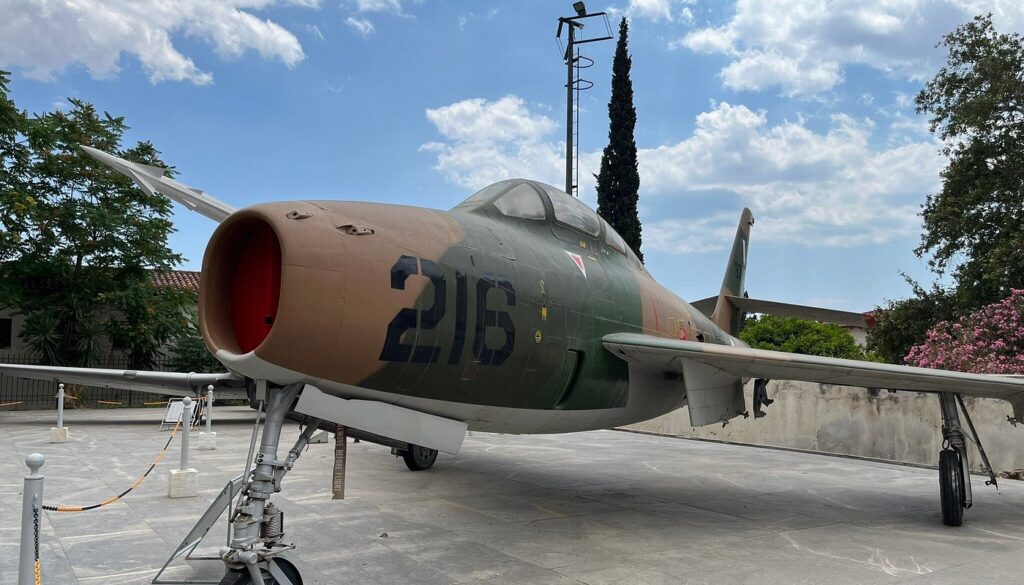
The external spaces features large firearms, aircraft, and Navy exhibits in the museum’s outdoor area.
Transport: Accessible via Evangelismos Metro Station (Line 3) or various buses and trolleys.
Diorama ’40: A visual display of significant moments from 1940 in Greek history.
War Museum
Opening Hours: Open Daily 9:00am-7:00pm
Tickets: General admission: €6.00; Reduced price: €3.00
Phone#: +30 21-0725-2974
Location: 2 Rizari Street, near Syntagma Square
22. Take a Dinner Cruise on the Saronic Gulf
You can enjoy a meal while sailing past coastal landmarks and nearby islands such as Aegina, Poros, and Salamis. These cruises are available year-round, though they are most popular in the summer. Some cruises offer live music or traditional Greek entertainment, enhancing the evening experience.
Check out Athens: Half-Day Sunset Catamaran Cruise: Spend a relaxing afternoon sailing on a modern sailing boat departing from Athens and see a majestic sunset on the Saronic Gulf. Enjoy traditional Greek food and sip on a glass of wine as you sail. https://www.getyourguide.com/athens-l91/athens-riviera-sunset-sailing-cruise-with-free-cocktail-t147096/
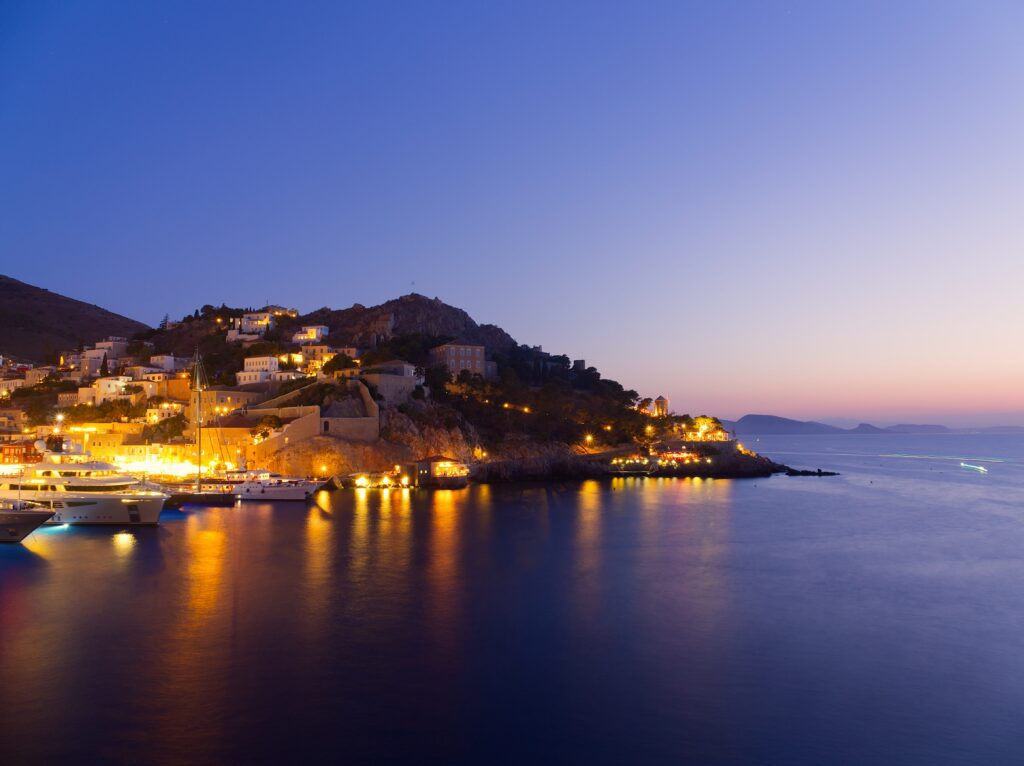
23. Tour the Kerameikos Archaeological Site
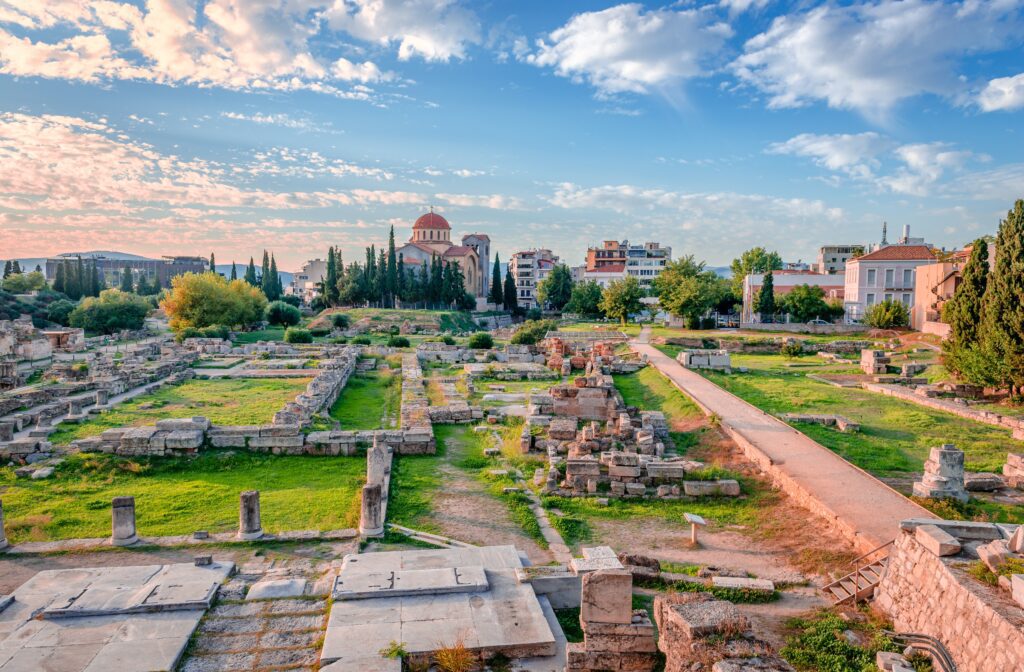
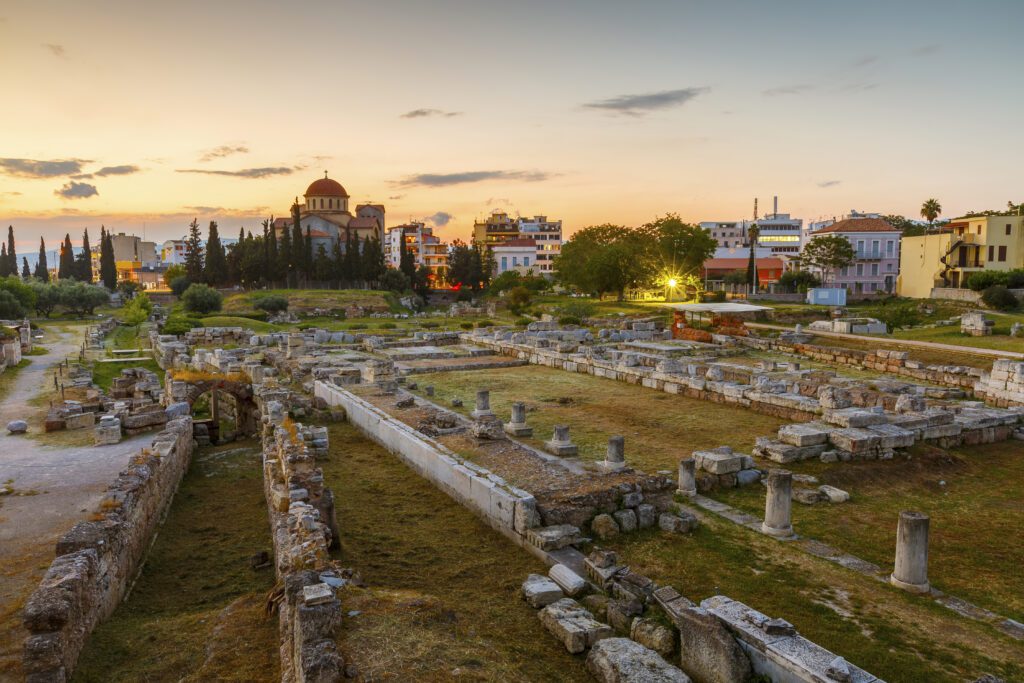
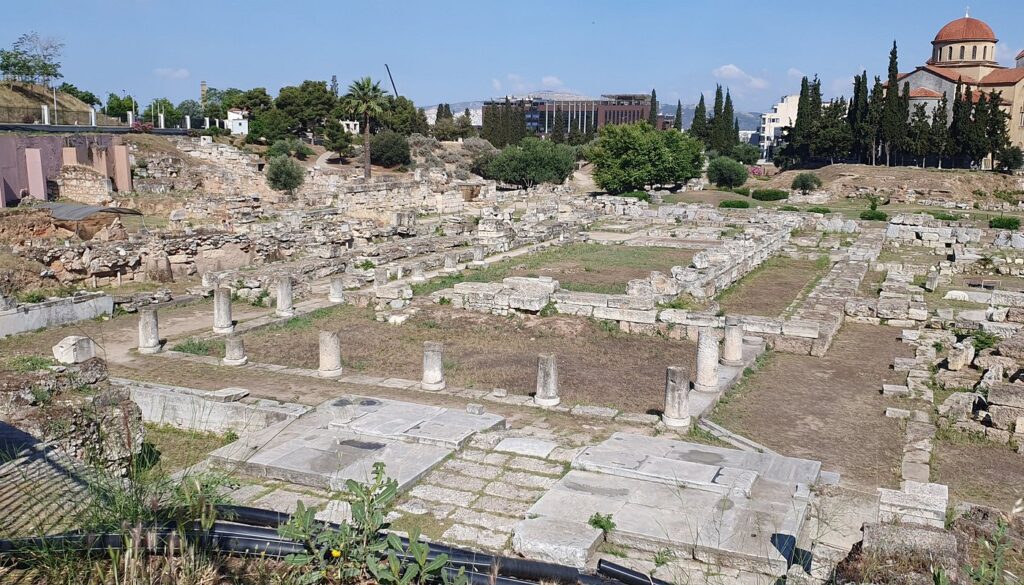
The Kerameikos Archaeological Site is an important and lesser-known ancient sites in Athens. This site was both the cemetery of ancient Athens and home to pottery workshops. It was used continuously as a burial ground from the 9th century B.C. to Roman times.
Two major gates, the Sacred Gate and the Dipylon Gate, are located here.
- Dipylon Gate: Entrance to the city and starting point for the Panathenaic Procession, one of Athens’ most important religious festivals.
- Sacred Gate: Led to the town of Eleusis, home of the Eleusinian Mysteries.
- Pompeion: A significant public building used for the Panathenaic Festival.
History and Significance
Kerameikos gets its name from “keramos,” meaning pottery, due to the many workshops in the area before it became a cemetery. It was also named after the local hero Keramos, son of Dionysus and Ariadne. The site was divided by the Themistoclean walls: the inner part was residential, and the outer part served as the cemetery.
How to Visit
- By Metro: Thissio Station (Green Line), a 5-minute walk.
- By Foot: Easily accessible from Monastiraki Station, about a 10-minute walk.
A small museum on-site displays pottery, sculptures, and other findings from the excavations.
Check out the Athens Sunset Electric Bike Tour!
Kerameikos Archaeological Site
Opening Hours: Open Daily
Tickets: Full: €8, Reduced: €4
Phone#: +30 21-0346-3552
Location: Located at the end of Ermou Street, northwest of the Acropolis
24. Take a Sunset Tour to Lake Vouliagmeni
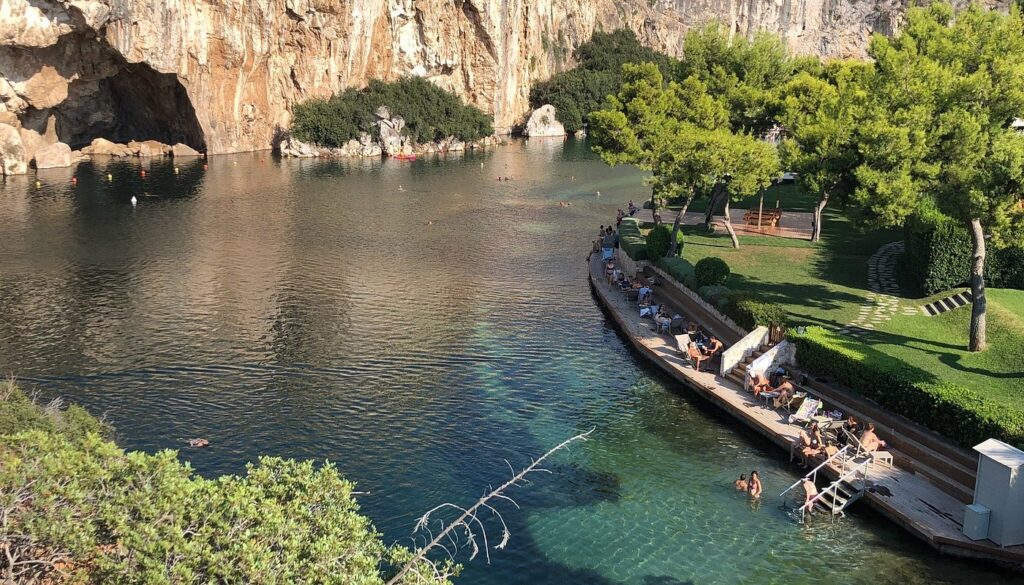
Lake Vouliagmeni is one of the most stunning natural sights in Athens, known for its spectacular beauty and unique geological features. This brackish-water lake offers an unforgettable sunset tour experience, combining nature, history, and relaxation.
Unique Features of Lake Vouliagmeni
Geological Wonder: The lake was originally a large cavern that collapsed following an earthquake. It was formed around 2,000 years ago. The lake connects to the sea through an underground channel, and its depth and full connection to the sea remain undiscovered. The underwater cave extends over 3,000 meters and holds many mysteries.
Thermal Waters: The lake’s waters are always warm (18°C to 29°C), enriched with hydrogen sulfide and offers therapeutic benefits. It’s known for its healing properties, treating ailments such as skin diseases, arthritis, and headaches.
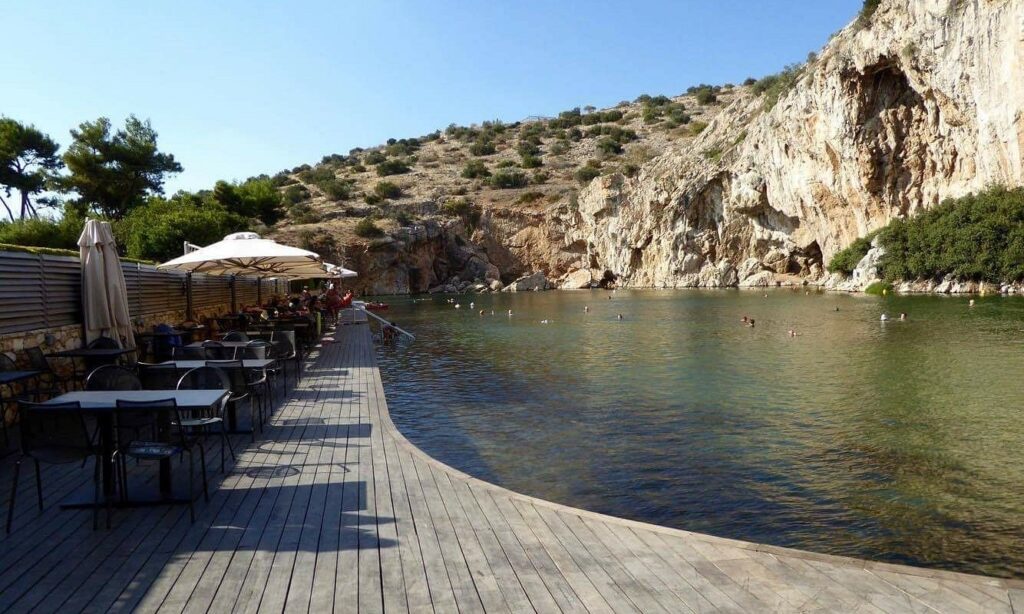
Sunset Experience and Things to Do
A sunset tour to Lake Vouliagmeni allows visitors to relax in its therapeutic waters while enjoying the breathtaking view of the setting sun. As the light fades, the natural beauty of the lake and its surroundings creates a serene and peaceful atmosphere.
- Swimming and Spa: The lake’s mineral-rich waters provide a holistic wellness experience, with services like hydrotherapy available year-round.
- Cave Exploration: Though some of the lake’s underwater tunnels are restricted for safety, the lake still offers a sense of mystery and adventure.
- Dining: Enjoy refreshments or a full meal at the lake’s café-bar-restaurant, with a view of the beautiful landscape.
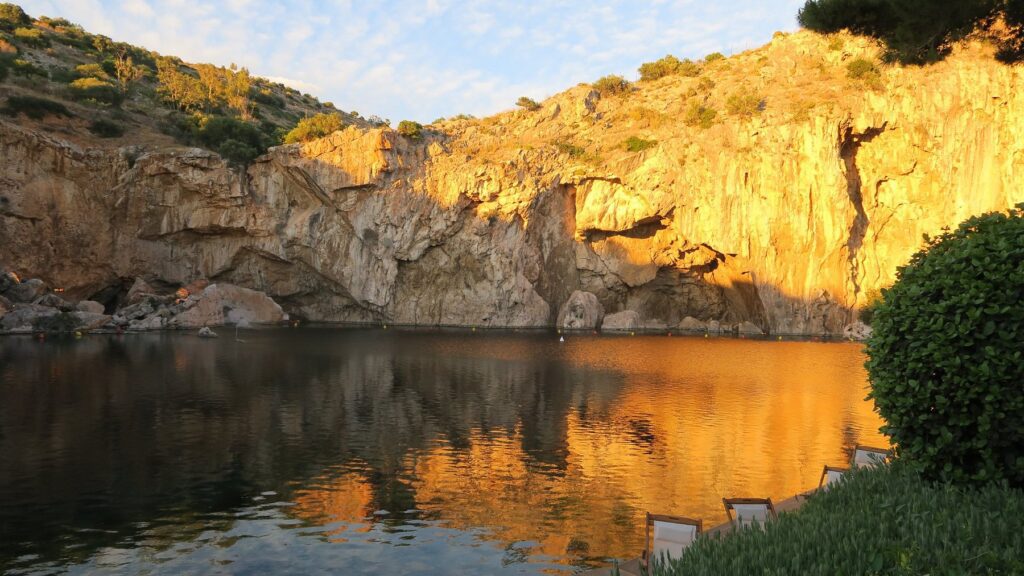
Lake Vouliagmeni
Opening Hours: Open Daily 8:00am-8:00pm
Tickets: €16 on weekdays, €19 on weekends
Location: South of Athens
25. Explore the Monastiraki Flea Market
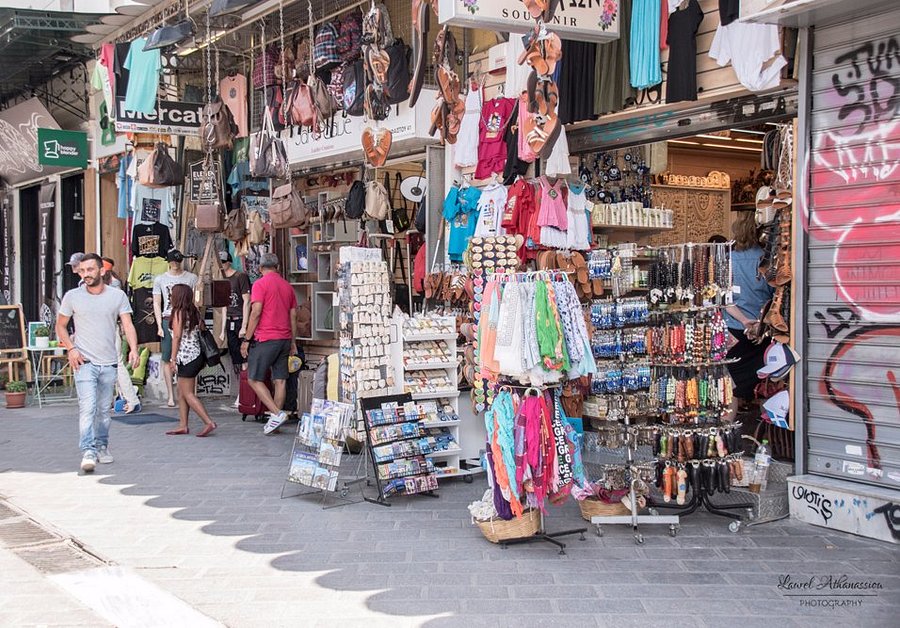
Monastiraki Flea Market offers a dynamic mix of traditional flea market finds and typical tourist shop items. At nighttime, the market still retains its vibrant energy, but the cooler temperatures and soft lighting create a more laid-back ambiance. Street musicians often perform, adding to the lively atmosphere.
On Sundays, the market transforms into a lively scene with vendors setting up tables to sell a range of items from antiques to junk. Weekdays are quieter, with shops focusing on mass-produced souvenirs and tourist trinkets.
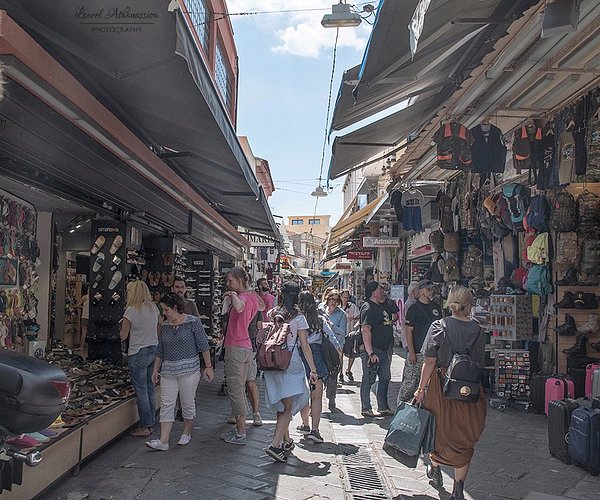
Shopping Highlights
- Handcrafted Goods: Explore ceramics, including hand-painted chests and picture frames, as well as woven and hand-embroidered traditional costumes.
- Antiques and Furniture: Discover vintage antiques and a selection of wooden and lacquered furniture pieces.
- Leather Goods: Enjoy the aroma of fresh leather from various shoe shops and find unique leather-bound accessories.
- Unique Finds: Look for colorful “Flokati” rugs and Greek musical instruments like bouzoukis.
- Local Products: Worry Beads (Authentic and imitation varieties)
- Jewelry: Handmade gold and silver pieces, as well as inexpensive “handmade” jewelry.
Bargaining is expected, so be prepared to haggle for the best deals.
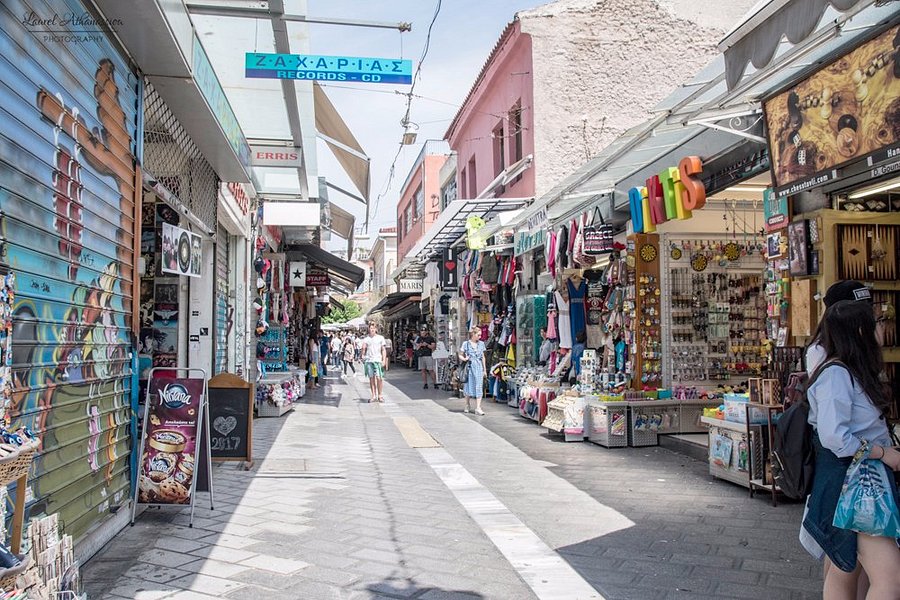
Dining and Drinks
Monastiraki Square and the surrounding streets come alive with various dining options. Many cafes and restaurants stay open into the evening, offering a great opportunity to enjoy local cuisine. Places like Diodos and Poikili Stoa offer seafood and grilled meats, while others provide a selection of mezedes and drinks.
Getting Around
Navigating Monastiraki at night is relatively easy, as the area is well-lit and generally safe. Keep an eye on your belongings, as pickpockets can be active in crowded areas even at night.
Entrance is free. It’s easily accessible via the green metro line 1 and blue line 3.
Monastiraki Flea Market
Opening Hours: Open Daily 10:00am-10:00pm
Tickets: Free
Location: Ifestou
26. Go Night Shopping on Ermou Street
Ermou Street is one of Athens’ most famous shopping destinations, located between Syntagma Square and Monastirak. This pedestrian-friendly street is lined with major international brands and smaller, affordable local shops. At night, the atmosphere becomes even more vibrant with illuminated storefronts.
Ermou Street offers a wide variety of shops for all tastes and budgets. Many shops offer significant discounts, often ranging from 30% to 50% off. You can explore stylish clothing stores, grab a late-night snack, or pick up unique souvenirs. Wear comfortable shoes and spare plenty of time to walk around and do some shopping.
Getting to Ermou Street is easy.
- Syntagma Station: Take the Red Line (Line 2) or Blue Line (Line 3).
- Monastiraki Station: Accessible by Green Line (Line 1) and Blue Line (Line 3).

Ermou Street
Operating Hours: 9:00am-9:00pm (Monday-Friday), 10:00am-6:00pm (Saturday), Souvenir shops are closed on Sundays
Tickets: Free
Location: Between the Monastiraki Square and the Syntagma Square
27. Head to Areopagus Hill
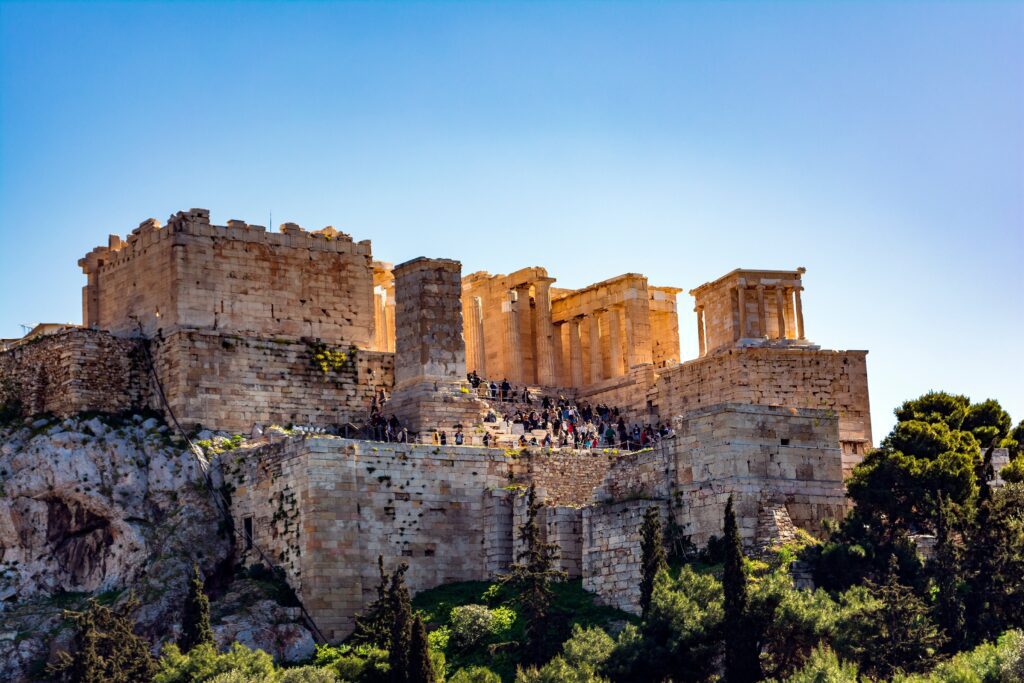
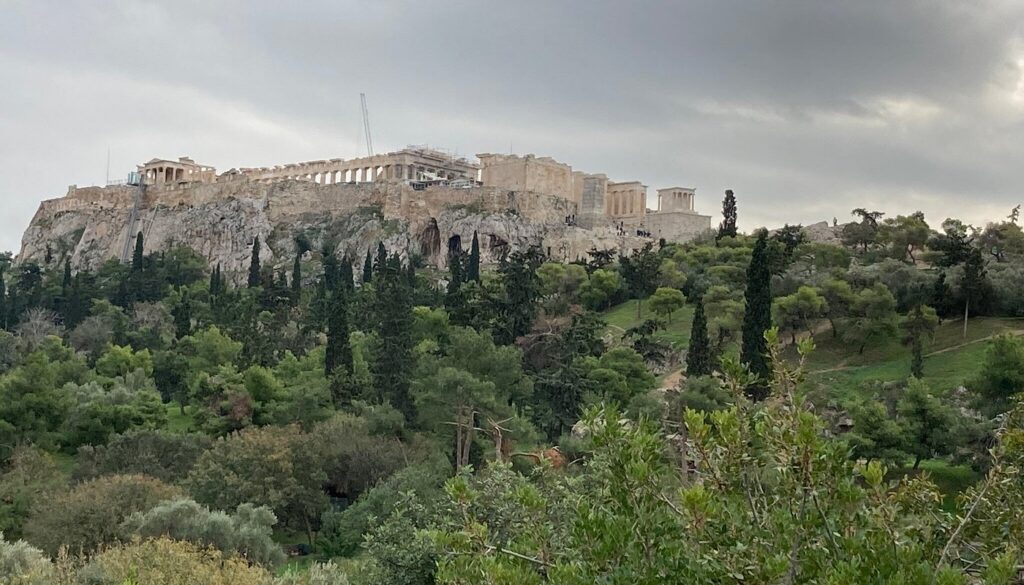
The Areopagus Hill, also known as Aries Hill, is a 125-yard-high rocky hill in the heart of Athens. You can enjoy incredible views of the Acropolis, Agora, Lycabettus Hill, and the Athenian coast. It’s also a beautiful spot to catch the sunset.
History of Areopagus Hill
Once dedicated to Ares, the god of war, Areopagus Hill was the meeting place of Athens’ Supreme Council. Legends say the apostle Paul preached on the hill in A.D. 51, converting Dionysus, and it’s linked to the legendary Marathon runner who delivered news of victory against the Persians. The hill is also home to the remains of an early Christian church.
How Do I Get to Areopagus Hill?
Take Metro lines 1 or 3 to “Monastiraki,” and from there, it’s just a 7-minute walk. If you’re arriving by cruise from Piraeus, catch the M1 line for a 16-minute ride to Monastiraki.
Areopagus Hill
Operating Hours: Open Daily 24/7
Tickets: Free
Location: Theorias, Near the Acropolis
28. View Athens from Mount Lycabettus
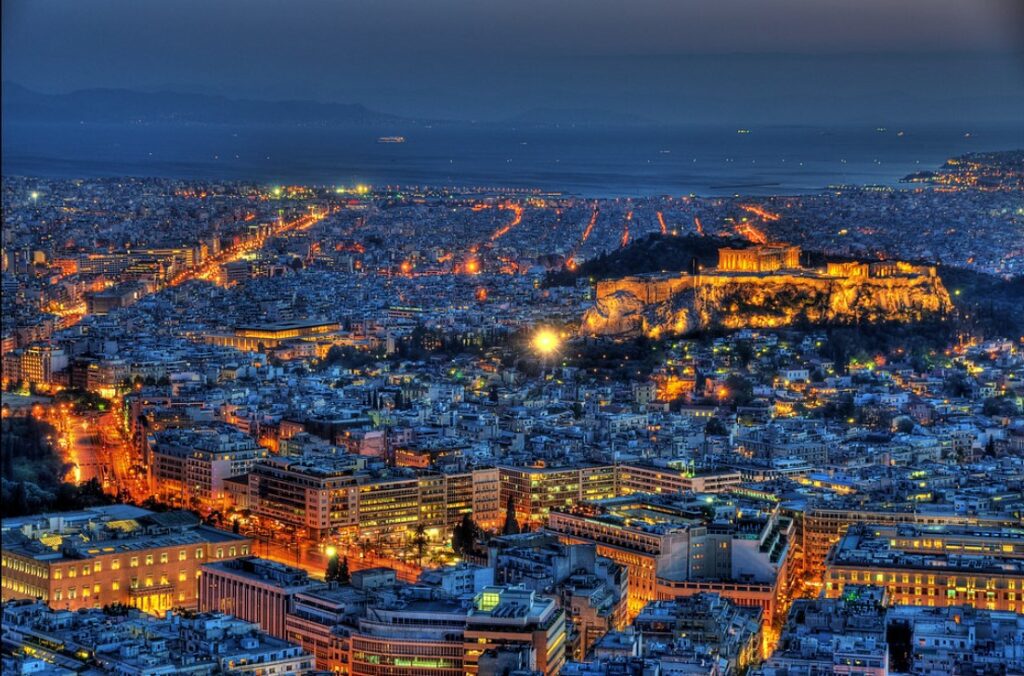
Climbing Mount Lycabettus offers one of the best panoramic views of Athens. Rising around 908 feet above sea level, it’s the highest point in the city. While climbing the hill can be a challenge, especially in the summer, the rewards at the summit are worth the effort.
Sunset Views at the Summit
Mount Lycabettus is best visited at sunset. From the summit, you’ll enjoy a panoramic view of Athens, with the Acropolis, Temple of Olympian Zeus, and Panathenaic Stadium all illuminated.
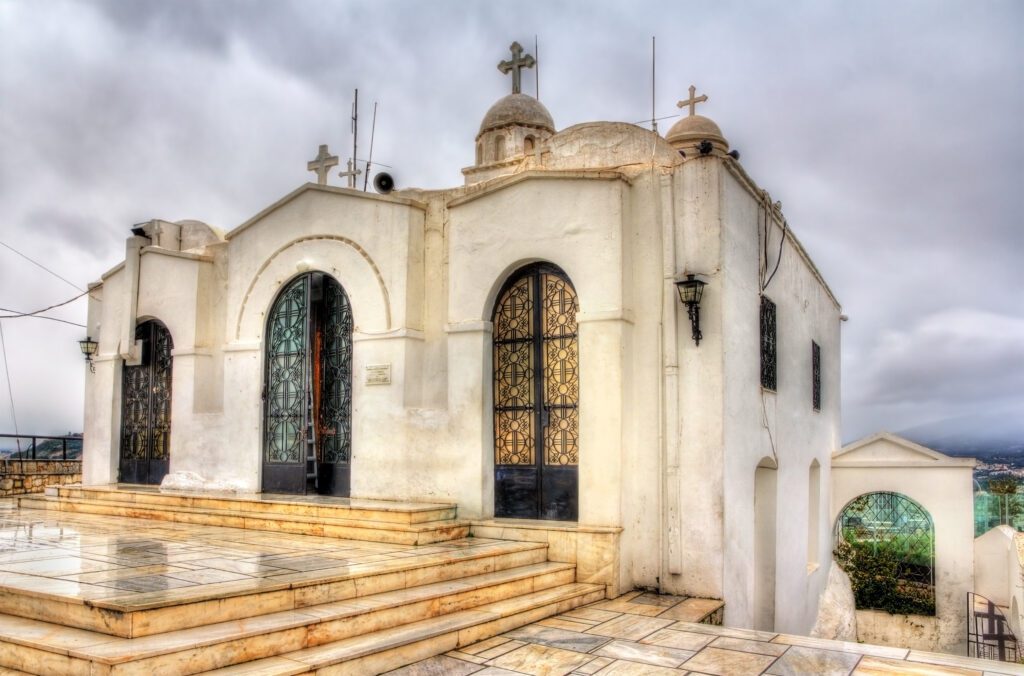
St. George’s Chapel
The whitewashed Agios Georgios (St. George) Chapel, perched on the peak, is a striking sight. It’s open to visitors, and its viewing platform offers sprawling vistas of Athens.
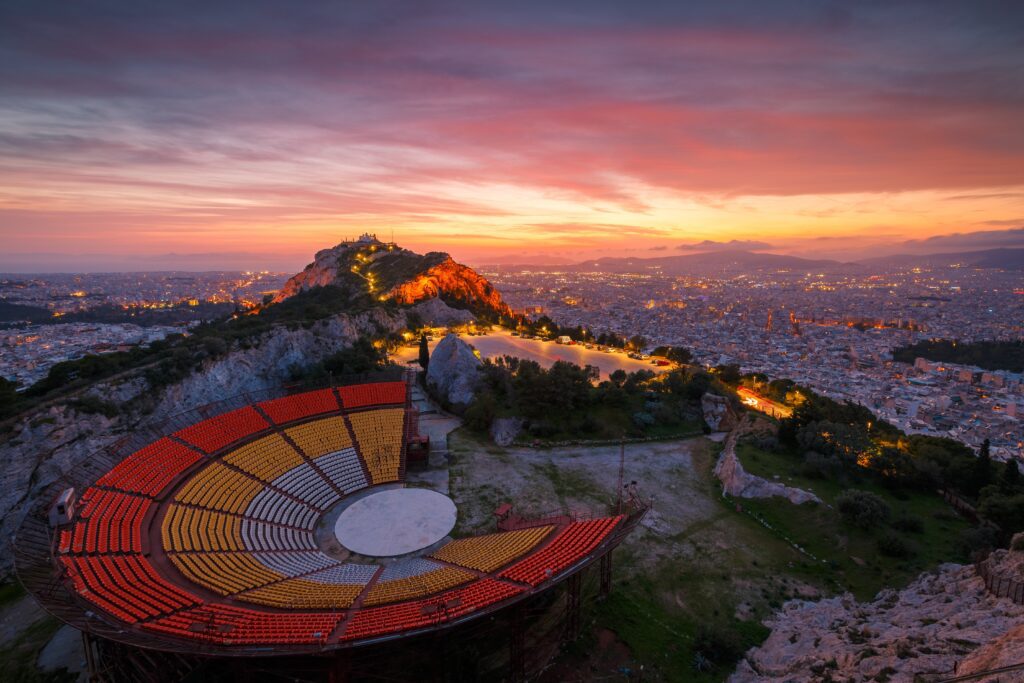
The Lycabettus Theatre
For those interested in entertainment, check out the events at the open-air Lycabettus Theatre, located on the hill. It’s a fantastic venue to experience live performances against the backdrop of the Athens skyline.
Ways to Reach the Top
- Walking: A scenic yet steep 30–45 minute hike up a circular trail with great views. Bring water and wear comfortable shoes, especially in the summer heat.
- Cable Car (funicular railway): A quick, easy ride from Aristippou Street in Kolonaki. It runs through a tunnel with no view, but it’s convenient for those avoiding the hike. Operates daily until midnight.
There are several options for dining. For casual bites, there’s a café open for breakfast and lunch. For dining, Orizontes offers an upscale Mediterranean menu with stunning panoramic views of Athens.
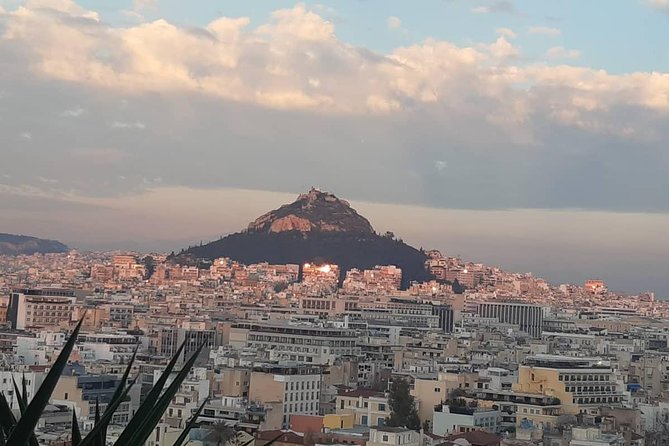
Check out the Athens By Night Private Tour
Mount Lycabettus
Funicular Operating Hours: Open Daily 9:30am-2:30am
Tickets: Free, Funicular Ticket: 10€ per person roundtrip
Phone #: +30 210-721-0701
Location: Located in the suburb of Kolonaki
Is Athens Safe At Night?
Yes, Athens is safe at night, whether you’re a family, couple, male or female, even for solo travelers.
As with any city, there are areas that are safer and more secure than others so you may prefer to stick to busier or more lively districts like Plaka as you will feel more relaxed but there isn’t too much to worry about in the quieter areas.
If you’re walking alone at night then make sure to be aware of your surroundings and stick to well-lit areas, with valuables close to the front of your body. These are just standard travel considerations that I’d recommend anywhere.
Greece has a far lower crime rate than many other European countries but theft can still happen, especially at night so it’s always wise to stay alert.
Female travelers are typically at no higher risk than their male counterparts but may on occasion receive an unwanted wolf whistle or comment. My advice is to just walk on by, cross the street when you can and have your phone close at hand should you feel unsafe.
Best Time to Visit Athens
Where to Stay in Athens
Budget Accommodation – Plaka Hotel
Plaka hotel offers breathtaking views of the Acropolis and across Athens. It is just 5 minutes walk from Syntagma Square and 2 blocks from Monastiraki Metro Station. A rich American breakfast buffet and a Greek breakfast are served each morning between 07:00 and 10:00. The rooms include a minibar, safe, Wi-Fi, and air conditioning. Most rooms have balcony with views to the Acropolis, Plaka or Lycabetus hill.
➡️Click here to book your stay at Plaka Hotel!
Mid-range Accommodation – Acropolis View Hotel
Acropolis View Hotel offers spectacular Parthenon views. The New Acropolis Museum and the metro station are just 650 metres away. All air-conditioned rooms at the Acropolis View are equipped with free Wi-Fi access, a satellite TV and mini bar. Some rooms include balconies with views of the Acropolis or Filopappou Hill.
➡️Click here to book your stay at Acropolis View Hotel!
Luxury Accommodation – Sofitel Hotel Airport
The 5-star Sofitel Hotel Airport is conveniently located 50 metres from Athens International Airport. It offers a spa and an indoor heated pool with views over the airport. Wellness options include a sauna, massage and facial treatments. Sofitel Athens Airport is just 28 km from Athens city centre and has excellent public transport links.
➡️Click here to book your stay at Sofitel Hotel Airport!
FAQs: Things to do in Athens at Night
Below are some common questions about “Things to do in Athens at Night” along with my answers to each question.
Can you walk around Athens at night?
Yes! Athens is a lovely city to explore at night and there are very few safety concerns. The city is known to party into the early morning hours and the streets are never empty of tourists. During the summer months, many attractions remain open later and you can extend your activities into the evening.

Does Athens have a nightlife?
Yes! Athens has a great nightlife scene and a huge range of clubs and bars to explore. Whether you’re looking for an all-night rave or prefer a quiet evening sipping cocktails with live music, you’ll find what you’re looking for in Athens.
How do you spend an evening in Athens?
There are plenty of great ways to spend an evening in Athens. You could take a guided tour, try a new sport, enjoy the sunset on a terrace or explore the lively nightlife in the city.
Final Thoughts
Athens at night is full of amazing things to see and do. Whether you’re soaking in the stunning views from the Acropolis or enjoying the lively atmosphere in Plaka, the city has something for everyone. As you explore these 28 amazing activities, you’ll discover the magic of Athens after dark.
So grab your friends or family, and get ready to make unforgettable memories in this incredible city!
Don’t forget to check out my blog Things to Do In Thessaloniki!