How to Visit the Acropolis in 2026: Everything You Need to Know

Planning to visit the Acropolis? Here’s everything you need to know!
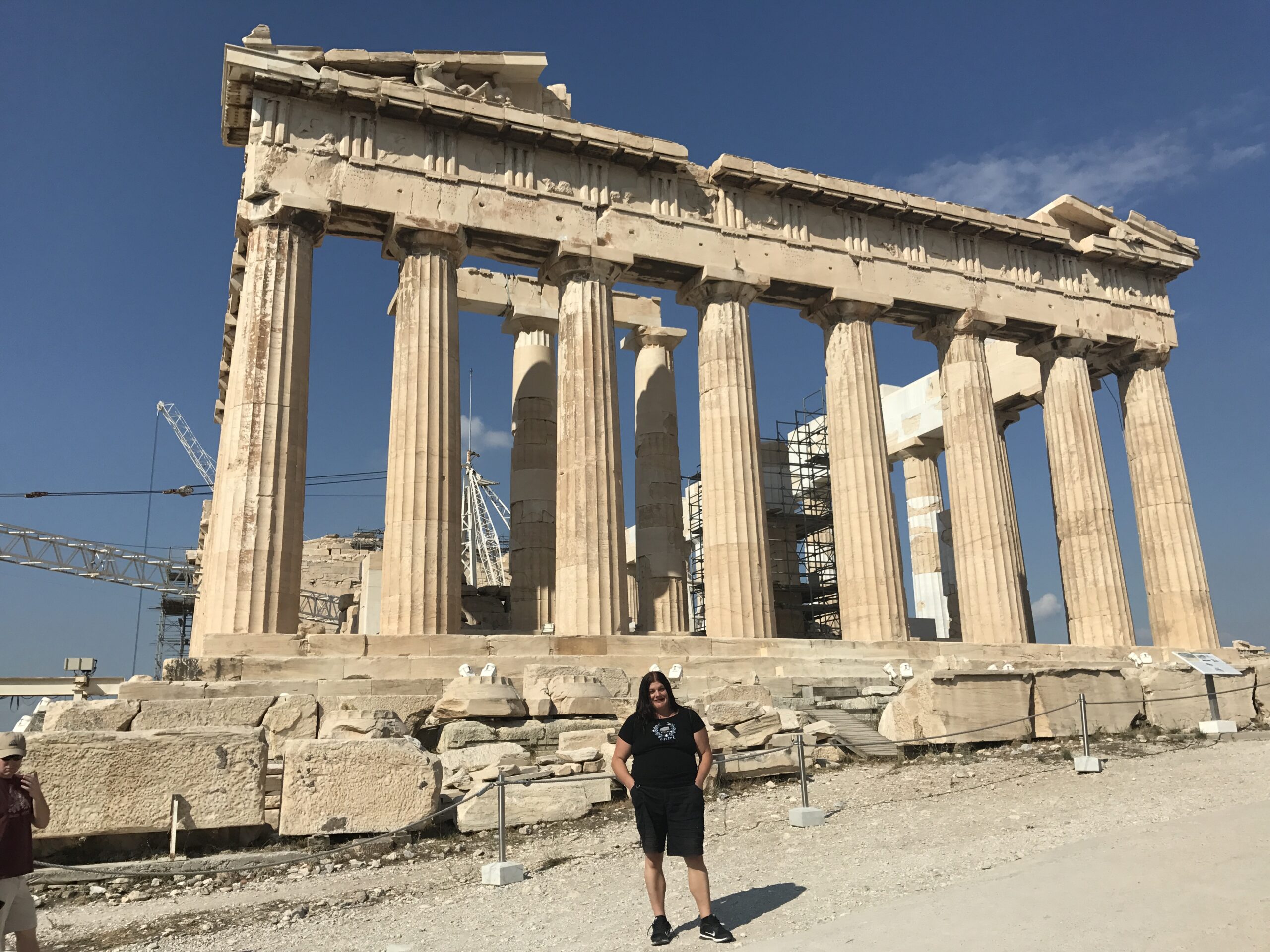
I am a Greek-American. I have wanted to visit the Acropolis my entire life. So on my first trip to Greece in 2017 it was the first place I went.
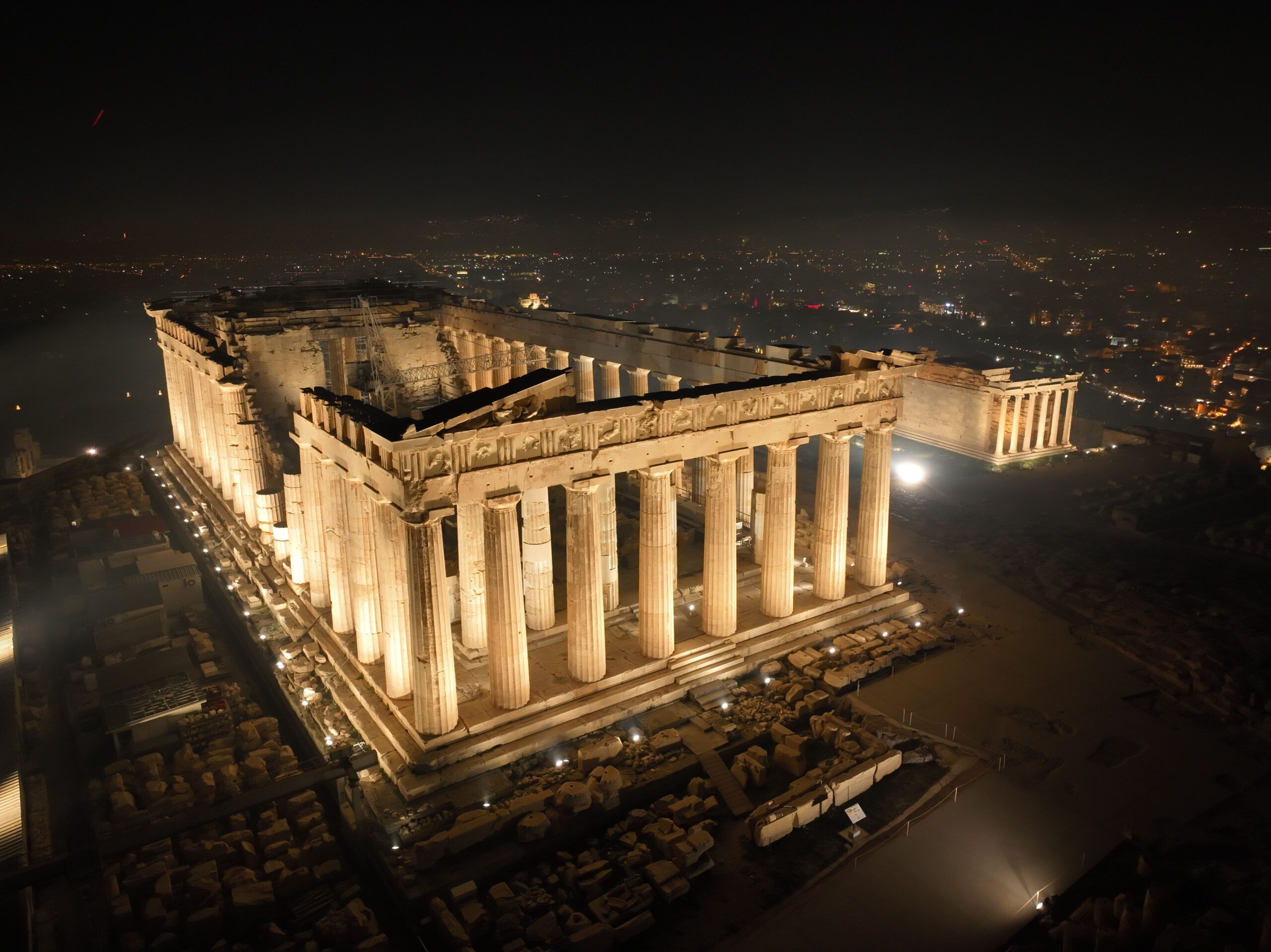
The Acropolis is an ancient citadel on a hill in Athens. It consists of several buildings, the most famous of which is the Parthenon. Over 1 million people visit every year. When I walked into the ruins of this ancient wonder, I felt like I was being transported back in time! I imagined people dressed in white robes worshipping Athena, the city’s patron goddess.
In this post I will tell you how to visit the Acropolis and all about its amazing history!


Plan Your Trip With My Favorite Resources
– Best accommodation site: Booking.com
– Book day tours here: Viator.com
– Purchase travel insurance here: SafetyWing
History of the Acropolis
The word Acropolis means “city on a hill” in Greek. (“Acro” means high and “Polis” means city). It is a high, strong area built to protect the local population from enemies.
When most people hear the word “acropolis” they think of the acropolis in Athens. However, in ancient Greece most cities had an Acropolis. During an attack or war, everyone living in the city below would run up to the acropolis to stay safe. Because it was built on a hill, it was easier to defend.
The early inhabitants of Athens initially settled on the Acropolis due to its natural defenses and the abundant water supply at its base. As the population grew, they expanded down the slopes and beyond. However, the Acropolis remained a sacred site with several important sanctuaries dedicated to their gods, especially Athena.
By the 8th century B.C., Athenians constructed the Hekatompedon, an early temple on the Acropolis that likely stood where the Parthenon was later built. In the 6th century B.C., a larger temple housing a wooden statue of Athena Polias was erected.

The Golden Age of Athens
The 5th century B.C. – known as the Golden Age of Athens – was marked by significant cultural and political developments.
Under Pericles, Athens saw the construction of magnificent new structures on the Acropolis. This era also saw the rise of democracy, with citizens actively participating in governance.
Prominent figures such as Socrates, Herodotus, and Thucydides, Aeschylus, and Sophocles contributed to the city’s legacy of philosophy, history, and drama. This solidified Athens’ status as a cultural and intellectual hub.

Acropolis Over Time
The Acropolis has suffered extensive damage over time. After ancient times ended, the site saw numerous transformations.
During the Byzantine era, the Parthenon, the Propylaea, and the Erechtheion was converted into churches. Under Frankish rule and later Turkish occupation, further alterations and damage occurred, including the use of the Parthenon as a mosque and the storage of gunpowder.
The worst damage occurred in 1687 when Venetian forces bombed the Parthenon, causing severe destruction. In 1799, while Greece was under Ottoman rule, Lord Elgin, a Scottish noble, obtained permission to study ancient sculptures. Instead, he bribed officials and took the Parthenon Marbles to Britain, and sold to the government. Today, these marbles are in the British Museum, and Greece is working to have them returned.
Restoration efforts began after Greece’s liberation from Turkish rule and continue today. The Parthenon has been a UNESCO World Heritage Site since 1987.

The Goddess Athena
Athena, the goddess of wisdom and war, was a key figure in Greek mythology. She was known for her wisdom, courage, and strategic skill in warfare. Her symbols include owls, olive trees, and snakes.
The most common names of the goddess Athena are Pallas, Glafkopis, Ergane, Promachos, Polias, and Parthenos.
Athena wore a protective cloak called an Aigis, which is decorated with the head of Medusa. It featured the Gorgoneion, a symbol meant to ward off evil.

Birth from Zeus’ Head
Zeus swallowed his first wife, Metis, to prevent a prophesied son who would surpass him. Zeus himself gave birth to Athena from his own head. Athena was born fully grown and armed from Zeus’ head, making her his favorite daughter and goddess of wisdom and war.
Patron of Athens
Athena was the patron goddess of Athens, which was named after her. She won the city’s patronage by giving it the olive tree, symbolizing peace and prosperity. The Parthenon on the Acropolis was built in her honor.
Panathenaea Festival
The Panathenaea was a major festival held in honor of Athena in Athens. It was held annually, with a more elaborate version, the Greater Panathenaea, celebrated every four years.
The festival included athletic competitions, musical contests, and poetry readings. The festival also featured a grand procession where citizens offered a specially woven robe (peplos) to Athena.
The procession concluded with sacrifices of animals at the Acropolis. The meat from the sacrifices was shared in a communal feast, celebrating the city’s unity and prosperity.

Visiting the Acropolis: Must See Sites
The Acropolis is home to some of the most iconic structures in ancient Greek history. Each structure has its own unique purpose and design. It reflects the architectural brilliance and cultural significance of the period.
In addition, the space between the temples was filled with statues and inscriptions, all offered to the goddess Athena by faithful worshippers. Many of these can now be seen in the new Acropolis Museum.
1. The Parthenon
The Parthenon is an ancient Greek temple on the Acropolis, built between 447 and 438 BC. It was dedicated to Athena, the city’s patron goddess. The temple was designed by architects Ictinus and Callicrates, and its sculptures were overseen by the artist Phidias.
The Parthenon also served as the treasury for the Delian League, an alliance of Greek city-states led by Athens. It has been on the list of UNESCO world cultural heritage since September 1987.
Your Acropolis tickets include access to Parthenon.

Design and Structure
The timeless monument is a prime example of Doric architecture and has a single row of columns around it. There are eight columns at each end and seventeen along the sides. Each column is 10.5 meters tall and made of white Pentelic marble.
The Parthenon is built using post and lintel construction. It features a colonnade inside that forms the Greek letter Pi (Π).
The Parthenon is adorned with intricate sculptures, including metopes, friezes, and pediments depicting mythological scenes.

Metopes
The Parthenon has 92 carved metopes on its exterior walls. Metopes are square panels between triglyphs, often depicting mythical battles. On the west side, they show Greeks fighting Amazons; on the east, gods battling giants. The north side depicts the Trojan War, and the south side shows the battle between Lapiths and centaurs.

Parthenon Frieze
The Parthenon frieze is a horizontal band running along the temple’s inner chamber. It features slightly raised sculptures, carved in bas-relief. The frieze likely depicts the Panathenaic procession, a ceremony honoring Athena. The procession shows Athenians offering sacrifices and a new robe to the goddess.

Parthenon Pediments
The Parthenon has two pediments, one on each end of the temple. The east pediment shows Athena’s birth, witnessed by other gods and goddesses. The west pediment depicts the battle between Athena and Poseidon for control of Athens. They’re made of white marble and capture intricate details of the human body.

Athena Parthenos
Athena Parthenos was a massive statue created by Phidias, housed in the Parthenon. It stood about 12 meters tall and was made of gold and ivory. The statue depicted Athena after a victory, holding a spear and the goddess of victory, Nike. Though lost, its design is known from coins and engravings.

➡️Check out the Acropolis and Parthenon Guided Walking Tour
2. The Erechtheion or Temple of Athena Polias
The Erechtheion (or Erechtheum) is an ancient Greek temple to house Athena’s wooden cult statue and serve other religious functions. The temple honored multiple deities and heroes, including Athena, Poseidon, Hephaestus, Cecrops, and Erechtheus. It is named after Erechtheus, king of Athens.
It was built between 420 and 406 BC. The Erechtheion was constructed at the spot where Athena and Poseidon were believed to have contested for the city’s patronage. Next to the temple grew Athena’s sacred olive tree, a symbol of peace and prosperity.

Architectural Highlights
- Caryatids: The temple’s south side is famous for the six Caryatids-sculpted female figures that serve as columns. They’re known for intricate details and bold stance.
- Marble: Originally white Pentelic marble, now with a honey color due to iron oxidation
- Ionic Frieze: Originally 63 cm high, damaged beyond recognition
- Statue of Athena: A seven-meter-high bronze statue of Athena, created by Phidias, was a prominent feature of the temple.

Historical Changes
The Erechtheion has seen significant damage and repurposing over the centuries. During Roman general Sulla’s siege in the 1st century BCE, the temple was burned. It later served as a church, a bishop’s palace, and an Ottoman harem.
Between 1801 and 1812, Lord Elgin removed sculptures, including caryatids, taking them to England. Additionally, the north porch ceiling was blown up during the Greek War of Independence.
Restoration efforts have had mixed results. Nikolaos Balanos’s restoration work in the early 1900s caused further damage with corrosive iron and poorly executed repairs. More recent restoration between 1979 and 1987 focused on correcting these issues, including adding new blocks to the north wall.
The original caryatids were removed in 1978 and replaced with copies, while the originals were placed in the Acropolis Museum and cleaned using pulse laser ablation.

3. The Odeon of Herodes Atticus
Odeon of Herodes Atticus is located at the southwest slope of the Acropolis. It is a stunning open-air theatre known for hosting world-class performances. Odeon of Herodes Atticus was described by Pausanias in the 2nd century AD as “the finest building of its type.”
It continues to host performances and events, blending ancient history with modern cultural experiences. While the interior is not open to daily visitors, you can still admire its beauty from the Acropolis.

Construction and Design
The Odeon was built in 160-174 AD by Herodes Atticus, in memory of his wife, Regilla. It was constructed using Pentelic marble, known for its fine grain and golden hue. It features Roman arches, three-story stage, and a semi-circular marble orchestra.
The Odeon originally featured a wooden roof, which has not been restored. It has a seating capacity for approx 5,000 spectators.

History and Restoration
The Odeon was damaged in 268 AD and during Ottoman occupation. During 1950s, the Odeon was fully reconstructed, carefully preserving original elements while using modern materials for durability.

➡️Check out Athens: Acropolis and Acropolis Museum Private Guided Tour
4. The Stoa of Eumenes
The Stoa of Eumenes was a covered walkway or portico on the Acropolis of Athens. It served both as a shelter for theatergoers and as a storage space for theater props.
The Stoa of Eumenes is located on the southern slope of the Acropolis, facing the paved street of Dionysiou Areopagitou.

History
It was built in the 4th century BC by Eumenes II, the king of Pergamon. The Stoa served as a grand entrance for visitors to the nearby Theater of Dionysus and the Odeon of Herodes Atticus. It provided a shaded area for people to walk and gather.
In the 2nd century AD, a staircase connected the western end of the Stoa of Eumenes to the Odeon of Herodes Atticus. The stoa remained in use until the 3rd century AD, after which it was destroyed. By the 13th century, the northern retaining wall was incorporated into the Rizokastro Wall surrounding the Acropolis.
The ruins of the Stoa of Eumenes were uncovered by the Archaeological Society of Athens in 1877-78

Architectural Features
The structure stretches approximately 535 feet in length and stands about 52 feet high. It was supported by columns and had a roof that protected visitors from the elements. The stoa featured 64 Doric columns on its exterior and 32 Pergamene columns on the interior.
The stoa was constructed mainly from island marble and the design closely resembles that of the Stoa of Attalos in the Ancient Agora of Athens.
5. The Theatre of Dionysus
The Theatre of Dionysus, built into the southern slopes of the Acropolis in Athens, is the world’s oldest known theater.
The theater was the site of the annual City Dionysia festival, where playwrights like Aeschylus, Sophocles, Euripides, and Aristophanes presented their works. This festival was pivotal in the evolution of Greek drama.

Construction and Design
The Theatre of Dionysus was established in the 6th century BCE. It was initially a wooden structure but was reconstructed in stone around 350 BCE. The design included a circular orchestra and a stone skene.
The theater had a semi-circular seating area (theatron) that could hold about 17,000 spectators. The stage (skene) and performance area (orchestra) evolved over time, incorporating tiered stone seats and elaborate front row thrones.

Later History
The theater underwent several renovations and additions, including a Roman stage building with elaborate decorations. During Emperor Hadrian’s rule, the theater was further embellished with statues and inscriptions.
During the Byzantine and Ottoman Periods, the theater faced deterioration and repurposing. It was integrated into a Byzantine basilica and suffered damage during various invasions. The theater was rediscovered in the late 19th century.
6. The Propylaea
The Propylaea, a grand entrance to the Acropolis of Athens, was built after the completion of the Parthenon. It was designed by the architect Mnesikles in the 5th century BCE but was never fully completed due to the Peloponnesian War.

Architecture and Design
The Propylaea was constructed between 437-432 BCE and was part of Pericles’ ambitious building program. It was constructed from Pentelic marble.
The monumental gateway has a central section flanked by two wings. It features Doric columns on both facades and a unique design adapted to the sloping terrain of the Acropolis. The central section had six Doric columns on both the west and east facades, with five doors in between.
History
The North Wing, known as the Pinakotheke, housed an art gallery with works by famous artists such as Polygnotus. It was the world’s first gallery (pinakotheke in Greek). The South Wing had a facade of Doric columns and provided access to the Temple of Athena Nike.
It was converted into churches during the Early Christian period and later dedicated to the Taxiarches in the 10th century. The Propylaea served as the residence for Frankish dukes and a garrison during the Ottoman era.
A significant explosion in 1640 caused severe damage. After Greece’s War of Independence, the medieval and Ottoman additions were removed, and the site was excavated.
7. The Temple of Athena Nike
Next to the Propylea is a small, beautiful Ionic temple, the Temple of Athena Nike, dedicated to Nike Aptera. It was built so that Nike would never leave the city. Athena Nike symbolizes the goddess of victory and was closely associated with Athena, the patron deity of Athens.
In the Roman era, it was known as the Temple of Nike. The wingless statue was believed to symbolize the Athenians taking Nike’s wings to ensure she remained in the city. The construction of the temple began in 427 BCE, led by the architect Callicatres.

Features and Decorations
- Interior: The nave housed a statue of Athena Nike holding a helmet and a pomegranate. The pomegranate was a symbol of the gods of the underworld.
- Frieze: The temple featured a relief-carved frieze with scenes of battle and victory. The east side depicted gods around Zeus, while other sides showed Greeks in battle, including the victory at Marathon in 490 BCE.
- Pediments: The west pediment likely depicted the Gigantomachy (victory over Giants), and the east pediment the Amazonomachy (victory over Amazons).
- Parapet: Around 410 BCE, a marble parapet with reliefs was added for visitor safety. These reliefs depicted Athena resting after victories, winged Nikes leading sacrifices, and decorating victory trophies.

8. Asclepion
The Asclepion on the South slope of the Acropolis of Athens was a sanctuary dedicated to Asclepius, the Greek god of medicine. It was founded at the end of the 5th century BCE by Telemachus, who brought the cult from Epidaurus. The site was chosen for its small spring, essential for patient cleansing.

Asclepion Structure
The sanctuary featured a small temple dedicated to Asclepius and two stoas. The Doric, two-storied stoa served as an infirmary and was known as the enkoimeterion, where patients slept hoping to receive divine healing advice in their dreams. A smaller Ionic stoa, located to the west, included four rooms for visitors’ accommodation.

Healing Practices at Asclepion
Patients at the Asclepion practiced “enkoimesis” or temple sleep. They would sleep in the sanctuary, expecting Asclepius to visit them in dreams with healing guidance. Preliminary purification through baths and a specific diet was required before admission.
Decline and Replacement
The sanctuary was destroyed by the Heruli in 267 CE and later replaced by a Christian basilica dedicated to Saints Anargyri, protectors of health.

9. Sanctuary of Artemis Brauronia
Brauronion was dedicated to goddess Artemis, patroness of women in labor. It was probably a branch of the big sanctuary at Brauron Attica which formed the Greek letter Pi (П). It was established around the mid-6th century BCE by the Athenian tyrant Peisistratus, who hailed from Brauron.
The sanctuary was built on the southeastern slope of the Acropolis and consisted of a sacred enclosure with a prominent stoa featuring two closed wings at its ends. Although no temple remains have been preserved, an over-life-size marble head of a cult statue suggests that a temple might have existed.

10. Chalkotheke
The Chalkotheke was a treasury where the bronze offerings to goddess Athena were kept. It was constructed in the late 5th or early 4th century BCE. Its primary purpose was to house metal objects, including weapons and armor. The name “Chalkotheke” translates to “bronze store,” reflecting its function of safeguarding valuable metal items dedicated to Athena.
Architectural Features
The Chalkotheke featured a rather simple architectural style, with the exception of its monumental Doric portico. This portico was added to the building during the early 4th century BCE. The building itself was approximately 140 feet long and 45 feet wide. Its location was strategically placed between the Parthenon and the Brauronion, in front of the Propylaea.

11. Sanctuary of Zeus Polieus
The Sanctuary of Zeus Polieus was dedicated to Zeus Polieus, the protector of the city of Athens. Established around 500 BCE on the Acropolis, this walled open-air sanctuary was situated to the east of the Erechtheion.
Zeus Polieus, the supreme deity in Greek mythology, was the youngest son of Kronos and Rhea, who survived his father’s attempts to devour his children. His role as the city’s protector, although significant, was not as central as his daughter Athena’s.

Architectural Features
Little remains of the Sanctuary of Zeus Polieus today. The site’s plan was trapezoidal, with various entrances identified through rock cuttings on the Acropolis.
The sanctuary featured an altar for sacrifices, a sacrifice table, and a stable known as the Bukoleion, where oxen destined for sacrifice were kept. The main entrance of the sanctuary had a pediment, marking its significance.
Acropolis Museum
The Acropolis Museum in Athens displays artifacts from the Acropolis site, including sculptures and pottery from the Archaic to Roman periods. The museum was officially opened to the public on June 20, 2009. Its modern design by Bernard Tschumi enhances the historical exhibits.

Acropolis Museum Exhibits
The Acropolis Museum is divided into three main floors and two intermediate levels. The Museum’s exhibits are organized across four levels:
- Building Base (The Archaeological Excavation): The Acropolis Museum integrates an ancient Athenian neighborhood into its design, showcasing daily life from the 4th millennium BC to the 12th century AD. Located on the Acropolis Rock’s south slope, it includes roads, houses, baths, workshops, and tombs.
- Ground Floor: Displays artifacts from the sanctuaries and the settlements that evolved on the slopes of the Acropolis, spanning all historical periods.
- First Floor: Follows a circular path, showcasing the history of the Acropolis summit from the 2nd millennium BC through the end of antiquity.
- Third Floor: Features the sculptural decorations of the Parthenon, the Acropolis’s largest and most significant temple.

Museum Highlights
- Parthenon Frieze: A continuous sculpted band depicting the Panathenaic procession. It’s a masterpiece of classical Greek art.
- Caryatids of the Erechtheion: Sculpted female figures that served as columns for the Erechtheion temple.
- Moschophoros (Calf Bearer): Early Greek statue of a man carrying a calf on his shoulders as a religious offering.
- Kritios Boy: Early Classical statue of a young athlete; marks realism in Greek sculpture.
- Sandalbinder: The sculpture depicts the goddess Nike (Victory) in a graceful pose, bending down to adjust her sandal.

Acropolis Museum
Winter Season Opening Hours: Monday – Thursday (9:00am-5:00pm), Friday (9:00am-10:00pm), Saturday & Sunday (9:00am-8:00pm)
Summer Season Opening Hours: Monday (9:00am-5:00pm), Tuesday-Sunday (9:00am-8:00pm), Friday (9:00am-10:00pm)
Tickets: General admission 10€ (Winter season) and 15€ (Summer season)
Phone #: (+30) 210-900-0900
Location: Dionysiou Areopagitou 15, Athens
Here you can find more information on Acropolis Museum Tickets.

How To Get There
By Bus: Nearest stop Makrigianni, Routes 24, 40, 57, 103, 106, 108, 111, 126, 134, 135, 136, 137, 155, 206, 208, 227, 230, 237, 790, 856, Α2, Α3, Α4, Β2, Β3, Β4, Ε2, Ε22
By Metro: Nearest station Akropoli, Line 2 Anthoupoli – Elliniko
By Trolley: Nearest stop Makrigianni, Lines 1, 5, 15
By Tram: Nearest station Leoforos Vouliagmenis
By Tourist Coach: A bus drop-off point for groups is available in Hatzichristou Street

Gift Shop and Bookstore
The Acropolis Museum has a gift store on the ground floor and a bookstore on the second floor. The shops remain open during the scheduled days and hours of the Museum’s operation.


➡️Check out Athens: Acropolis, Parthenon and Acropolis Museum Guided Tour
Check out my blog Things to do in Athens at night.
Planning Your Visit to the Acropolis
Acropolis Opening Hours
The Acropolis archaeological site opens daily at 8:00am, with closing times changing seasonally. The official seasonal schedule is:
- April 1-August 31: 8:00am-8:00pm
- September 1-15: 8:00am-7:30pm
- September 16-30: 8:00am-7:00pm
- October 1-15: 8:00am-6:30pm
- October 16-31: 8:00am-6:00pm
- November 1-March 31: 8:00am-5:00pm
Last admission is 20 minutes before closing. For October 1-15, including October 9, opening hours are 8:00am-6:30pm, with last admission at 6:10pm. Check the official site for holiday closures or temporary changes.
➡️Check out the Acropolis and Parthenon Guided Walking Tour

Best Time to Visit Acropolis
The best time to visit the Acropolis is in April, May, or October. Summer, especially July and August, brings large crowds, making the site very busy.
Visiting in spring or fall offers milder temperatures and a more comfortable experience. Summer can be pleasant, but heatwaves are common.

How to Visit the Acropolis: Tickets and Guided Tours
Standard admission to the Acropolis archaeological site costs €30. Reduced admission is €15 for eligible visitors; bring proof of eligibility. Book through the official Hellenic Heritage ticket website and check the conditions for your selected visit.
The Acropolis Museum is a separate ticket.

Acropolis Entrances
The Acropolis has two main entrances:
- Main Entrance (Western Entrance): Located at the top of the western side, this is the most commonly used entrance, near the Propylaea (the monumental gateway). It provides direct access to the central area of the Acropolis, including the Parthenon.
- Southeast Entrance (Dionysiou Areopagitou Street): This entrance is less crowded and located near the Theater of Dionysus. It’s a good option for visitors who want to avoid the main crowds and explore the slopes of the Acropolis first.

How to Get to the Acropolis
Getting to the Acropolis is easy due to its central location. From Acropoli Station, it’s a 10-minute walk to the entrance. You can also take a bus, tram, or taxi. If using a taxi, request the Acropolis public car park, which is a four-minute walk from the entrance.
The drive from Athens International Airport to the Acropolis via Attiki Odos takes about 45 minutes.
From the Port of Piraeus, it takes 20 to 30 minutes, depending on traffic.
Public Transportation
By Metro
- Line: M2 (Red Line)
- Nearest Stop: Acropoli
- Travel Time: 8 minutes from Syntagma Square
Take Line M2 from Syntagma Square toward Elliniko and get off at Acropoli. The Acropolis is a 2-minute walk from the station. You can also use Line M3 (Blue Line) to Monastiraki or Line M1 (Green Line) to Thiseio.
By Bus
- Bus Numbers: 230, 035, 040, 550, A2
- Nearest Stop: Akropolē
- Travel Time: 17 minutes from Syntagma Square
Take bus 230 from Syntagma Square and get off at Akropolē. The Acropolis is a 3-minute walk from the stop. Buses 035, 040, 550, and A2 also stop near the Acropolis.
By Tram
- Line: T6
- Nearest Stop: Leoforos Vouliagmenis
- Travel Time: 12 minutes from Syntagma Square
Take tram line T6 from Syntagma Square to Leoforos Vouliagmenis. The Acropolis is a 7-minute walk from the tram stop.
By Trolleybus
- Lines: 1, 5, 15
- Nearest Stops: Makrygiannē, Gargaretta
- Travel Time: 5 to 8 minutes from Syntagma Square
Take trolleybus 1, 5, or 15 from Syntagma Square and get off at Makrygiannē (1 stop) or Gargaretta (3 stops). The Acropolis is an 8 to 10-minute walk from these stops.
Where to Stay in Acropolis
There are many hotels conveniently located within walking distance of the Acropolis.
Budget Accommodation – Acropolis View Hotel
Acropolis View Hotel offers spectacular Parthenon views. The New Acropolis Museum and the metro station are just 650 metres away.
American breakfast is served daily in the breakfast room and there is also a rooftop terrace where guests can relax with a drink while enjoying views of the Acropolis.
➡️Click here to book your stay at Acropolis View Hotel!
Mid-range Accommodation – A for Athens
A for Athens offers a rooftop bar with a stunning view of the Acropolis. Guests can take their breakfast on the panoramic terrace with Acropolis views.
The stylish rooms feature a modern bathroom, a flat-panel TV and designer furniture. The large windows allow for plenty of sunlight and stunning city views, while some rooms face the Acropolis.
➡️Click here to book your stay at A for Athens Hotel!
Luxury Accommodation – Electra Palace Athens
Electra Palace Athens is located in the centre of Plaka, facing the Acropolis. The his 5-star hotel offers personalised service, a beautiful rooftop pool and well-appointed rooms with a buffet breakfast included. The restaurant’s terrace looks directly to the Acropolis.
➡️Click here to book your stay at Electra Palace Athens Hotel!
Additional Tips for Visiting the Acropolis
To ensure a memorable experience, it’s important to come prepared with the right essentials and plan your visit strategically. Below are tips for a comfortable and enjoyable visit to this iconic landmark.

Dress Code & Cultural Etiquette While Visiting the Acropolis
- Modest Clothing: While there’s no dress code, wearing modest clothing is respectful, especially considering the Acropolis is a site of great cultural and historical significance.
- No Hats in Sacred Areas: When visiting nearby churches or sacred areas within the Acropolis, remove your hat as a sign of respect.
- Respectful Behavior: Keep noise to a minimum and refrain from loud conversations. The Acropolis is a UNESCO World Heritage site and a place of reflection and learning.
- No Climbing on Monuments: Do not climb on the ancient ruins or lean on the marble structures. This helps preserve the site for future generations.

Tips for a Comfortable and Enjoyable Visit
- Arrive Early or Late: To avoid crowds and the midday heat, visit the Acropolis early in the morning or late in the afternoon. The site opens at 8 AM, and the light at sunrise or sunset is perfect for photography.
- Plan Your Route: The Acropolis complex is vast. Decide in advance which monuments you want to see first, such as the Parthenon, the Erechtheion, and the Temple of Athena Nike.
- Respect the Rules: Follow the site’s guidelines, such as not touching the ancient structures and staying within marked paths. Smoking and eating are not allowed within the archaeological site.
- Comfortable Footwear: The terrain at the Acropolis is uneven, with steep inclines and slippery marble surfaces. Wear sturdy, comfortable shoes with good grip.
- Water Bottle: The Greek sun can be intense. Make sure you drink plenty of water throughout your visit. Stay hydrated during your visit by bringing a refillable water bottle. There are a few places where you can refill it.
- Snacks: If you plan to spend several hours at the Acropolis, bring some light snacks to keep your energy up.

FAQs
Below are some common questions about “How to Visit The Acropolis?” along with my answers to each question.

How much time should I spend at the Acropolis?
You should plan to spend two to three hours exploring. Besides the Parthenon, there are many other points of interest, including temples, sanctuaries, a theater, and caves.
Is Acropolis accessible for people with disabilities?
The Acropolis is partially accessible for people with disabilities and reduced mobility. The Acropolis Museum is completely wheelchair accessible. There are special ramps for wheelchairs and strollers.
Which entrance is best to enter the Acropolis?
The best entrance to the Acropolis is the Southeast (Dionysiou Areopagitou Street) Entrance. It is usually less crowded than the main entrance and offers quicker access to key sites like the Parthenon and the Theater of Dionysus.
What should I visit first Acropolis or Acropolis Museum?
You can visit the Museum before or after the Acropolis. It comes down to personal preference. I’d recommend visiting the Acropolis first. Walking through the ancient ruins gives you a real sense of the history and significance of the place. Then, when you head to the Acropolis Museum afterward, you can connect the artifacts and sculptures with what you’ve just seen.
Final Thoughts
Visiting the Acropolis is an unforgettable journey through ancient history and culture. Each site and structure offers a glimpse into Athens’ rich past. The Acropolis Museum further enriches your experience by showcasing artifacts that bring the ancient world to life.
Whether you’re interested in history, architecture, or stunning views, the Acropolis offers a memorable and enriching experience. The Acropolis is mostly outdoors, so check the weather forecast and plan accordingly.
If you are still trying to figure out your Greece itinerary, check out my blog Is Thessaloniki Worth Visiting In 2024?