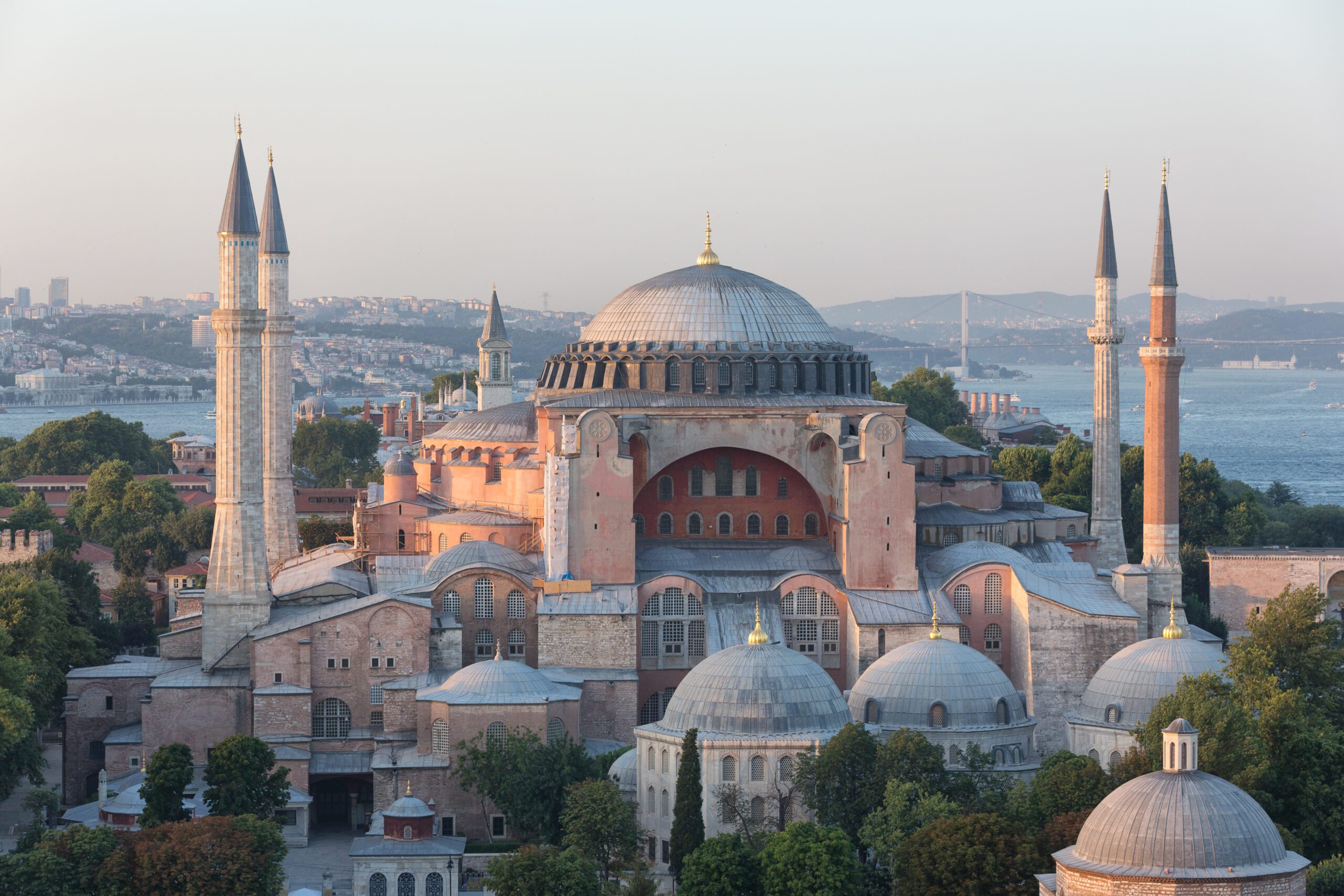
The House of the Virgin Mary in Ephesus: Ultimate Guide
Thinking of visiting the House of the Virgin Mary in Ephesus? You’ve come to the right place!
In 2019 I took a two week Gate 1 tour of Turkey. It was a secular tour, so I was surprised when we stopped at a house in Ephesus where Mary – the mother of Jesus – lived out her old age.
We also visited the nearby tomb of Jesus’ disciple John. I am a devout Christian, but did not know that John and Mary lived together after Jesus’ death!
Mary’s House and John’s Tomb – which are located next to each other – are both popular pilgrimage and tourist sites. Christian believers leave prayer requests on a wall near Mary’s House.
In this post I will tell you about Jesus’ mother Mary, her final years in Ephesus, and everything you need to know to visit.


Plan Your Trip With My Favorite Resources
– Best Accommodations: Booking.com
– Top Day Tours: Viator.com
– Purchase Travel Insurance: SafetyWing
Jesus asked John to care for Mary
According to John 19:26-27, when Jesus was hanging on the cross his mother Mary and disciple John were with him. Jesus looked down at his mother and said, “Here is your son.” He then turned to John and said, “Here is your mother.”
Then “from that time on” John took Mary “into his home.”
So it should not come as a surprise that John and Mary lived out their old age together. The question then becomes – why Ephesus, Turkey?

Why Ephesus?
After Jesus’ death his disciples in Jerusalem were persecuted. As a result, they scattered around the world. John took Mary and moved 615 miles away to Ephesus, Turkey, where they lived the rest of their lives.
There is ample evidence of this. First of all, Polycrates – the bishop of Ephesus in the 2nd century – wrote in a letter that John was buried in Ephesus.
Secondly, early church historian Eusebius records that the apostles scattered around the Mediterranean after persecution started in Jerusalem, and John came to Ephesus.

History of Mary’s Later Life in Ephesus
The location of Mary’s House, a simple stone structure, has been revered as the place where Mary spent her final years on Earth.
Based on Christian tradition, the traditional belief suggests that Mary spent her later years in solitude and contemplation. However, the later lives of Mary and Joseph remain primarily undocumented in the Bible, so the exact details of her life in Ephesus remain a matter of faith.
There isn’t even much historical evidence of whether Holy Mary received visitors at her home near Ephesus.

Rediscovery of the House of the Virgin Mary in Ephesus
The story of the House of Mary in Ephesus sort of faded into obscurity until the late 19th century. Visions and mystical experiences of German nun Anne Catherine Emmerich revived details about Mary’s life in Ephesus.
These descriptions piqued the interest of the Catholic Church and archeologists, prompting investigations in the area. In the 1950s, excavations led by the Lazarist Fathers revealed a house matching Emmerich’s descriptions, reigniting interest in the site.
How To Visit The House of the Virgin Mary in Ephesus Today
If you plan to visit the House of the Virgin Mary in Ephesus, Here’s everything you should know before traveling to Turkey, including where to find Mary’s House, entrance fees, opening hours, and what you can expect to see there.

Where Is Mary’s House?
The House of the Virgin Mary is situated on the hillside just a few miles outside Acarlar, Turkey, and the Ancient City of Ephesus.
It sits right on the edge of the Mediterranean Sea, and most people hoping to visit fly into Izmir and see it on a day trip or weekend excursion.
This part of Ephesus is very different from the modern-day resort city.
Ephesus has become a popular resort town on the Meditteranean today with long sandy beaches, luxury beach clubs, and Aqua Parks. That’s perfect for some people, but I’d much rather be exploring the ancient city and learning all about the history of Ephesus as a central port city of the Roman Empire!
How to Get to the House of the Virgin Mary from Ephesus
There aren’t any buses that can take you to the House of the Virgin Mary from Ephesus. Visitors usually hire a taxi, rent their own car, or join guided tours that include transportation.
Just a couple of steps outside the south exit of Ephesus, I was able to find a line of taxis ready to take you to Mary’s House. It’s definitely the most hassle-free way to get there if you’re staying near Ephesus.
The taxi should only cost about 120-200 TL ($4-8).
If you’re staying in Kusadasi (30 minutes away) or Izmir (1 hour away), it would be a much more expensive taxi, so I’d recommend booking a day tour of Ephesus that includes a trip to the House of the Virgin Mary. This day tour is an excellent option.

Opening Hours and Entrance Fees
Opening Hours: 8:00am-6:00pm in Summer (April-October) and 8:00am-5:00pm in Winter (November-March)
Entrance Fees: 35 TL ($1)
Phone #: +90 232 894 10 14
➡️Check out this Ephesus Private Tour that includes Mary’s House and Ephesus Ruins

What’s the Dress Code?
There is no official dress code, but cultural sensitivity is very important here.
So, I always tell people asking my advice to dress modestly (i.e., cover your shoulders and knees) when visiting any historical Christian destinations, including the House of the Virgin Mary.
This helps maintain the atmosphere of reverence for both pilgrims and tourists visiting the religious site.

What to See at the House of the Virgin Mary in Ephesus
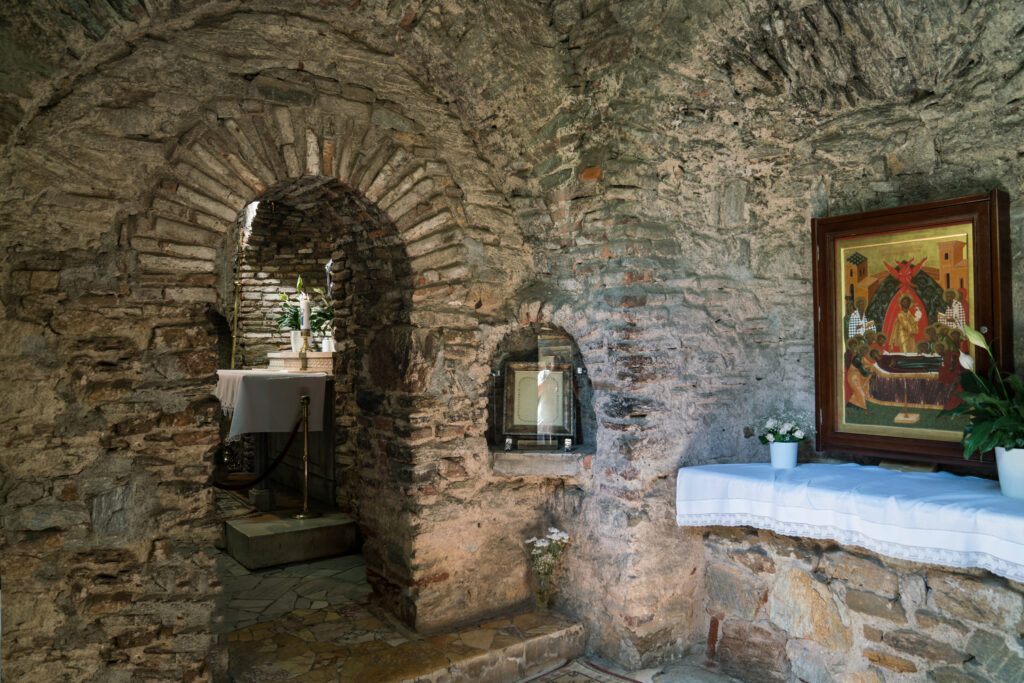
Mary’s House is a simple stone structure nestled in the hills near Ancient Ephesus. Visitors can explore the modest dwelling, showcasing a small altar. One of the rooms is believed to have been Mary’s bedroom.
For devout Christians, visiting Mary’s House in Ephesus invokes a deep sense of the Holy Spirit. Many believe that being in Mary’s final abode is deeply profound, and they feel a connection with the life of Mary and Jesus. Pilgrims come to this place to pray, reflect, and seek solace.

Mary’s House
Mary’s House is the main attraction here, as the name suggests. This modest stone dwelling, though unassuming at first glance, holds a profound significance for Christians around the world. It’s where Mary, the mother of Jesus, spent her final years.
Today, it is the final point of reflection and tribute for pilgrims.
Once you get here and pay the entrance fee, you can walk through the small rooms of the house. The centerpiece is a small altar in what is believed to have been Mary’s bedroom. Despite its simplicity, there’s an undeniable sense of peace and spiritual significance.
For me, visiting Mary’s House was also a wonderful opportunity to reflect on my own faith. Whether you’re there to pray, reflect, or explore, Mary’s House offers a unique perspective on the early days of Christianity and is absolutely worth visiting.

Holy Water
When you’re wandering through the surroundings of Mary’s House, you’ll stumble upon three fountains fed by a natural spring on the right side of Mary’s House. This water is believed to come from a stream with Holy Water, blessed with the power to heal both spiritually and physically.
Visitors often bring an empty bottle to collect some of this water. It’s potable, but most people simply want it as a souvenir.


Wishing Wall
Just a stone’s throw from Mary’s House is another captivating site: the Wishing Wall (a.k.a. Meryemana). Today, it’s a mosaic of emotions and desires, where visitors from across the globe leave their prayers and wishes on the wall.
What struck me most was the tangible sense of hope in this space. Each note, tied carefully to the wall, represents a personal story, a prayer for blessings, healing, or simply expressing gratitude.
I also found beauty in the diversity of languages since it shows me the universal nature of hope and faith. Some visitors leave notes on paper, while others tie fabrics or tokens, and if you want to be a part of that, you can bring your own message to leave on the wall.

Baptism Pool
Yet another cool part of this historic site is the Baptism pool, a short walk from Mary’s House and is seen as a relic of the early Christian community that once thrived here.
While it’s no longer in use, and there’s no longer any water in the pool, it’s still an interesting place to see on your visit, and you can imagine the countless individuals who were baptized here over the years.
Next to this pool is a giant statue of the Virgin Mary that’s nearly 200 years old and surrounded by beautiful olive trees.

➡️Check out the Kusadasi Tour that incluses Ephesus, House of Mary & Artemis Temple with Lunch
Mary’s Death and Burial
The death of Mary, the mother of Jesus, is not explicitly recorded in the canonical Gospels of the Bible. Christian tradition and theology vary regarding the details of Mary’s death, and there are different beliefs among denominations.
The Catholic Church actually believes that Mary was taken to Heaven without experiencing death. This is called ‘The Assumption’, and although it’s not explicitly stated in the Bible, it’s been part of certain religious teachings and traditions in the Catholic Church for centuries.
According to tradition, Mary is buried at the Tomb of the Virgin Mary on the Mount of Olives in Jerusalem. It is one of the main Christian Holy Sites in Jerusalem.

Where To Stay Near Ephesus
Ephesus is one of the most spectacular ancient cities in the world and staying nearby allows you to explore the ruins early in the morning, before the tour buses arrive. Most visitors stay in Selçuk, the closest town, or Kuşadası, a beach resort town about 30 minutes away.
If you’re interested in history, quiet charm, and walkability, Selçuk is the ideal base. From local cafés and ruins to boutique hotels and shuttle services to Ephesus, it’s the perfect place to slow down and soak in the atmosphere.
Here are three of the best-reviewed hotels near Ephesus for all budgets:
| Tier | Hotel | Highlights | Location |
|---|---|---|---|
| Budget | Hotel Bella | Shuttle to Ephesus, personal service, terrace dining | Selçuk center |
| Mid-range | Ephesus Centrum Hotel | Central, art gallery, excellent breakfast, cozy atmosphere | Selçuk center |
| Luxury | Akanthus Hotel Ephesus | Boutique luxury, pool, gardens, top-tier reviews | Selçuk center |
Budget Accommodation – Hotel Bella
If you’re looking for an affordable and welcoming stay in Selçuk, Hotel Bella is a long-time traveler favorite. This family-run guesthouse is known for its warm hospitality, free shuttle to Ephesus, and traditional terrace restaurant overlooking the ruins of the Basilica of St. John.
The rooms are cozy and authentic, and the staff go out of their way to help you with travel plans, transport, and restaurant tips.
➡️Click here to book your stay at Hotel Bella!
Mid-range Accommodation – Ephesus Centrum Hotel & Art Gallery
Modern and vibrant, Ephesus Centrum Hotel offers a stylish yet reasonably priced stay just a short walk from the Selçuk train station and Ephesus Museum. It’s also home to a small art gallery, giving the property a unique and creative vibe.
The standout here is the homemade Turkish breakfast, included in every stay, and the clean, bright rooms perfect for solo travelers or couples.
➡️Click here to book your stay at Ephesus Centrum Hotel!
Luxury Accommodation – Akanthus Hotel Ephesus
For a boutique luxury experience in Selçuk, Akanthus Hotel Ephesus is the top choice. With lush gardens, an outdoor pool, and stunning decor, this small hotel has earned glowing reviews from travelers for its peaceful setting and exceptional service.
Each room is beautifully decorated, and many overlook the serene courtyard. It’s only a 10-minute walk from the center of town and offers a quiet retreat after a day of exploring ancient ruins.
➡️Click here to book your stay at Akanthus Hotel Ephesus!
How many days should you stay in Ephesus, Turkey?
Most people spend one day exploring the Ancient city of Ephesus, which I would say is enough time to see most of the major highlights. Those include the House of the Virgin Mary, the Terrace Houses, the Cathedral of St. John, and the lone column left of the Temple of Artemis.
But if you want to spend time in the modern city of Ephesus and see more of the surrounding area, then you should set aside 2-3 days of your itinerary.


FAQs
Here are some commonly asked questions about the House of the Virgin Mary and their answers to help you better understand this pilgrimage site.

Where is Ephesus today?
Ephesus is in modern-day Turkey, near the town of Selçuk, in the Izmir Province. It’s famous for its well-preserved ancient ruins and is a popular tourist destination.

Are visitors allowed freely in the House?
Yes, visitors are generally allowed to freely visit the House of the Virgin Mary near Ephesus in Turkey. It’s open to tourists and pilgrims who wish to explore the site.

What is the best time of year to visit the House of the Virgin Mary?
The best time to visit the House of the Virgin Mary is in spring (April to May) and autumn (September to October). These seasons offer pleasant weather and fewer crowds, making it easier to explore the site comfortably. Be sure to check the weather forecast and any local events before planning your visit.

Is Virgin Mary’s tomb in Turkey?
The belief that the Virgin Mary’s tomb is in Turkey is not widely accepted in Christian tradition. While there is a site near Ephesus believed by some to be her house, her tomb is traditionally associated with Jerusalem. According to Catholic tradition, the Assumption of Mary into Heaven took place, meaning that her body was taken into heaven rather than remaining on Earth.

Final Thoughts
Mary’s tomb is a very significant place for Catholics, and for history buffs and Pentecostal Christians like myself.
Ephesus was the recipient of one of the letters of Paul, as well as one of the 7 churches mentioned in the Book of Revelation, so there is a lot of biblical connection and history to explore here.
One of my other favorite places in Ephesus is John’s Tomb, which is right next to Mary’s house. It’s the final resting place of John the Apostle and the “disciple whom Jesus loved.” When Jesus was on the cross, he told Mary that John would now be her son, and they remained close for the rest of their lives.