Where was John buried? The Basilica of St. John in Ephesus
Have you ever wondered where Jesus’s disciple John is buried?
I didn’t know either! In 2019 I took a 2-week tour of Turkey. When we got to Ephesus I was shocked to learn that we were going to the tomb of Jesus’ Disciple John!!! I have read the Bible for years but I never heard of John’s tomb.
John’s tomb is located next to the House of Jesus’ Mother Mary, which is also open to tourists.
According to Christian tradition and early writings, John lived out his final years after Jesus’ crucifixion in Ephesus. He was buried there along with Mary, the mother of Jesus, and centuries later, a Basilica was built on top of the burial site to honor the Apostle.
In this post I will tell you about Jesus’ disciple John, his final years in Ephesus, and everything you need to know to visit.

Plan Your Trip With My Favorite Resources
– Best Accommodations: Booking.com
– Top Day Tours: Viator.com
– Purchase Travel Insurance: SafetyWing

Basilica of St John in Ephesus
Opening Hours: Open Daily 8:00am-8:00pm
Cost: €6
Location: Atatürk St. Jean Cd Selçuk/İzmir
E-mail: efesmuzesi@kultur.gov.tr
Phone #: 011 90 232 8926010 or 011 90 232 8926011
Where was St. John Buried?
St. John, also known as John the Apostle, was buried in the ancient city of Ephesus (which is now modern-day Selçuk, Turkey). We know this because of early writings from that time period and Christian tradition.
After surviving his exile on the island of Patmos, John eventually returned to Ephesus, where he lived until his death.
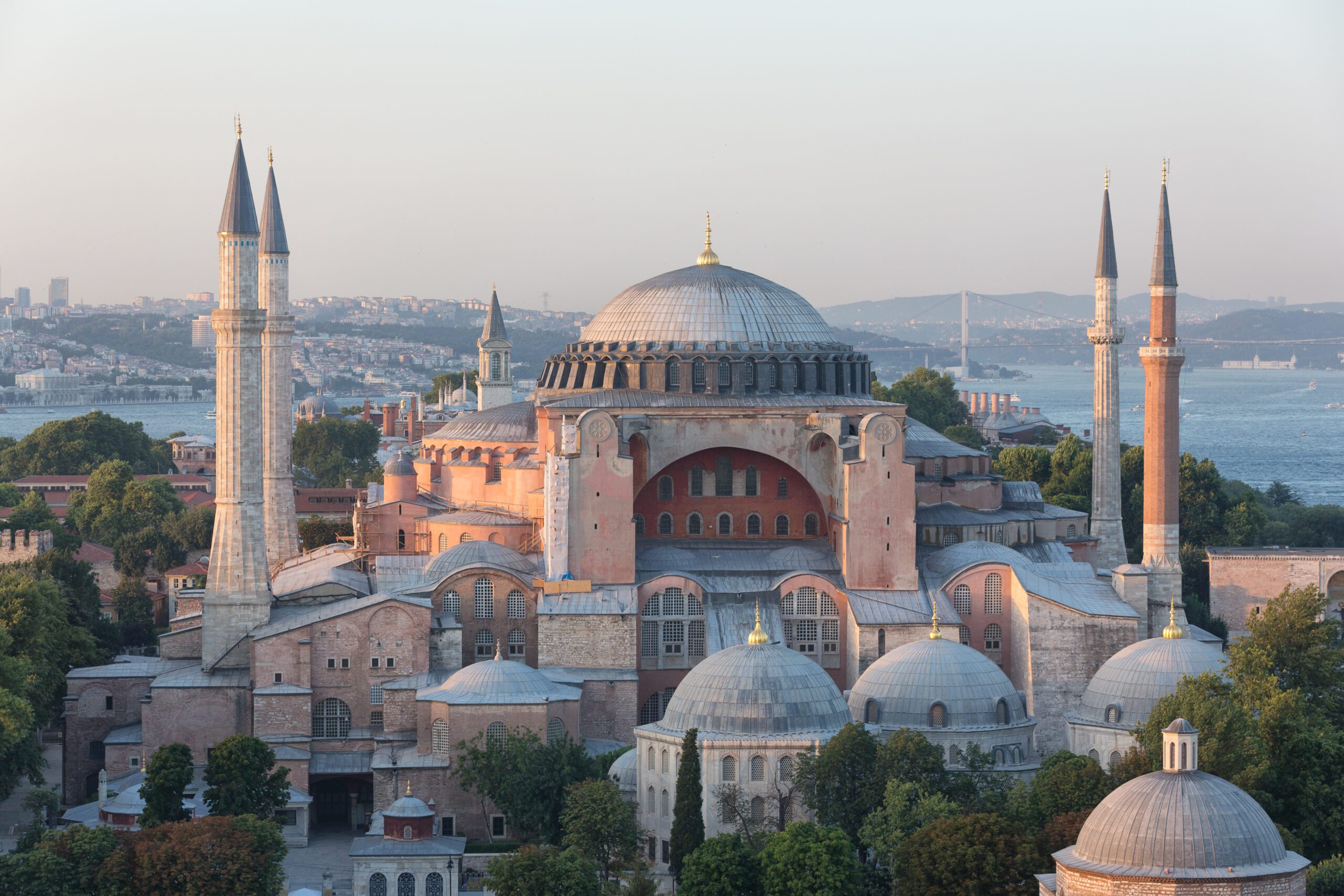
A few centuries after John’s death, Emperor Justinian built the Basilica of St. John over his grave, and it’s been a significant pilgrimage site ever since. Justinian also built the Hagia Sophia, which explains why they look alike.


Who is St. John?
John was one of the 12 Disciples of Jesus.
He is sometimes referred to as “John the Evangelist” and is best known for writing 5 books of the Bible – the Gospel of John, the three Epistles of John, and the Book of Revelation.
Jesus refers to John as the “beloved disciple” or the “disciple who Jesus loved.”
John was also at the foot of the cross when Jesus was crucified and remained as a son with Mary, the mother of Jesus, throughout his later years in Ephesus.
You can visit the House of Mary in Ephesus, right next to St. John’s Tomb.
John has had an incredible influence on the Christian Church. He was also super influential in spreading the Gospel throughout the 1st century, and his writings have transformed the lives of billions of believers over the years.
John eventually died of natural causes at the age of 98 under the rule of Emperor Trajan.

Jesus asked John to care for Mary
In the Gospel of John (19:25-27), as Jesus was hanging on the cross, he spoke to John and asked him to take care of Mary, his mother, into her elder years. We do not have the specific reasons for this, but the passage goes like this:
“Near the cross of Jesus stood his mother, his mother’s sister, Mary the wife of Clopas, and Mary Magdalene. When Jesus saw his mother there, and the disciple whom he loved standing nearby, he said to her, ‘Woman, here is your son,’ and to the disciple, ‘Here is your mother.’ From that time on, this disciple took her into his home.“
(John 19:25-27, NIV)
Most interpretations understand it as simply an act of care and responsibility for Mary’s well-being. Jesus wanted to ensure that his mother would be taken care of after he was no longer physically present.
However, some commentaries will say that the relationship between Jesus and John is often seen as symbolic of the care and responsibility that the Christian community should have for one another or the act that completes his sacrificial death.


What happened to the Apostle John after the Biblical account of his life ends?
The Bible does not provide much detail about the Apostle John’s later life.
The last book traditionally attributed to John is the Book of Revelation, where he describes visions he received while on the island of Patmos.
This book was likely written towards the end of the 1st century, and after that, there is a large gap before the next historical records we have for John.
As recorded by church historians such as Eusebius, early Christian tradition suggests that John lived to an old age and died peacefully, likely in Ephesus. However, these accounts are not part of the canonical Scriptures and are based on later traditions.
We don’t know much about the exact details of John’s later life and death other than the fact that he ended up in Ephesus and was the only Apostle not to die as a martyr.

Why was John so Special to Jesus?
The specific reasons for Jesus having a special relationship with John are not explicitly detailed in the biblical texts, but we do know that he was closer to Jesus than the other disciples and even considered himself to be “the disciple whom Jesus loved.”
John was part of Jesus’ inner circle of disciples, along with James and Peter. This inner circle was present at significant events, such as the Transfiguration, the raising of Jairus’ daughter, and the agony in the Garden of Gethsemane.
We can also assume that since Jesus entrusted the care of his mother, Mary, to John during his crucifixion (John 19:25-27), there must have been a level of trust and intimacy between them.

Are John the Baptist and John the Apostle the Same Person?
No, John the Baptist and John the Apostle are not the same person. They are two distinct figures in the New Testament with very different roles and timelines.
John the Baptist is often referred to as the precursor or forerunner of Jesus Christ. His primary role was to prepare the way for Jesus’s coming. He baptized people in the Jordan River, including Jesus, and proclaimed the arrival of the Messiah.
John the Apostle was an evangelist and one of Jesus’ 12 Disciples. John played a close and intimate role among them and is often referred to as the disciple whom Jesus loved. He also authored the Gospel of John, the three Epistles of John (1 John, 2 John, 3 John), and the Book of Revelation.

How did the Apostle John die?
Christian tradition states that the Apostle John died of natural causes rather than as a martyr. In fact, he was the only Apostle who wasn’t martyred.
However, the details surrounding the deaths of John are based more on church tradition than historical writings, and there is no biblical account of the specific circumstances of his death.
John is thought to have lived to an old age and died peacefully, likely around the end of the 1st century.

Does the Bible say John was boiled in oil?
The Bible itself does not explicitly state that the Apostle John was boiled in oil. Scripture actually doesn’t account for any of John’s later life after his exile to Patmos.
The accounts of John being boiled in oil are based on later Christian traditions and writings, specifically in the works of church historians like Eusebius (c. 260–340 AD).
Eusebius, in his “Ecclesiastical History,” which was the primary source for church history up until this time, mentions an event where John was allegedly immersed in boiling oil but miraculously survived without harm.
According to Eusebius, this incident occurred during the reign of the Roman emperor Domitian.

History of the Basilica of St. John
The burial site of St. John was a revered pilgrimage site for nearly 500 years after his death.
Something I learned that I found very interesting is that, during that time, the mystics believed that the fine dust from his grave had healing properties.
However, in the 6th century, Emperor Justinian I ordered a Basilica to be constructed on top of John’s presumed burial site.
The Basilica of St. John would be shaped like a cross with six domes, crafted from a combination of stone and brick, and John’s Tomb would lie right beneath the central dome.
Unfortunately, the Basilica only stood for about 750 years. In 1304, the city fell to the Seljuk Turks, leading to the conversion of the Basilica into a mosque. It was then completely destroyed in 1402 during the Mongol invasions.
Over the centuries of Ottoman rule, the remains of the church were neglected. It wasn’t until the mid-twentieth century that Austrian archaeologists initiated restoration efforts on Ayasoluk Hill.
The area was cleaned, and the tomb was rebuilt to resemble what it would have looked like before.

Visiting John’s Tomb in Ephesus Today
One of my favorite parts of visiting Ephesus was seeing John’s Tomb. It’s situated on Ayasuluk Hill, near the remains of the Basilica of St John.
There is no building today, so it’s more of an archaeological site than a Basilica. You should not come here expecting it to be anything like the Basilica of St. Paul or St. Peter in Rome.
But you can see the structures that used to make up the Basilica, including pillars, arches, and stone walls that reflect what it used to look like. At the center of the ruins are four columns and a marble terrace that marks the site of John’s Tomb.
There’s not much to see, but you should allow 1-2 hours to see and appreciate the whole complex.
➡️Check out the PRIVATE EPHESUS TOUR: Skip-the-Line & Guaranteed ON-TIME Return to Boat

Where is Ephesus?
Ephesus is located right in the modern town of Selçuk in Western Turkey, near Izmir.
Most people, including myself, stayed in Selçuk, and you don’t really need to worry much about getting to the ruins and Basilica of St. John. It’s only a 5-15 minute walk from anywhere in town.
But if you’re staying near the beach town surrounding Pamucak Beach, you’ll need to take a cheap 10-minute taxi to Selçuk.

Entrance Fee
You can purchase a ticket to St. John’s Basilica for about €6 per person.
However, if you’re spending a few days in Ephesus, you might want to check and see if you can book a ticket that includes the Basilica.
St. John’s Basilica is considered part of the greater Ephesus Archaeological Site, so it’s sometimes included in your tour or ticket.

➡️Check out the Private Tour From Kusadasi or Izmir: Ephesus Private Tour
Where To Stay Near Ephesus
Ephesus is one of the most spectacular ancient cities in the world and staying nearby allows you to explore the ruins early in the morning, before the tour buses arrive. Most visitors stay in Selçuk, the closest town, or Kuşadası, a beach resort town about 30 minutes away.
If you’re interested in history, quiet charm, and walkability, Selçuk is the ideal base. From local cafés and ruins to boutique hotels and shuttle services to Ephesus, it’s the perfect place to slow down and soak in the atmosphere.
Here are three of the best-reviewed hotels near Ephesus for all budgets:
| Tier | Hotel | Highlights | Location |
|---|---|---|---|
| Budget | Hotel Bella | Shuttle to Ephesus, personal service, terrace dining | Selçuk center |
| Mid-range | Ephesus Centrum Hotel | Central, art gallery, excellent breakfast, cozy atmosphere | Selçuk center |
| Luxury | Akanthus Hotel Ephesus | Boutique luxury, pool, gardens, top-tier reviews | Selçuk center |
Budget Accommodation – Hotel Bella
If you’re looking for an affordable and welcoming stay in Selçuk, Hotel Bella is a long-time traveler favorite. This family-run guesthouse is known for its warm hospitality, free shuttle to Ephesus, and traditional terrace restaurant overlooking the ruins of the Basilica of St. John.
The rooms are cozy and authentic, and the staff go out of their way to help you with travel plans, transport, and restaurant tips.
➡️Click here to book your stay at Hotel Bella!
Mid-range Accommodation – Ephesus Centrum Hotel & Art Gallery
Modern and vibrant, Ephesus Centrum Hotel offers a stylish yet reasonably priced stay just a short walk from the Selçuk train station and Ephesus Museum. It’s also home to a small art gallery, giving the property a unique and creative vibe.
The standout here is the homemade Turkish breakfast, included in every stay, and the clean, bright rooms perfect for solo travelers or couples.
➡️Click here to book your stay at Ephesus Centrum Hotel!
Luxury Accommodation – Akanthus Hotel Ephesus
For a boutique luxury experience in Selçuk, Akanthus Hotel Ephesus is the top choice. With lush gardens, an outdoor pool, and stunning decor, this small hotel has earned glowing reviews from travelers for its peaceful setting and exceptional service.
Each room is beautifully decorated, and many overlook the serene courtyard. It’s only a 10-minute walk from the center of town and offers a quiet retreat after a day of exploring ancient ruins.
➡️Click here to book your stay at Akanthus Hotel Ephesus!
FAQs
Here are some commonly asked questions about the Basilica of St John in Ephesus and their answers to help you better understand this pilgrimage site.

When did John visit Ephesus?
John is said to have visited Ephesus during the early Christian era, likely around the first century AD.

Why is Ephesus important to John?
According to Christian tradition, John spent a significant portion of his later life in Ephesus. He is said to have written several of his biblical works while in Ephesus and played a key role in the development of the early Christian community there.

Why is John buried in Turkey?
John is believed to be buried in Turkey because it is said that he spent his final years in the region around Ephesus.

Final Thoughts
St John’s Basilica may not be the most popular place to visit in Turkey, but if you’re fascinated by historical sites connected to people from the Bible, then it’s a must-visit.
It’s also really easy to see if you’re already planning to go and visit Mary’s House, which is just a short taxi from the tombs of John the Apostle.
You could also get to Turkey a few days early and check out all the incredible things to do in Istanbul. I LOVED seeing the Hagia Sophia in person!