

45 BEST Things To Do In Jerusalem: A Must-See Guide For 2026
Jerusalem is one of the oldest cities in the world. First inhabited in 4,500 B.C., it has been attacked 52 times, captured and recaptured 44 times, besieged 23 times, and destroyed twice.
In addition, it is the location of most of the holy sites of the world’s 3 major religions – Judaism, Christianity, and Islam.
So, as you can imagine, Jerusalem is a history lover’s dream! There are ancient city walls, historic churches, museums, and religious sites everywhere you look.
I have spent many years studying and exploring this ancient city.
This post will give you insider tips on all of the things to do in Jerusalem. This includes holy sites, historical sites, museums, and local culture. And tips on how to visit the Jewish, Christian, Muslim, and Armenian Quarters.


Plan Your Trip With My Favorite Resources
– Best accommodation site: Booking.com
– Book day tours here: Viator.com
– Purchase travel insurance here: SafetyWing
Best Things To Do In Jerusalem
Jerusalem was amazing! There were fascinating museums, historical monuments around every corner, holy sites associated with all 3 Abrahamic religions, and natural wonders tied to the city’s rich history.

1) Visit the Temple Mount/ Dome of the Rock
The Temple Mount (Har HaBayit in Hebrew) is the holiest site in Judaism and one of the most contested pieces of land in the world. Its history is deeply rooted in the Torah and the Bible, stretching back thousands of years.
Around 1,000 B.C., King David conquered Jerusalem and made it the capital of the Jewish kingdom (2 Samuel 5:4-9). At that time, the Ark of the Covenant was kept in a tent. David longed to build a temple to house it (II Samuel 7:1-2), but God told him that because he had shed much blood, he would not be the one to build it (1 Chronicles 22:8).
In 957 B.C., David’s son King Solomon built the First Temple on Mount Moriah (2 Chronicles 3:1). It’s the very place where Abraham was tested and asked to sacrifice his son Isaac (Genesis 22:1–8).

Destruction and Rebuilding
In 587 B.C., the Babylonians invaded Jerusalem, destroyed the Temple, and sent the Jewish people into exile. About 60 years later, the returning exiles built a modest Second Temple (Ezra 3:8–13).
Then, around 20 B.C., King Herod magnificently renovated and expanded the Second Temple (John 2:20), turning it into one of the most stunning architectural achievements of its time.
Sadly, in A.D. 70, after a Jewish revolt, Roman soldiers destroyed the Second Temple, leaving only one remnant: the Western Wall.

The Temple Mount Today
Fast forward to 635 A.D., Muslim Caliph Omar, the second successor to the Prophet Muhammad, conquered Jerusalem. About 50 years later, two of Islam’s most important sites, the Dome of the Rock and the Al-Aqsa Mosque, were built on top of the Temple Mount.
According to Islamic tradition, it marks the spot where the Prophet Muhammad ascended to heaven during his Night Journey. However, according to Jewish tradition, it is the site where Abraham prepared to sacrifice his son Isaac.
This overlapping history makes the site deeply complex. The Temple Mount is under Israeli sovereignty, yet the Jerusalem Islamic Waqf has administered it since Saladin recaptured Jerusalem in 1187. (A waqf is a charitable Islamic trust.)

Today, non-Muslims are not allowed to enter the Dome of the Rock or the Al-Aqsa Mosque. The Temple Mount itself is open to non-Muslim visitors only four hours per day, three in the morning and one in the early afternoon.
Visitors should also know that non-Muslim prayer is strictly prohibited, and you cannot bring prayer books, religious items, or wear visible religious symbols.
I once saw a Jewish man escorted away by security for silently praying on the Mount. When I visited, a guard asked me to tuck my cross necklace under my shirt before entering.

How to Visit Temple Mount
There are 12 gates surrounding the Temple Mount, but only the Mughrabi (Moroccan) Gate is open to non-Muslims.
To reach it, go to the Western Wall Plaza, then walk across the wooden Mughrabi Bridge, which leads directly to the gate.
The site is closed on Fridays and Saturdays, and opening hours vary by season (see below). Be aware that entry can close suddenly for security reasons, and lines form quickly, so it’s best to arrive early.
Dress modestly: both arms and legs must be covered. If your clothing isn’t appropriate, waqf attendants will provide cover garments.
Once, I arrived wearing shorts and was handed a long turquoise skirt to slip on over them – it completely clashed with my outfit and ruined my photos! So, plan your clothing before you go.
Inside, you will find over 100 different structures from various historical periods, arches, fountains, courtyards, and prayer areas, each with its own story.

Temple Mount
Opening Hours: Summer: April through September (Sunday-Thursday): 8:30am-11:30am and 1:30pm-2:30pm.
Winter: October through March (Sunday-Thursday): 7:30am-10:30am and 12:30pm-1:30pm.
Cost: Free
Location: Temple Mount, Old City
2) Visit the Church of the Holy Sepulchre
The Church of the Holy Sepulchre is considered the holiest site in Christianity, marking the traditional place where Jesus was crucified, buried, and resurrected. The altar stands over the spot of the Crucifixion, while the dome rises above the tomb where He was laid to rest.
This church contains the final five Stations (10–14) of the Via Dolorosa, the path Jesus walked to His death. However, many Evangelical Christians, including myself, believe the true site of the Crucifixion was outside the city walls at the Garden Tomb.

A Church Built on Faith and History
In 326 A.D., Emperor Constantine sent his mother, Helena, to the Holy Land in search of Christian relics. She discovered three crosses near a tomb, believed to be where Jesus was crucified. Constantine later built a church and rotunda on the site, transforming a former Roman temple into one of Christianity’s holiest places.
Over the centuries, the church was destroyed, rebuilt, and restored multiple times by Persians, Muslims, Byzantines, and Crusaders. The current structure mostly dates from 1810.

What to See Inside
Stone of Anointing: Just inside the entrance lies the slab where, according to tradition, Joseph of Arimathea and Nicodemus prepared Jesus’ body for burial. Pilgrims still kneel here in prayer.
Calvary (Golgotha): Up a short staircase to the right is the traditional site of the Crucifixion. Two small chapels, one Greek Orthodox and one Roman Catholic, mark where the cross once stood. Pilgrims can even touch the Rock of Calvary, encased in glass beneath the altar.

Jesus’ Tomb (The Aedicule): At the heart of the church lies the Aedicule, a two-room chapel under the main dome. Inside is the tomb of Jesus, the centerpiece of the entire site. Expect long lines as this is one of the most visited places in all of Jerusalem.
Chapel of Saint Helena: Located on the lower level, this 12th-century Armenian chapel marks the spot where Helena is said to have found the True Cross. The space is beautifully decorated with Armenian art and mosaics.

The “Status Quo”
Since the 18th century, six Christian denominations – Greek Orthodox, Roman Catholic, Armenian Apostolic, Coptic, Syriac, and Ethiopian Orthodox – have shared custodianship of the church under an agreement known as the Status Quo.
It’s so strict that even the small “Immovable Ladder” leaning against an upper window hasn’t been moved in centuries. No changes are allowed without full agreement among all six groups!

Muslim Custodians
Interestingly, the church’s main entrance and keys have been entrusted to two Muslim families since the 12th century. This is a centuries-old tradition of peace and cooperation that continues today.

Church of the Holy Sepulchre
Opening Hours: 5:00am-9:00pm Summer (April-October) / 4:00am-7:00pm Winter (November-March). Closes at 8:00pm on Sundays year-round.
Days Closed: Open 365 days a year.
Cost: Free
Location: Saint Helena St in the Christian Quarter
3) Walk the Via Dolorosa
The Via Dolorosa, or the “Way of Suffering,” is a path through Jerusalem’s streets, believed to be the route Jesus walked on the way to his crucifixion. The 14 Stations of the Cross mark this pilgrimage route, each representing a specific event from Jesus’ trial and eventual crucifixion.
I highly encourage you to download the interactive app once you get to Israel. It costs $3-4, but it gives you a self-guided tour of the Via Dolorosa with GPS tracking, a map, and a narrator to help you navigate each station along the route!
The route ends at the Church of the Holy Sepulchre, making it a profound spiritual journey that ties together the crucifixion and resurrection.
I couldn’t visit each stop on the Via Dolorosa, but I did visit the Church of the Holy Sepulchre, and I could imagine that following the self-guided tour would be very transformative.

Via Dolorosa
Opening Hours: Sunrise to Sunset
Cost: The Self-Guided App is $2.99
Location: Old City, Jerusalem
4) Walk Down the Mount of Olives
The Mount of Olives is a ridge east of Jerusalem’s Old City with a ton of biblical significance.
According to the Gospels, Jesus spends significant time here teaching his disciples. It’s also where Jesus wept over Jerusalem (Luke 19:41-44) and possibly the location of his ascension.
It’s really easy to pair a visit to the Mount of Olives with the Garden of Gethsemane, the Mount of Olives Jewish Cemetary, the Church of All Nations, and the Church of the Pater Noster, which is the ‘certain place’ where Jesus taught The Lord’s Prayer to his disciples!
I really loved spending time here. Even when it gets crowded, there’s still enough space to find quiet spots for reflection, and the panoramic views of the Old City are amazing!
Give yourself enough time to walk through the olive trees and reflect on the sacred sites’ connection to particular biblical events.

Mount of Olives
Opening Hours: Open 24 hours (but obviously go during daylight hours!)
Cost: Free (outdoor areas)
Location: At-Tur District
➡️This Full Day Tour includes the Mount of Olives
5) Explore the Garden of Gethsemane
The Garden of Gethsemane is famous for being the place Jesus went to pray on the night of his crucifixion. When I visited with my church, the pastor gave a mini-sermon there, prompting me to pray and ask God to forgive me of my sins.
The Garden of Gethsemane is easy to visit from Jerusalem’s Old City, right at the foot of the Mount of Olives.
I recommend planning to spend more time here than you think you need. It was much bigger than I expected, and it was nice to sit and reflect on the passages in the Garden (Mark 14:32, Matthew 26:36).
If you’re a Christian, this will be one of the most powerful places to visit in Jerusalem, but it’s still fascinating if you aren’t a believer.


The Garden of Gethsemane
Opening Hours: Open 24 hours
Cost: Free
Location: Mount of Olives
6) Visit the Western Wall
The Western Wall (a.k.a. Wailing Wall) is next to the Temple Mount and is another sacred site in Judaism. It is the last remaining wall of the Second Temple, which was destroyed by the Romans in 70 CE and served as a place of prayer and pilgrimage for Jews worldwide.
The wall is divided into sections for men and women to pray separately, per Orthodox Jewish practice. When I visited, I noticed so many written prayers left in the crevices of the wall.
Visiting the Western Wall is a deeply moving experience, and although it’s last on this list, it’s one place you should not skip if you’re spending time in Jerusalem.

The Western Wall
Opening Hours: 24/7
Cost: Free
Location: Muslim Quarter, Old City, Jerusalem
7) Visit the Tomb of the Virgin Mary
The Tomb of the Virgin Mary is not quite as popular as some other places to see in Jerusalem, but it’s really easy to stop by if you’re going to the Mount of Olives since it’s directly opposite the Garden of Gethsemane,
The Tomb of the Virgin Mary is another holy site in Jerusalem, and I think it should be added to more Holy Land Tours.
Unlike the Holy Sepulchre, Mary’s tomb is situated underground. As you descend into the softly lit crypt, you’ll encounter a tomb decorated with icons and lamps. The atmosphere at this site is deeply reverent and peaceful, and it’s a cool place to see, even if you aren’t Catholic.
While there is no scriptural backing for Mary’s burial here, and I believe she spent her later years in Ephesus, tradition holds this spot as her final resting place.


Tomb of the Virgin Mary
Opening Hours: 6:00am-12:00pm & 2:30pm-5:00pm (Monday to Saturday)
Cost: Free
Location: Mount of Olives
8) Walk Mount Zion
Mount Zion is a hilltop right outside Jerusalem’s Old City Walls that has been significant for thousands of years.
It’s the highest point in Jerusalem and is a major part of biblical history. It’s mentioned all the way back in 2 Chronicles, where it’s referred to as Mount Moriah. Historically, “Zion” actually encompassed the entire City of David, which is today’s Jerusalem.
Today, when you visit Mount Zion, you can see a few different places, like King David’s Tomb, the Upper Room, and the Dormition Abbey.
Even if you aren’t super interested in these other things to see, it’s still worth adding Mount Zion to your itinerary for the breathtaking views of the Old City. From the summit, you can see iconic landmarks like the Dome of the Rock, the Tower of David, and the Western Wall.

Mount Zion
Opening Hours: 24 Hours (though attractions at the top vary)
Cost: Free
Location: Southwest of the Armenian District
➡️Explore Guided Tours of the Old City (Including Mount Zion) Here
9) Wander the Muslim, Jewish, Christian, and Armenian Quarters
The Old City of Jerusalem is divided into four distinct quarters: Muslim, Jewish, Christian, and Armenian. Each quarter has its own history, culture, and rhythm of daily life. Walking through them is like stepping through four worlds that coexist within one set of ancient walls.
The current division of the Old City dates back to the 19th century, though people of all faiths have lived in these areas for thousands of years. The walls surrounding the Old City were built by Ottoman Sultan Suleiman the Magnificent between 1537-1542. These walls enclose some of the holiest places on earth within less than one square kilometer.

Muslim Quarter
The Muslim Quarter is the largest and most populated section, filled with markets, narrow alleys, and the aroma of freshly baked bread and spices. This area is vibrant and full of daily life. Notable landmarks include:
- Temple Mount / Haram al-Sharif, home to the Dome of the Rock and Al-Aqsa Mosque.
- Via Dolorosa, the path believed to be walked by Jesus on his way to the crucifixion.


Christian Quarter
The Christian Quarter centers around the Church of the Holy Sepulchre, the site where Christians believe Jesus was crucified, buried, and resurrected. You’ll find many monasteries, chapels, and hospices run by different Christian denominations.

Jewish Quarter
The Jewish Quarter contains some of the most significant sites in Judaism, including the Western Wall (Kotel), the last remnant of the Second Temple. After being destroyed in 1948, the quarter was rebuilt following the Six-Day War in 1967. Today it’s a mix of archaeological ruins, synagogues, and modern residences.


Armenian Quarter
The Armenian Quarter is the smallest and most secluded. It has been home to the Armenian community since the 4th century A.D., when Armenia became the first nation to adopt Christianity.
The centerpiece is the St. James Cathedral, located within the Armenian Monastery compound. It is known for its beautiful blue tiles and ancient manuscripts. Visitors can also explore quiet courtyards and art workshops that reflect centuries of Armenian craftsmanship and resilience.

Muslim, Jewish, Christian, and Armenian Quarters
Opening Hours: Cost: Free
Hours: Open 24/7 (some religious sites within have specific hours)
Location: Within Jerusalem’s Old City Walls
10) Walking Tour on the Mount of Olives
Few walks in Jerusalem feel as powerful and beautiful as the walk down the Mount of Olives. It is a mountain ridge located east of Jerusalem’s Old City, named after the olive groves that once covered its slopes. This ridge has long been a site of prayer, prophecy, and pilgrimage.
From the top, you’ll enjoy one of the most breathtaking views of the “Golden City.” This ridge is home to several Christian holy sites, including the Garden of Gethsemane, the Church of All Nations, the Church of Mary Magdalene, the Chapel of the Ascension, and the Church of the Pater Noster.
Several key biblical events took place here:
- Jesus rode into Jerusalem on Palm Sunday (Luke 19:29–44).
- He taught the Lord’s Prayer to His disciples (Luke 11:1–4).
- He wept over Jerusalem (Luke 19:37–41).
- And forty days after His resurrection, He ascended into heaven from Bethany (Luke 24:50–51).

How to Visit the Mount of Olives
The easiest way to explore the Mount of Olives is to take a taxi to the top and then walk downhill. The path is paved and has a handrail, making it accessible for most visitors.
If you’re using public transport, you can catch Bus 275 from Sultan Suleiman Street (across from Herod’s Gate). The bus stops near the Church of the Ascension.
Driving is not recommended since parking is limited near the holy sites. If you have a car, it’s best to park at the Lions Gate lot and take a taxi to the top.

Follow Jesus’ Footsteps down the Mount of Olives!
To truly follow in Jesus’ footsteps, start at the top of the Mount of Olives and walk your way down through the sacred sites that mark His final days. Here’s a simple walking route to guide your visit:
- Start at the Chapel of the Ascension.
- Visit the Church of the Pater Noster.
- Stop at the Mount of Olives Viewpoint for a panoramic view of Jerusalem.
- Continue to Dominus Flevit, Church of Mary Magdalene, and the Church of All Nations.
- End at the Garden of Gethsemane.
The walk is about 4 miles round-trip if you start and end at Lions Gate, though you’ll pass the same spots twice. For a more varied route, walk from Lions Gate to Dung Gate, which also takes you past Absalom’s Tomb, Zechariah’s Tomb, and the Kidron Valley.
When I visited, I was still recovering from a knee injury and had been advised not to walk. But I couldn’t imagine missing it. Step by step, holding the handrail, I made my way down, slow but determined. By the time I reached the Garden of Gethsemane, every ache felt worth it. Trust me, seeing the places of the Bible come to life here is an experience that stays with you long after you leave.

Mount of Olives
Opening Hours: Open 24/7
Cost: Free
Location: East of the Old City, across the Kidron Valley
11) Visit the Yad Vashem Holocaust Museum
Yad Vashem Holocaust Museum is Israel’s official memorial to the victims of the Holocaust. Established in 1953, it honors the six million Jews who perished and the survivors who rebuilt their lives after unimaginable loss. The name itself means “a memorial and a name,” expressing the mission to ensure each life is remembered.

Inside the Museum
The museum’s triangular structure leads visitors through nine galleries detailing Jewish life before, during, and after the Holocaust.
- The Hall of Names is a circular chamber lined with photos and testimonies of victims. There is an opening at the center that symbolizes the millions whose names remain unknown.
- In the Hall of Remembrance, an eternal flame burns above ashes brought from extermination camps.
- The Children’s Memorial pays silent tribute to the 1.5 million children who lost their lives.
- Along the Avenue of the Righteous Among the Nations, trees are planted to honor those who risked everything to save others.

Travel Tips and My Experience
The Jerusalem Light Rail stops directly at Mount Herzl for easy access from the city centre.
Visitors can join guided tours in English or Hebrew, or explore independently using an audio guide available in multiple languages. Tours cover not just the museum but the surrounding memorial gardens and monuments. Photography is not allowed inside the main exhibits.
Allow at least 2-3 hours for your visit. My group left to go back to the hotel, but since the museum was still open for another hour and a half, I stayed behind and later took a taxi back. This is why I’m starting to prefer to travel on my own rather than with a large organized tour.
I am a huge museum and history lover, but I only saw half of the museum because of their strict itinerary. On my next trip, I’ll make time to see the rest!

Yad Vashem Holocaust Museum
Opening Hours: Sunday-Thursday 9:00am-4:00pm. Friday 9:00am-1:00pm. Saturday Closed.
Reservations Required: Reserve a spot here
Website: https://www.yadvashem.org/visiting.html
Cost: Free + Registration Fee of 15 NIS ($4)
Location: Mount of Remembrance
12) Explore the City of David Archaeological Park
The City of David Archaeological Park is the original site of ancient Jerusalem, where the city began over 3,000 years ago. Located just outside the Old City walls near the Dung Gate, this is where King David established his capital and where archaeologists continue to uncover layers of Biblical history.
What You Will See
Visitors can walk through ruins, ancient tunnels, and fortifications that bring the Bible’s history to life.
- Hezekiah’s Tunnel: An underground passage carved around 700 BCE to bring water from the Gihon Spring into the city. Visitors can walk through it (bring a flashlight and waterproof shoes!).
- Gihon Spring: The ancient city’s main water source and one of Jerusalem’s oldest landmarks.
- Pool of Siloam: Mentioned in the New Testament as the site where Jesus healed a blind man.
- Royal Acropolis & Palace Ruins: Excavations reveal large public buildings and fortifications from Jerusalem’s earliest royal era.
- Pilgrim Road: The ancient route used by worshippers traveling from the Pool of Siloam to the Temple Mount.
Visitor Experience
You can explore on your own or join a guided tour that explains the archaeology, biblical connections, and current excavations. For families, the park also offers interactive exhibits, a 3D movie, and nighttime light shows projecting ancient Jerusalem’s story onto the hillsides.
City of David
Opening Hours: Sunday-Thursday 8:00am-5:00pm. Friday 8:00am-2:00 pm
Cost: Entry is 16 NIS
Location: Near the Dung Gate
13) Walk Hezekiah’s Tunnel
Hezekiah’s Tunnel, also called the Siloam Tunnel, is one of Jerusalem’s most remarkable ancient engineering feats. This ancient water channel was built by King Hezekiah in the 8th century B.C. to protect Jerusalem’s water supply during the Assyrian siege. (2 Chronicles 32:4)
The tunnel stretches 1,749 feet from the Gihon Spring to the Pool of Siloam. Inscriptions found on the tunnel walls describe how the two teams of diggers met in the middle, guided only by sound.
Walking through Hezekiah’s Tunnel’s shallow, flowing water is a unique experience. The water level can reach up to your knees. It’s pretty narrow but completely passable.
Bring a flashlight or headlamp, wear water shoes, and keep valuables dry. The walk takes about 20-30 minutes and is best enjoyed in warm weather.
The other cool part is that Gihon Spring is famous for being the actual spot where Solomon was crowned King of Israel, according to 1 Kings.

Hezekiah’s Tunnel
Opening Hours: Sunday-Thursday 8:00am-7:00pm. Friday 8:00am-4:00pm. Closed Saturday
Cost: 45 NIS ($12)
Location: City of David, Jerusalem
14) Visit the Israel Museum
The Israel Museum in Jerusalem is one of the world’s most impressive art and archaeology museums. After major renovations in 2010, it now holds over 500,000 artifacts from ancient Israel to contemporary art.
Some of the most famous artifacts are the Dead Sea Scrolls housed in the iconic Shrine of the Book, a detailed model of Jerusalem from the Second Temple Era, and life-size reproductions of synagogues worldwide.
I’m a HUGE museum lover, so I would definitely spend all day trying to see every single exhibit, but I know that most people would only need a few hours to enjoy the Israel Museum!

The Israel Museum
Opening Hours: Sunday-Thursday 10:00am-5:00pm. Tuesday 4:00pm-9:00pm. Friday and holidays 10:00am-2:00pm. Saturday 10:30am-4:00pm.
Cost: Adults 54 NIS ($15), Students 39 NIS ($10.50), Children = 27 NIS ($7)
Location: Derech Ruppin 11, Jerusalem
15) Explore the Davidson Center and Southern Wall Excavations
The Davidson Center and Southern Wall Archaeological Park sit at the foot of the Temple Mount, showcasing some of the most significant remains from ancient Jerusalem’s Second Temple period. This area offers a rare opportunity to walk where pilgrims once ascended to the Temple over 2,000 years ago.
What You Will See
- Southern Steps: The original stone steps used by worshippers entering the Temple Mount. Many scholars believe Jesus and his disciples once walked here.
- Herodian Street & Shops: An excavated marketplace from the time of King Herod, where pilgrims bought offerings before entering the Temple.
- Robinson’s Arch: The remains of a massive bridge that once connected the Temple Mount to the Upper City.
- Ancient Mikvehs (Ritual Baths): Used by pilgrims for purification before entering the holy area.
- Archaeological Museum (Davidson Center) – Features multimedia exhibits, ancient artifacts, and a 3D model showing what the Temple Mount looked like in the first century.
16) Visit the Bible Lands Museum
The Bible Lands Museum was opened in 1992, based on the private collection of scholar‑collector Elie Borowski. It’s located on “Museum Row” in Givat Ram, near the Israel Museum, making it a great stop if you’re exploring Jerusalem’s modern archaeological and historical offerings.
The museum presents the history of the ancient Near East, showing civilizations mentioned in the Bible, including Egyptians, Hittites, Persians, Canaanites, and Phoenicians.
The exhibits include pottery, jewelry, statues, seals, weapons, inscriptions, and everyday household items. The permanent exhibition follows a timeline from prehistoric communities to the early Christian era.
The museum offers guided tours, children’s activities, and rotating exhibitions. So it’s not just for hardcore history buffs, it’s accessible and engaging for casual visitors too.
Bible Lands Museum
Opening Hours:
Sunday-Thursday: 9:30am-5:30pm; Wednesday: 9:30am-9:30pm; Fri/Sat & holiday eves: 10:00am-2:00pm
Cost: Adults ~44 NIS; reduced fare for children, students, and soldiers
Location: Shmuel Stephan Weiz St 21, Givat Ram
17) Explore the Rockefeller Archaeological Museum
The Rockefeller Archaeological Museum combines Western architectural style with local Eastern elements (Jerusalem‑stone, regional motifs). The exhibits span thousands of years of history, from prehistoric times to the Ottoman period. Highlights include:
- A 9,000‑year‑old statue from Jericho, one of the oldest human representations ever found.
- Bronze Age gold jewellery, pottery, everyday items, stone tools, reflecting ancient life in the region.
- Marble sarcophagi and Roman period artifacts, representing the Greco‑Roman era influence.
- 8th‑century wooden panels from the Al‑Aqsa Mosque.
- 12th‑century marble lintels from the Church of the Holy Sepulchre.
It is managed by The Israel Museum, in cooperation with Israel Antiquities Authority.
Rockefeller Archaeological Museum
Opening Hours: Sunday, Monday, Wednesday, Thursday: 10:00am-3:00pm. Saturday: 10:00am-2:00pm. Closed Tuesday and Friday
Cost: Free
Location: 27 Sultan Suleiman Street, East Jerusalem; just outside the Old City Wall, near Herod’s Gate
18) Visit the Museum of Islamic Art
The Museum of Islamic Art provides a sweeping view of Islamic art from the 7th to the 19th centuries. The artifacts tell stories of dynasties such as the Umayyads, Abbasids, Fatimids, Seljuqs, Mamluks, Timurids, Safavids, Mughals, and Ottomans.
A Tour of the Galleries
The museum is organized chronologically across six galleries, providing a comprehensive overview. Only about one quarter of the museum’s 4,000-item collection is on display, but every piece is remarkable.
- Ground Floor: The Watches Collection showcasing the remarkable craftsmanship and technical skill of both Islamic and European clockmakers
- Entrance Floor: The Story of Islam, Early Islamic Art, Art in the Middle Ages
- Top Floor: Late Iranian Art, The Qajar Period, The Ottoman Period, The Moghul Period
Practical Tips
Plan to spend about one to two hours at the museum – the collection is extensive but easy to navigate. The museum is conveniently located near other Old City attractions, making it easy to combine with a full cultural day. Entrance for the disabled is via the Museum parking lot.

Museum of Islamic Art
Opening Hours: Monday-Wednesday from 10:00am-3:00pm, Thursday from 10:00am-4:00pm, and Friday and Saturday from 10:00am-2:00pm. Closed on Sundays
Cost: Adult: 44 NIS, Israeli Senior: 22 NIS, Child: 25 NIS
Phone#: 02-566-1291
Location: 2 Hapalmach St.
19) Explore the Herodian Quarter (Wohl Archaeological Museum)
The Herodian Quarter, home to the Wohl Archaeological Museum, offers a fascinating glimpse into Jerusalem during the time of King Herod. Excavations in this area have uncovered the remains of palaces, streets, and private homes from the Second Temple period. It gives visitors a vivid sense of urban life nearly 2,000 years ago.
This site is particularly important because it showcases the Herodian architectural style – grand palaces, carefully planned streets, and complex water systems. The museum preserves mosaics, inscriptions, and everyday artifacts that tell the story of a city at the crossroads of politics, religion, and culture.
Herodian Quarter (Wohl Archaeological Museum)
Opening Hours: Sunday-Thursday from 9:00am- 4:00pm, and Friday from 9:00 am-2:00pm. Closed on Saturdays
Cost: Adult: 60NIS, Child: 45NIS
Location: HaKaraim Street
20) Visit the National Library of Israel
The National Library of Israel in Jerusalem is a modern hub of knowledge and culture. It houses millions of books, manuscripts, maps, music scores, and rare documents that reflect the history of Israel, the Jewish people, and the wider region.
It was founded in 1892 as part of the Jewish National and University Library. You can explore exhibitions featuring ancient manuscripts, Hebrew books, early printings, and unique collections of music and maps. Plan at least an hour to enjoy both the exhibitions and the building itself. Photography is usually restricted to exhibition areas only.

The National Library of Israel
Opening Hours: Sunday-Thursday from 9:00am-6:00pm and Friday from 9:00am-2:00pm. Closed on Saturdays and Jewish holidays
Cost: Free
Location: Kaplan St. 1
21) Explore the Mahane Yehuda Market (Shuk)
Mahane Yehuda Market, often known as “The Shuk,” is the heart of Jerusalem. It’s a bustling marketplace where locals and tourists buy fresh fruits and vegetables or enjoy a meal at one of the local stalls. There’s literally all the food you could imagine, from Iraqi cuisine to East European, Moroccan, North African, and Latin.
You can visit the market anytime, from early morning until late at night (except during Sabbath).
The whole place is full of vibrant colors, smells, and sounds, making it one of the most exciting things to do in Jerusalem!
The evening is best, though. That’s when the market shifts from grocery goods to a more traditional bazaar with street food, bars, and live music.

Mahane Yehuda Market (Shuk)
Opening Hours: Sunday through Thursday, 8:00 am to 11:00pm. Friday, 8:00am until two hours before the Sabbath. Saturday night, 1 hour after the Sabbath ends until late.
Cost: Varies
Location: Agripas St 90, Jerusalem, Israel
22) Walk Ben Yehuda Street
Ben Yehuda Street is one of Jerusalem’s liveliest pedestrian areas and a place where modern city life meets history. It offers a refreshing change of pace from the Old City’s ancient alleys.
The street is named after Eliezer Ben-Yehuda, the pioneer who revived Hebrew as a spoken language. This is where locals gather, travelers linger, and the everyday rhythm of Jerusalem is easy to observe.
Ben Yehuda Street
Opening Hours: 9:00am-10:00pm
Cost: Free
Location: Near the Old City (1 km southwest)
23) Visit the First Station (HaTachana)
The First Station (HaTachana) is one of Jerusalem’s most enjoyable spots for food, culture, and relaxed wandering. Once the city’s original railway station, this restored complex has been transformed into a lively public space where history and modern life blend seamlessly. It’s a refreshing stop after a day of sightseeing and a favorite gathering place for both locals and visitors.
Built in the late 19th century, the station played a key role in connecting Jerusalem to Jaffa and the coast. Although the trains no longer run, the historic buildings and tracks remain, preserving the story of Jerusalem’s early transportation history. Today, the area is filled with cafés, restaurants, boutique shops, and open-air seating.
The First Station is suitable for all ages and very family-friendly. It’s also fully accessible and offers a free shuttle service to the Old City.
First Station (HaTachana)
Opening Hours: 24/7
Cost: Free
Location: Next to Jaffa Road
24) Stroll Emek Refaim Street (German Colony)
Emek Refaim Street is the main street of Jerusalem’s German Colony, known for its relaxed atmosphere, historic charm, and excellent food scene. It offers a rare mix of biblical geography, European settlement, and modern city life.
Emek Refaim Street is easily accessible by bus, taxi, or a short walk from nearby attractions. It’s easy to combine with a visit to The First Station (HaTachana).
Historical Background
The name Emek Refaim comes from the biblical Valley of Rephaim, which begins its descent from Jerusalem here. The name is commonly translated as Valley of the Ghosts or Valley of the Giants.
The area lay outside ancient Jerusalem, but was inhabited during the First and Second Temple periods. Villagers from the tribe of Judah lived here.
In the 19th century, German Templers were the first modern settlers of Emek Refaim. They built houses inspired by architecture from Württemberg, Germany, and buildings featuring German biblical inscriptions. During World War II, the British interned and deported the Templers as enemy nationals.
Many buildings along Emek Refaim date to the Ottoman and British Mandate periods. Notable features include:
- Original German Templer houses
- Elegant villas once owned by wealthy Arab families
- Homes built from Jerusalem stone, the limestone used throughout the city
Landmarks to Notice
- St. Andrew’s Church of Scotland (1927), overlooking the Hinnom Valley. It features local Armenian tile-work, echoed on nearby buildings
- Smadar Cinema, one of Jerusalem’s oldest operating cinemas, played a unique role during the British Mandate period
What You Will Find
- Cafés, bakeries, and ice cream shops popular with locals
- Casual restaurants offering Israeli and international cuisine
- Bookstores, small boutiques, and neighborhood shops
Emek Refaim Street
Opening Hours: Morning through evenings
Cost: Free
Location: German Colony
25) Go to the Old City Bazaar
Exploring the markets throughout Jerusalem’s Old City is another of the best things to do in Jerusalem, and one of the most famous places is the Old City Bazaar.
Here, you’ll find so many small shops and boutiques built right into the city walls, and you can spend as little or as much as you like!
The markets wind through narrow alleys and have everything you could imagine for sale. I saw everything from handmade jewelry and ceramics to exotic spices, textiles, rugs, and fresh produce.

Old City Bazaar
Opening Hours: 9:00am-6:00pm
Cost: It depends on what you buy!
Location: Christian Quarter & Muslim Quarter, Old City Jerusalem
26) Shop and Explore Mamilla Mall
Mamilla Mall offers a modern shopping experience right outside the Old City’s Jaffa Gate.
This open-air pedestrian promenade combines upscale boutiques, well-known chain stores, and charming cafes and restaurants.
The architecture is beautiful, and I love how it blends contemporary design with the historical elements of the city.
There are also a lot of incredible art installations around the mall, and it’s a fun place just to hang out and people-watch!

Mamilla Mall
Opening Hours: Sunday-Thursday 9:30am-10:00pm. Fridays 9:30am-2:00pm. Closed on Saturdays
Cost: Free to enter. Prices vary by store
Location: Mamilla
27) Walk the Ramparts Walk
The Ramparts Walk isn’t the first thing you’ll see on most lists of things to do in Jerusalem, but it offers the most unique perspectives of the city.
The path follows the top of the Old City Walls and is divided into two sections, each starting at Jaffa Gate. The Northern walk goes all the way to Lions’ Gate in the Muslim Quarter, and the Southern walk leads down around the Armenian Quarter and eventually ends at Dung Gate in the Jewish Quarter.
Each side takes about 90 minutes to complete, so if you want to walk the whole thing, set aside 3-4 hours!

Ramparts Walk
Opening Hours: Sunday-Thursday 9:00am-5:00pm, Friday 9:00am-2:00pm
Cost: 25 NIS ($7) – Adults, 12 NIS ($3.50) – Kids
Location: Jaffa Gate, Old City Jerusalem
28) Visit the Tower of David
The Tower of David (a.k.a. Jerusalem Citadel) is a historical landmark located in the center of Jerusalum’s Christian Quarter.
There’s a small museum here that shares fascinating insights into Jerusalem’s 3,000-year history and how it relates to Judaism, Christianity, and Islam. The museum has a few permanent exhibit galleries, and the recent renovations added lots of interactive displays and presentations!
The tower also has three layers. The bottom section was built during biblical times, the second section during the Crusades, and the Ottomans added the top section just 500 years ago!
People also visit the Tower of David for a panoramic view of the city in Phasael Tower and to see the Night Spectacular, which is a sound and light show about the narrative of Jerusalem.

The Tower of David
Opening Hours: Sunday-Thursday 9:00am-5:00pm. Friday 9:00am-3:00pm. Saturday 12:00om-8:00pm.
Cost: Entry is 50 NIS ($13). The Night Spectacular show costs 67 NIS ($18)
Location: Jaffa Gate, Old City
29) Visit the Garden Tomb
Of all the sites I saw in Jerusalem, this was hands-down my favorite, which is why it’s first on the list.
You can literally enter Jesus’ tomb!!
The Garden Tomb is right outside the city, next to the Damascus Gate. I personally believe that this is the site of Jesus’ crucifixion, burial, and resurrection—not the Church of the Holy Sepulchre.
The reason is because, unlike any other tomb in the area, it has two rooms. All 4 gospels mention that Jesus was buried in a “rolling stone tomb,” which always had two rooms. (Matthew 27:59-60) (Mark 15:46) (Luke 24:2-3) (John 20:1).
I spent a lot of time here, and even when everyone in my group went to listen to the lecture, I waited in line again to spend more time inside the tomb. There were so few people at the time, and I had to spend a long time inside. It was glorious!

The Garden Tomb
Opening Hours: Monday-Thursday 9:00am-1:00pm. Saturday 9:00am-1:00pm. Closed on Sundays
Website: https://gardentomb.com/book-visit/
Cost: Free
Location: Conrad Schick St Jerusalem
30) Explore Mount Zion
Mount Zion is a hilltop right outside Jerusalem’s Old City Walls that has been significant for thousands of years.
It’s the highest point in Jerusalem and is a major part of biblical history. It’s mentioned all the way back in 2 Chronicles, where it’s referred to as Mount Moriah. Historically, “Zion” actually encompassed the entire City of David, which is today’s Jerusalem.
Today, when you visit Mount Zion, you can see a few different places, like King David’s Tomb, the Upper Room, and the Dormition Abbey.
Even if you aren’t super interested in these other things to see, it’s still worth adding Mount Zion to your itinerary for the breathtaking views of the Old City. From the summit, you can see iconic landmarks like the Dome of the Rock, the Tower of David, and the Western Wall.
Mount Zion
Opening Hours: 24 Hours (though attractions at the top vary)
Cost: Free
Location: Southwest of the Armenian District
➡️Explore Guided Tours of the Old City (Including Mount Zion) Here
31) See the Upper Room at Mount Zion
Also known as the Cenacle, the Upper Room was the original meeting place of the early Christian community of Jerusalem, where Jesus had the Last Supper with his disciples and the place where the disciples received the gift of tongues after Jesus died (Acts 2:2-4)
It’s located on Mount Zion, just south of the Old City Walls. In the 16th century, the Upper Room was converted into a mosque by the Ottomans, and today, it’s a sacred site for Christians to visit. In an intesting sidenote, the Tomb of King David is located on the ground floor!
The Upper Room is where the church received the Holy Spirit. So I guess I should not have been surprised that presence of the Holy Spirit was so thick when I entered the room I “broke” and started crying.

The Upper Room at Mount Zion
Opening Hours: Open Daily 8:00am-6:00pm. Friday, it closes at 9:00pm.
Cost: Free
Location: Mount Zion
32) Wander around Old City
Wandering around the Old City of Jerusalem is a must-do experience that immerses you in the heart of history, culture, and religion. The Old City is divided into four distinct quarters: Jewish, Muslim, Christian, and Armenian, each offering unique sights and sounds.
As you meander through the narrow, winding alleyways, you’ll encounter bustling markets (souks) filled with spices, textiles, and souvenirs.
My favorite parts were the Western Wall, Dome of the Rock, Church of the Holy Sepulchre, and the Tower of David, but there is much more to see if you go exploring with an open itinerary.
The Old City is also very walkable since private vehicles are not allowed to drive within the walls. It’s fun to get lost in the maze of streets and take your time immersing yourself in the history and vibrant atmosphere.

Wander around Old City
Opening Hours: Open 24 hours
Cost: Free
Location: Old City, Jerusalem
33) Visit the Church of All Nations
The Church of All Nations, also known as the Church of Gethsemane or the Basilica of the Agony, stands on a revered site.
Tradition holds this rock formation as the location where Jesus spent his final night in prayer before his betrayal. Initially, a small church was constructed here in the 4th century, but it was later replaced by a more impressive building in 1924 and is now known as the Church of All Nations!
This church earned its name because 12 different countries contributed to its construction.
According to the Gospel of Luke, Jesus experienced such deep sorrow here before his crucifixion that his sweat became like drops of blood. The church’s interior effectively captures that moment’s solemn mood, with minimal natural light and mosaics of a starry night on the ceiling.

Church of All Nations
Opening Hours: 8:00am – 6:00pm (closes at 5:00pm in the winter)
Cost: Free
Location: Mount of Olives
34) Visit the Abbey of the Dormition
Speaking of Mount Zion, while you’re there, another one of the best things to do in Jerusalem is visit the Abbey of the Dormition.
This Benedictine monastery was built in 1898 to honor the “dormition” or “falling asleep” of the Virgin Mary before her assumption into heaven. Many Catholics actually believe that Mary did not die. Rather, her body and soul were ‘assumed into heaven.’
This abbey features a crypt that’s very interesting to see, along with the other holy places on Mount Zion!

Abbey of the Dormition
Opening Hours: 9:00am-5:00pm (12:30pm-5:00pm on Sunday)
Cost: Free
Location: Mount Zion
Gates of the Old City
35) Visit Damascus Gate
The Damascus Gate is the largest of Jerusalem’s open gates and leads directly into the Muslim Quarter. Built by Ottoman Sultan Suleiman the Magnificent between 1537–1540, it sits atop Roman-era remains. Historically, it connected the Old City to northern trade routes and is named after the road to Damascus. Wander the bustling plaza outside, admire the ancient stonework, and notice the Roman mosaics preserved beneath the gate.

36) Explore Herod’s Gate
Also called the Flower Gate, Herod’s Gate is one of the oldest gates of the Old City walls. It links the Muslim Quarter with the Bab az-Zahra neighborhood outside. Look for the stone rosette above the entrance and the vaulted passageway inside. The gate carries fascinating stories tied to nearby Crusader churches and centuries of local traditions.
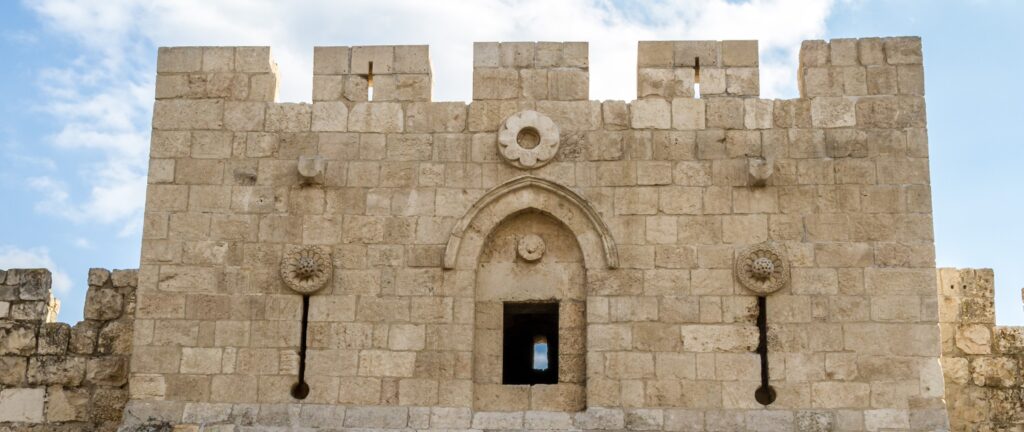
37) Walk Through Lion’s Gate
The Lion’s Gate opens into the Muslim Quarter near the northern Temple Mount wall. Its lion carvings honor Sultan Baybars and mark the gate’s defensive and ceremonial significance. This gate was once called Sheep’s Gate and is the starting point of the Via Dolorosa, making it an essential stop for pilgrims retracing the steps of Jesus.

38) See the Golden Gate
The Golden Gate (Gate of Mercy) on the east wall faces the Mount of Olives. Closed for over 500 years, it is deeply symbolic in Jewish, Christian, and Islamic traditions. Jews await the Messiah to enter here, Christians link it to Jesus’ triumphal entry, and Muslims see it as a passage for the righteous on Judgment Day. Although visitors cannot pass through, viewing its sealed arches and adjacent cemetery is a unique historical experience.

39) Visit Dung Gate
The Dung Gate is the most convenient access to the Western Wall and Jerusalem Archaeological Park. Its name reflects its ancient function: refuse and sacrifices were carried out to the Kidron Valley. Today, it serves as the main vehicular and pedestrian entrance to the Jewish Quarter. Explore the nearby Davidson Center for insights into Jerusalem’s Second Temple period.

40) Walk Zion Gate
The Zion Gate, also called the Wounded Gate, connects the Jewish and Armenian Quarters with Mount Zion. Visible bullet holes from the 1948 War of Independence tell a story of conflict and resilience. Visitors will notice its L-shaped passage and defensive features, including arrow slits and an upper balcony once used for pouring boiling oil.

41) Explore Jaffa Gate
Jaffa Gate is unique as it sits at a right angle to the wall and links the Old City to the road toward Hebron. Named for the port of Jaffa, it provides easy access to the Armenian, Christian, Muslim, and Jewish Quarters. Don’t miss the metal-coated wooden doors and Ottoman reliefs, and imagine Kaiser Wilhelm II’s historic entry on a white horse in 1898.

42) Visit the New Gate
The New Gate leads into the Christian Quarter and was added in 1887 to give pilgrims easier access. Unlike the other gates, it has no tower or gatehouse, and its quiet streets offer a peaceful route into the Old City. Recent renovations have improved accessibility and the surrounding shops make it a charming starting point for a Christian Quarter tour.

Day Trips From Jerusalem
43) Take a Dead Sea Tour
The most popular day trip from Jerusalem is a tour of the Dead Sea, which is the lowest point on Earth and the world’s saltiest body of water.
You’ve probably seen a ton of photos of people effortlessly floating on the water because it’s so salty that it’s nearly impossible to sink!
Just be sure to pack a bathing suit that you don’t care too much about. It’s common for people to cover themselves in the mud because it’s full of healthy minerals, but it can stain some swimsuits.
Most tours depart from Jerusalem early in the morning, including transportation to and from the Dead Sea. Many tours also include stops at other attractions along the way, like Masada Fortress or Ein Gedi Nature Reserve

Dead Sea Tour
Tour Duration: 8-10 Hours
Cost: $80-120
➡️ Book a Day Trip from Jerusalem to The Dead Sea!
44) Day trip to Tel Tel Aviv (Jaffa)
I spent a few days in Tel Aviv apart from my tour through Israel and had a great time. It’s definitely a lot different from Jerusalem, and while it does have some interesting history, it’s more well-known for the beaches, shopping, and contemporary art galleries.
Still, for history lovers like me, you can take a walk around Old Jaffa, see St. Peter’s Church, or go to the Jaffa Flea Market (Shuk Hapishpeshim), where you can find antiques, handmade crafts, and cool souvenirs.
The food scene is fantastic here, too.
It’s only an hour away, so it’s very easy to drive yourself or hire a private transfer and spend the day in Tel Aviv!

Tel Tel Aviv (Jaffa)
Duration: 8-10 Hours
Cost: $40-80
45) Visit Hebron
At the time of writing, most people don’t feel comfortable visiting Hebron, but if you’re reading this when the political situation situation has settled down, it’s an incredible place to see.
However, visiting Hebron is about 4 hours from Jerusalem, so it’s a long day!
Still, it offers a profound insight into one of the oldest cities in the world. Some significant sites here are the Cave of the Patriarchs, where Abraham, Sarah, Isaac, Rebecca, Jacob, and Leah are all buried.
It’s also the only city that both Jews and Palestinians occupy, but you can take a tour to visit the city, no matter your demographic.

Hebron
Tour Duration: 12 Hours
Cost: $80-120
➡️ Hebron Day Tour From Jerusalem
Where To Stay In Jerusalem
If you’ll be staying in Jerusalem for a few days, it’s nice to have a comfortable place to stay. Luckily, there are many awesome hotels right in the center of Old City Jerusalem, and there’s something for every budget.
That means you’ll be able to walk right outside of your room and start exploring the best parts of Jerusalem.
Here are some of the best places I’ve found to stay around the city!

📍Best Budget Hotel: Legatia, Jerusalem
Legatia is a top-rated, budget-friendly studio apartment situated in the heart of Old City, Jerusalem. It’s conveniently located near the HaTkuma Gate, providing easy access to Mount Zion. Guests can enjoy the entire apartment, which includes a kitchenette, a private terrace, and a private bathroom.

📍Mid-Range Option: Petrakis Inn
Petrakis Inn is a fantastic choice if you’re willing to spend a bit more on a hotel in Old City Jerusalem. With its ancient stone interior, the inn offers a truly authentic atmosphere. It’s also conveniently located just down the street from the Church of the Holy Sepulchre, allowing you to visit before the crowds arrive!

📍Luxury Option: Western Wall Luxury House
The Western Wall Luxury House is among the most lavish accommodations in Old City Jerusalem. Featuring stone walls, modern furniture, and stunning decorations, guests enjoy the entire apartment to themselves. It’s also conveniently located just across the street from the Western Wall and the Dome of the Rock.

FAQs
Planning a visit to Jerusalem can be daunting. Here are the answers to some common questions I get about planning a trip to the ancient city.

How do you spend a day in Jerusalem?
If you only have a day in Jerusalem, you should try to visit all of the major tourist sites within the Old City during the morning, such as the Western Wall, the Church of the Holy Sepulchre, and the Dome of the Rock.
In the afternoon, either spend it checking out the religious sites around the Mount of Olives or see one of the museums in the modern city.

What to wear in Jerusalem?
When visiting Jerusalem, especially religious sites, dress modestly. For men, this means long pants and covered shoulders. Women should wear skirts or pants that cover the knees and tops that cover the shoulders.

How many days do you need in Jerusalem?
To fully experience Jerusalem, plan to spend at least 3-4 days. This allows enough time to explore the Old City, visit major museums, and take day trips to nearby attractions like the Dead Sea and Masada.

What is the most important thing in Jerusalem?
This question truly depends on the person, but for me, the most important thing to do in Jerusalem is explore the Old City, see the different holy sites surrounding the city (especially the Garden Tomb), and learn as much as I can from its rich history.

Final Thoughts
I absolutely loved my time in Jerusalem. Of all the places I’ve ever visited, it was definitely one of the most impactful and fueled my love for historical sites and Christian destinations!
The Garden Tomb is my favorite thing to do in the city, but I also loved wandering through the Old City and seeing places like The Western Wall, the Dome of the Rock, the Church of the Holy Sepulchre, and the Tower of David.
But don’t forget to venture outside the city walls, too.
Mount Zion has an awesome view of the city. The Mount of Olives has some of the most important biblical sites in the city, and I could spend days at Yad Vashem Holocaust Museum and the Israel Museum.
But if you only have 1-2 days, this Old Jerusalem Full-Day Tour is perfect for you!


