

How to Tour the White House in 2026
Q: How Do You Tour the White House in 2026? A: Apply to your Congressperson 3 Weeks to 3 Months in advance.
I have wanted to tour the White House since I was high school, but the timing was never right. Tours were suspended for two years after the 9/11 attacks, for 6 months during the Obama administration, and for two years during the Covid pandemic.
Finally in summer 2022 I was determined to make it happen. I submitted a request to my congressperson and 2 months later my dream came true.
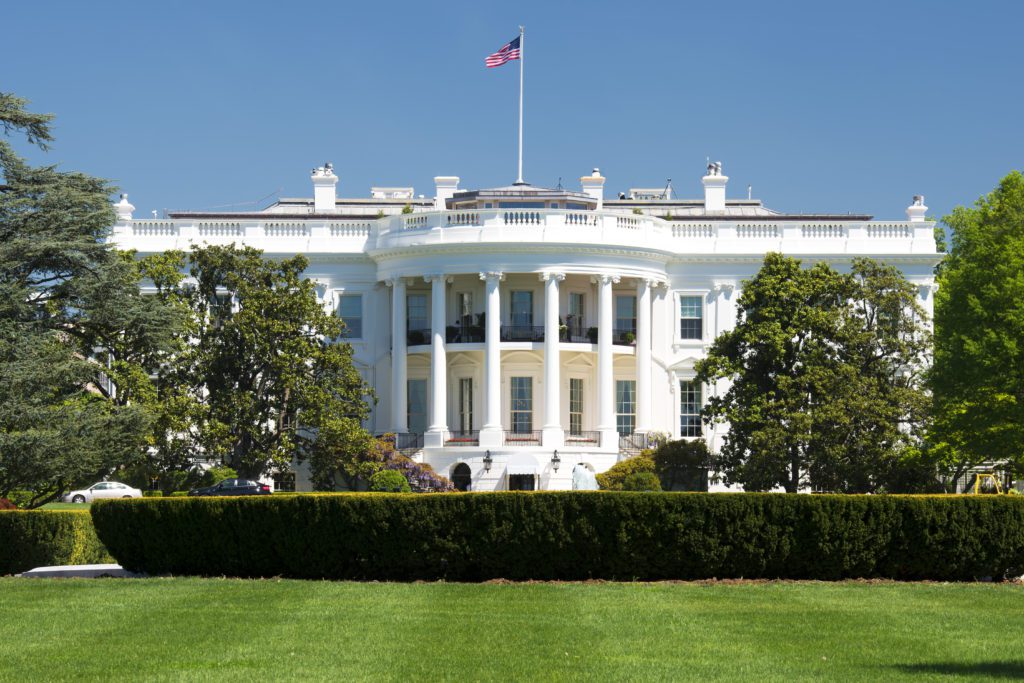
Famously located at 1600 Pennsylvania Ave, the White House is the official residence and workplace of the President and First Family of the United States.
This post will tell you everything you need to know about both White House History and How to Tour the White House.

Plan Your Trip With My Favorite Resources
– Best Accommodations: Booking.com
– Top Day Tours: Viator.com
– Purchase Travel Insurance: SafetyWing
Key Takeaways
* Free, self-guided tours of the White House are available Tuesday-Thursday from 7:30am-11:30am and Friday-Saturday from 7:30am-1:30pm. (Except for federal holidays or special events).
* You can see everything in 45 minutes if you rush. Follow the arrival time and visitor instructions on your confirmed reservation.
* Tour requests must be submitted to your Congressperson 7-90 days before your requested tour date, subject to availability. They fill up fast, so submit your request as soon as possible.
* Submit your request through your U.S. Representative or Senator. Check the official White House visit page before planning.
* For security reasons. you will not be told if your request was approved until the week before your visit.
* White House Tours are subject to change due to inclement weather or official use. Call the 24/7 White House Visitors Office Information Line at 202-456-7041 for up-to-date information.
How to Request a Tour from your Congressperson
To tour the White House, you have to place a request with your state’s two senators or your local representative. Not sure who your Congresspeople are? You can search online. Or contact the U.S. House of Representatives Switchboard at 202-225-3121 or the U.S. Senate Switchboard at 202-224-3121.
Tour dates fill up quickly. To maximize your chances, apply to both of your state’s U.S. Senators and the U.S. Representative for your district.
For example, I live in California. The offices of both Senator Dianne Feinstein and Senator Alex Padilla both told me that they were out of tickets for my requested dates. Fortunately, my U.S. Representative Jackie Speier was able to give me a ticket on one of my requested dates.

➡️Check out Washington DC Bus Tours
When Will I Learn if My Request was Approved?
When you apply for a White House Tour through your Congressperson’s office, you should give them ALL of the dates you will be in D.C. to increase your chances. Unfortunately, due to security concerns you will not be notified if your tour request was approved until 14 days before your tour date,
That makes it hard to plan a vacation. Therefore, I recommend having a Plan B that does not require purchasing a ticket. For example, if your White House tour request is denied (gasp!) plan to visit one of the 17 Smithsonian Museums located in Washington D.C. on that day instead. With the exception of the National Museum of African American History and Culture, you do not make to have an advance reservation.

➡️Check out DC: White House, National Mall and Lincoln Memorial Tour
Which Rooms are included on the White House Tour?
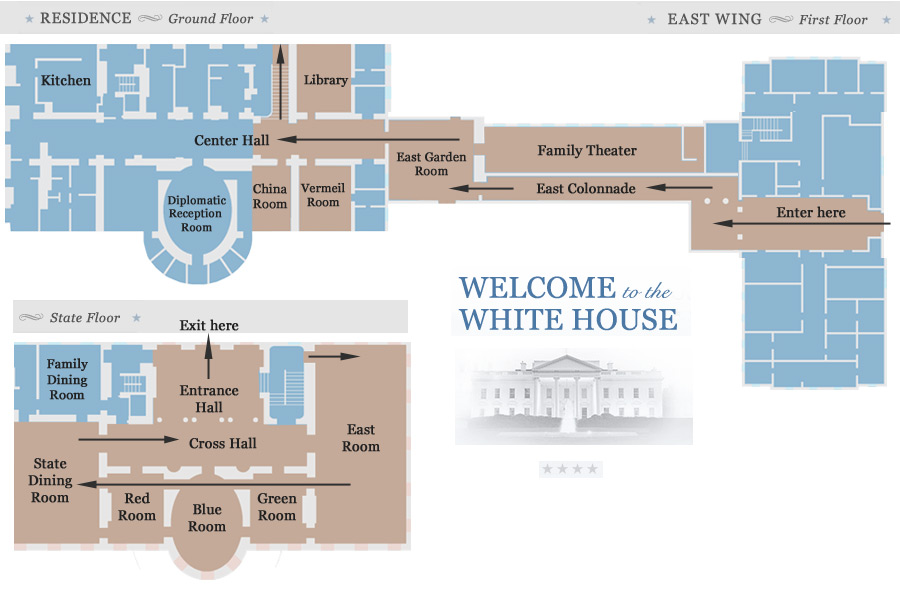
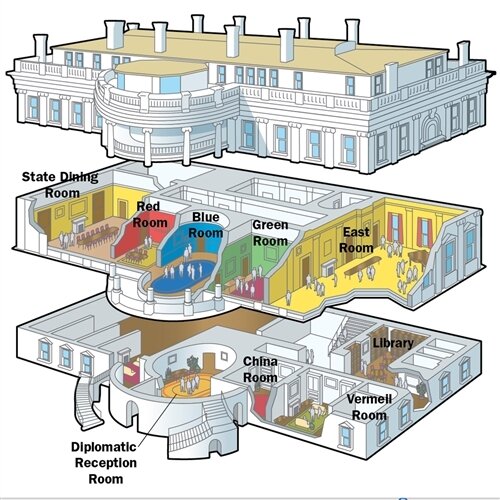
The White House Tour includes 16 locations on the east side of both the Ground and First Floors.
This includes 3 rooms on the Ground Floor of the Residence – the Library, Vermeil Room, and China Room. And 5 rooms on the First Floor of the Residence – the East Room, Green Room, Blue Room, Red Room, and the State Dining Room.
Note that visitors are not allowed inside the rooms; they have to view them from the roped off doorway. (Except for the State Dining Room, which guests walk through). Members of the Secret Service are on hand in every room to answer questions.
Also, public tours do not include the Second and Third Floors of the Residence where the President and his family live. Or the West Wing, where the president works.
What Items are Prohibited on the White House Tour?
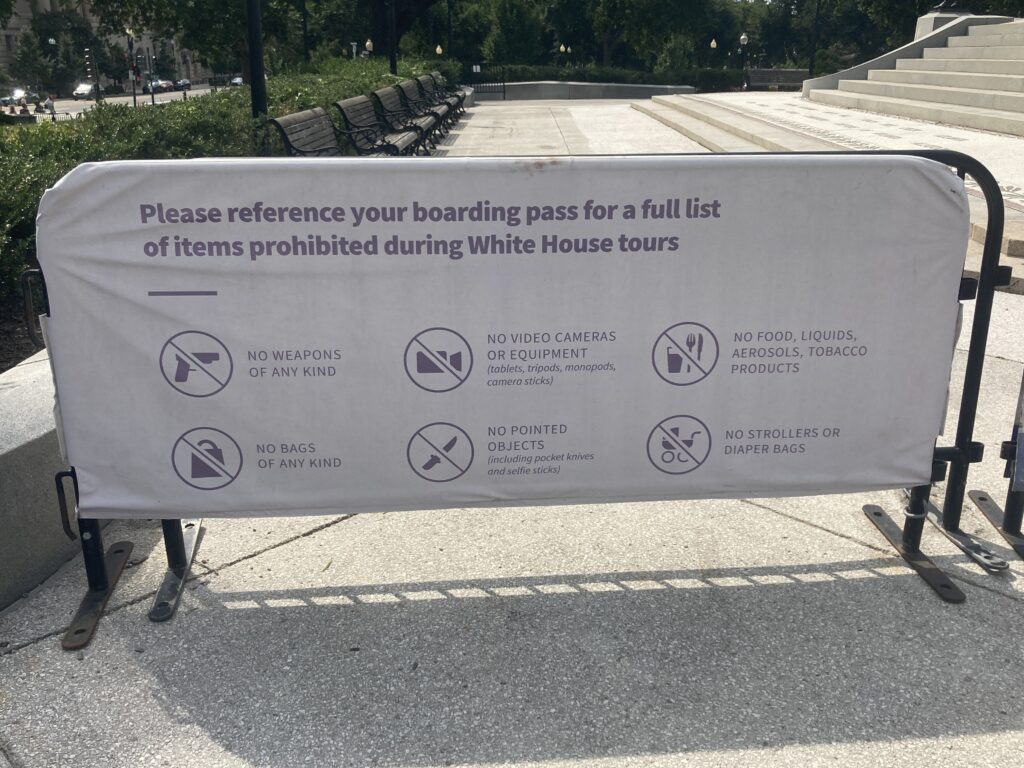
The following items are not allowed inside the White House. There are no lockers available, so leave them in your hotel room.
Note that “bags of an kind” are prohibited. There was a woman in my tour group who had a small purse and they allowed her to enter. However, I would not count on it.
Know Before You Go
* Dress for the weather – you have to wait outside before your tour starts.
* Arrive 15 minutes before your scheduled tour time.
* No late arrivals are accepted.
* All guests must be previously registered via the RSVP link provided by the White House.
* Silence your cell phone and refrain from phone calls during the tour.
* No flash photography or video recording is permitted during your tour.
White House 101
Set on 18 acres, the White House consists of a main residence with an east and west wing on both ends. As the name suggests, it is a beautiful, white, neo-classical sandstone building.
The Residence consists of 6 levels, 132 rooms, 35 bathrooms, 8 staircases, and 3 elevators. In addition, there is a tennis court, basketball court, putting green, bowling alley, movie theater, jogging track (built for President Bill Clinton), and a swimming pool.
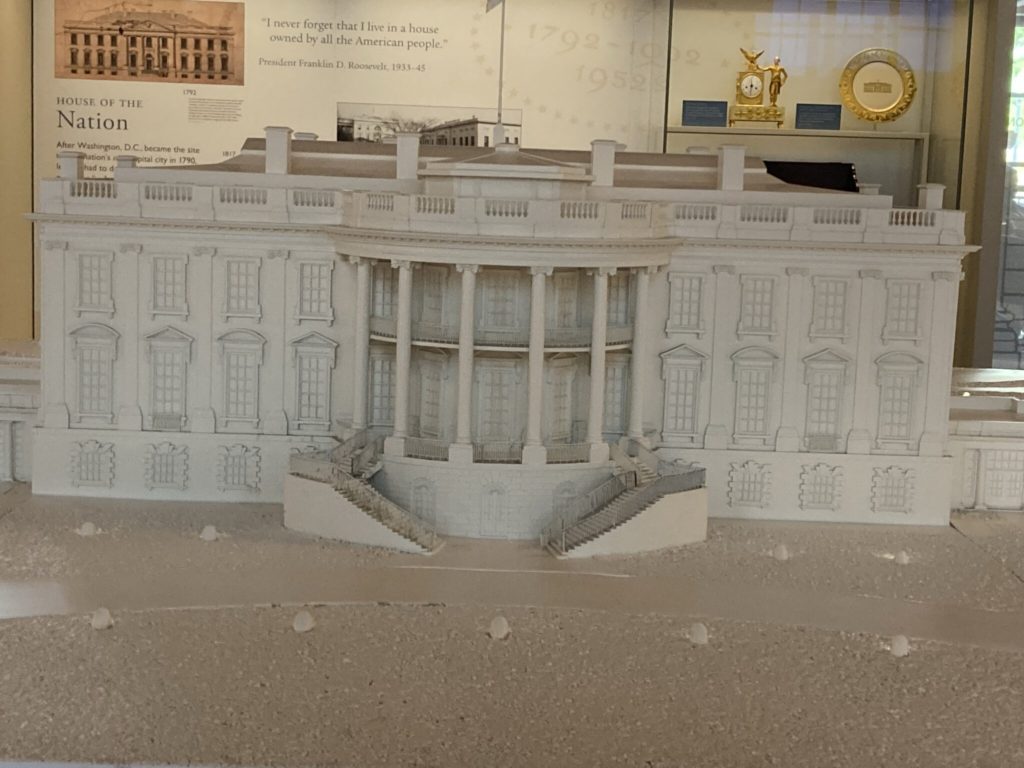
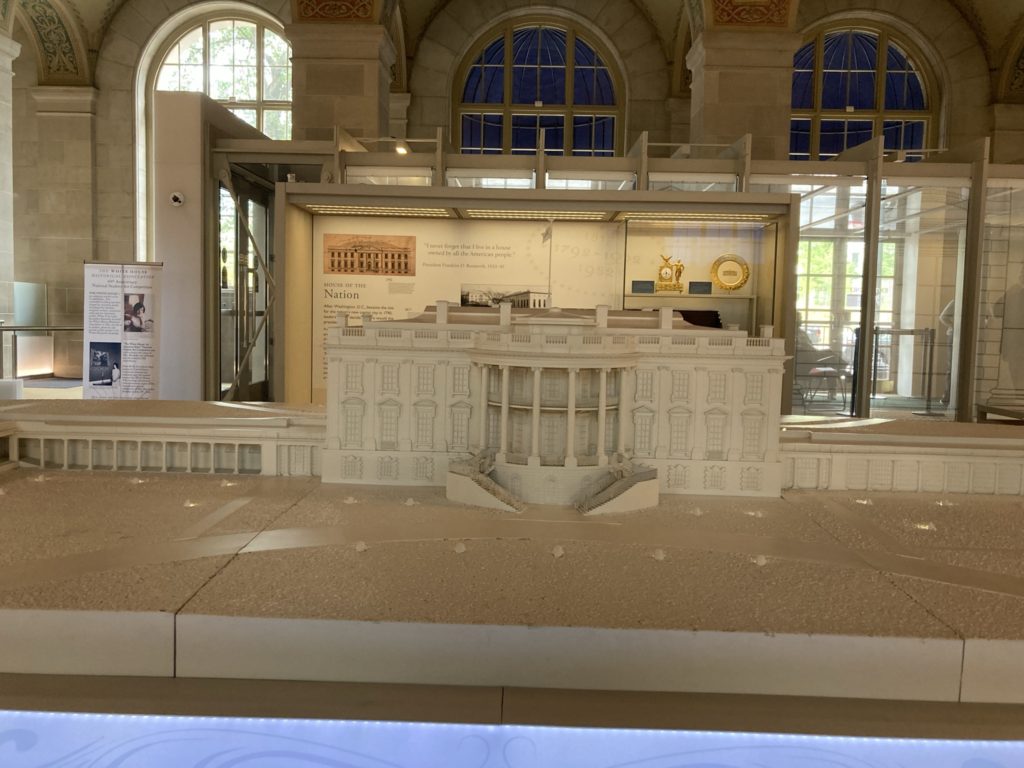
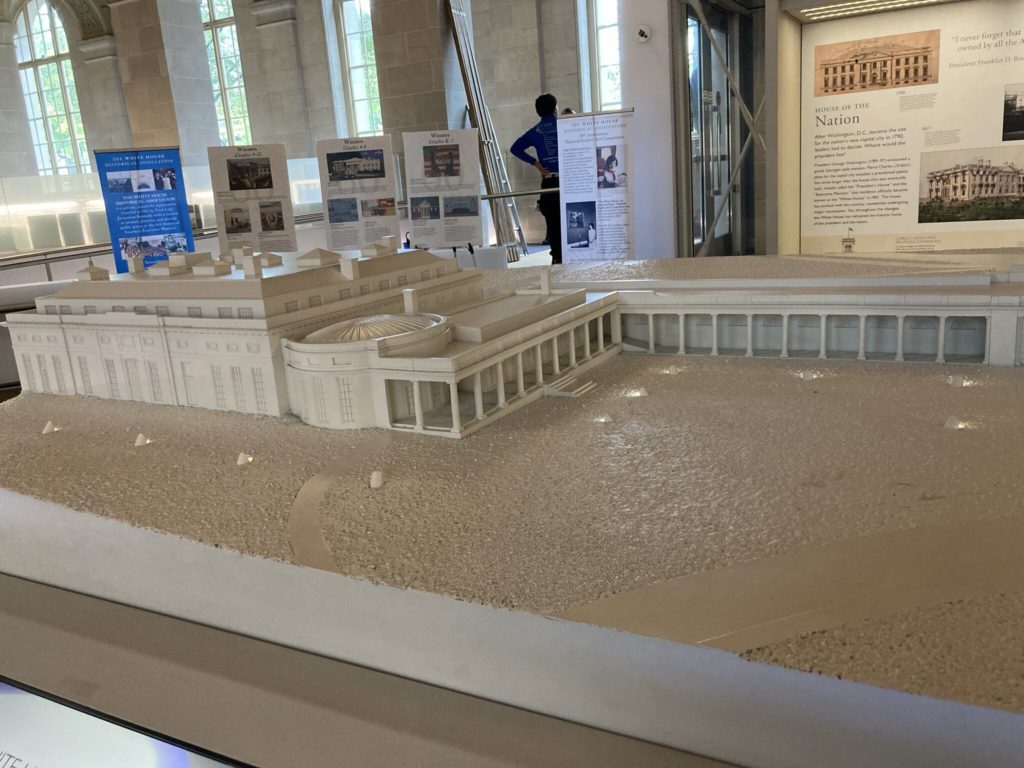
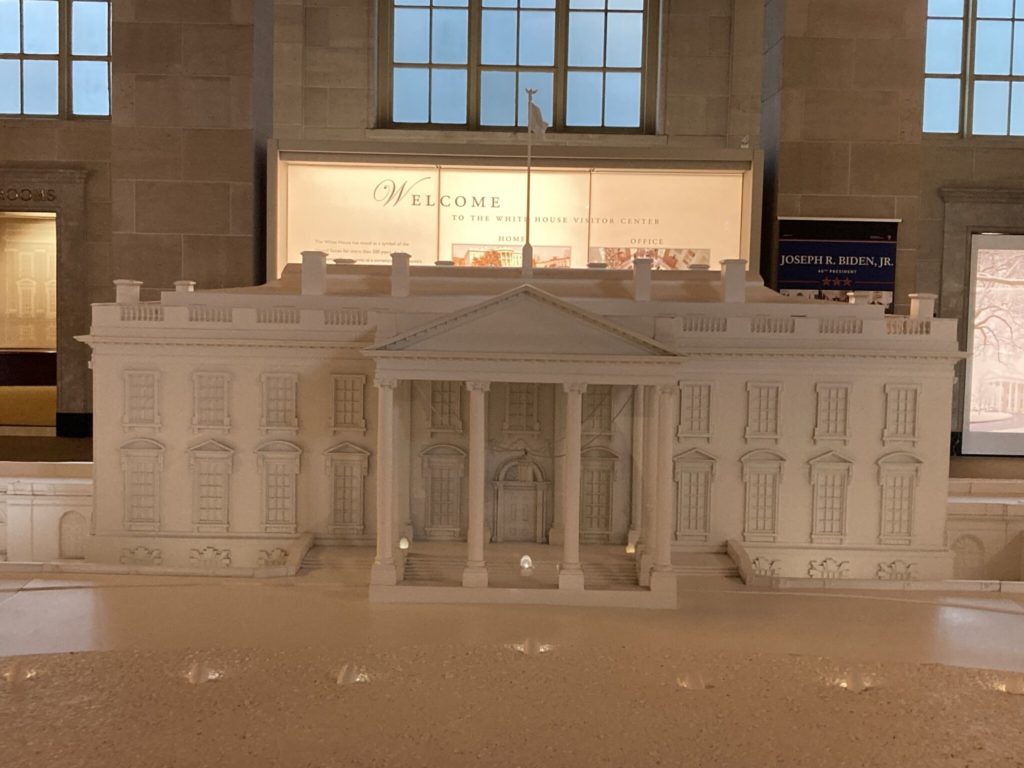
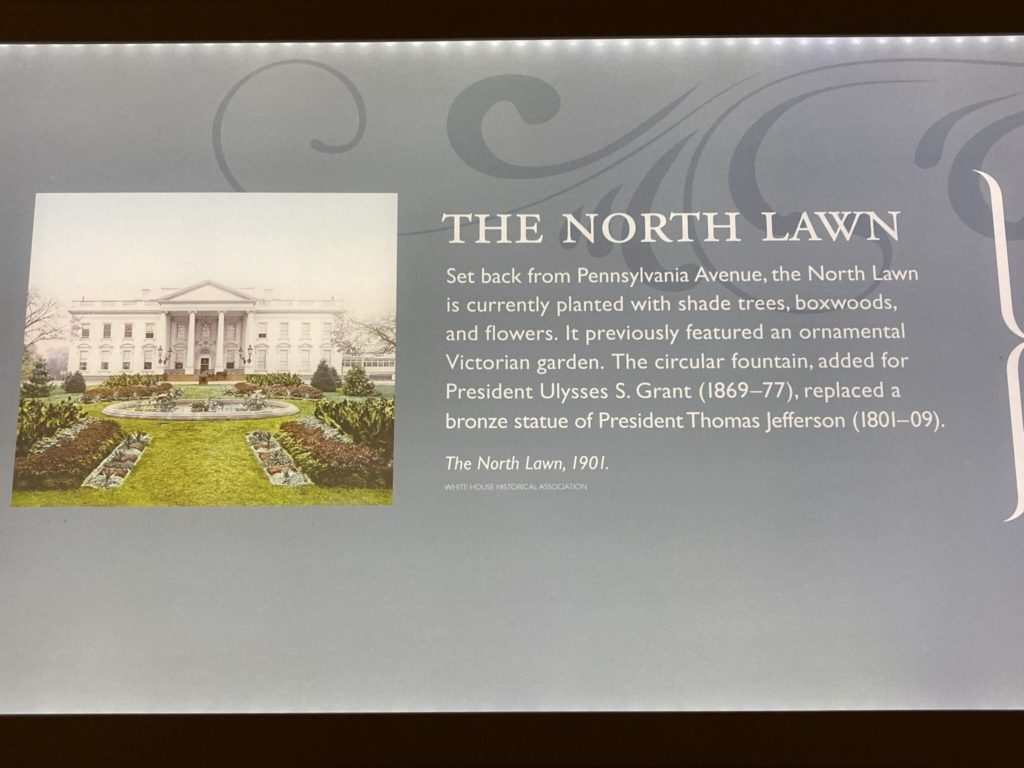
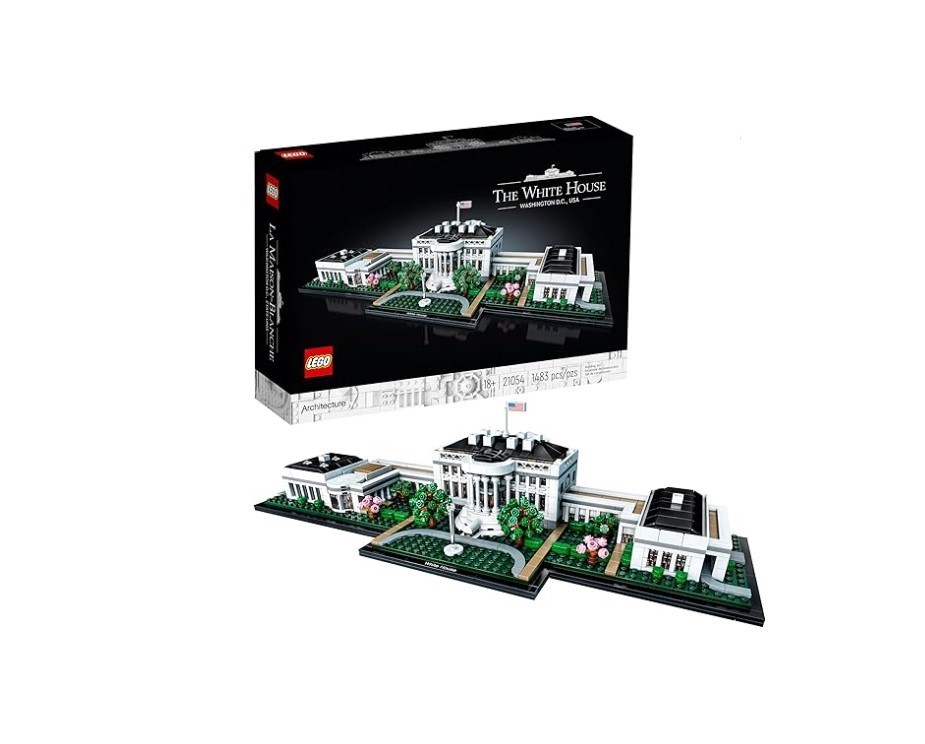
Check out the below model of the White House, which is on display at the White House Visitor Center. The center is located one block from the White House, is free, and does not require an advance reservation.







➡️Check out Best of DC Plus US Capitol and National Archives Reserved Entry

How many Floors does the White House have?
The White House Residence has 5 floors, including the basement. (Note that the East Wing has 2 floors and the West Wing has 3 floors).
1. Sub-basement – Mechanical Room (Air Conditioning and Electrical Panels), Storage, Dishwashing Room.
2. Ground Floor. – Tour Entrance, Library, Vermeil Room, China Room, Diplomatic Reception Room, Map Room, Kitchen, Flower Shop, Carpenter’s Room, Nixon’s Bowling Alley, and more.
3. First Floor – Official Entrance, East Room, Green Room, Blue Room, Red Room, State Dining Room.
4. Second Floor – Residence of the President and his family.
5. Third Floor – Solarium, Music Room, Several Bedroom Suites
White House History
In 1789 the U.S. Constitution was ratified and George Washington became the first U.S. president. New York City was named the first capital. The following year the capital was moved to Philadelphia.
Then in 1790 Congress voted to move the capital to a newly formed district called Washington D.C. It took 10 years to build, Finally, in1800 Washington D.C. became the official U.S. capital.

George Washington – Selected the Location of the White House
On April 3, 1789, George Washington became the first U.S. President. Two years later, he chose the location for the “President’s House” at the current location.
A public competition was held to choose the design for the new presidential residence. Fun Fact! Thomas Jefferson (who later became the third U.S. president) anonymously submitted a design! A neoclassical design by Irish-born architect James Hoban was chosen.
However, the residence (later called the White House) was not finished until after Washington was out of office.


John Adams – First President to move in
In 1796 John Adams became the second U.S. president. On November 1, 1800 Adams and his wife Abigail moved into the newly constructed residence. Called the “President’s House”, it was made out of sandstone and was still the original grey color.
The plaster on the wall was still wet. Abigail famously hung her laundry to dry in what is now the elegant East Room.


Thomas Jefferson – Built East and West Colonnades
In 1801, Thomas Jefferson became the third U.S. president and moved into the President’s House.
Two years later, he added low colonnade terraces on the east and west sides of the residence to conceal stables and storage. They would later become the East and West Wings.
Jefferson was the first president to open the White House for public tours.
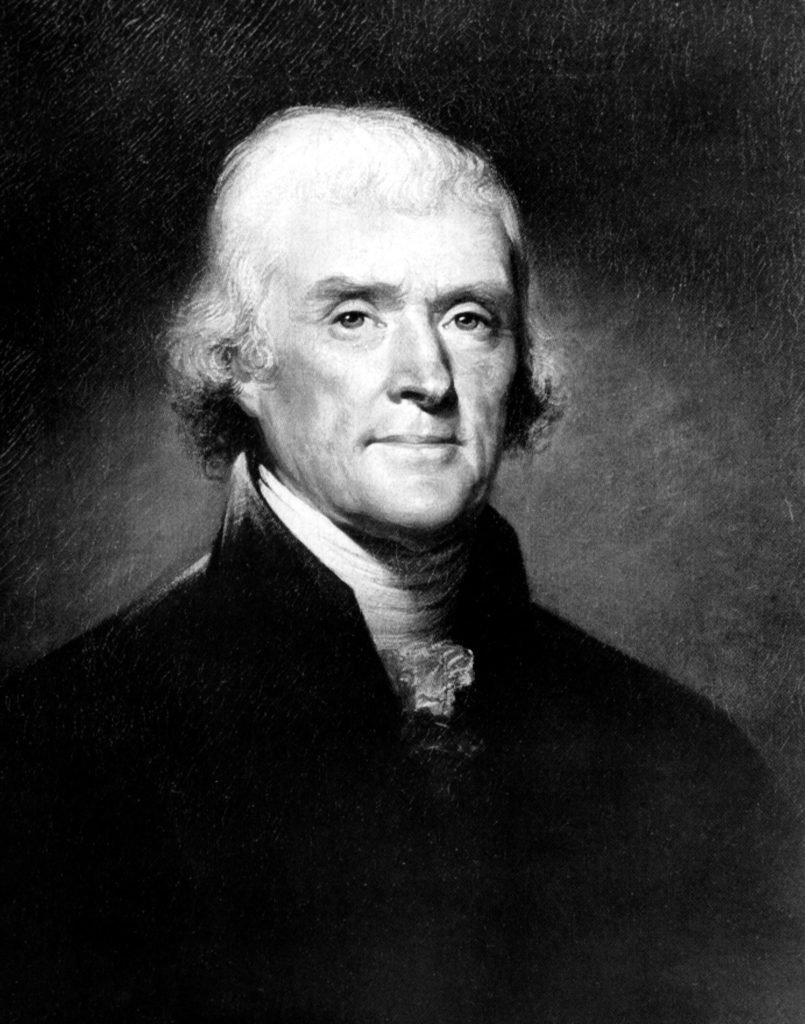


Dolly Madison – Flees the Burning White House
Sadly, the newly formed United States soon found itself at war. During the War of 1812, the British captured Washington D.C. and set the White House (which was still called the President’s House) on fire.
When First Lady Dolly Madison fled the building, she heroically left her personal belongings behind and instead grabbed a portrait of George Washington and some official papers.
The young country soon kicked the British out, and reconstruction of the President’s House began. It took two years. The design of the house was not changed. But the grey sandstone was painted white for the first time. Then in October 1817 President James Monroe and his family moved in.


President Theodor Roosevelt – Built East and West Wings
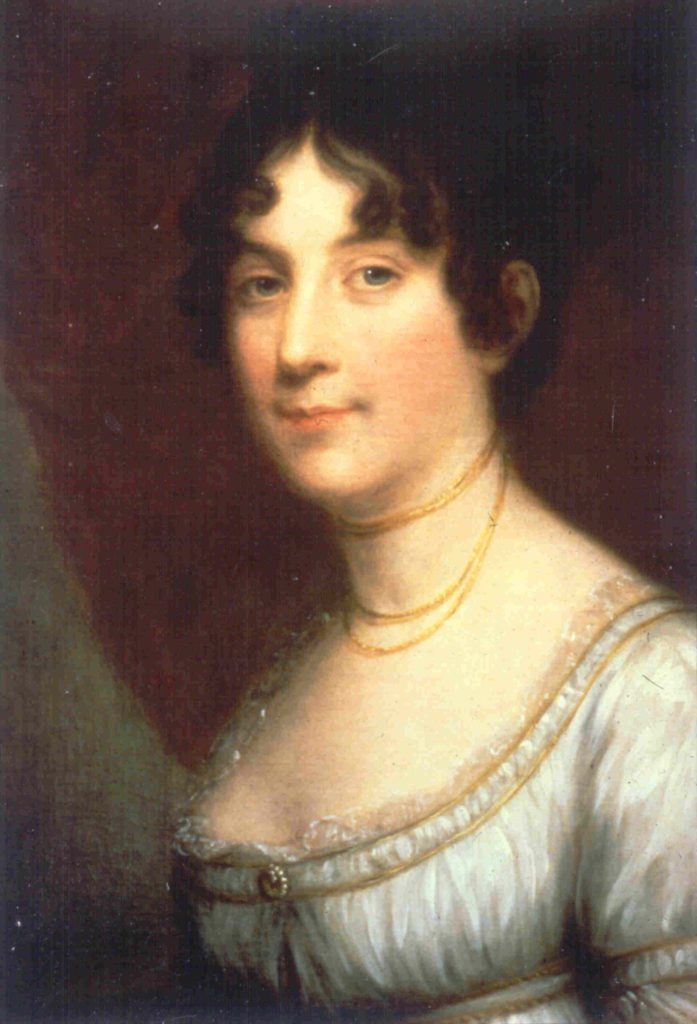
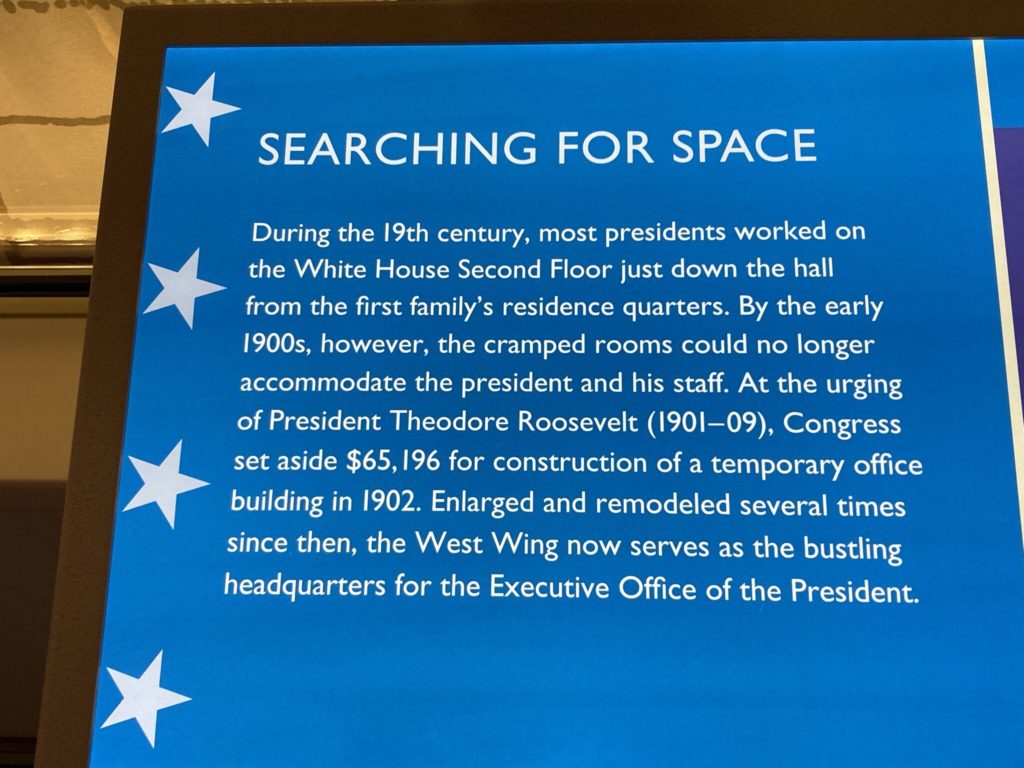
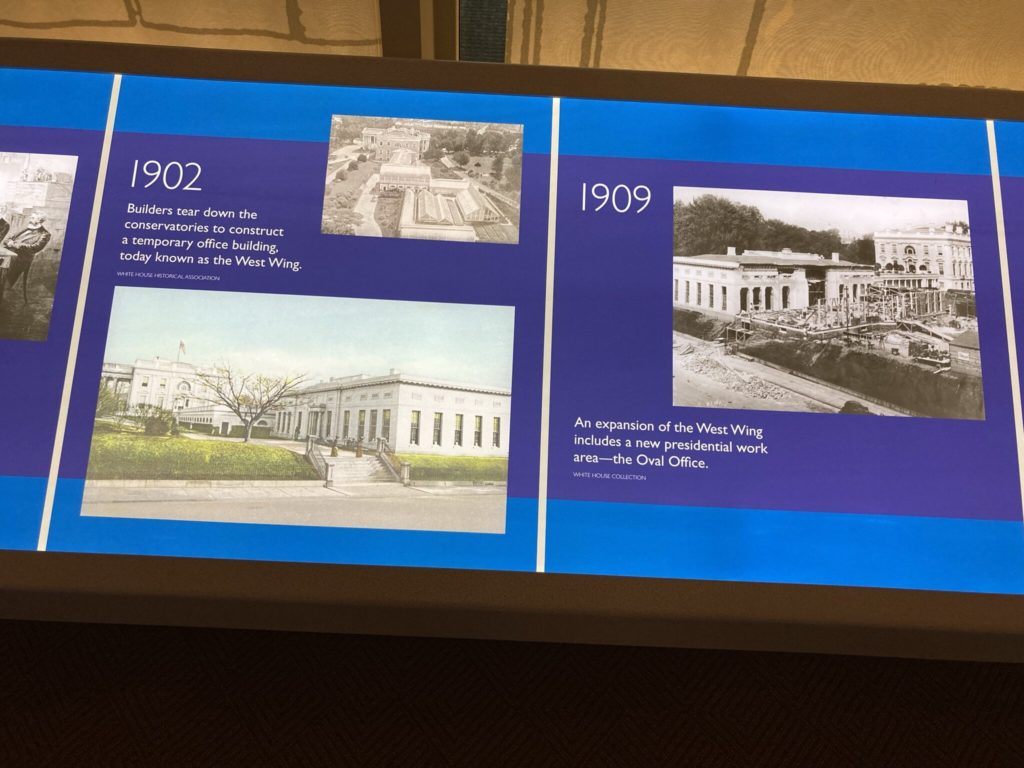
In 1902 President Theodor Roosevelt began a major renovation of the White House. This included construction of the West Wing to separate the offices from the residence.
It was originally built in a rectangle shape. In 1909 President William Howard Taft changed the shape to an oval.
Roosevelt also constructed a small East Wing. It was used as an entrance for large social gatherings that had many cars and carriages. A large cloak room was built near the entrance that is now the Family Theater.
In addition, in 1901 Roosevelt officially changed the name of the building from the President’s House to the White House.
The Truman Renovation
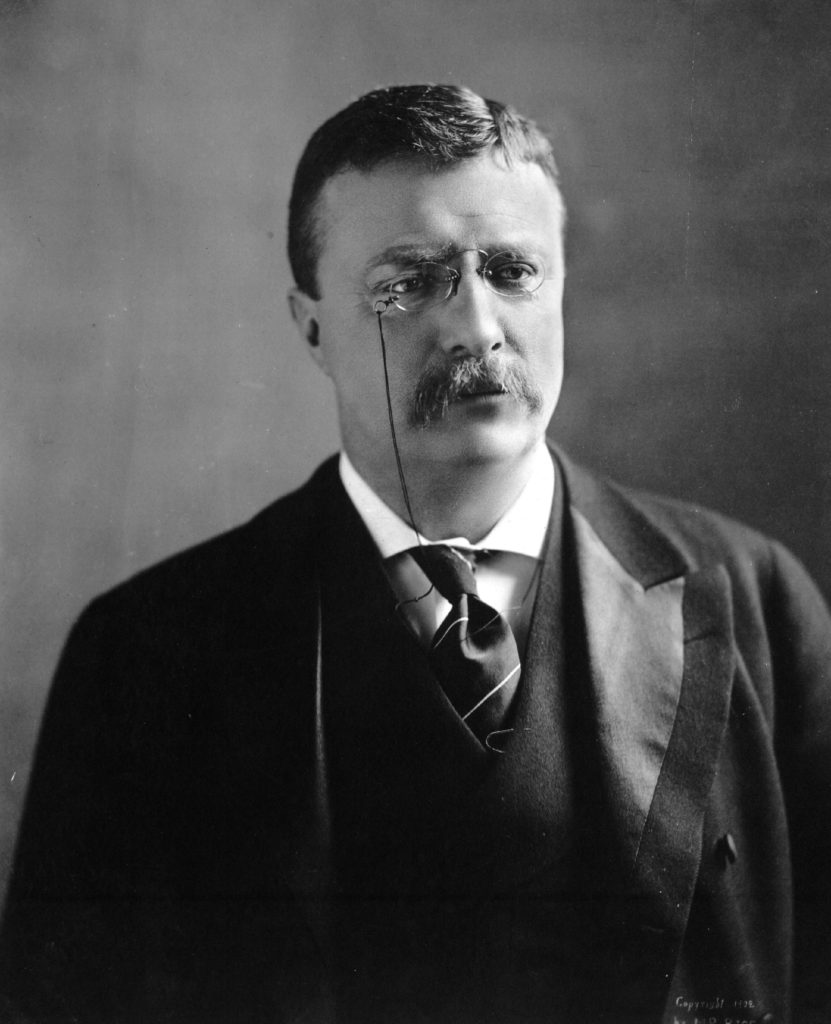
Astonishingly, in 1948 a study showed that the White House was about to collapse!!! In what is now called the is now called the Truman Renovation, the White House was completely rebuilt from1948-1952.
Only the outer brick walls remained. President Truman and his family lived across the street at Blair House during the 4-year project.

Jaqueline Kennedy – White House TV Special
Fast forward to 1961. When First Lady Jaqueline Kennedy moved into the White House, she was appalled that there were no furnishings older than 1946. Determined to turn the White House into a “living museum”, she created the White House Historical Association and raised over a million dollars in private donations.
Mrs. Kennedy worked to restore the historic integrity of the public rooms. And to display the best of American artwork, furniture, and décor. She personally rummaged through government storage facilities looking for presidential antique furniture to restore.
Her 1962 TV special “A Tour of the White House with Mrs. John F. Kennedy” enamored audiences worldwide and earned an Emmy.
Where do I Check in for my Tour?
The White House Tour meeting place is located in Sherman Park at 15th St NW and Alexander Hamilton Place NW. If you are taking Rideshare, use the White House Visitor Center as the address.

Travel Tip: The meeting place for the White House Tour is located diagonally across from the White House Visitor Center, which is located at 1450 Pennsylvania Avenue NW.
If you are standing in front of the center facing the street, turn left then walk to the corner and turn right. The line for the tour is halfway down the left side of the street in front of the below statue.
The White House Tour – Grand Floor
The White House Tour starts at the East Wing Entrance. Guests walk down the East Colonnade Corridor. and peak into the Family Theater on their right. They can view the Jacqueline Kennedy Garden outside the windows on their left.
Guests then pass the White House Gift Shop and enter the Ground Floor of the Residence. There they can view 3 rooms – the Library, Vermeil Room, and China Room.

1) The East Wing Entrance
The White House Tour begins at the East Wing Entrance. All White House visitors – including staff and dignitaries – enter through the East Wing. It is the entrance for the offices of the First Lady, the Social Secretary, and various administrative departments.
The president lives and works on the west side of the complex. So it makes sense that visitors enter through the east side. However, that means that the chances of you running into the commander-in-chief in his PJs are slim!

2) The East Wing Lobby
After you enter the East Wing Entrance, you will be in a small Lobby called the East Wing Lobby. It serves as a reception area for visitors, staff, and dignitaries entering the offices and departments within the East Wing.
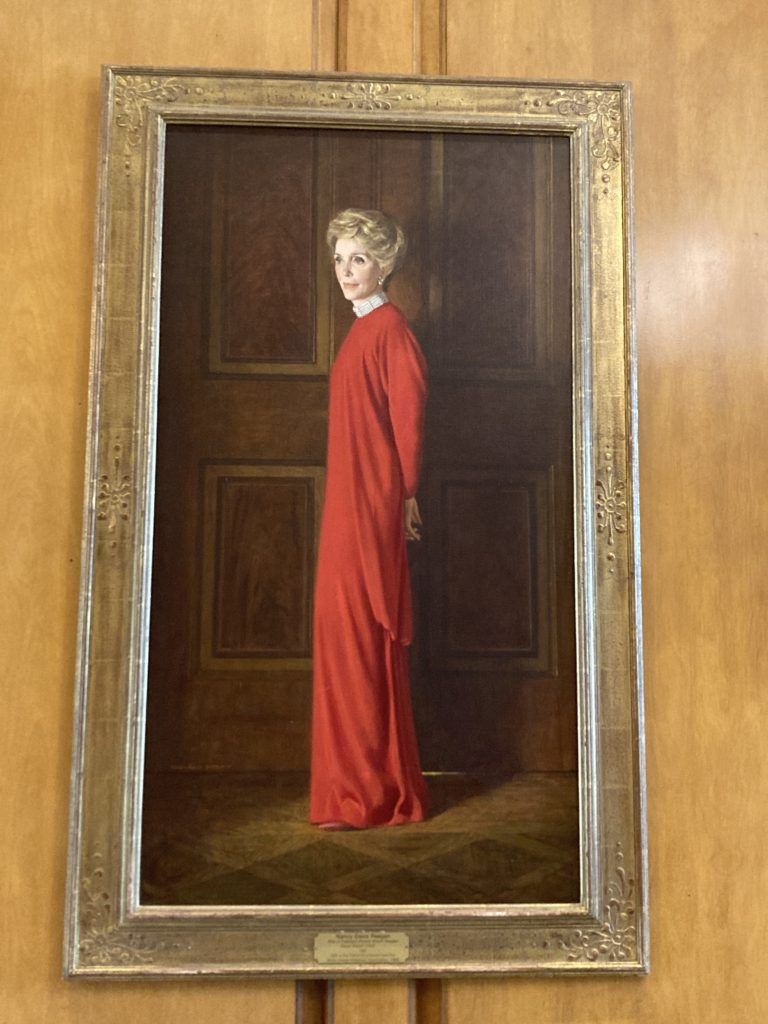
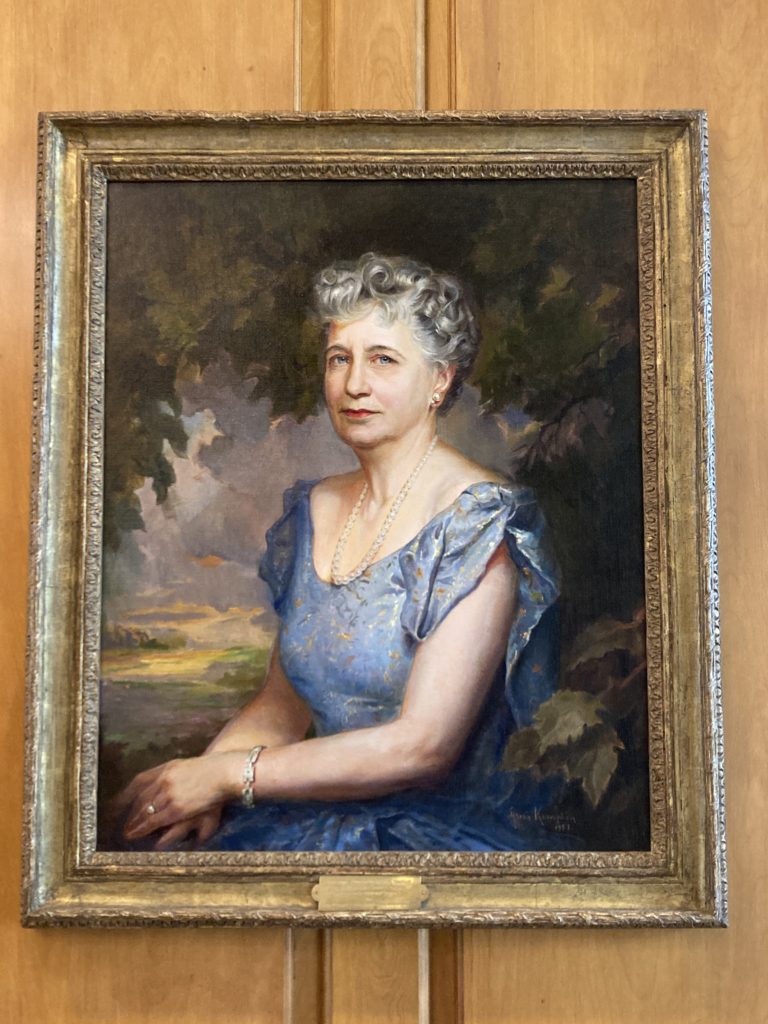
There is a Secret Service agent manning the desk. And portraits of several former First Ladies line the walls.





3) The Jacqueline Kennedy Garden
After you exit the East Wing Lobby, you will be standing in the East Garden Room. You can look out the window and see an up close (although obstructed) view of the White House South Side portico!!! That’s the closest most of us will ever get to it.
Tour group members are not allowed to go outside. to view the Jacqueline Kennedy Garden. However, there are several windows you can look out to view the garden. Named after the former First Lady in 1965, the garden is used for informal entertaining.
Note that the Jacqueline Kennedy Garden should not be confused with the infamous Rose Garden, which is located in the West Wing near the Oval Office).


4) The East Colonnade Corridor
Next you will walk down a long hallway called the East Colonnade Corridor. On the left there are several windows with a view of the Jacqueline Kennedy Garden.
On the right side hundreds of pictures line the walls. They feature former U.S. presidents and their family members in different rooms of the White House.


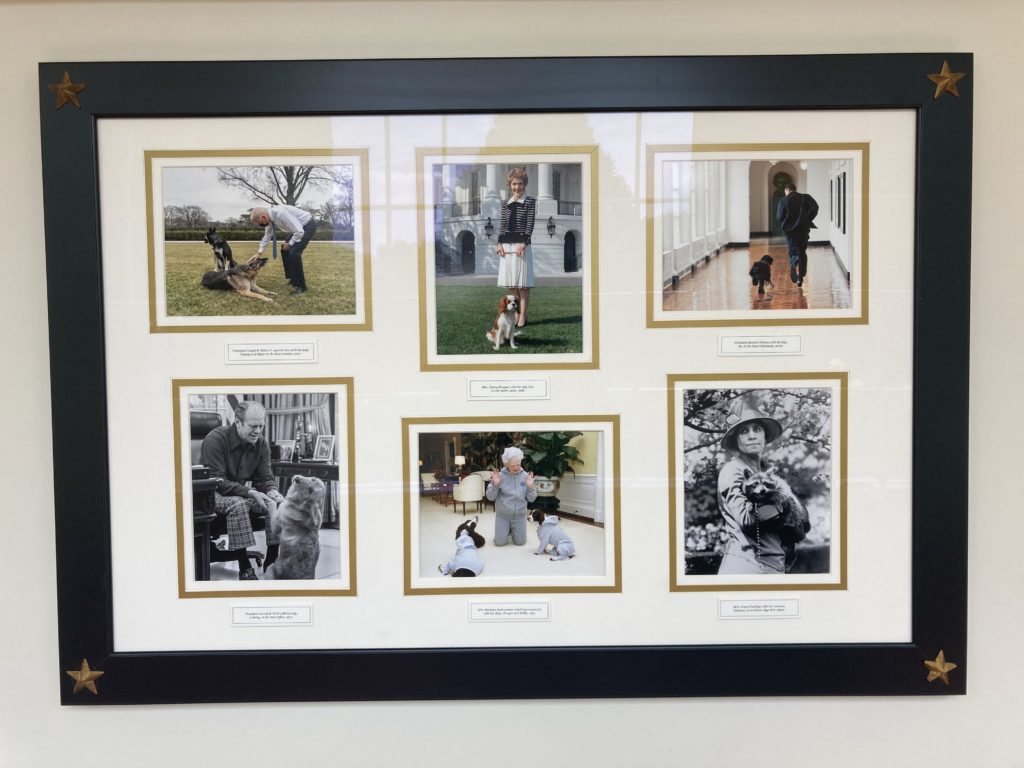

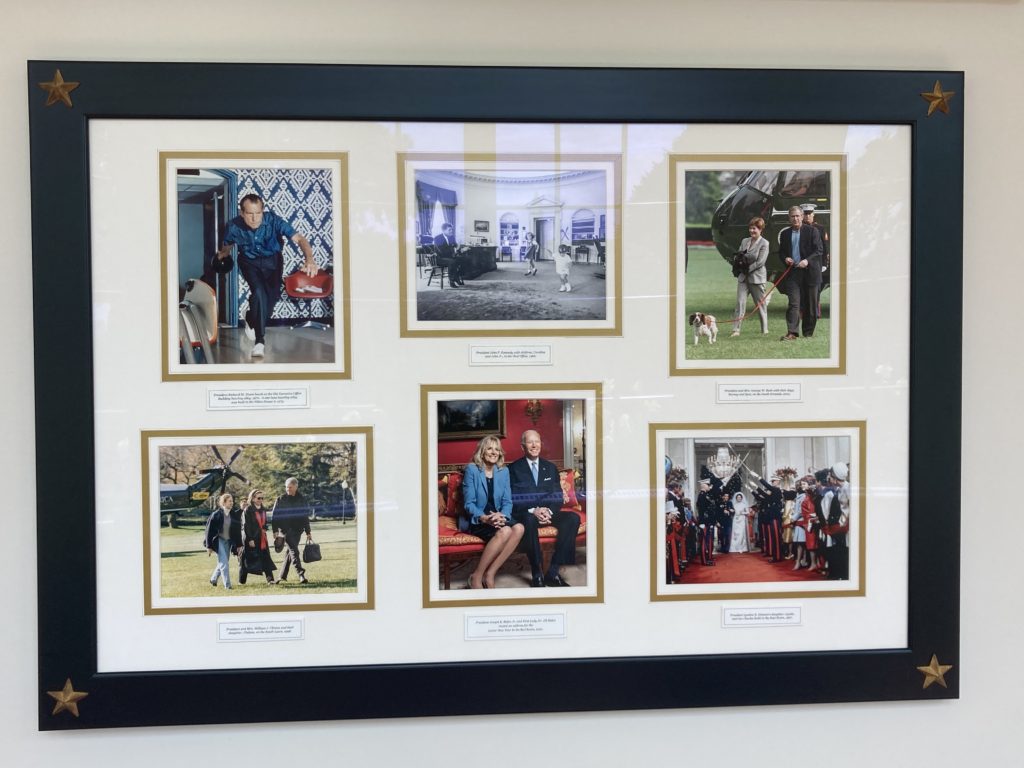


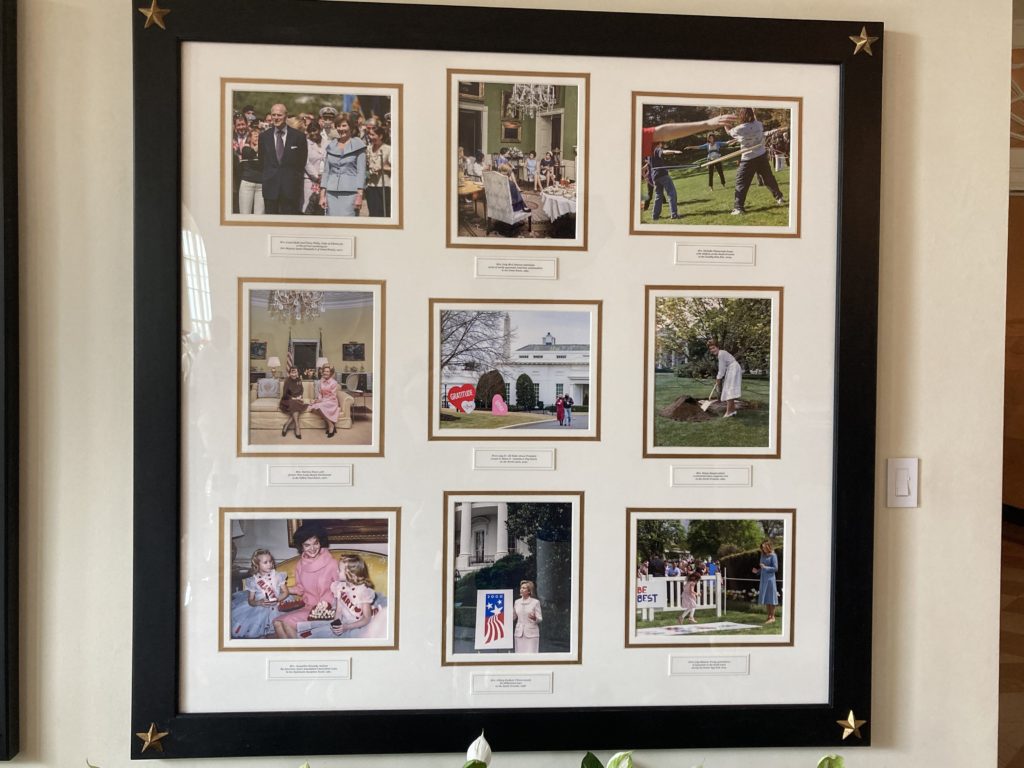
5) The Family Theater
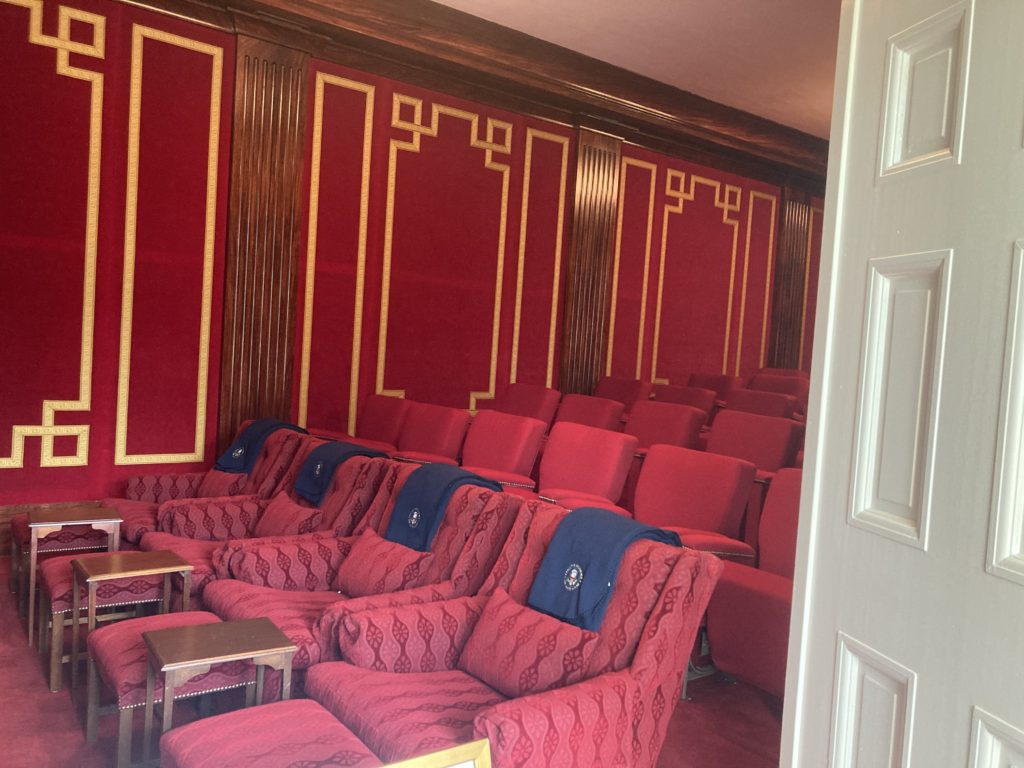
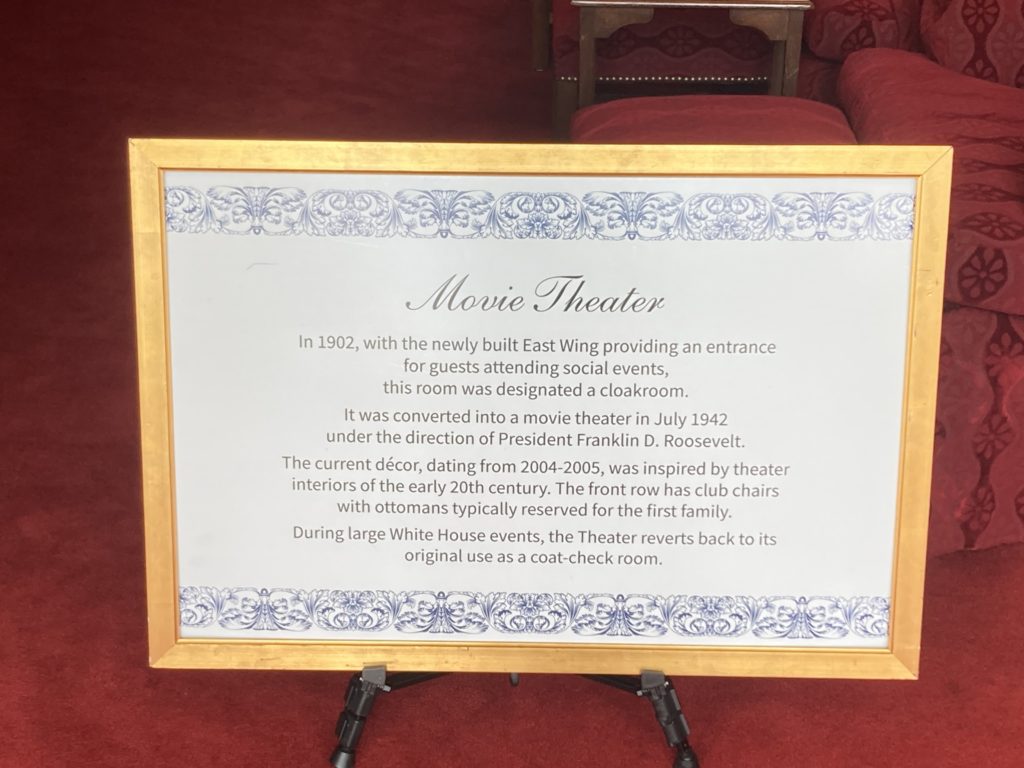
Next up on the tour is a 42-seat movie theater called the Family Theater. It’s called that because on movie nights the first family usually sits in the 4 large armchairs in the front row.
The library runs the length of the East Colonnade Corridor. However, most of it is behind a wall so you can’t see it.
When the East Wing was built in 1902 the theatre was used as a cloak room. Then in 1942 President Franklin Roosevelt converted it into a movie theater. In 2004 President George Bush and his wife Laura gave the theater a makeover, inspired by theater interiors of the early 20th century.


6) The Visitor’s Foyer
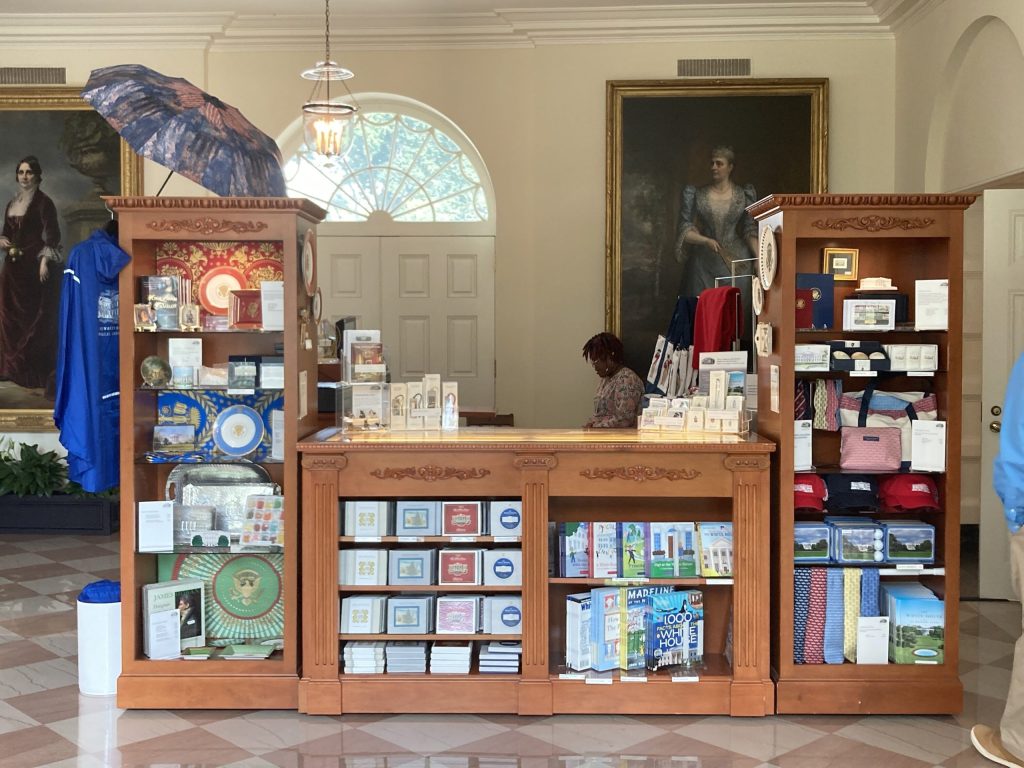
At the end of the East Colonnade is the Visitor’s Foyer. On the nights when there are State Dinners for visiting dignitaries, this is where the press snaps pictures of celebrities and politicians who are on their way upstairs to the State Dining Room.
On most days it is the location of a small, portable White House Gift Shop. No one who travels a lot is surprised to learn that the tour includes a Gift Shop. It features books, postcards, ornaments, jewelry, magnets, and more.
And there are more items for sale on the online White House Gift Shop. This includes apparel, jewelry, ornaments, magnets, key chains, and military gifts.
My favorites are the Annual White House Ornament Collection. And a set of Handcrafted Rooms of the White House.
Entering the Ground Floor Residence
After you leave the Visitor’s Foyer, you are officially inside the White House Residence.
As part of the tour you will see the Library, Vermeil Room, and China Room. However, you won’t get to see Nixon’s bowling alley, the main kitchen, the office of the White House physician, the carpenter shop, and the flower shop.
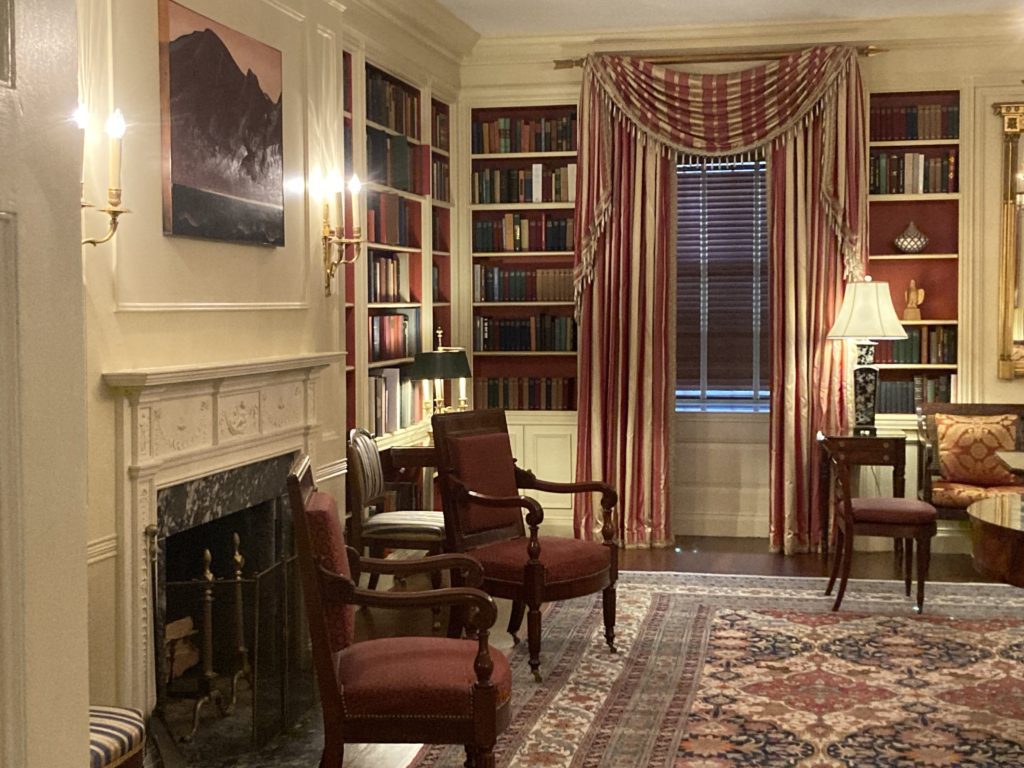
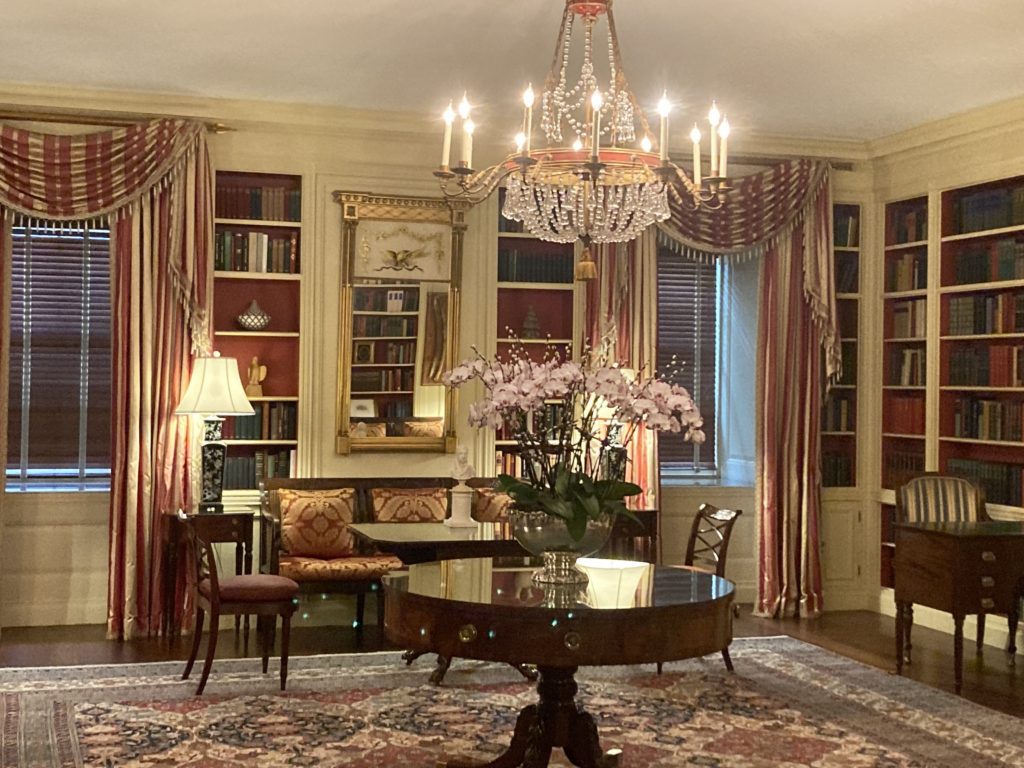
7) The White House Library
After you leave the Gift Shop, the first room you will see on the right side is the Library.
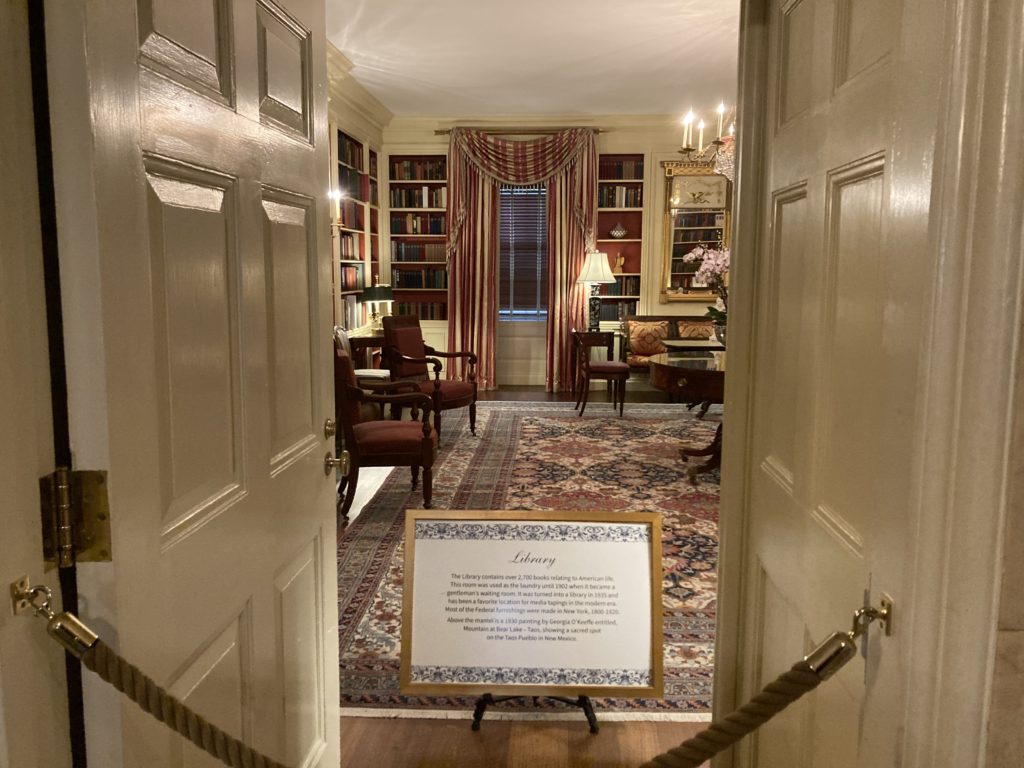
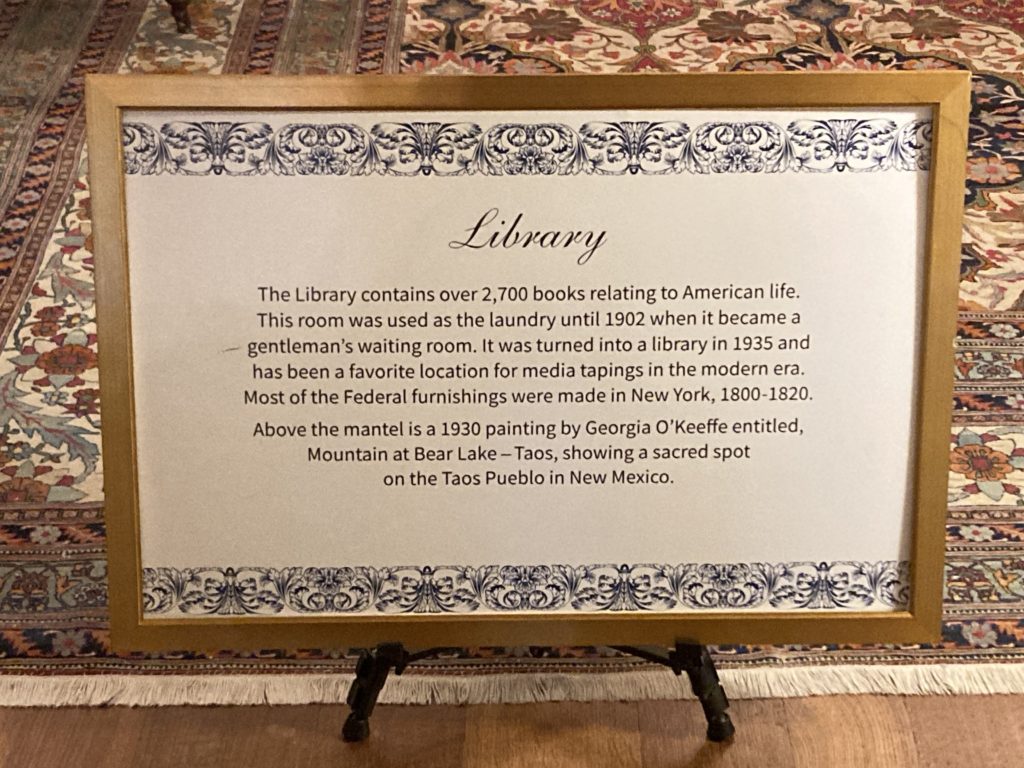
Originally built as a laundry. in 1902 it became a gentleman’s waiting room. Then in 1935 it was turned into a library which now contains over 2,700 books relating to American life. The Library is sometimes used for White House interviews.
Most of the furnishings in the library were made in New York from 1800 – 1820. Above the mantle is a 1930 painting by Georgia O’Keeffe called Mountain at Bear Lake – Taos. It features a secret spot on the Taos Pueblo in New Mexico.
8) The Vermeil Room
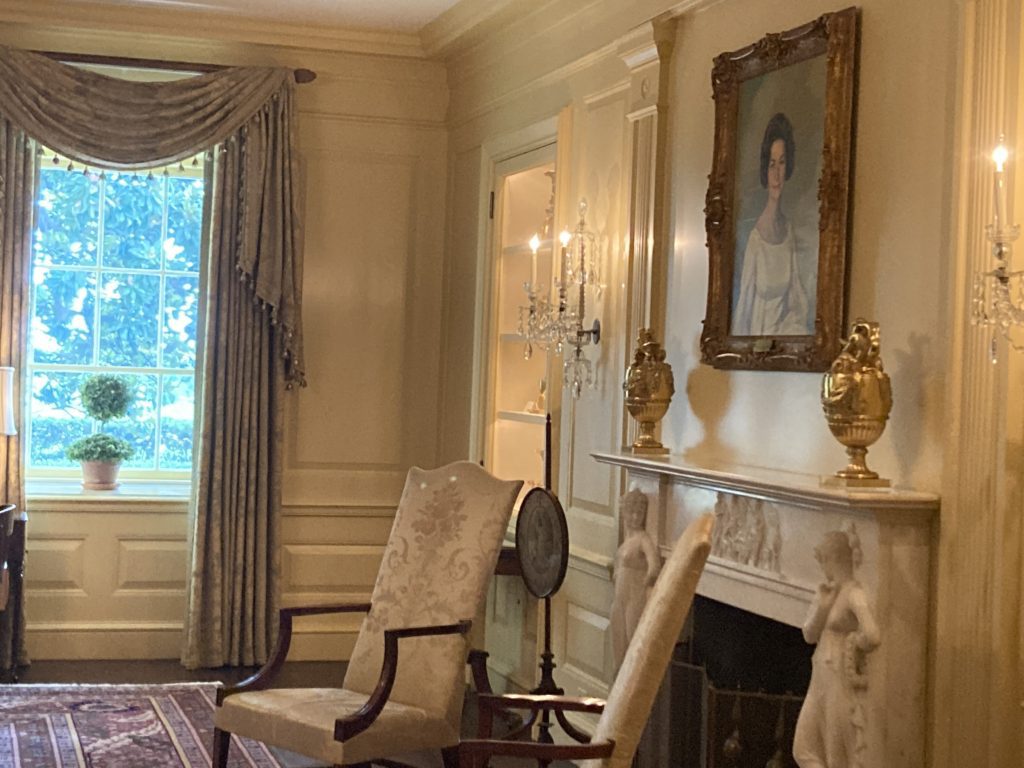
The next room on the tour is the Vermeil Room. Vermeil is a French word meaning gilded silver.
Originally used as a billiard room, the room now displays part of a 1,575 piece collection of European and American Vermeil that was acquired by the White House in 1957.
A portrait of First lady Jacqueline Kennedy is on display to honor both her support of artists from her era and her White House restoration project. It is surrounded by examples of American abstract and pop art.



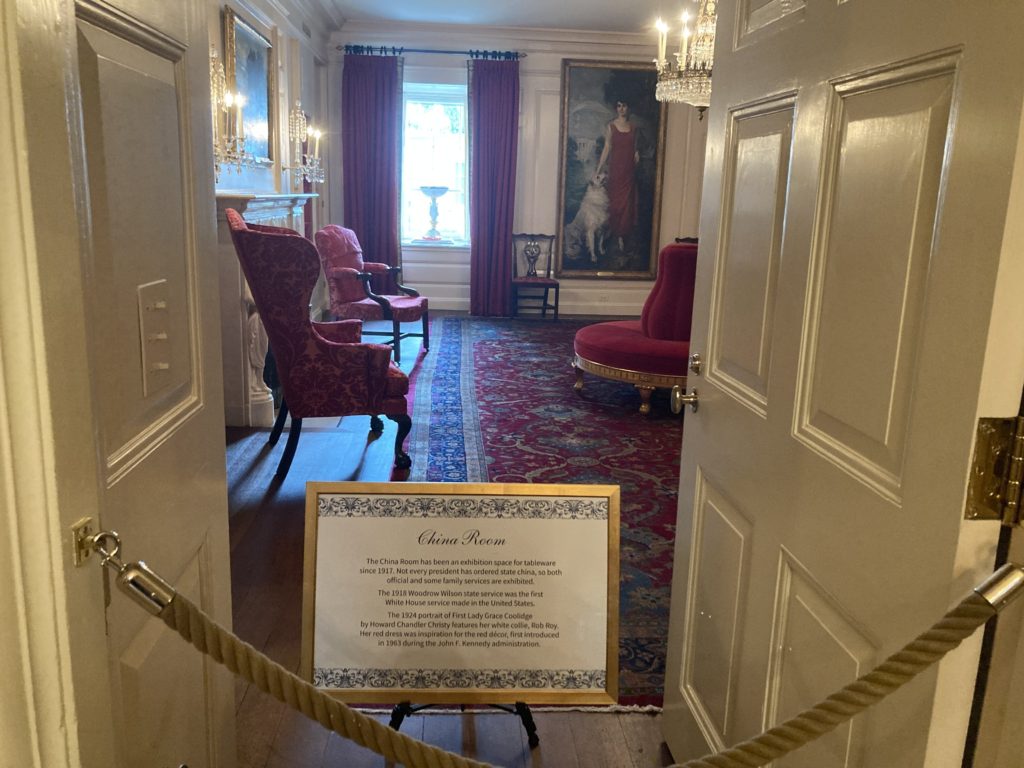
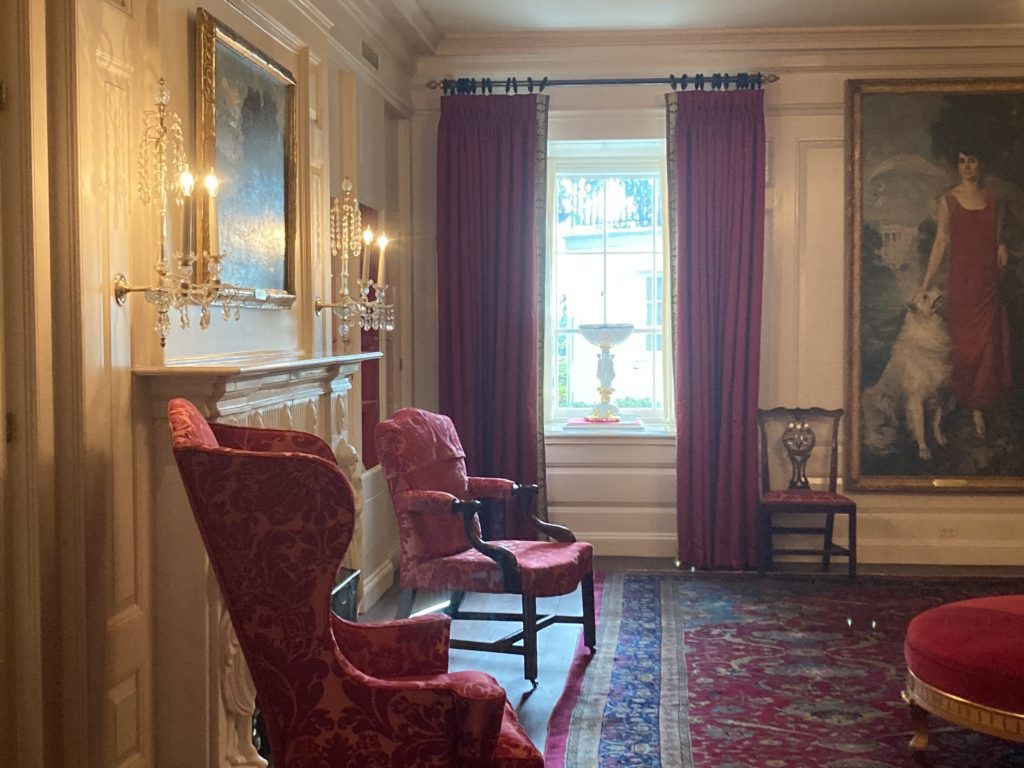
9) The China Room
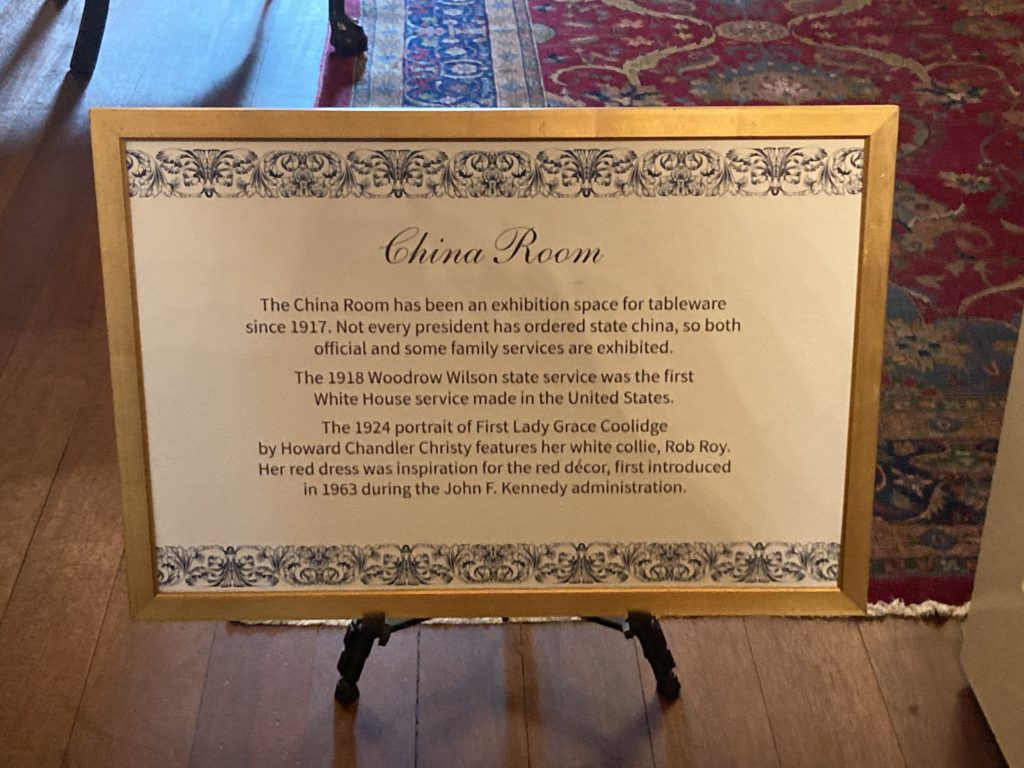
The China Room has housed the White House state china collection since 1917. The collection ranges from George Washington to Barack Obama.
Not every president has ordered state China, so both official and some family services are exhibited. For example, the Trump administration did not have a collection created and instead mainly used the china designed by Hillary Clinton during her time as First Lady.
The First Lady China Collections are on display at the Smithsonian National Museum of American History. They are absolutely beautiful; I highly recommend it. Highlights include the china collection of both Nancy Reagan and Hillary Clinton. And Mary Lincoln’s coffee/tea service.
The China Room features a 1924 portrait of First Lady Grace Coolidge with her white collie Rob Roy. Her red dress was inspiration for the red decor. The room is currently used by the first lady for teas, meetings, and small receptions.


The White House Tour – First Floor
Next you will walk up a marble Staircase from the Ground to the First Floor of the Residence.
Fun story! When I visited the White House in 2022 I was recovering from a leg injury, I had rented a scooter, so I could not take the stairs.
Instead, a member of the Secret Service walked me through the multi-roomed kitchen to get to the elevator!!! She explained this was where the White House florist and many other services were located. The elevator was so small it was hard to get in with my scooter!
Unfortunately, I was told I could not take pictures of the kitchen.

Which First Floor Residence Rooms are on the Tour?
The First (or State) Floor of the White House Tour includes the East Room, Green Room, Blue Room, Red Room, and State Dining Room. (Which are known as the “public rooms”). The Family Dining Room is not part of the tour.
Then tour participants will exit through Entrance Hall, As the name suggests, the Entrance Hall – which is located under the North Portico – is the primary entrance of the White House. The president and his family and staff enter here. (As a reminder, White House guests and tour participants enter through the East Entrance on the Ground Floor).
When tour participants exit the White House through Entrance Hall, they will find themselves looking at a side view of the North Portico!!! It is the closest the average person will ever get to the outside of the White House. The view is breathtaking.

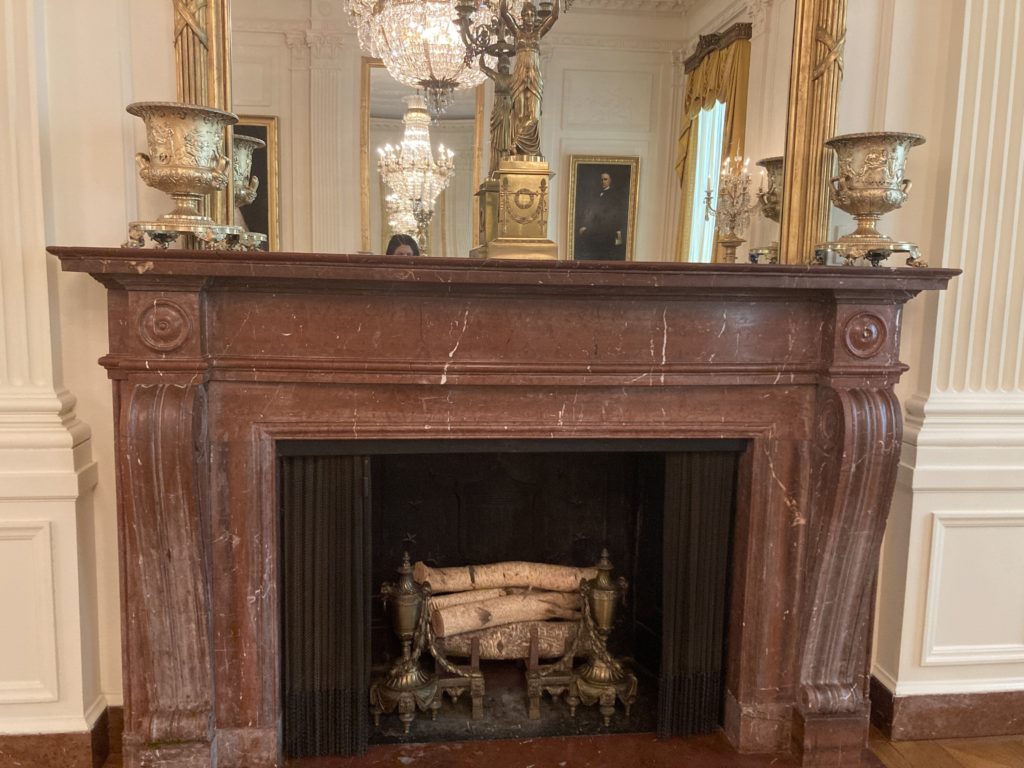
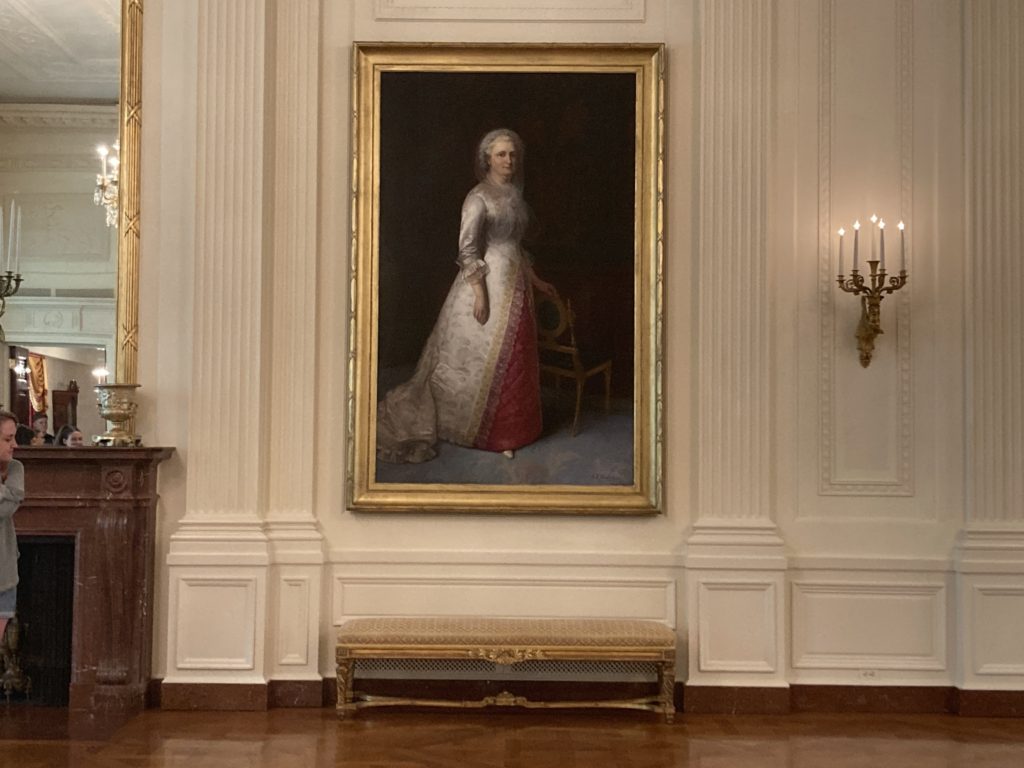
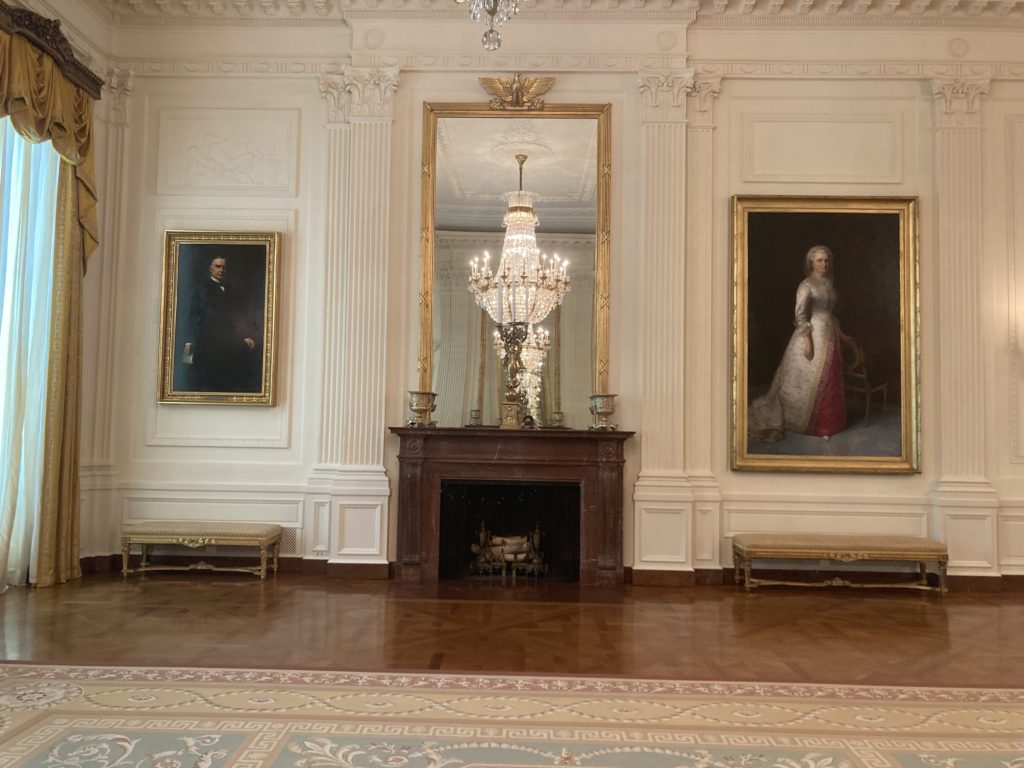
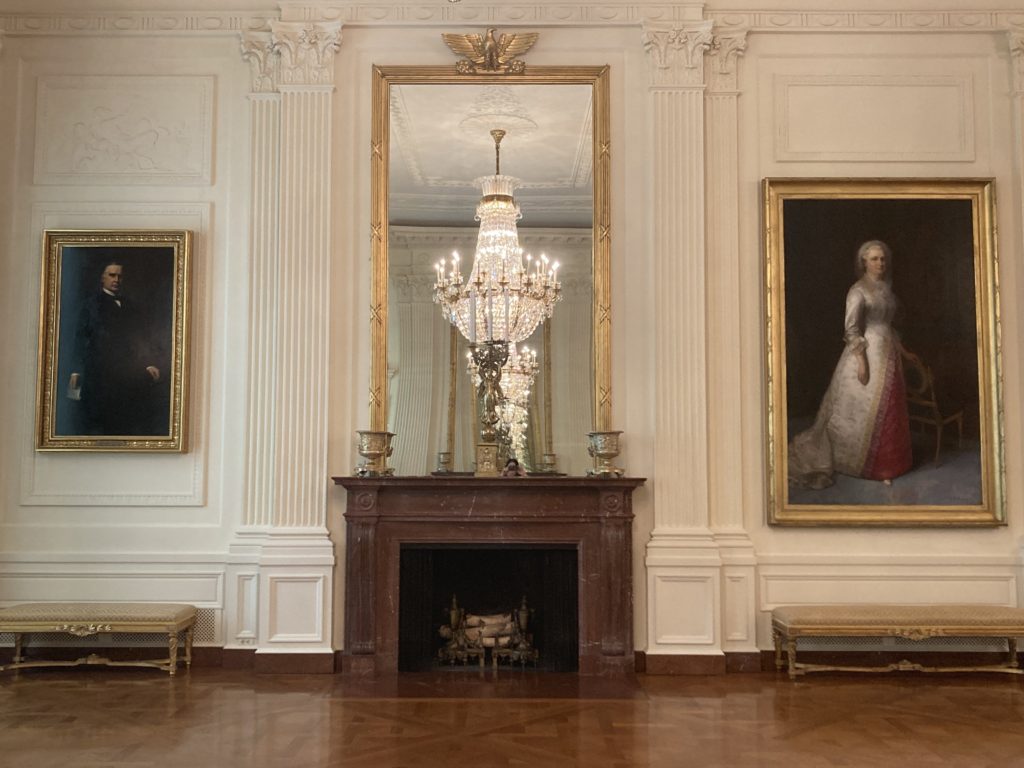
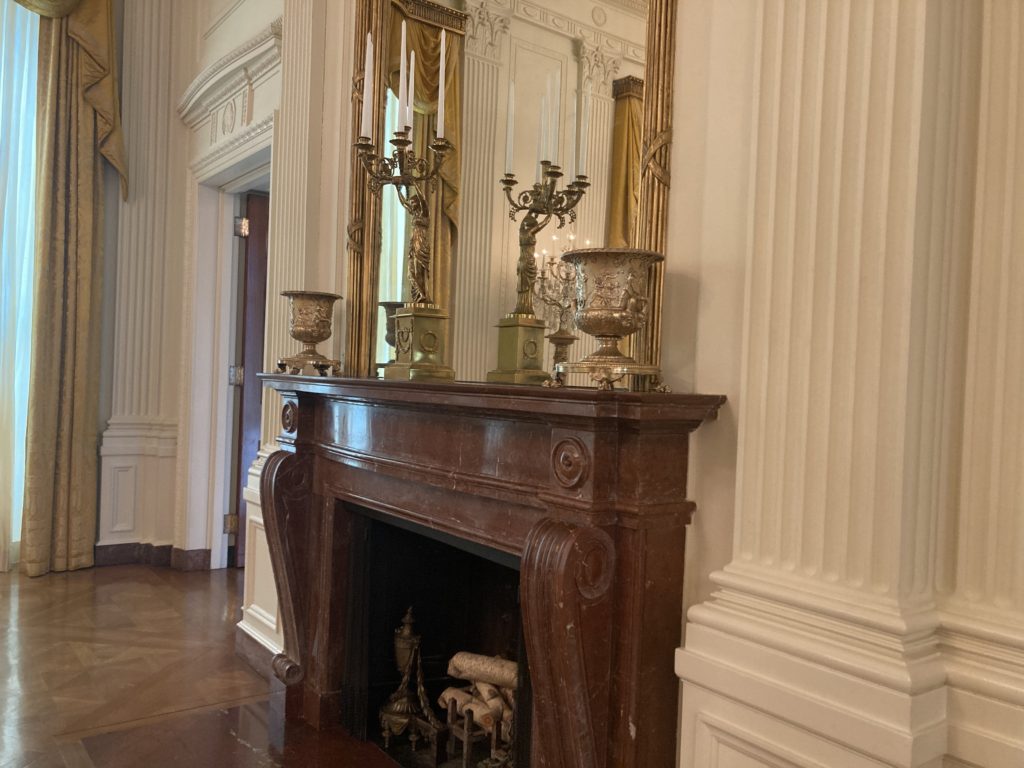
10) The East Room
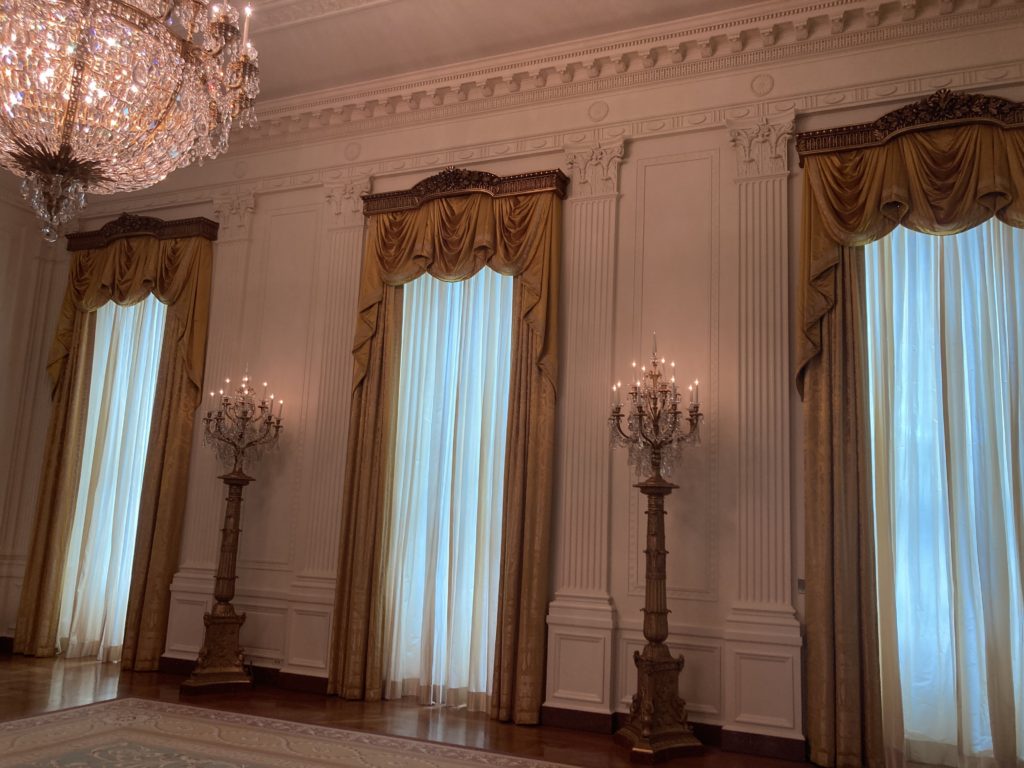
After you walk up the marble staircase, the first room you will see on the First Floor of the Residence is the beautiful East Room.
The largest room in the White House, it is used for receptions, ceremonies, press conferences, and other events.
It has been used as the location for several weddings, including Nellie Grant, Alice, Roosevelt, and Lynda Bird Johnson. And 7 U.S. presidents have laid in state here before burial.
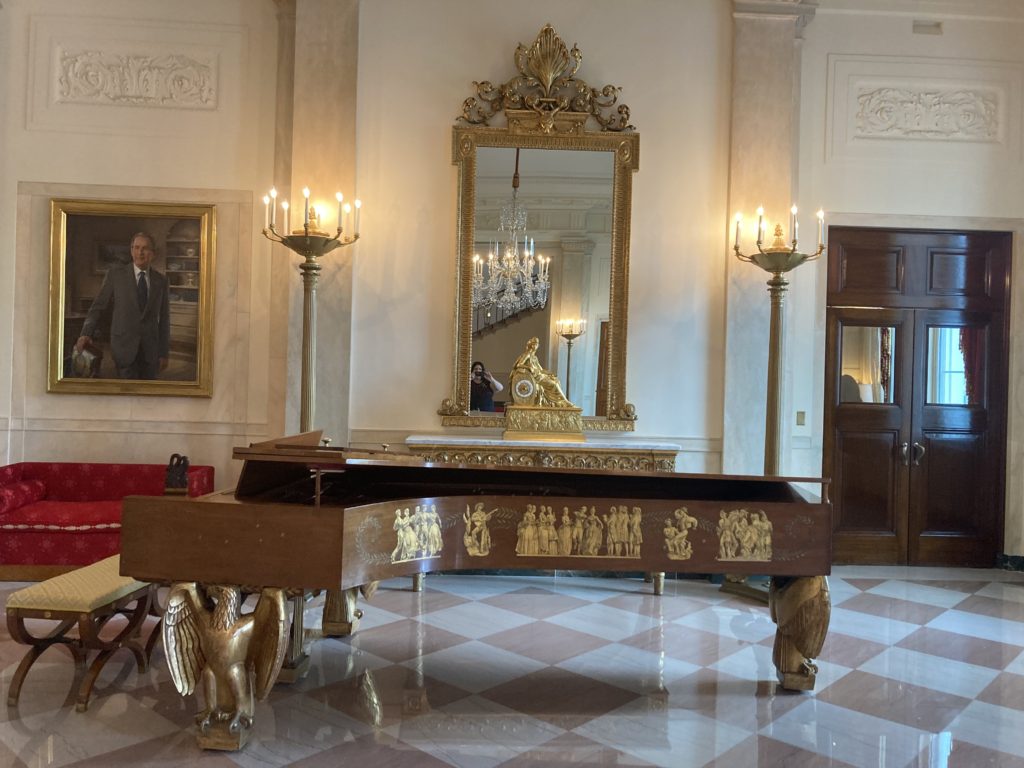
The original chandeliers, light standards, benches, and window cornices from the 1902 President Roosevelt renovation are still intact. The concert grand piano was presented by the Steinway Company in 1938. It is decorated with folk dancing scenes and eagle supports. It is also used in the cross hall.
There are 2 amazing historical facts about the East Room:
- President John Adam’s wife Abigail famously hung her laundry to dry here
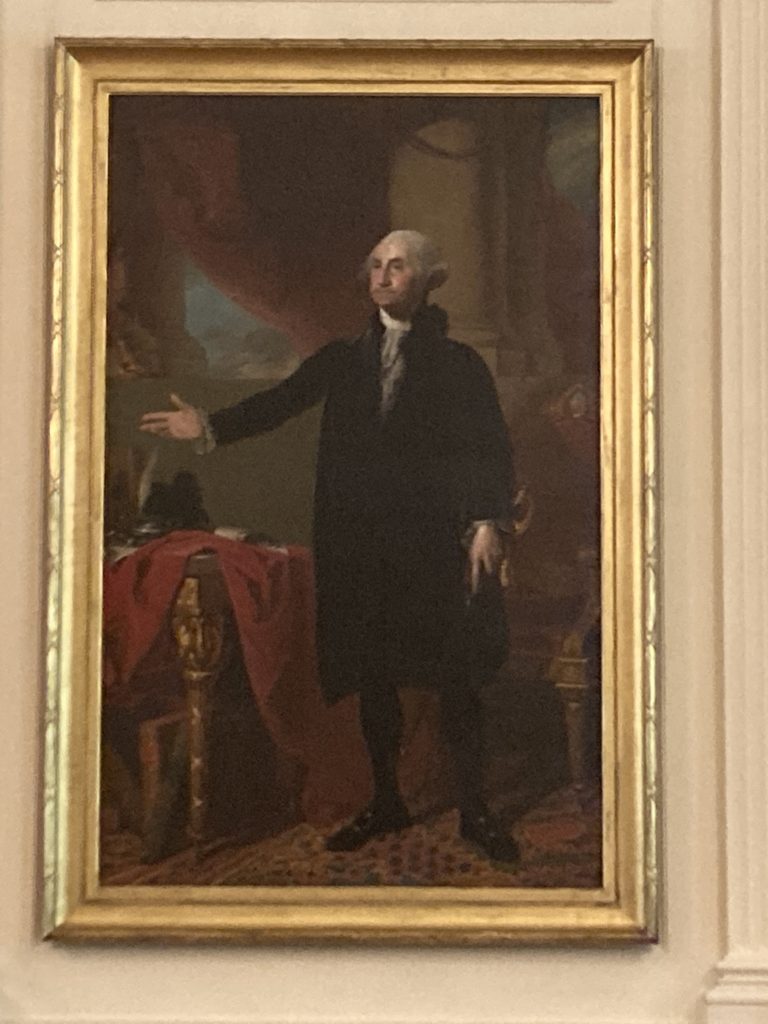
- The portrait of George Washington that First Lady Dolly Madison grabbed as she was fleeing the burning White House in 1814 is hanging on the wall. It is the only original item from the original White House built in 1800.



11) Cross Hall
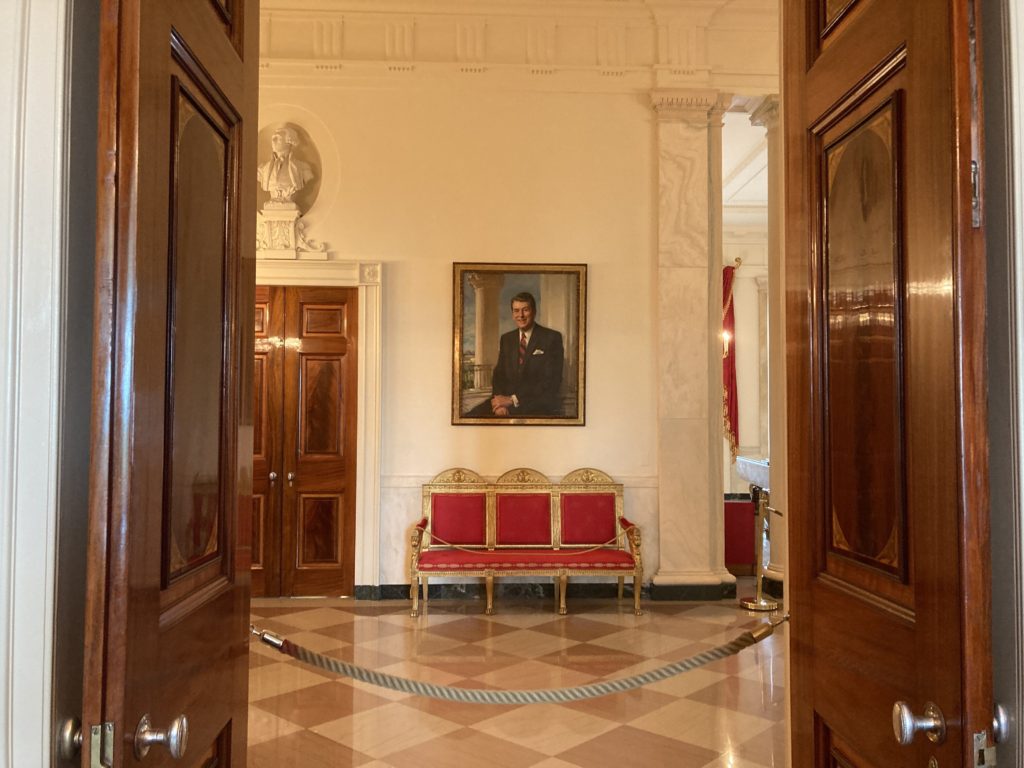
After you exit the East Room, you have to walk across Cross Hall to get to the other rooms on the First Floor of the Residence. The basic floor plan designed by James Hoban remains largely unchanged!
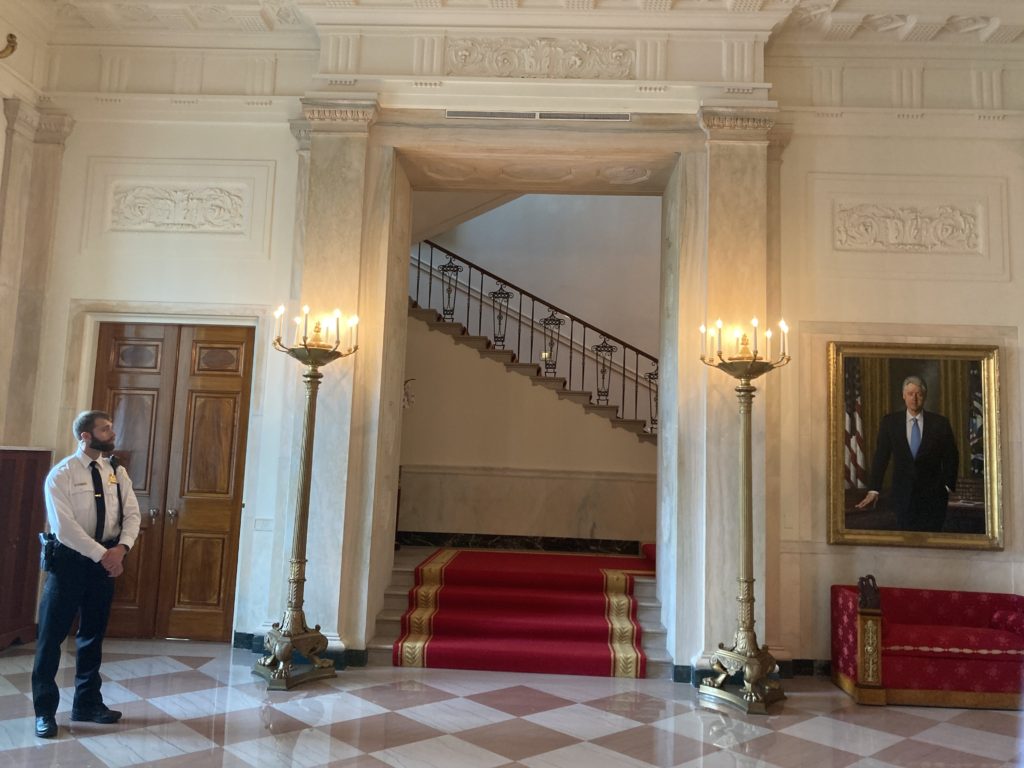
Travel Tip! When you are walking down Cross Hall and get to the Green Room, there is an opening where you can see the Grand Staircase that leads to the First Family’s residence! (See below picture).
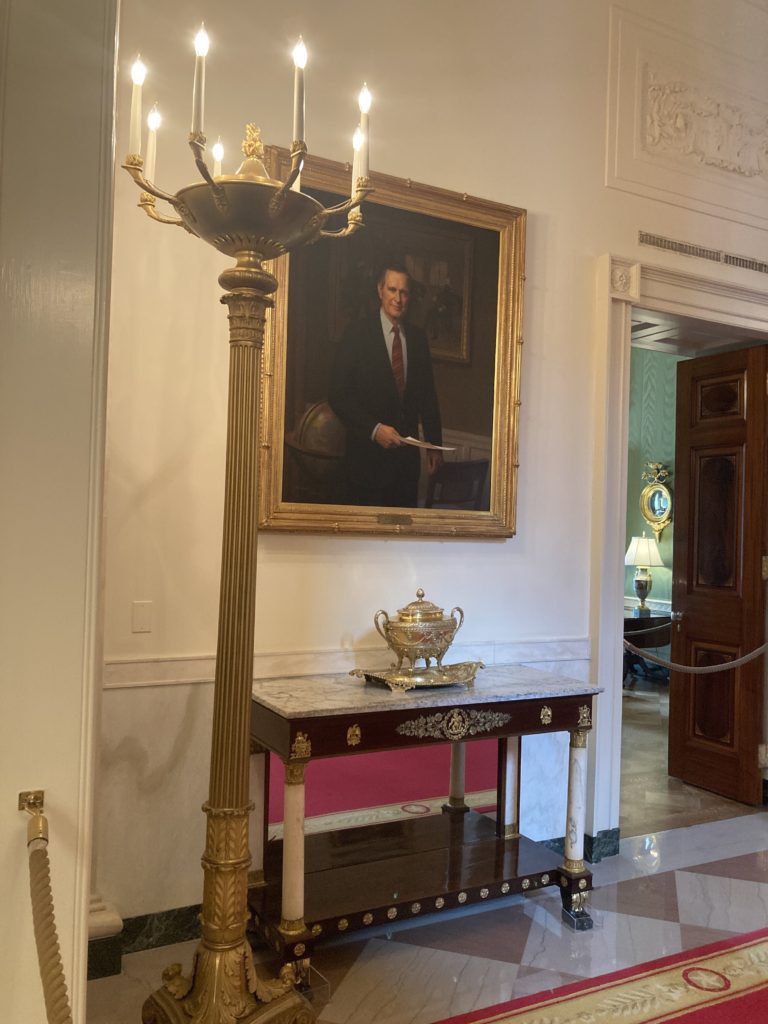
I think Cross Hall is beautiful. It features classical columns, arches, and intricate moldings. As well as marble walls and floors that were added during the Truman renovation. And it is covered by a beautiful red carpet. In addition, the hall is lighted by two Adam style cut glass chandeliers made in London in 1775.
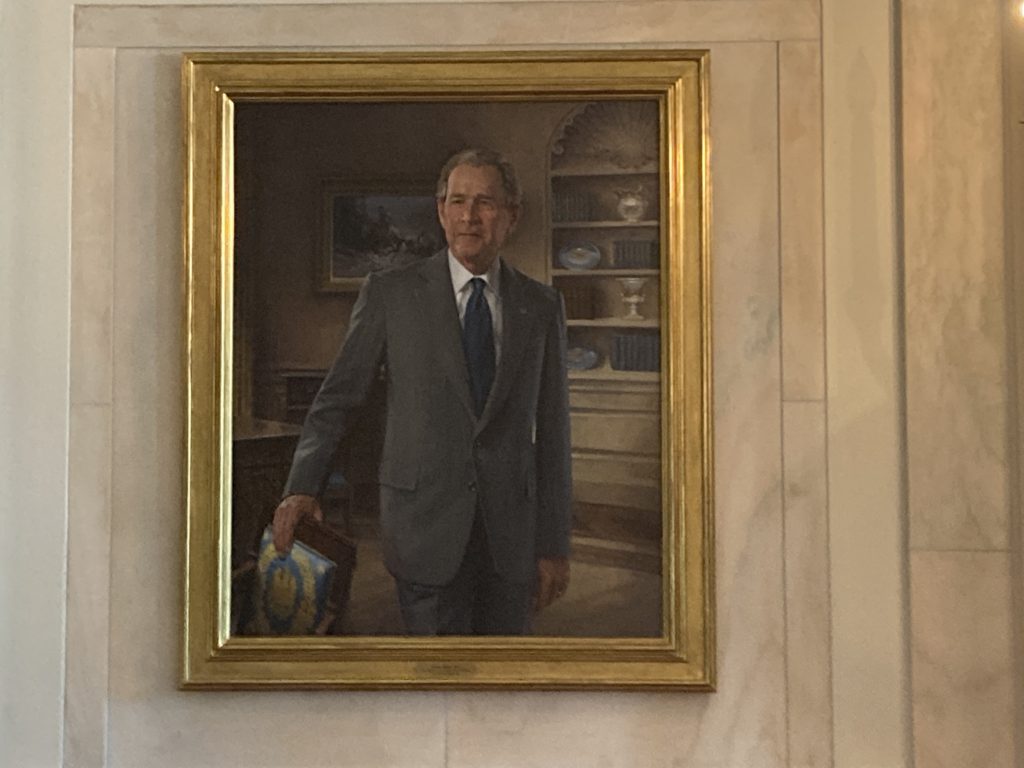
The hall also features several presidential portraits. The most well known is the Aaron Shikler portrait of John F. Kennedy. Painted after his death, it features the president in deep pensive thought.



12) The Green Room
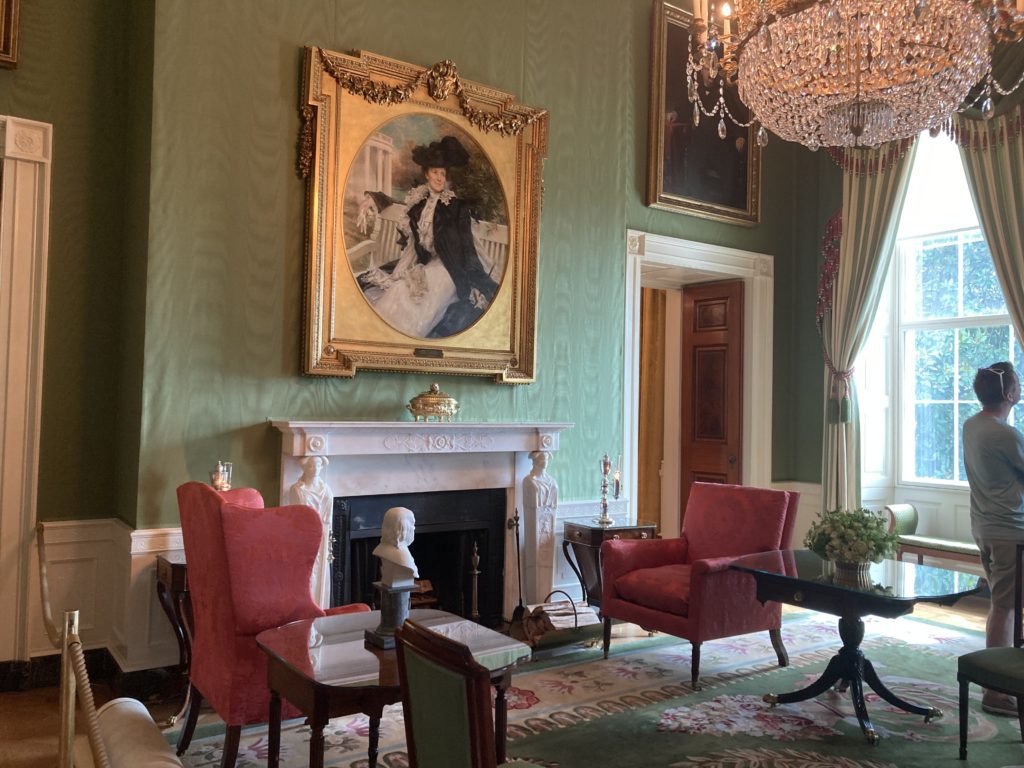
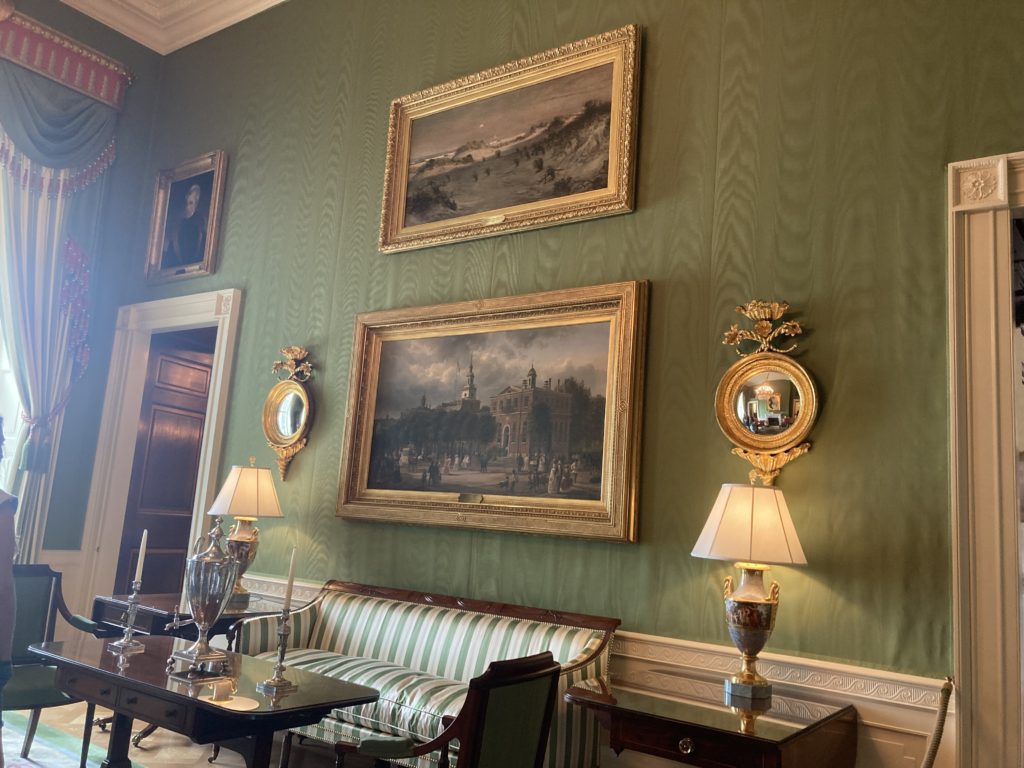
The Green Room is the least formal parlor on the First Floor. It serves as a reception room for hosting guests, meetings, interviews, and small gatherings. President John Adams originally used the room as a guest bedchamber.
It was named by President James Monroe in 1818 due to its green-colored décor. The serves as an art gallery and features paintings of presidents and other notable historical figures. This includes John Quincy Adams, Louisa Adams, and Edith Roosevelt.

13) The Blue Room
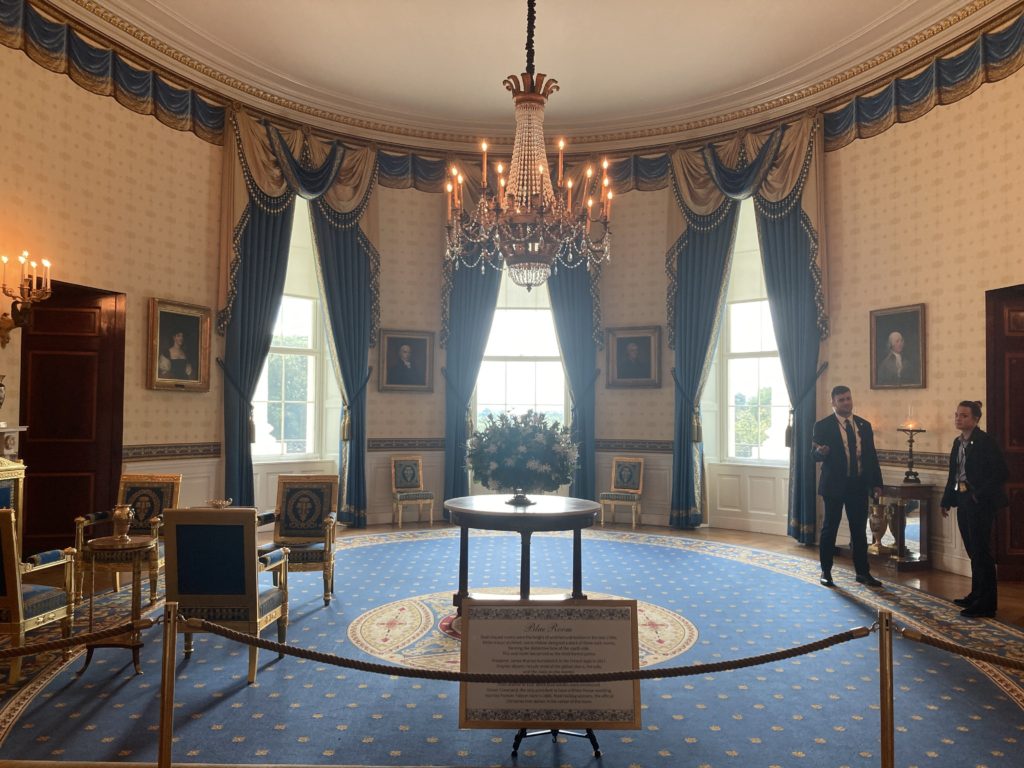
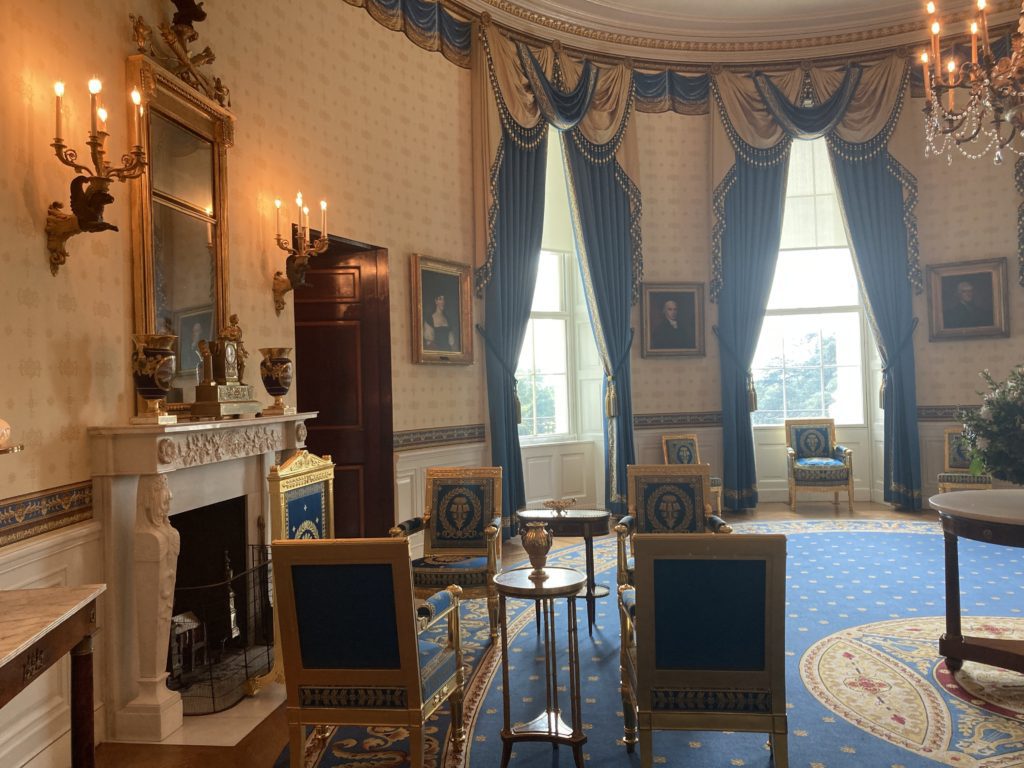
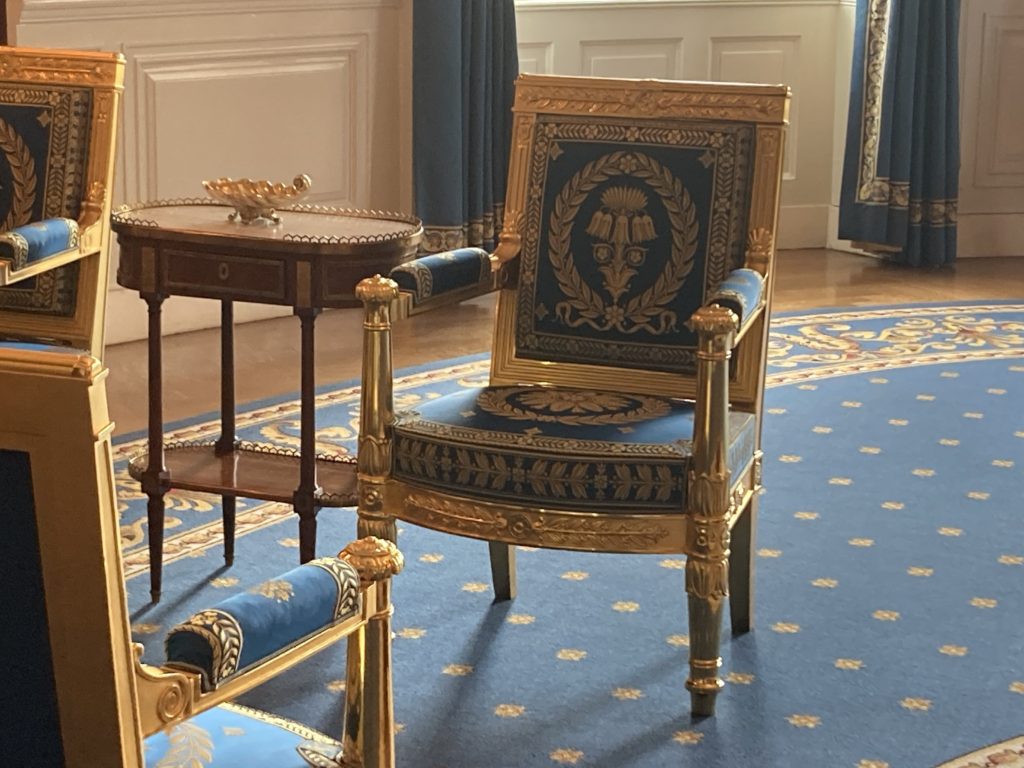
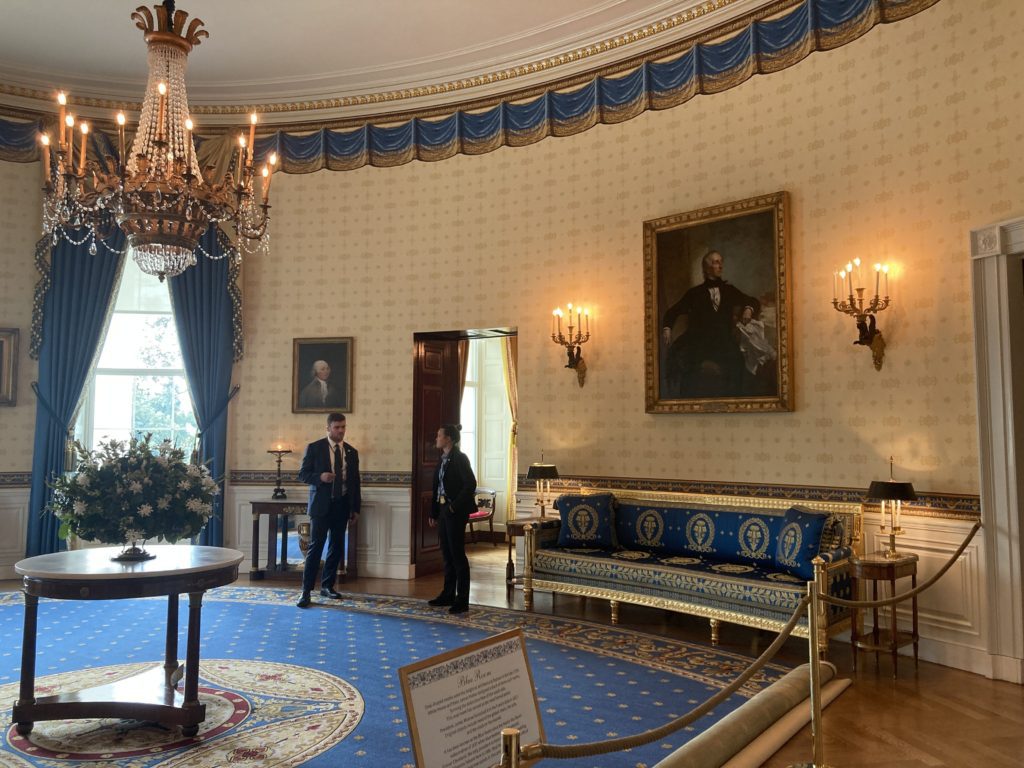
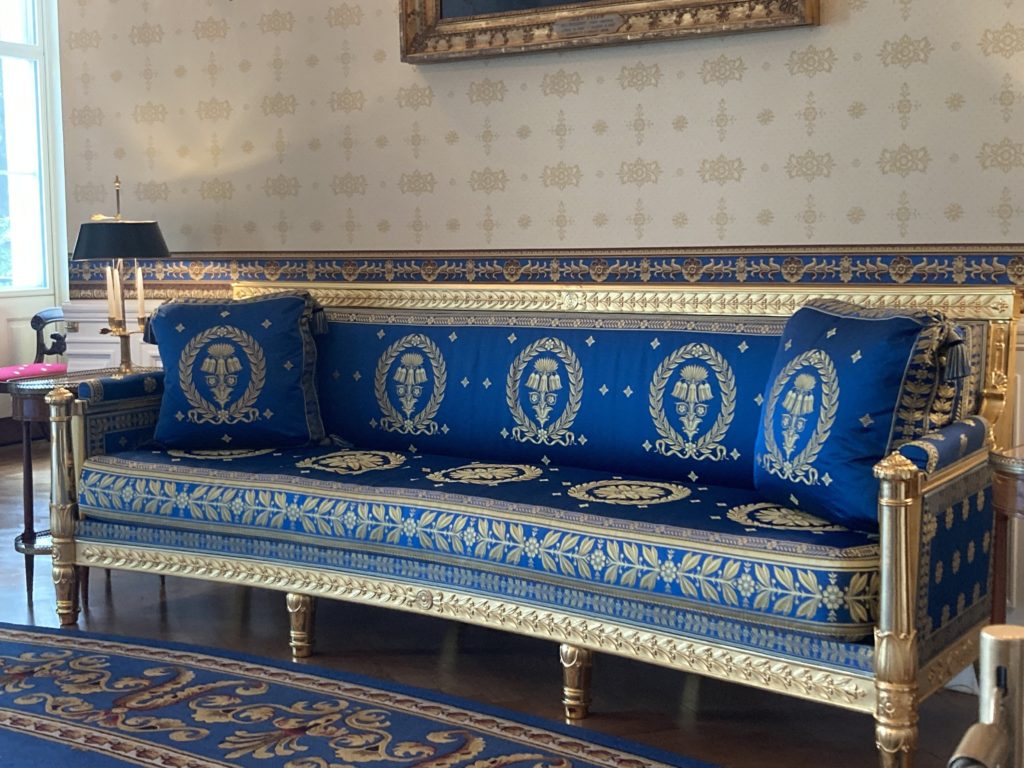
The Blue Room is one of my favorite rooms. It is an oval shaped room with beautiful blue and gold couches and chairs. The room was historically used for official receptions, ceremonies, and meetings.
It features several portraits of former presidents, including James Monroe, John Tyler, and William Howard Taft.




14) The Red Room
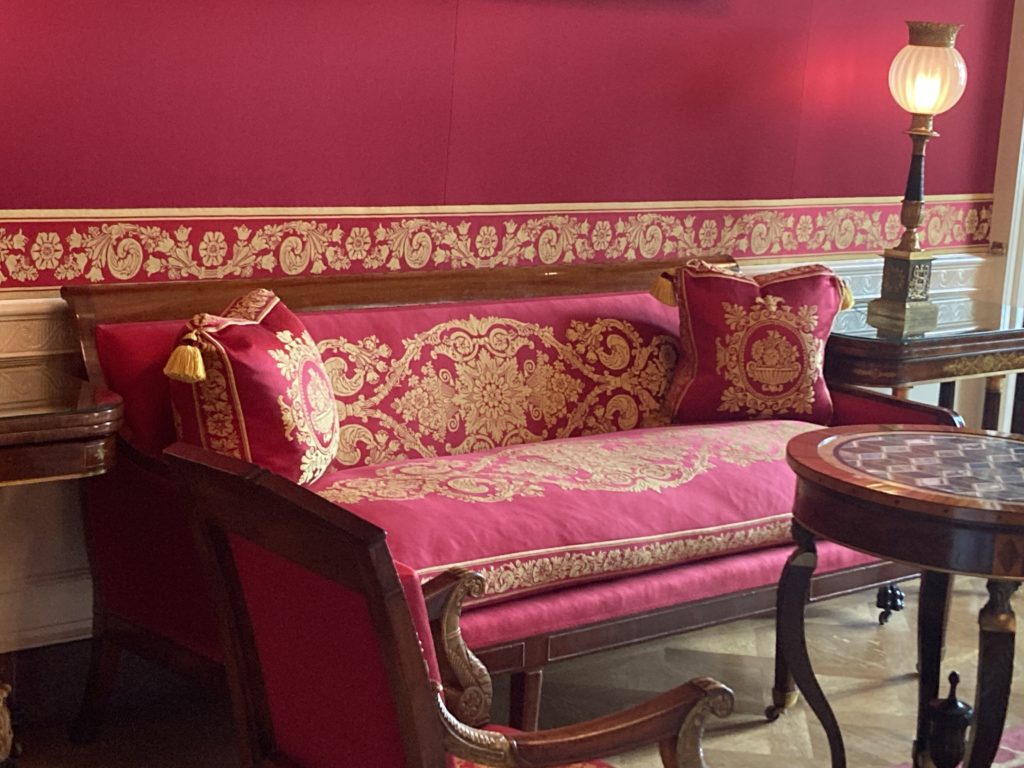
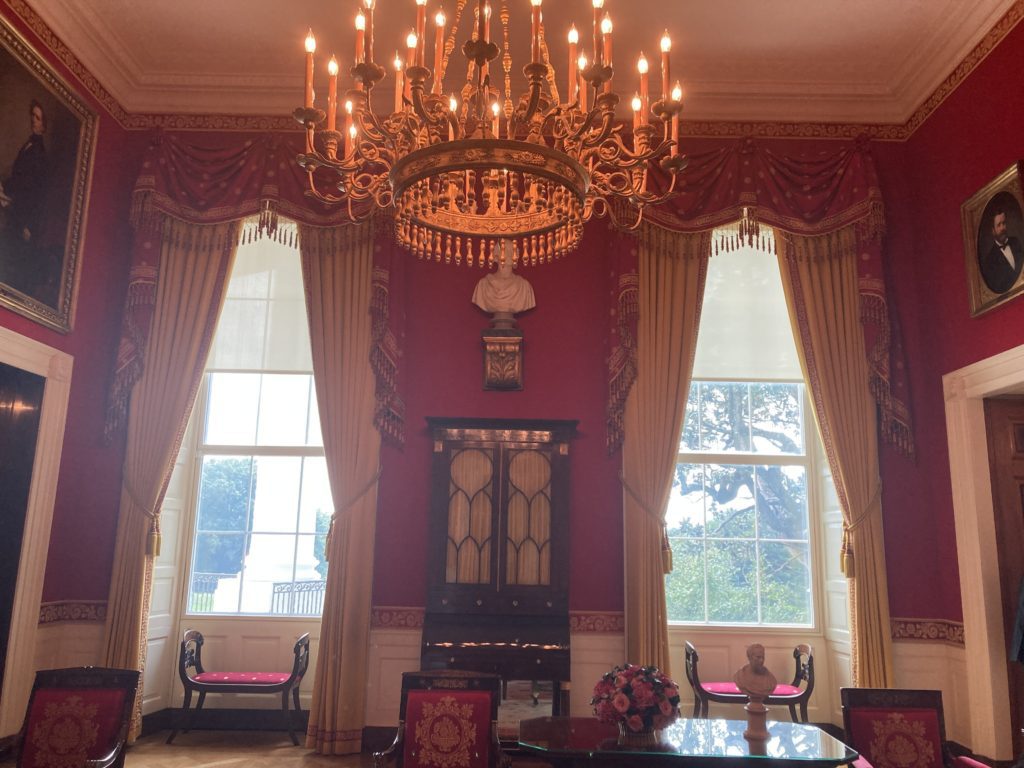
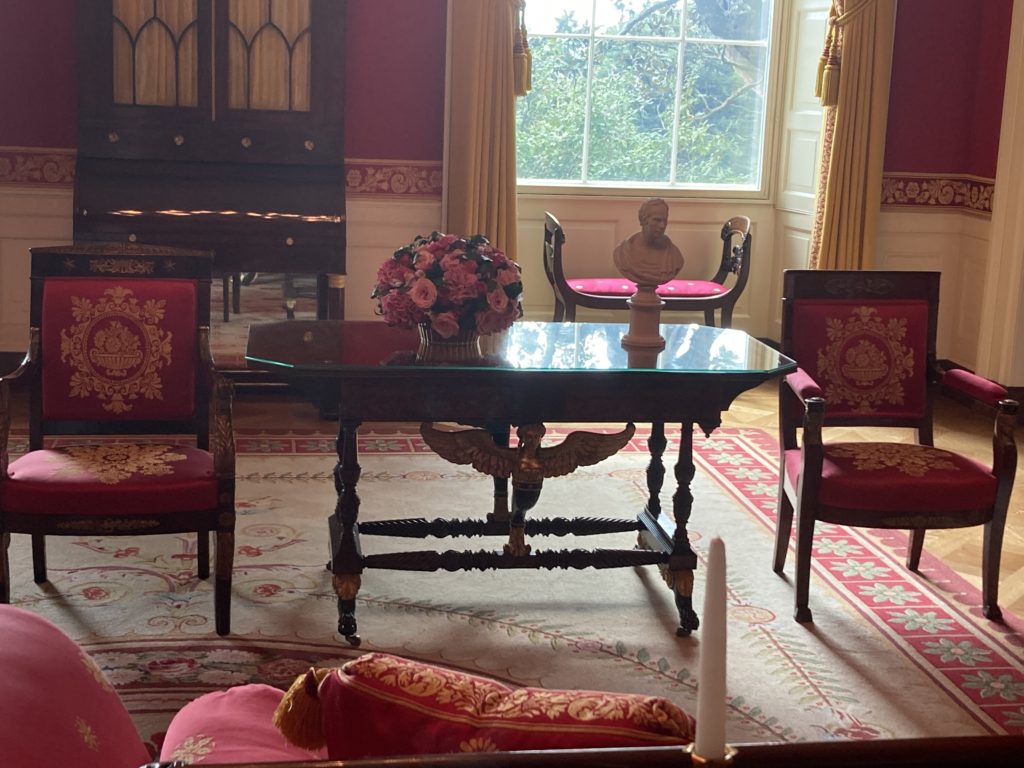
The Red Room is a beautiful room decorated in red. Formerly known as the Washington Parlor, it has served as a parlor and music room. In James Madison’s time, it hosted Dolley Madison’s infamous Wednesday night receptions.
During the administration of John Adams, it served as a breakfast room. Recent presidents have hosted small dinner parties there.
Adorning the walls of the Red Room are notable artworks, including portraits of former presidents.



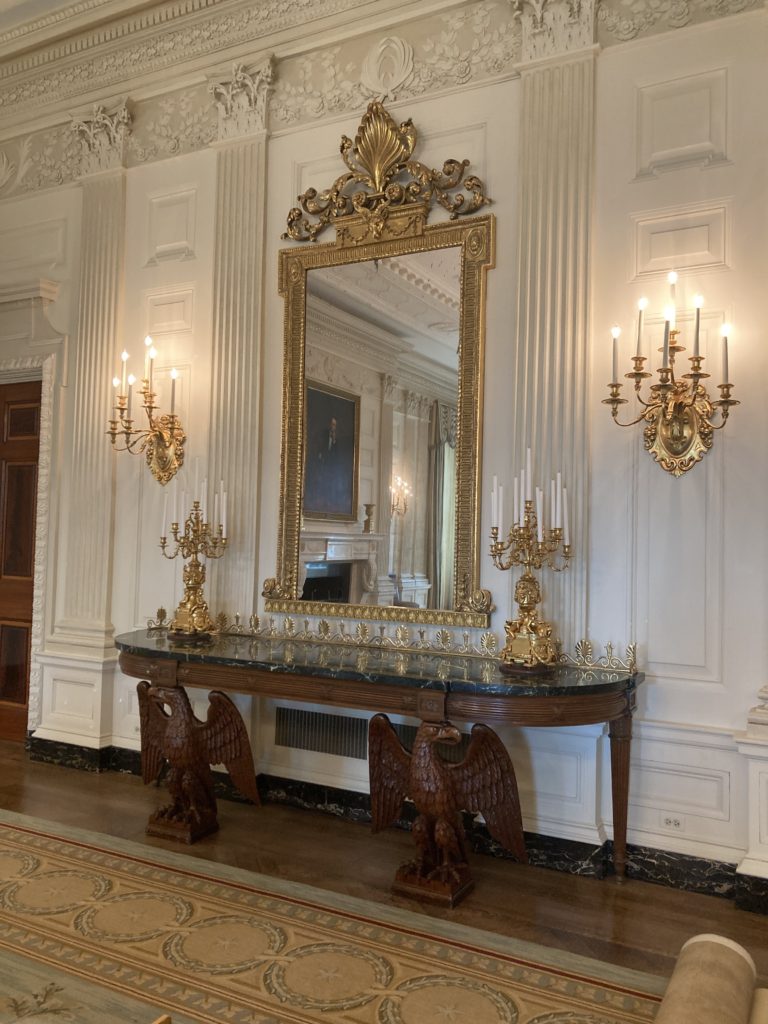
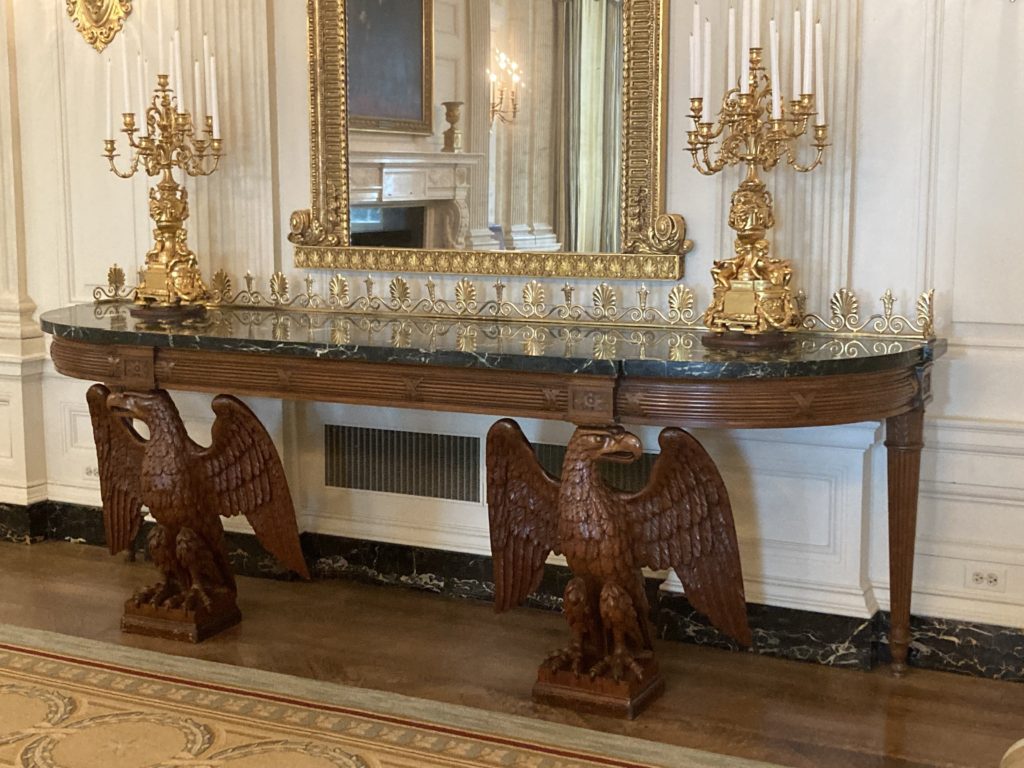
15) The State Dining Room
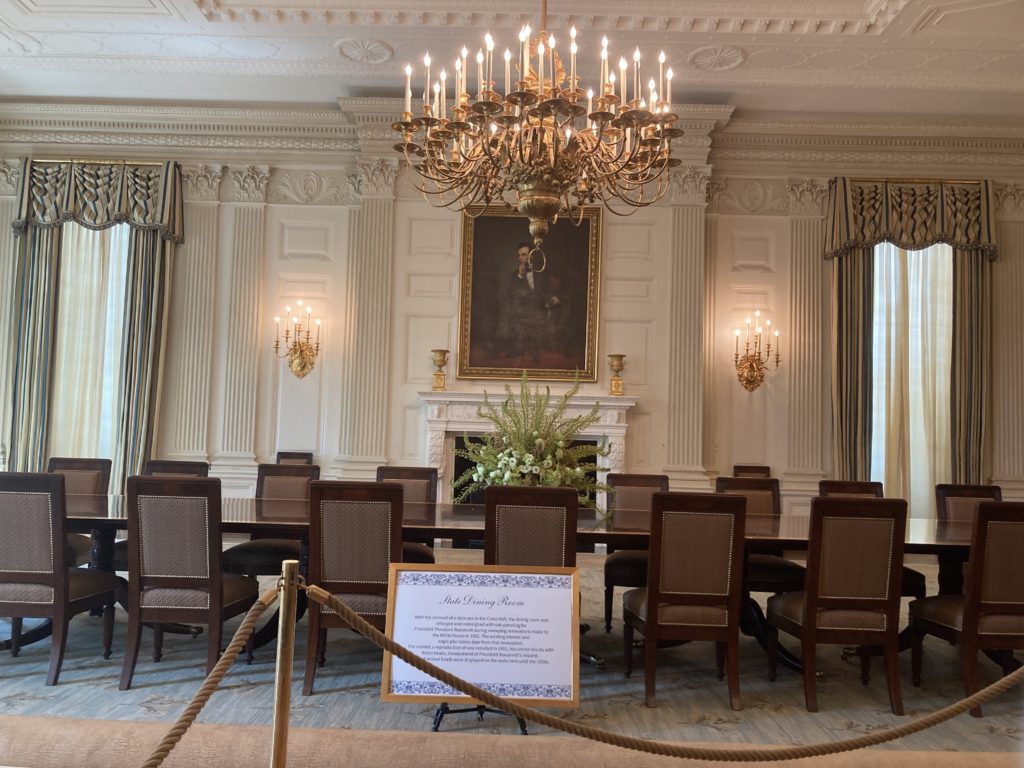
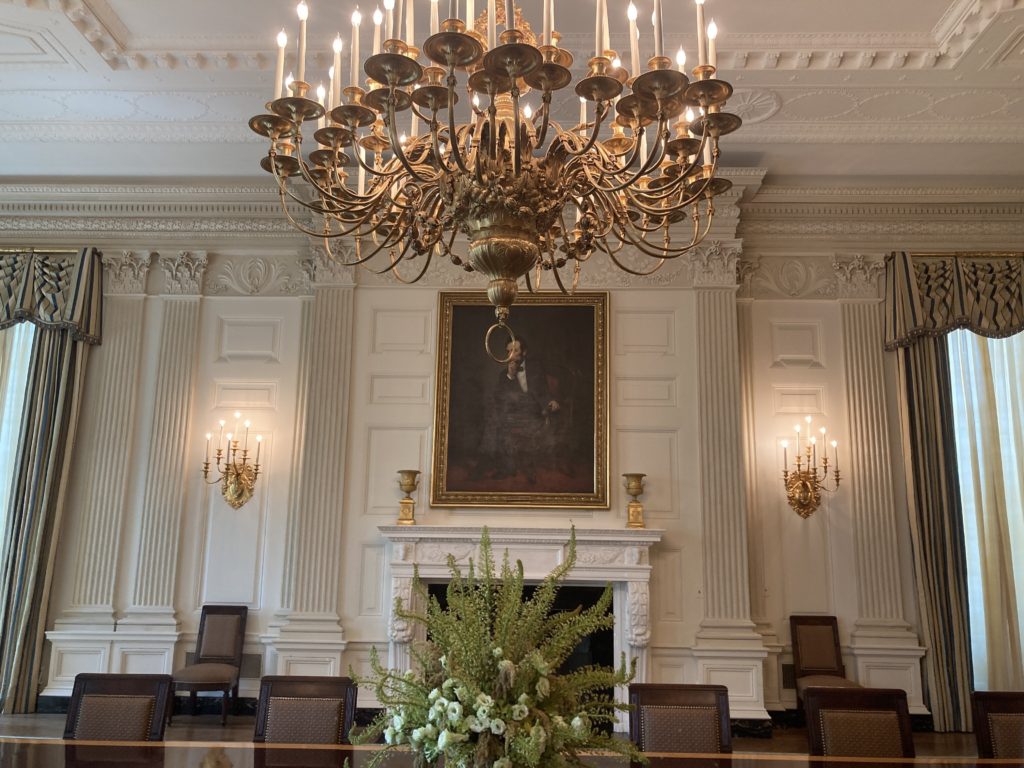
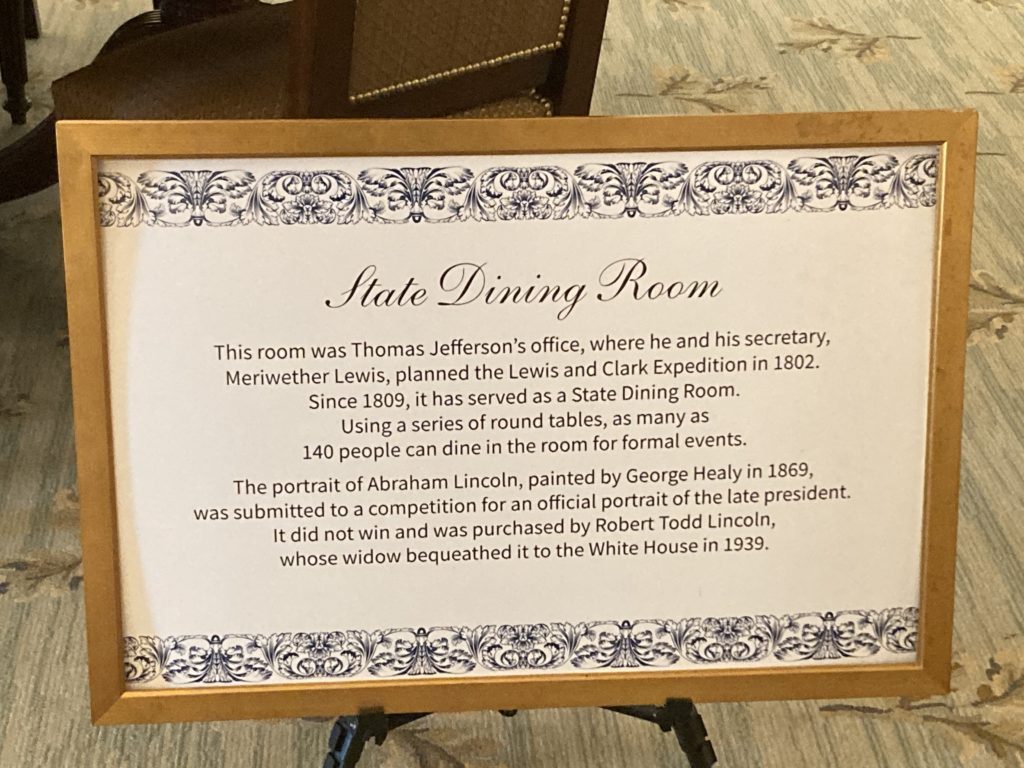
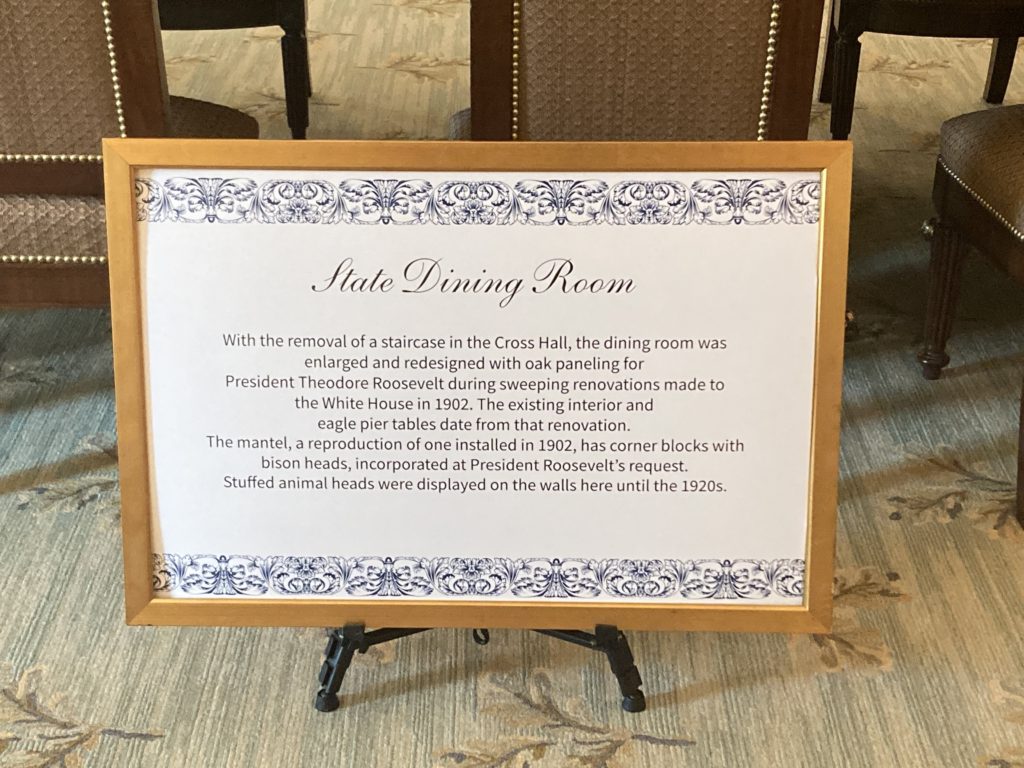
The State Dining Room is used for formal dinners, state banquets, and official receptions. It can seat up to 140 guests. Every time I see a state banquet on TV (for example for the Japanese Prime Minister) I think to myself, “I’ve been there!”
The room was originally used by President Thomas Jefferson as his private office. Then in the 1800s President James Monroe converted it into a formal dining room.
During the 1902 renovation, President Theodore Roosevelt significantly expanded the dining room. Fun fact! In 1939 President Franklin D. Roosevelt hung George P. A. Healy’s 1869 portrait of Abraham Lincoln above the mantle.




16) The Entrance Hall
The Entrance Hall is the formal entrance to the White House. Informally known as the “front door”, it is located under the North Portico. It serves as an initial reception area for guests.
The President and the First Family enter the White House through the Entrance Hall. Then they take the Grand Staircase to their living quarters on the Second Floor. which is off limits to visitors.
Presidents have used the Entrance Hall for different purposes. President Thomas Jefferson used it to display artifacts from the 1804 Lewis and Clark Expedition. Fun fact! I saw part of the collection in the foyer of Jefferson’s Monticello estate in nearby Virginia.
In 1835 President Andrew Jackson used the space to put out a mammoth cheese that was gifted to the White House. It also features a gold eagle leg piano that was a gift from Steinway and Sons in 1938.






Check out my National Air and Space Museum: Complete Guide blog!
White House Tour FAQs
Q: How much does it cost to tour the White House?
A: It’s free. You need to get a ticket in advance from your congressperson.
Q. Where do you park to visit the White House?
There is street parking near the White House. However, you might not find a close spot so allow for extra time. I recommend you download the ParkMobile app in advance for easy payment.
There are also nearby parking garages. You can reserve a parking spot in advance on SpotHero. It costs more, but it will guarantee you a parking spot and give you peace of mind.

Q: Is there a dress code to tour the White House?
A: There is no official dress code to tour the White House. However, due to the importance of this building, you should dress neatly.
Q. Which Metro Stop Is Closest to the White House?
A: The closest metro stop to the White House Tour Entrance (which is located on the east side) is McPherson Square. You can use the Washington D.C. Metro Route app to help you plan your trip.
Q: What does the White House Tour include?
A: The White House Tour includes various public rooms in the East Wing. On the ground floor it includes the Library, Verneil Room, and China Room. On the first floor it includes the East Room, Green Room, Blue Room, Red Room, and the State Dining Room.

Which Rooms are not on the White House Tour?
So far this blog has covered the rooms on the official White House Tour. Tour members enter the White House through the East Lobby on the Ground Floor. They then walk down the East Colonnade to several rooms in the Residence.
Then they take the stairs to the First Floor where they view several rooms. Then they exit the White House through the Entrance Hall.
But the question remains – which rooms are NOT on the tour?

Ground Floor Rooms Not on the Tour
After the China Room, the White House Tour makes a right turn and goes up a marble staircase to the First Floor. However, if a person was to continue walking straight (instead of going up the stairs) they would continue down the arched Ground Floor Corridor.
The next few rooms they would come across – the Diplomatic Reception Room, Map Room, and Palm Room – are not included on the tour. As you can see from the map below, the Ground Floor is also the location of the White House Physician, Main Kitchen, Florist, Carpenter’s Shop, and more.
Diplomatic Reception Room
As the name suggests, the Diplomatic Reception Room serves as a reception room for foreign ambassadors.
When visiting heads of state arrive at the White House, they participate in a State Arrival Ceremony on the South Lawn. Then they walk through a vestibule to the Diplomatic Reception Room.
Located on the Ground Floor, the Diplomatic Reception Room is used as an entrance from the South Lawn. It is 1 of the 3 oval shaped rooms in the White House Residence.
The room has 4 doors, They lead to the Map Room, Center Hall, the China Room, and a vestibule that leads to the South Lawn.
The French wallpaper was installed by First Lady Jacqueline Kennedy in 1961. It depicts scenes of Boston, Niagara Falls, West Point, Natural Bridge, and New York Harbor. An 1805 painting of George Washington by Gilbert Stuart hangs above the mantel.

Map Room
The Map Room was built in1902 as a billiards room. Then during WWII, President Franklin Roosevelt converted the room into a situation room where maps were consulted to track the war’s progress.
The Situation Room in the West Wing is now used for such purposes. And the Map Room is currently used for television interviews, small teas, and social gatherings.

Palm Room
The Palm Room – also known as the West Garden Room – is used as a staging room for visitors and provides access to the Rose Garden. (This same function is provided by the Visitor’s Foyer – or East Garden Room – in the East Wing).
It is located on the Ground Floor between the White House Residence and the West Wing. In the late 1800s the Palm Room was a glass conservatory that was used as a greenhouse or a sunroom.
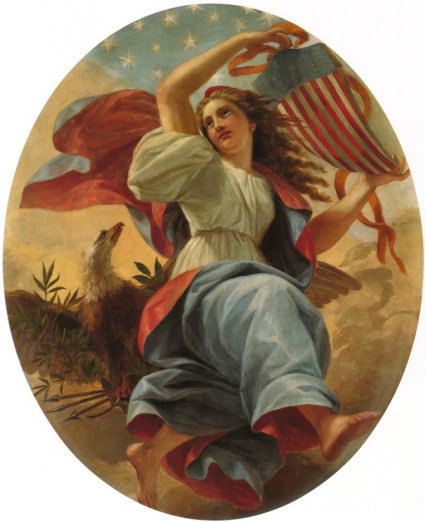
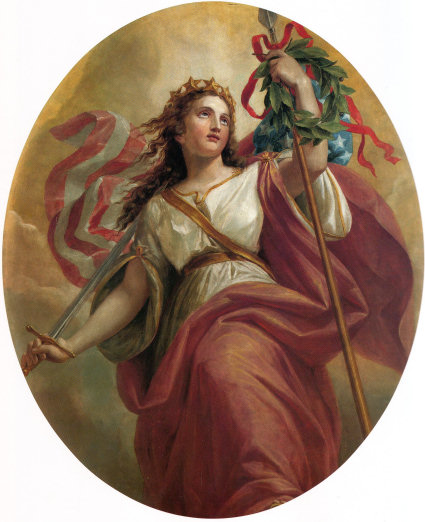
The room is furnished very casually with a bench, potter’s table, and potted plants. And there are two 1869 paintings by Constantini Brumidi – Union on the west wall and Liberty on the east wall.

Second Floor – Where the President Lives
The Second Floor of the White House is the location of the First Family’s private quarters. It includes bedrooms, living rooms, a small kitchen, and a family dining room.
The formal names of the rooms on the second floor are the East Sitting Hall, Lincoln Bedroom, Lincoln Sitting Room, President’s Dining Room, Queens’ Bedroom, Queens’ Sitting Room, Treaty Room, West Sitting Hall, and the Yellow Oval Room.
Fun Fact! The President and his family don’t get to live in the White House for free. They receive a bill every month for meals, dry cleaning, and toiletries.
A few interesting Second Floor. facts…
- The Treaty Room is used by presidents as their home office.
- The infamous Lincoln Bedroom was actually Lincoln’s office, not his bedroom.
- The Truman Balcony can be accessed from this floor.

Treaty Room
The Treaty Room is located in the First Family’s private quarters on the Second Floor. Recent presidents have used the room as a home office to analyze reports, hold private meetings, edit speeches, and host family gatherings.
It served as the Cabinet Room for Presidents Ulysses S. Grant, Rutherford B. Hayes, and William McKinley.
As the name suggests, the Treaty Room was originally used as a place to sign treaties. It is one of the most historic rooms in the house. The following treaties were signed there:
- Peace protocol between the U.S. and Spain in 1898
- Limited Nuclear Test Ban between the U.S. and the Soviet Union in 1963
- Possibly where President James Monroe composed the Monroe Doctrine.

Third Floor – Solarium and Bedrooms
The Third Floor of the White House is not included in the Whiter House Tour. It is the location of the Solarium, storage rooms, a game room, a workout room, and communal bathrooms.
The third floor also features several bedroom suites. Michelle Obama’s mother stayed in one of them during the Obama presidency. She was in charge of caring for the couple’s two young daughters – Malia and Sasha. It also includes a music room that First Lady Hillary Clinton built for President Bill Clinton so he could play his saxophone,
The third floor is also the location of the Promenade, which is an outdoor area on the roof. Fun Fact! President Eisenhower set up a portable grill on the Promenade and BBQed there frequently.

Check out my Smithsonian National Museum of American History | What to See + Visitor Tips blog!
The West Wing
The West Wing houses the president’s offices. This includes the Oval Office, Cabinet Room, Roosevelt Room, and the Situation Room. It has 3 Floors – Ground, First, and Second.
The West Wing also houses the offices of the Vice President, White House Chief of Staff, Counselor to the President, Senior Advisor to the President, the White House Press Secretary, and their support staff.
There is a swimming pool on the South Lawn near the West Wing. The first White House swimming pool was an indoor pool installed in 1933 for President Franklin Rosevelt after his polio diagnosis. He swam frequently for exercise. The Daily News raised money to build the pool.

The Oval Office
The offices of the President and his staff were originally located on the west side of the Second Floor, next to where the president and his family lived. (Think crying babies while running a country).
Then in 1902 President Teddy Roosevelt decided that he and his staff needed more room. So the first version of the West Wing was built. It was originally a rectangle shape. Then 7 years later. President Wiliam Howard Taft changed the West Wing to an oval shape (Good thing, because the “Oval Office” has such a better ring to it than the “Rectangle Office”!)
Check out this amazing video of the West Wing Colonnade and the Oval Office!
The Situation Room
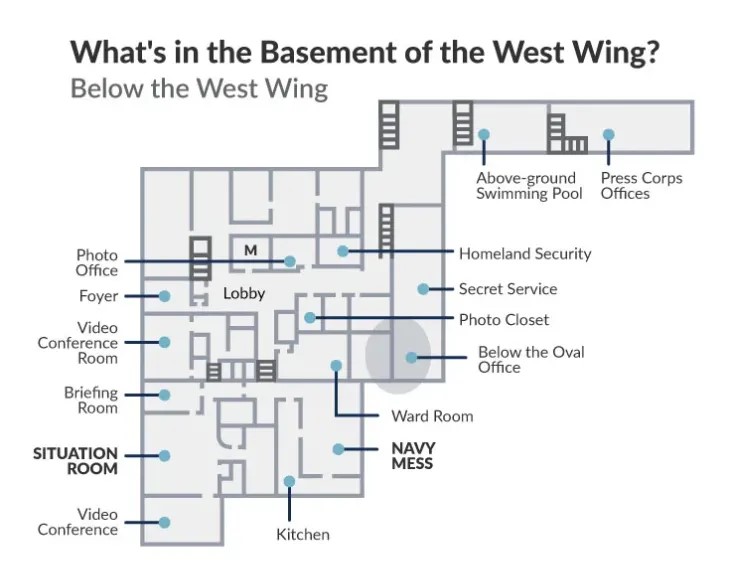
The Situation Room is where the President meets with his advisors during a crisis. It consists of 3 secure conference rooms that are located in the basement beneath the West Wing. It is run by 130 National Security Council staff.
The purpose of the Situation Room is so that the President and his advisors (including the National Security Advisor, the Homeland Security Advisor and the White House Chief of Staff) can monitor and deal with crises at home and abroad. And to conduct secure communications with people who are outside the building; often overseas.
In 2023 the Situation Room underwent a $50 million renovation in 2023. Check out the fascinating video below for more information!
The White House Press Briefing Room
The West Wing is connected to the Residence via the West Colonnade. In the middle of the colonnade – right next to the Press Secretary’s Office – is the James S. Brady Press Briefing Room. There is also workspace for the White House Press Corps.
The White House press room is named after James Brady, the former press secretary to President Ronald Reagan. On March 30, 1981 Brady was shot during an assassination attempt on President Reagan. Brady survived but succumbed to his injuries in 2014. The medical examiner ruled his death a homicide, caused by the gunshot wound 33 years earlier.

The Basement
The White House Basement is located beneath the North Portico. It is not part of the tour. It houses the Mechanical Room (which contains the Air Conditioning and Electrical Panels), Storage, and the Dishwashing Room.
(Note that Wikipedia is wrong! The White House Basement is NOT the location of the carpenter shop, bowling alley, flower shop, etc. They are located on the Ground Floor).
Also note that the Basement beneath the North Portico should not be confused with the Basement beneath the West Wing, which is the location of the White House Situation Room and more.
The East Wing
As mentioned above, in 1801 President Thomas Jefferson added low colonnade terraces on the east and west sides of the residence in 1801. And the first small East Wing was built during the 1902 President Theodore Roosevelt renovations.
The two-story East Wing as it exists today was added to the White House in 1942 to cover the construction of the Presidential Emergency Operations Center (PEOC) underground bunker. Around the same time President Theodore Roosevelt’s coatroom became the movie theater.
Later, offices for correspondence, calligraphers and the social secretary were placed in the East Wing. First Lady Eleanor Roosvelt hired the first social secretary.
In 1977 Rosalyn Carter became the original First Lady to house her own office in the East Wing. Today, the social secretary prepares all of the invitations and written correspondence for every event held at the White House.

Presidential Emergency Operations Center (PEOC)
I was shocked to learn that there is a bunker underneath the White House. (Call me naive!) It is officially called the Presidential Emergency Operations Center (PEOC)
The PEOC is a bunker like structure underneath the East Wing. It serves as a secure shelter and communications center for the president and others in case of an emergency. I could not find any pictures.

Take a Virtual White House Tour
If you can’t make it to Washington D.C., the White House Historical Association has several Virtual White House Tours. Or you can take the interactive White House 360 Tour which makes you feel like you are actually there!
Tour the White House at Christmas
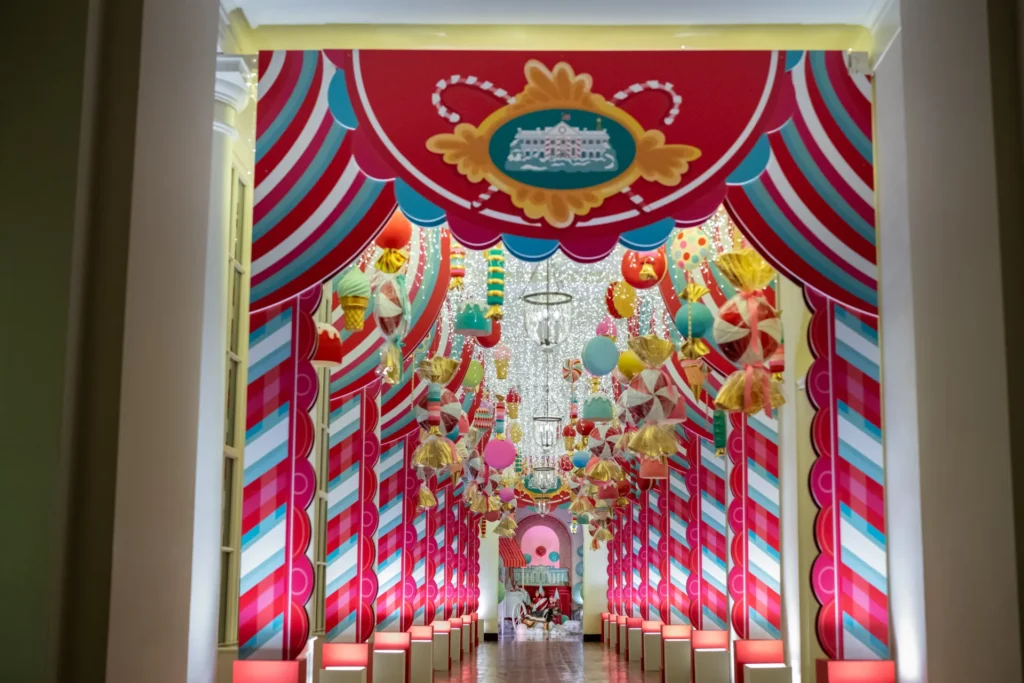
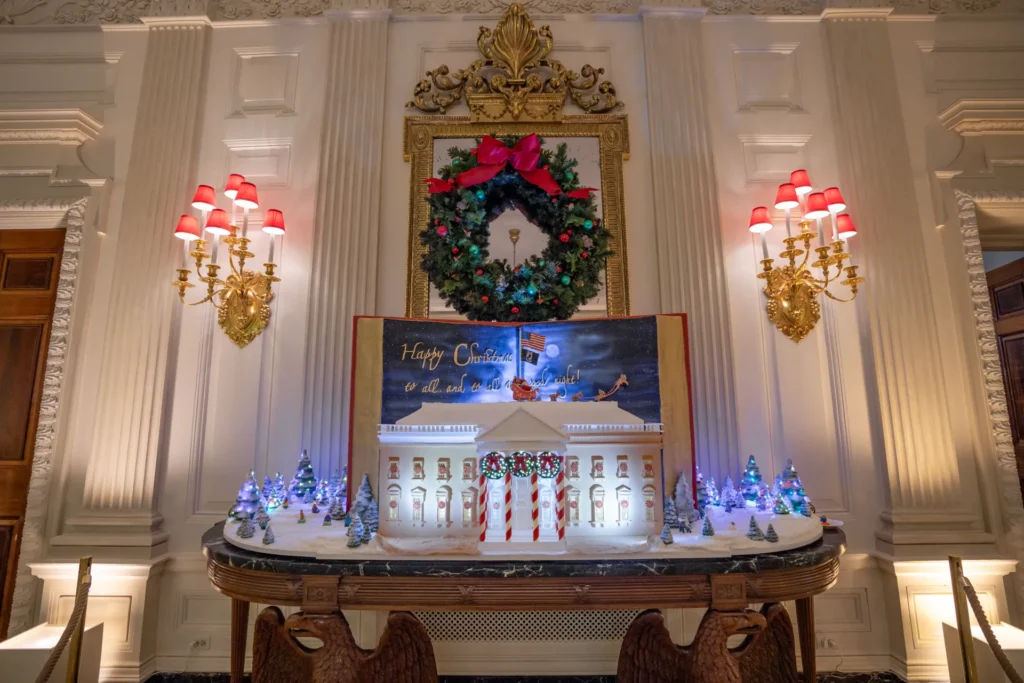
Every year from November – January the White House is decorated for the holidays. This includes 98 Christmas trees, 142,000 holiday lights, and 33,892 ornaments!
Highlights are a gigantic gingerbread house in the shape of the White House. And the Gold Star Tree, which is adorned with wooden Gold Star ornaments that are engraved with the names of fallen U.S. service members.
If you want to see the White House all wrapped up. then request a ticket from your Congressperson 3 months before your preferred tour date. Don’t delay! It’s very popular and tickets run out fast.
In addition, visitors can view the National Christmas Tree on the Ellipse, which is a park located outside the gate of the South Side of the White House.




Bonus: Camp David, Air Force One, & more!
There are several fascinating entities related to the U.S. President and the White House.
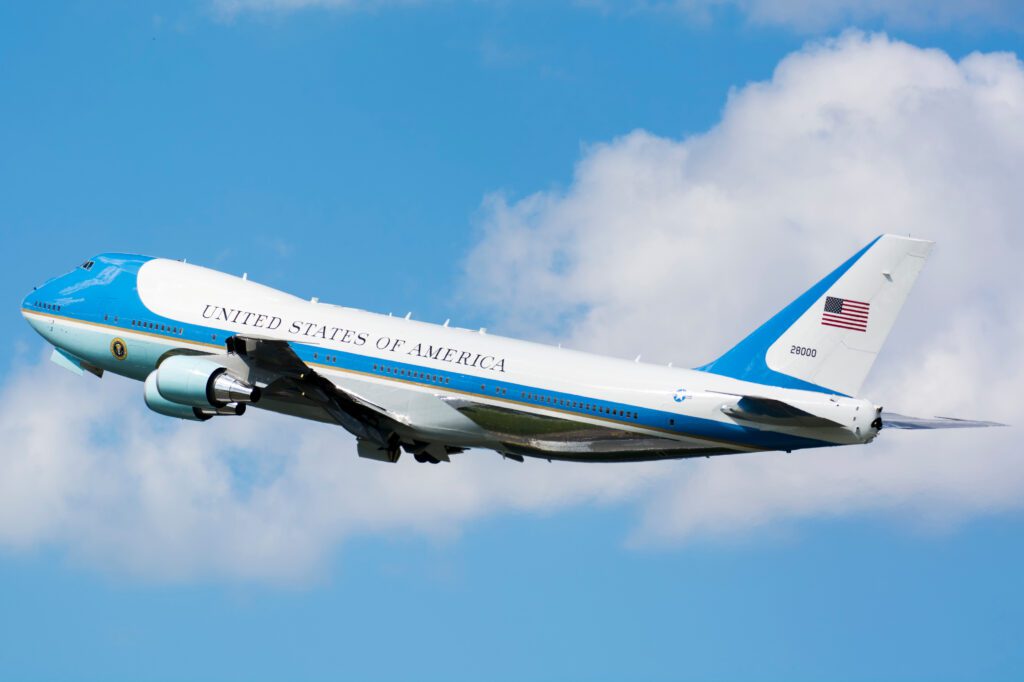
Air Force One – A term used for any Air Force aircraft carrying the President. There are currently two highly customized Boeing 747-200B series aircraft that are used.
The Eisenhower Executive Office Building – Located next to the West Wing, it houses the majority of White House staff offices. There is a two-lane bowling alley located in the basement that should not be confused with the one-lane Nixon bowling alley which is located in the White House basement.
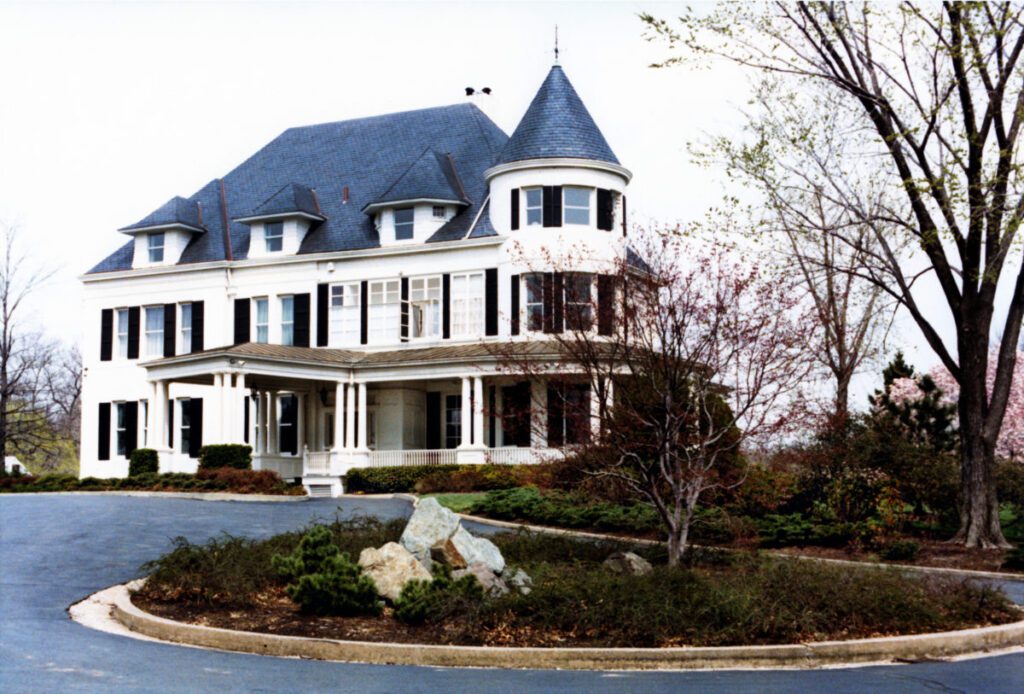
The Vice President’s Residence & Office – The Vice President lives and works here. A white 19th century house located on the grounds of the U.S. Naval Observatory (USNO), the address is Number One Observatory Circle.
Camp David, – The presidential retreat since President Franklin Roosevelt. Located in Catoctin Mountain Park in Frederick County, Maryland, it is formally known as the Naval Support Facility Thurmont.

Cjeck out my How to Visit the 16 Smithsonian Museums in Washington D.C. blog!
Where To Stay in Washington D.C.
If you’re planning to visit the National Archives, the National Mall, or the U.S. Capitol, staying in or near the Downtown, Penn Quarter, National Mall area keeps everything within easy reach.
planning to visit the National Archives, the National Mall, or the U.S. Capitol, staying in or near the Downtown, Penn Quarter, National Mall area keeps everything within easy reach.
Here are three of the best-reviewed hotels in Washington D.C. for all budgets:
Budget Accommodation – Motto by Hilton Washington D.C. City Center
If you’re looking for a clean, modern stay just blocks from the National Archives and Smithsonian Museums, Motto by Hilton offers great value.
The rooms are compact but stylish, and there’s a rooftop bar with fantastic city views. Guests love the location, just a short walk to Metro stations and top sites.
➡️Click here to book your stay at Motto by Hilton!
Mid-Range Accommodation – Hotel Hive (Near the National Mall)
Hotel Hive is Washington D.C.’s first micro-hotel, blending affordability with fun, artistic design. Located near the Lincoln Memorial and Foggy Bottom, it’s perfect for travelers who plan to spend their days exploring and want a hip, affordable home base at night.
There’s a rooftop bar, great pizza downstairs, and tons of great reviews from solo travelers and couples alike.
➡️Click here to book your stay at Hotel Hive!
Luxury Accommodation – Willard InterContinental Washington D.C.
For those wanting a luxurious stay with historical depth, you can’t beat the Willard InterContinental. Just a block from the White House and a 10-minute walk to the National Archives, this iconic hotel has hosted U.S. presidents, foreign dignitaries, and even Martin Luther King Jr.
The rooms are grand, the service is exceptional, and the lobby feels like stepping into a piece of American history.
