Top Things to Do in Everglades National Park
Everglades National Park is a 1.5 million acre subtropical wetland. It consists of coastal mangroves, sawgrass marshes, and pine flatwoods. And it is home to alligators, crocodiles, manatees, Florida panthers, and more.
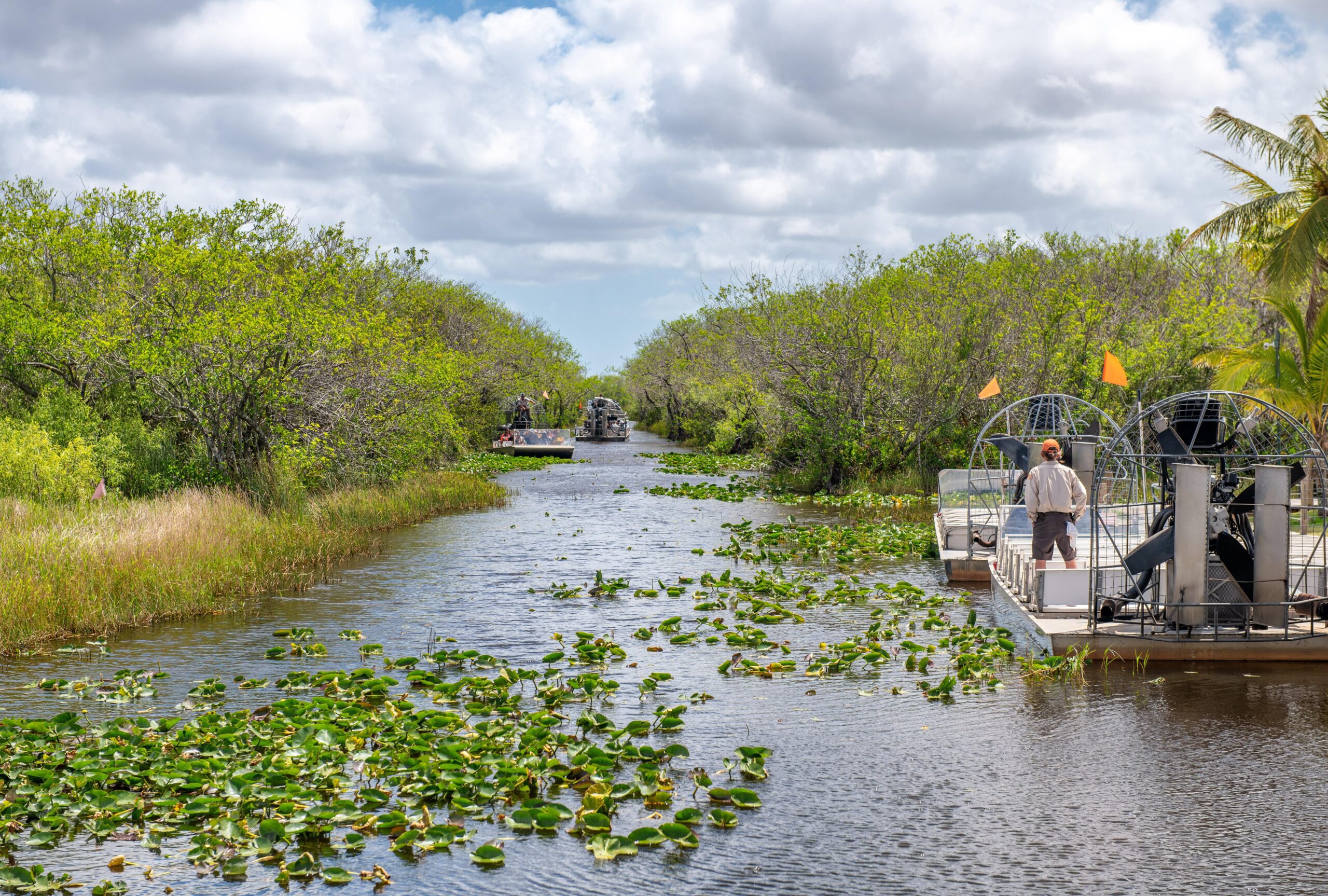
Top things to do include airboat tours, camping, hiking, biking, canoeing/kayaking, birdwatching, and wildlife viewing.

Key Takeaways
* Located on the southern tip of Florida. – Monroe, Miami-Dade, and Collier.
* Spans 3 counties. The Shark Valley entrance is in Miami, the Gulf Coast entrance is in Everglades City, and the Main Entrance is in Homestead.
* The 3 sections of the park are not interconnected. Therefore, you have to drive to the park entrance of the section you want to visit
Everglades is a U.S. National Park
Everglades National Park is 1 of the 63 U.S. National Parks. (A National Park is a scenic or historically important area of countryside protected by the federal government. Its purpose is the enjoyment of the general public or the preservation of land and wildlife).
Everglades National Park is the largest tropical wilderness in the United States. And it is the 3rd largest national park in the lower 48 states (after Death Valley and Yellowstone).
Visit Everglades National Park
Everglades National Park is open 365 days a year. Admission is $30 for private vehicles, $25 for motorcycles, and $15 for individuals that walk or bike in. All passes are valid for 7 days.
For those who plan to visit the park frequently, the best value is to purchase an Everglades National Park Annual Pass. It costs $55 and is valid for 12 months from the date of purchase. All passes can be purchased online or at the park entrance.
If you plan to visit several national parks, consider the America the Beautiful annual pass, valid for 12 months. It costs $80 for U.S. citizens and residents or $250 for non-U.S. residents. Starting January 1, 2026, non-U.S. residents aged 16 and older pay an additional $100 per person at Everglades, on top of the standard entrance fee, unless covered by a valid America the Beautiful or park-specific annual pass. These passes cover the holder and passengers in one private vehicle or on two motorcycles; at per-person entrances, they cover the holder and up to three additional adults. Valid passes purchased before 2026 remain honored under their original terms and cover the surcharge.
Things to Do at Everglades National Park
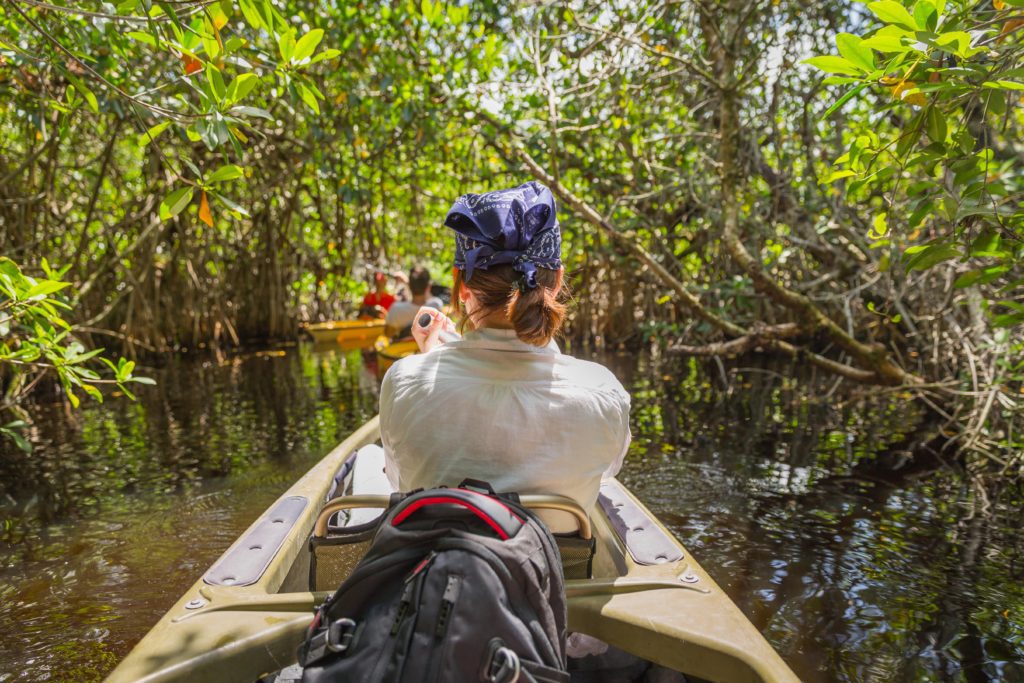
Hiking at Everglades National Park
There are a lot of land trails at Everglades National Park. They can be used for leisurely walks, extended hikes, or bicycle treks.
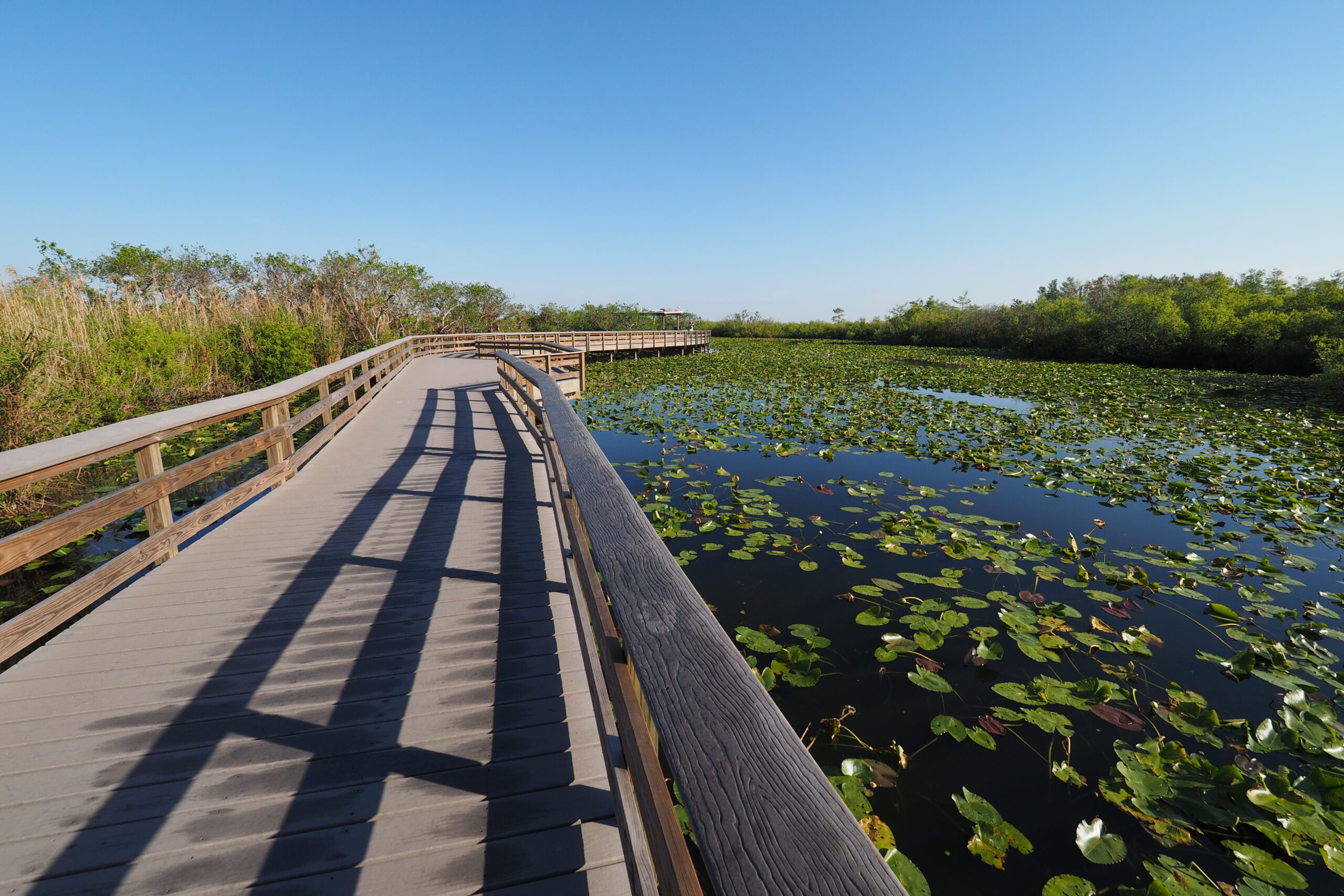
The most popular is the .8 mile roundtrip Ahinga Trail, Another favorite is the .16-mile Pahayokee Overlook boardwalk loop. The raised observation platform provides sweeping vistas of the “river of grass.”
For those looking for a longer hike, try the 1.6 mile Snake Bight Trail or 2 mile Bayshore Loop Trail along the shore of Florida Bay or the 2.6 mile Rowdy Bend Trail.
In addition, paddlers can access many miles of the Gulf Coast Water Trails along or near the park’s southern and western coasts.

Everglades has 3 Park Entrances
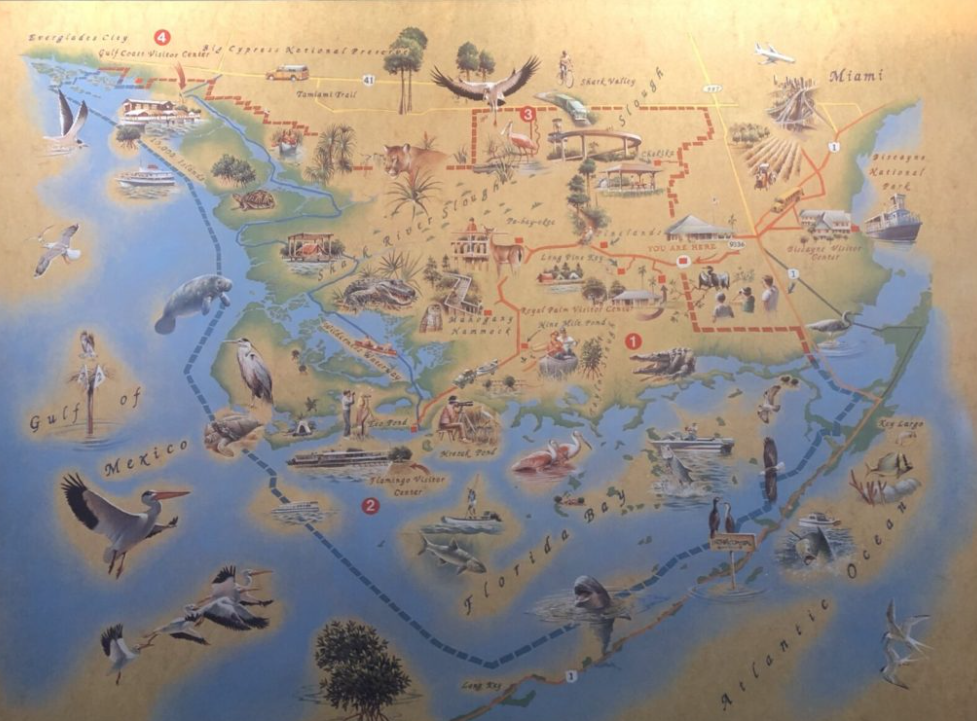
There are 3 entrances to Everglades National Park: 1) The Homestead Entrance in the city of Homestead 2) The Gulf Coast Entrance in Everglades City 3) The Shark Valley Entrance in Miami. Note that the 3 entrances do not interconnect within the park.

1) The Homestead Entrance
The main entrance to Everglades National Park is in Homestead. A free trolley provides service to this entrance from downtown Homestead on weekends during the winter and early spring.
The Homestead Entrance is open 24 hours a day, 365 days a year, and connects visitors to the Royal Palm area and the Flamingo area.
If you’re entering through the Homestead entrance, stop by the Tropical Everglades Visitor Association for more information about everything you can see and do in the Everglades.

Ernest F. Coe Visitor Center
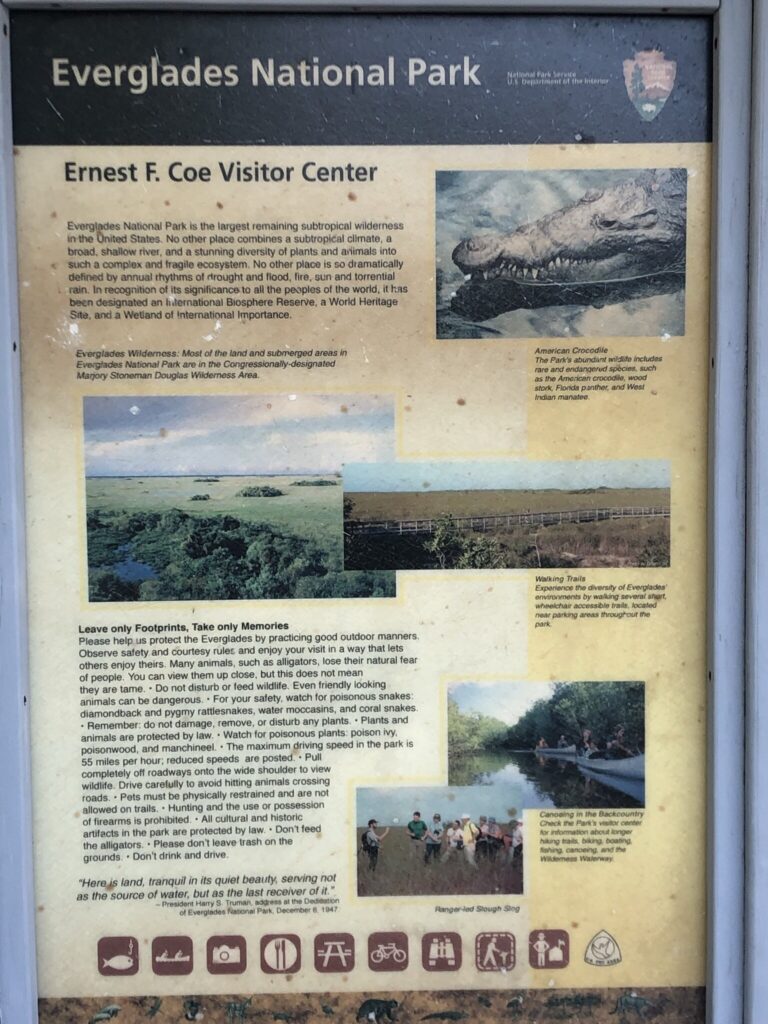
The Ernest F. Coe Visitor Center is located at the Homestead entrance. It features educational displays and a 15-minute movie which plays on loop. The bookstore sells books, postcards, and insect repellent. There are several popular walking trails located a short drive away.
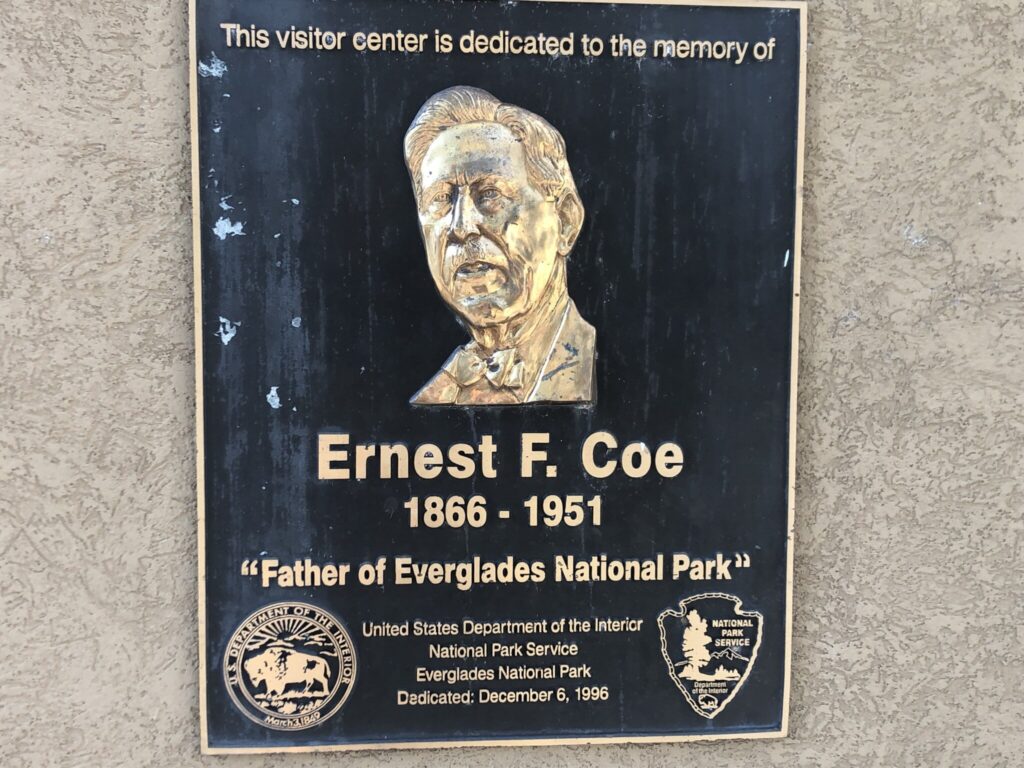
The center is named after Ernest F. Coe. Known as the Father of the Everglades, Coe is responsible for the establishment of Everglades National Park in 1947.
The Ernest F. Coe Visitor Center is located at 40001 State Road 9336 in Homestead, Florida. It is open from 8:00am-5:00pm (December-April) and 9:00am-5:00pm (May-November). The phone number is 305-242-7700.

Royal Palm Visitor Center
The Royal Palm section of Everglades National Park extends from Mahogany Hammock to Flamingo. It includes Long Pine Key Campground and all of the trails in between the Homestead entrance and Flamingo.
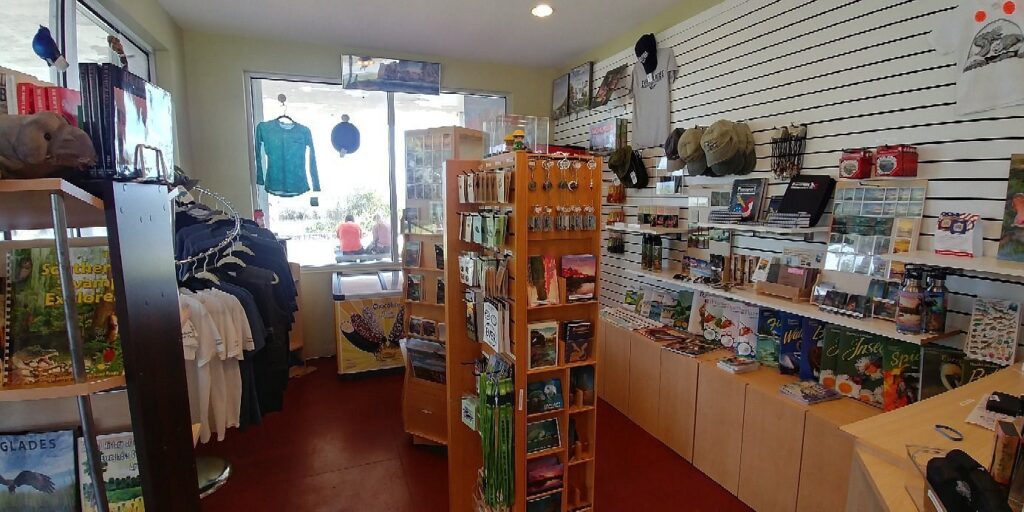
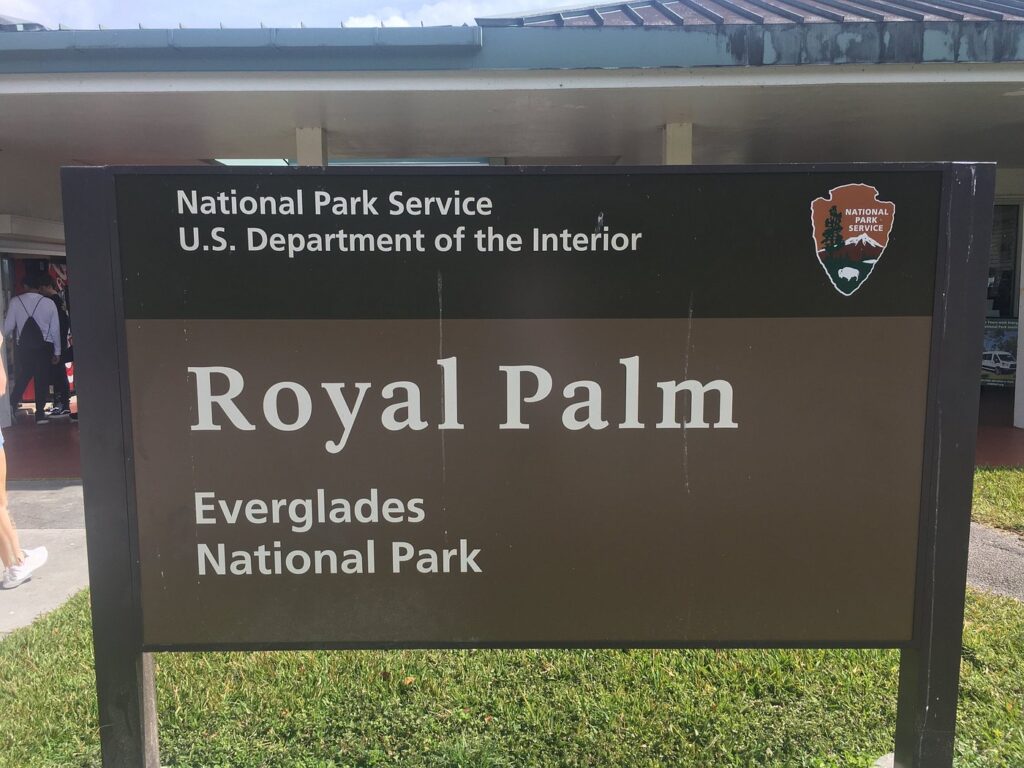
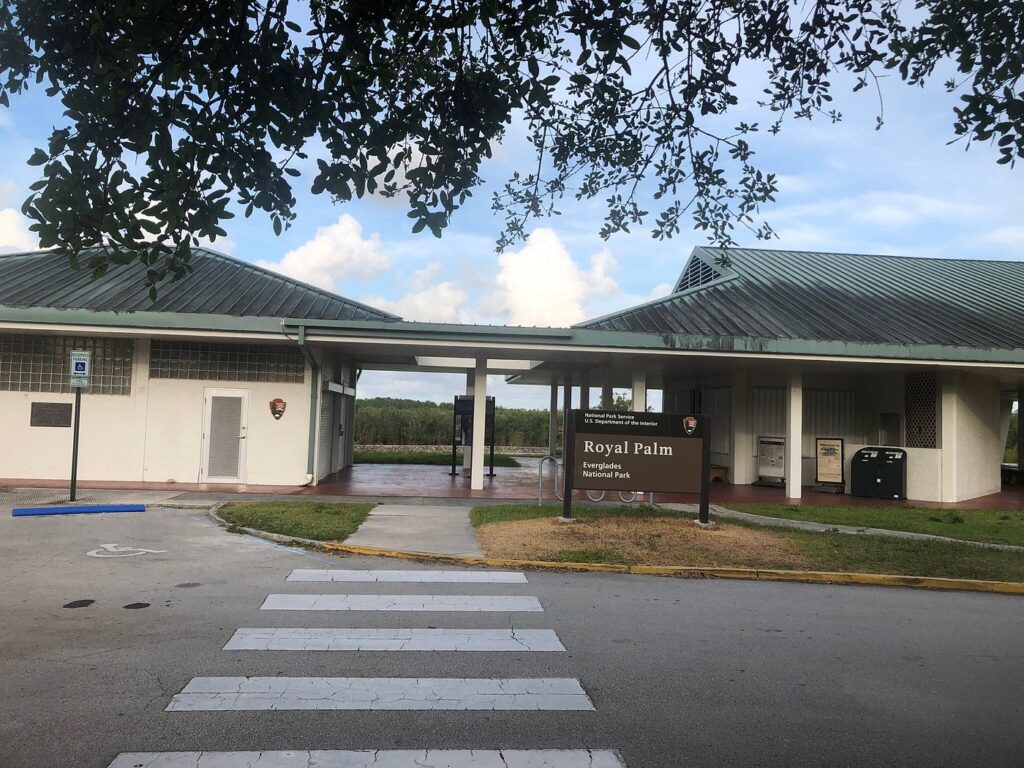
Located one mile from the Homestead entrance, the Royal Palm Visitor Center has a small bookstore, restrooms, and vending machines. And it is the site of Ranger led walks and talks.
The Royal Palm Visitor Center is open daily from 10:00am-4:00pm. Their phone number is 305-242-7237.
The Ahinga Trail
The most famous feature at the Royal Palm Visitor Center is the Ahinga Trail. (Which is named after the Ahinga birds that nest there). Starting in the parking lot, the .8 mile trail is a paved walkway and boardwalk over Taylor Slough, a freshwater sawgrass marsh.
Check out the Ahinga Trail Webcam.
Flamingo Area
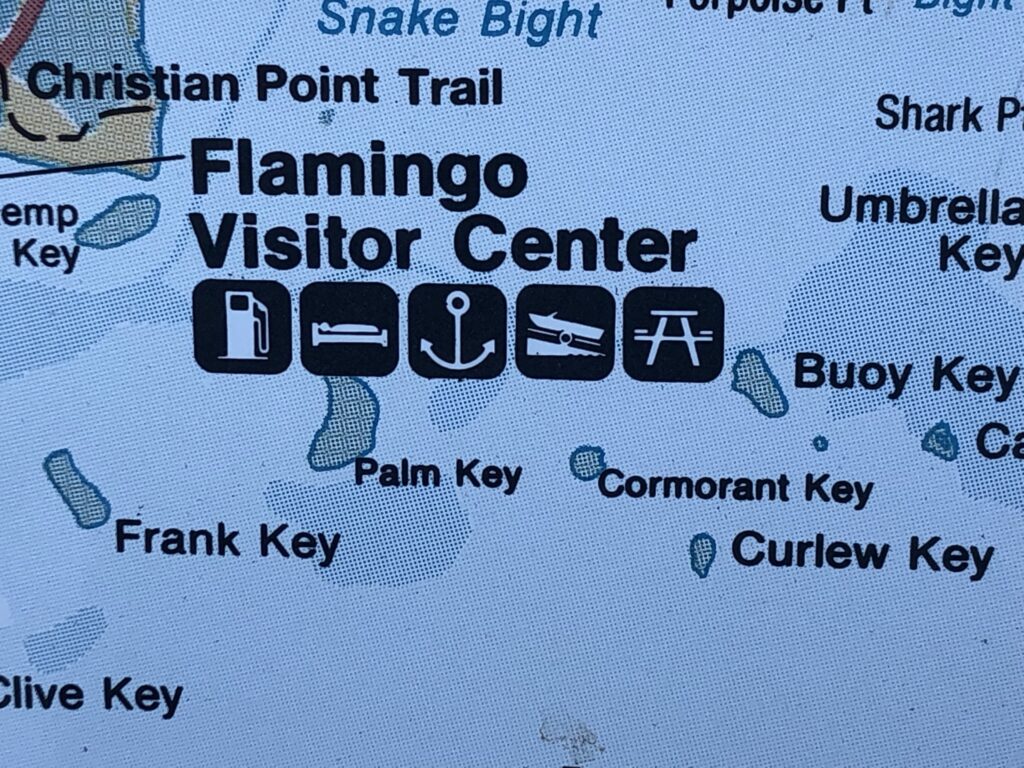
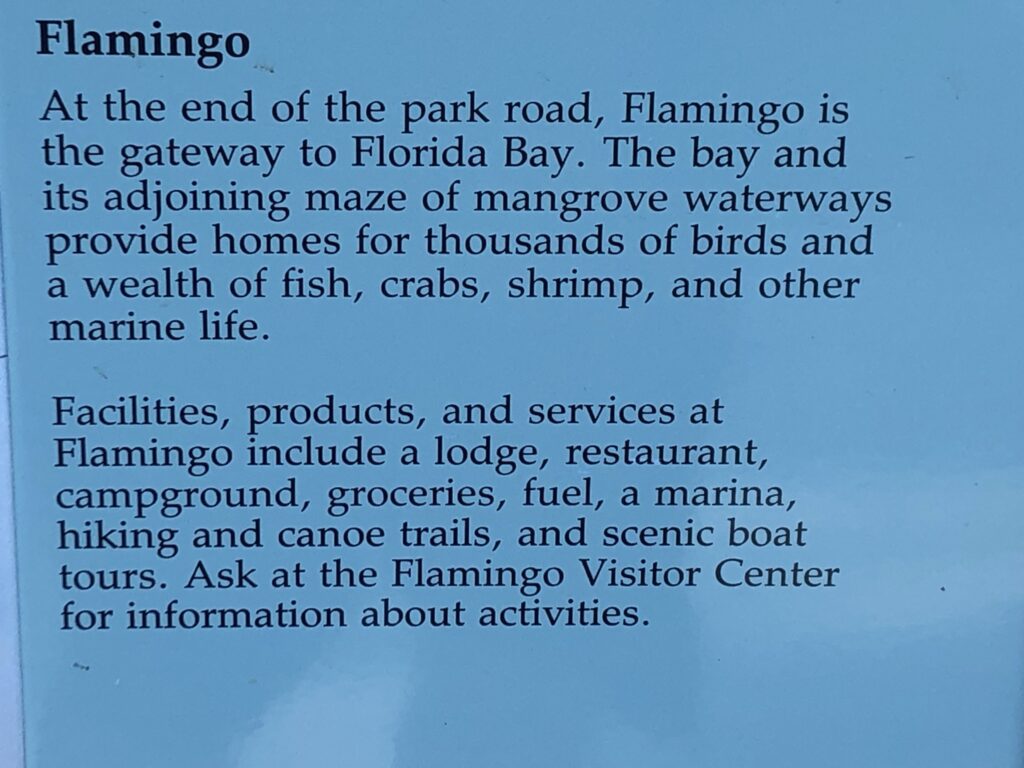
For those who really want to explore Everglades National Park, the Flamingo area is your best bet. It has beautiful campgrounds, an abundance of recreational activities, and phenomenal views of the largest subtropical wilderness in the nation. And it is a great place for exotic wildlife and bird watching.
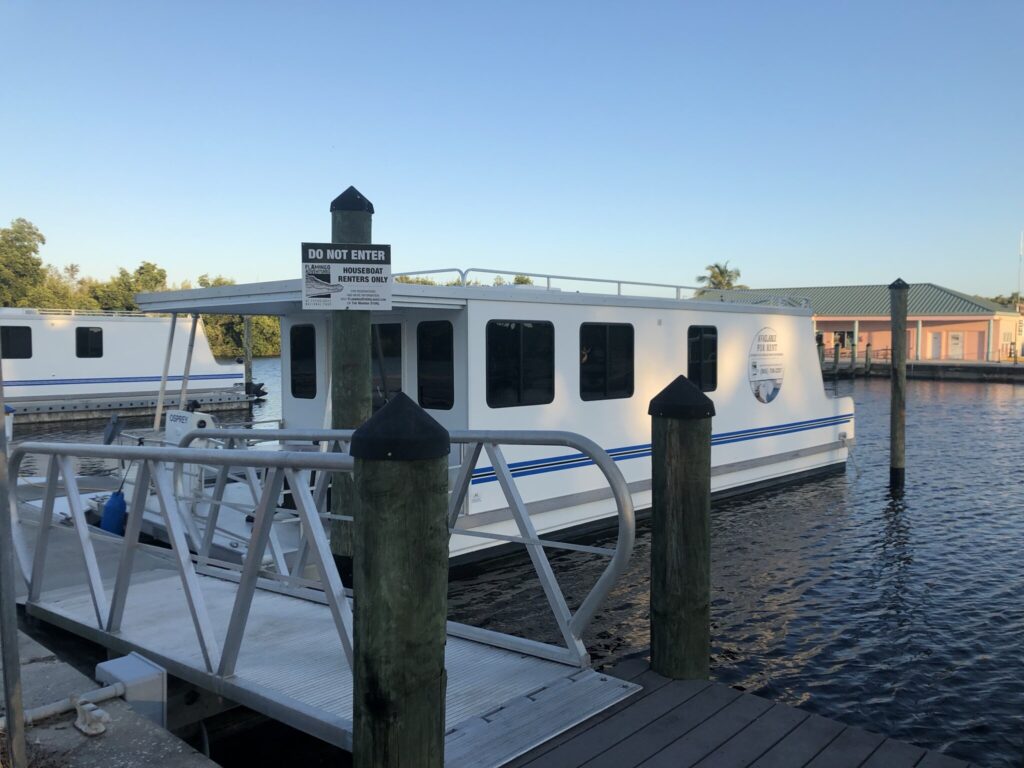
There are a large number of concession operated services, including boat slips and launch ramps. Activities include boat tours of the back country, kayaking, canoeing, fishing, biking, and hiking. Lodging options include houseboats, eco tents, camping, and RV sites. A lodge and restaurant are under construction.
The fully stocked Marina Store sells water, to-go food, beer, sunscreen, bug spray, and more.

Flamingo Boat Tours
There are two 90-minute boat tours that depart from the Flamingo Marina. On both tours an onboard naturalist will highlight unique plant and animal life, and outline the rich history of the area.
The Backcountry Tour explores the magnificent Florida backcountry. It ventures up the Buttonwood Canal through Coot Bay and Tarpon Creek into the Whitewater Bay. The 90-minute tour departs daily at 9:00am, 11:00am, 1:00pm, and 3:00pm.
The Bayside Tour explores the beautiful Florida Bay. The 90-minute tour departs daily at 10:00am, 12:00pm, 2:00pm, and 4:00pm.
Tickets can be purchased at the Marina Activities Booth or online. The cost is $40 for Adults, $20 for Children age 5-12, and free for children under 5.

2) Gulf Coast Entrance
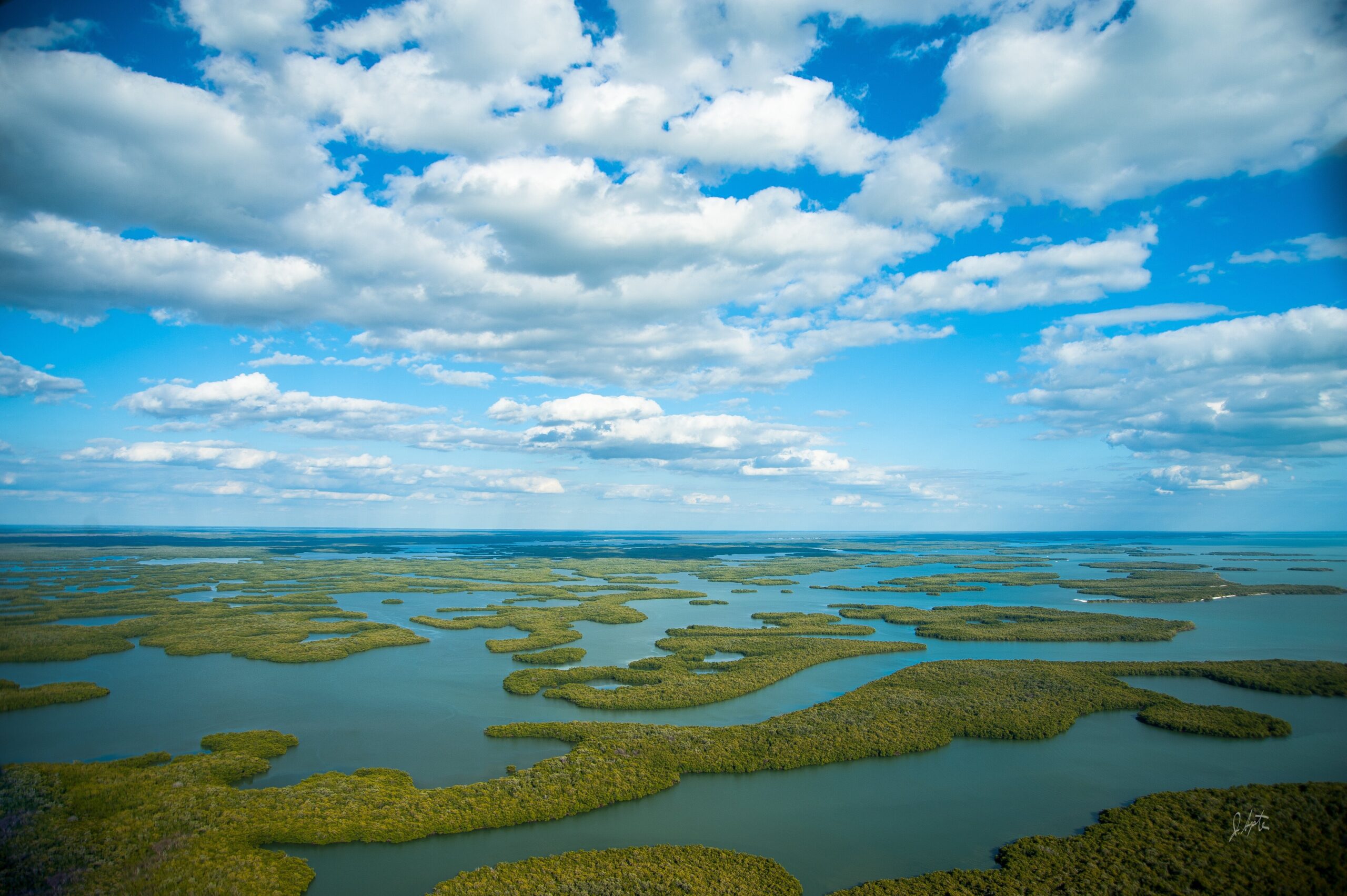
The Gulf Coast Entrance to Everglades National Park is located in Everglades City. It serves as the gateway for exploring the Ten Thousand Islands, a maze of mangrove islands and waterways that extends to Flamingo and Florida Bay. Ten Thousand Islands is accessible by boat only in this region.
You can rent a canoe or kayak. Or take the 10,000 Islands Tour, a 90-minute boat tour through mangrove islands to the Gulf of Mexico. An onboard naturalist will be on the lookout for manatees, osprey, sea turtles, shore birds, and dolphins. Call Everglades Florida Adventures at 855-793-5542 for more information.
Gulf Coast Visitor Center
The original Gulf Coast Visitor Center was destroyed by Hurricane Irma in September 2017. A temporary Visitor Contact Station is now open.
There are no stores, restaurants, lodging, or campgrounds in this area of the park. (All amenities all located just outside the park gate in nearby Everglades City). So bring snacks and water!
The Gulf Coast Visitor Center is located at 815 Oyster Bar Lane in Everglades City, Florida 34139. It is open daily from 8:00am-5:00pm. Their phone number is 239-695-3311.

3) Shark Valley Entrance
The Shark Valley Visitor Center has educational displays, a park video, and informational brochures. books, postcards, and other souvenirs are available in the gift store.
Guided tram tours, bicycle rentals, snacks and soft drinks are available. Note that electric bicycles are allowed on the Shark Valley loop. Two short walking trails (one wheelchair accessible), are located off the main trail.
The Shark Valley Entrance is located on U.S.41/Tamiami Trai. The Entrance Gate is open daily from 8:30am-6:00pm. The Shark Valley Visitor Center is open daily from 9:00am-5:00pm.

Shark Valley Tram Tours
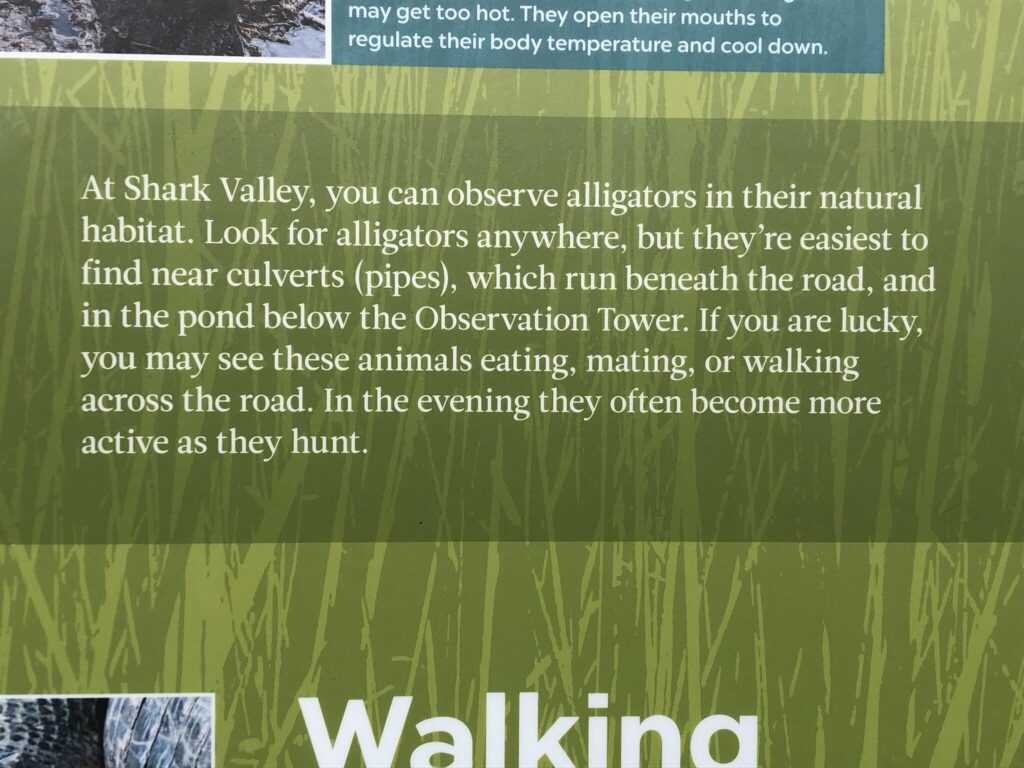
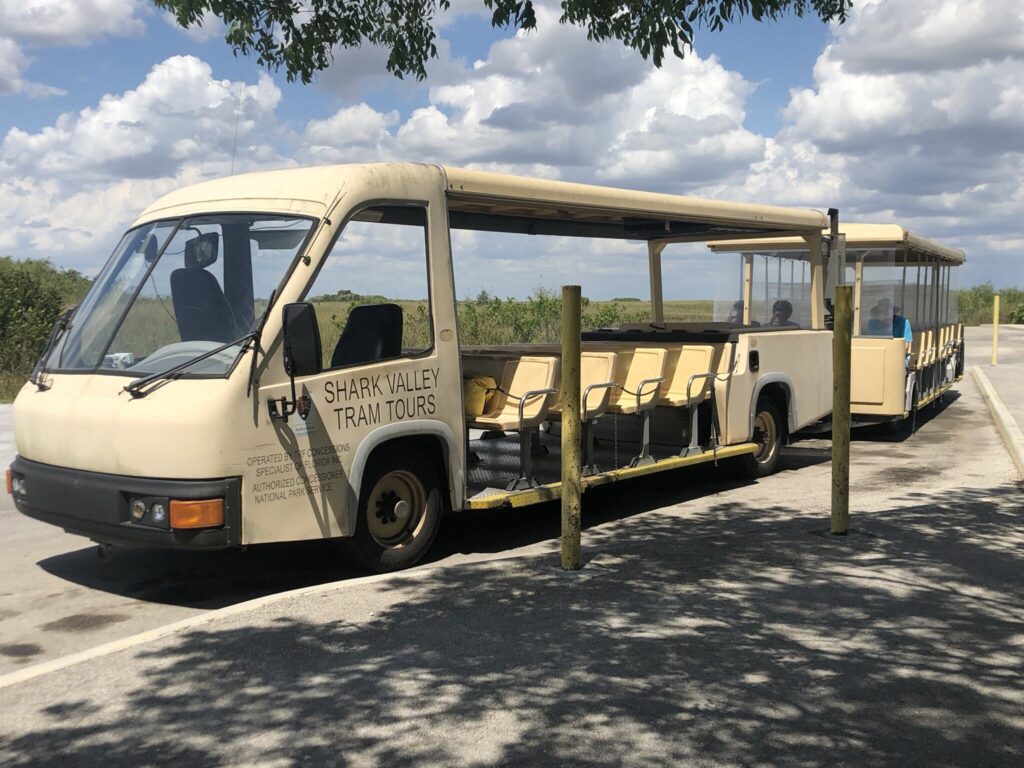
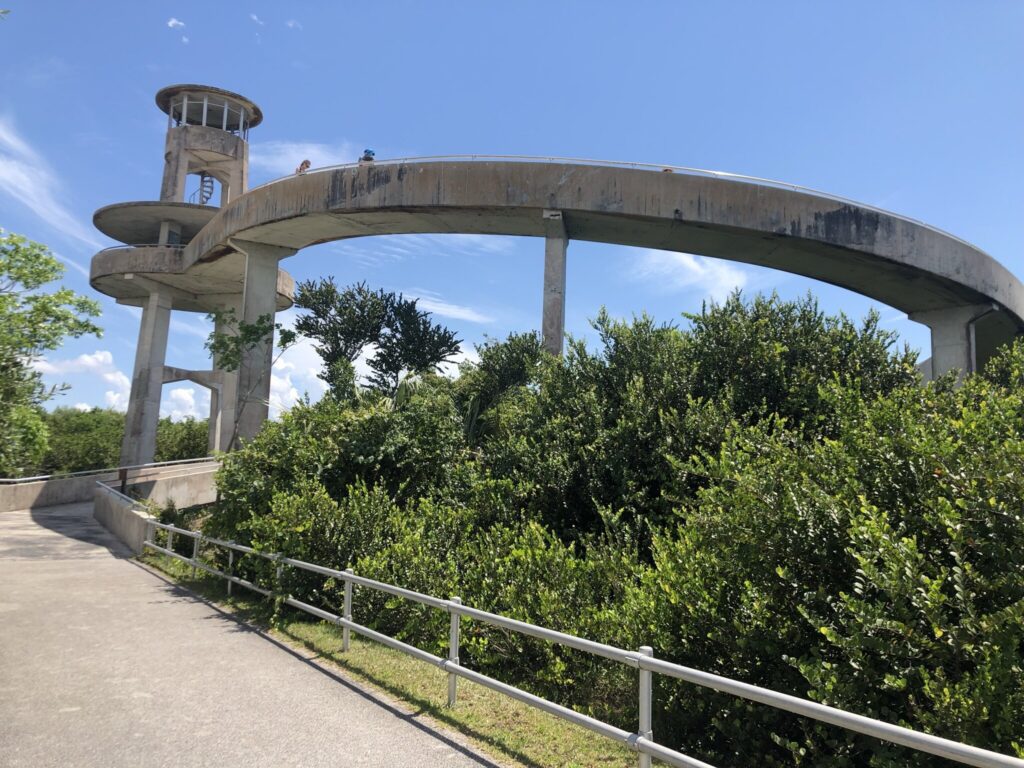
The Everglades Tram Tour takes visitors through the Shark Valley section of Everglades National Park. The 2 hour, 15 mile tram ride departs from the Shark Valley Visitor Center. It stops at a 65 foot Observation Tower for spectacular vistas.
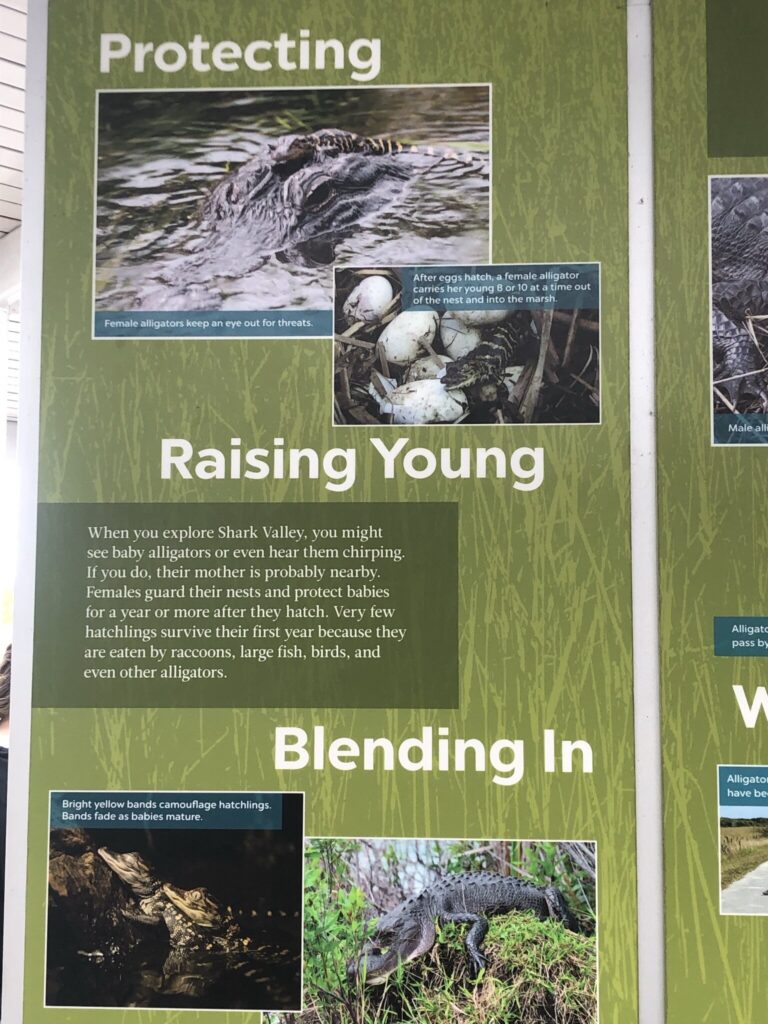
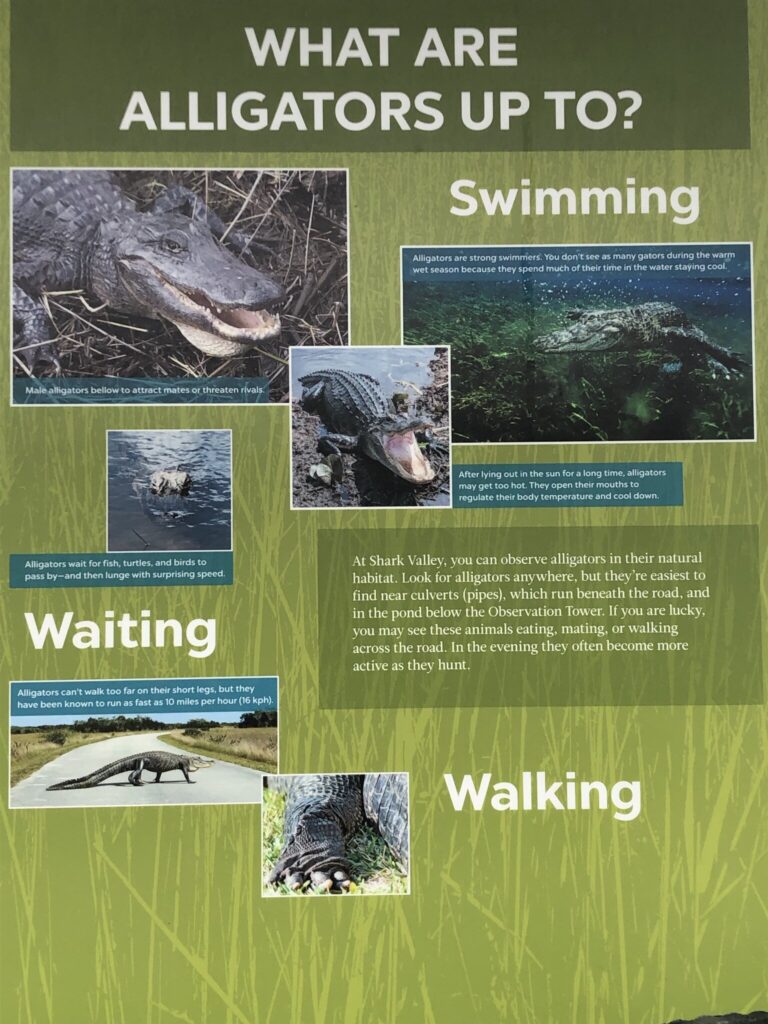
As the tram cuts through the sawgrass prairie, wildlife can be seen on both sides. I saw several small alligators and large birds! Shark Valley naturalists escort all tours. Check out these recent wildlife sightings from the tram.
Everglades Subtropical Wilderness
Everglades National Park protects the southern 20% of the original Florida Everglades.
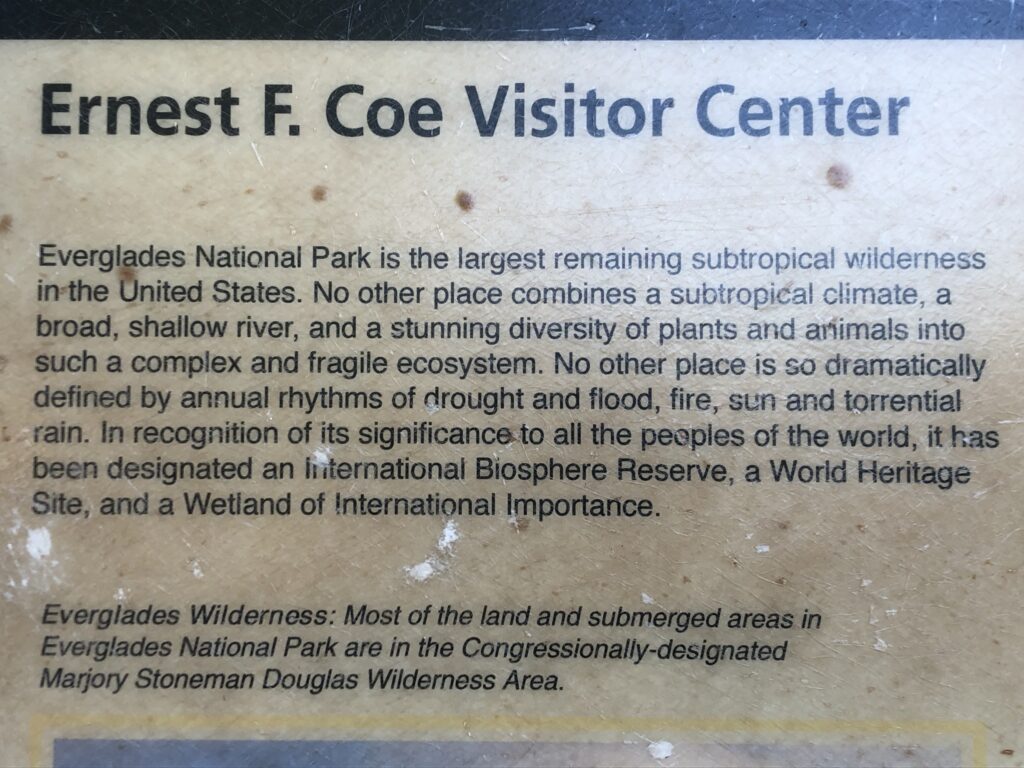
It is the largest remaining subtropical wilderness in the United States. No other place combines a subtropical climate, a broad, shallow river, and a stunning diversity of plants and animals into such a complex and fragile ecosystem.
One third of Everglades National Park is covered by saltwater; the rest is a freshwater wetland. (Wetlands are areas where water covers the soil or is present near the surface).

Wildlife in Everglades National Park
Everglades National Park is home to 36 rare and endangered species, including the elusive Florida panther, American crocodile, endangered leatherback turtle, and West Indian manatee.
And there are American Alligators, Deer, and 28 different kind of snakes. Fish found in the Everglades include Red teriera, Large mouth bass, Redfish, and Catfish.

Alligators AND Crocodiles!!!
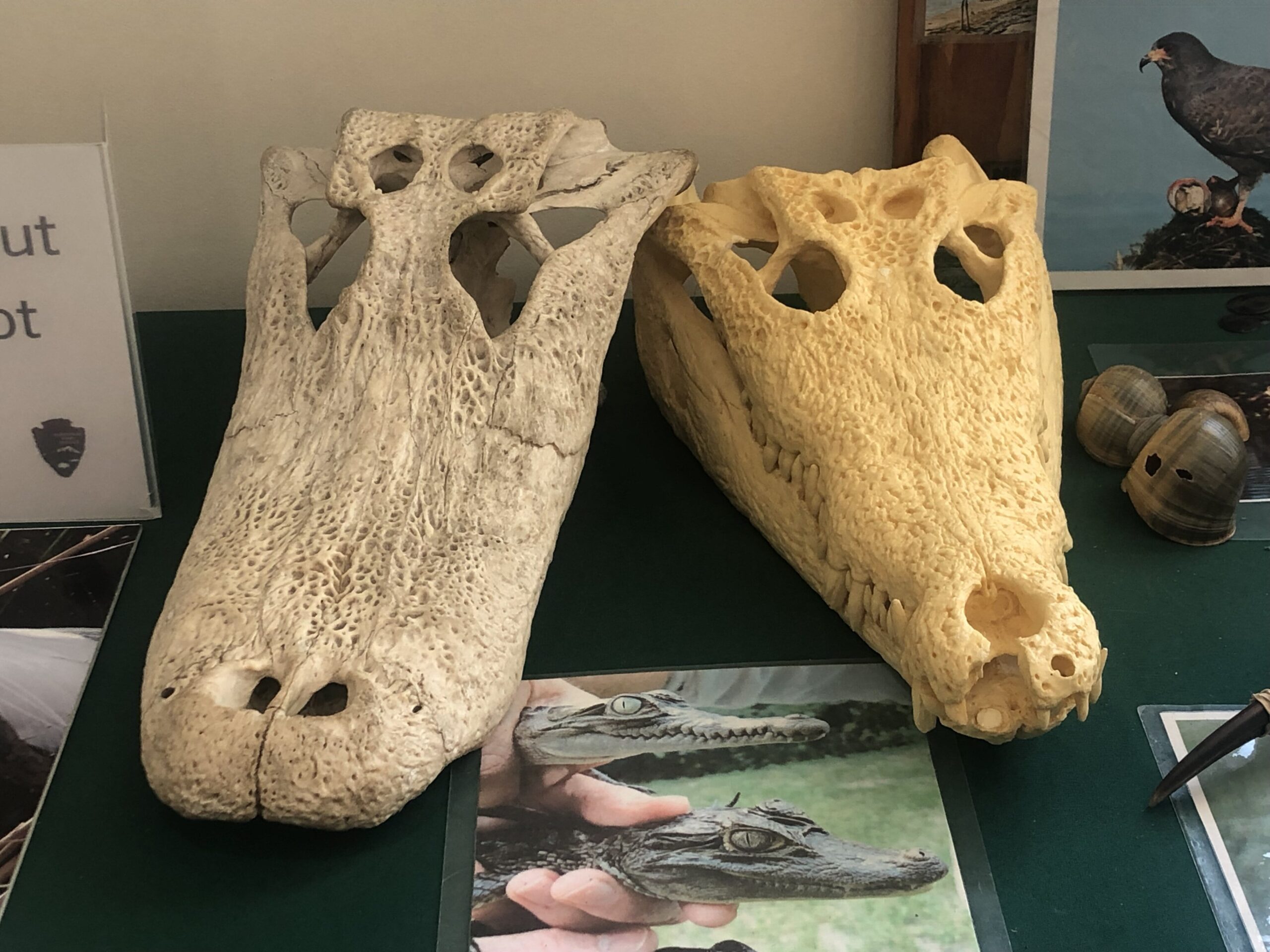
The Everglades is the only ecosystem in the world where alligators and crocodiles co-exist! That’s because it is a unique ecosystem where Florida Bay fresh water meets Gulf of Mexico salt water.
(Alligators live in fresh water and can not digest salt. In contrast, Crocodiles can live in both fresh and salt water).
Alligators
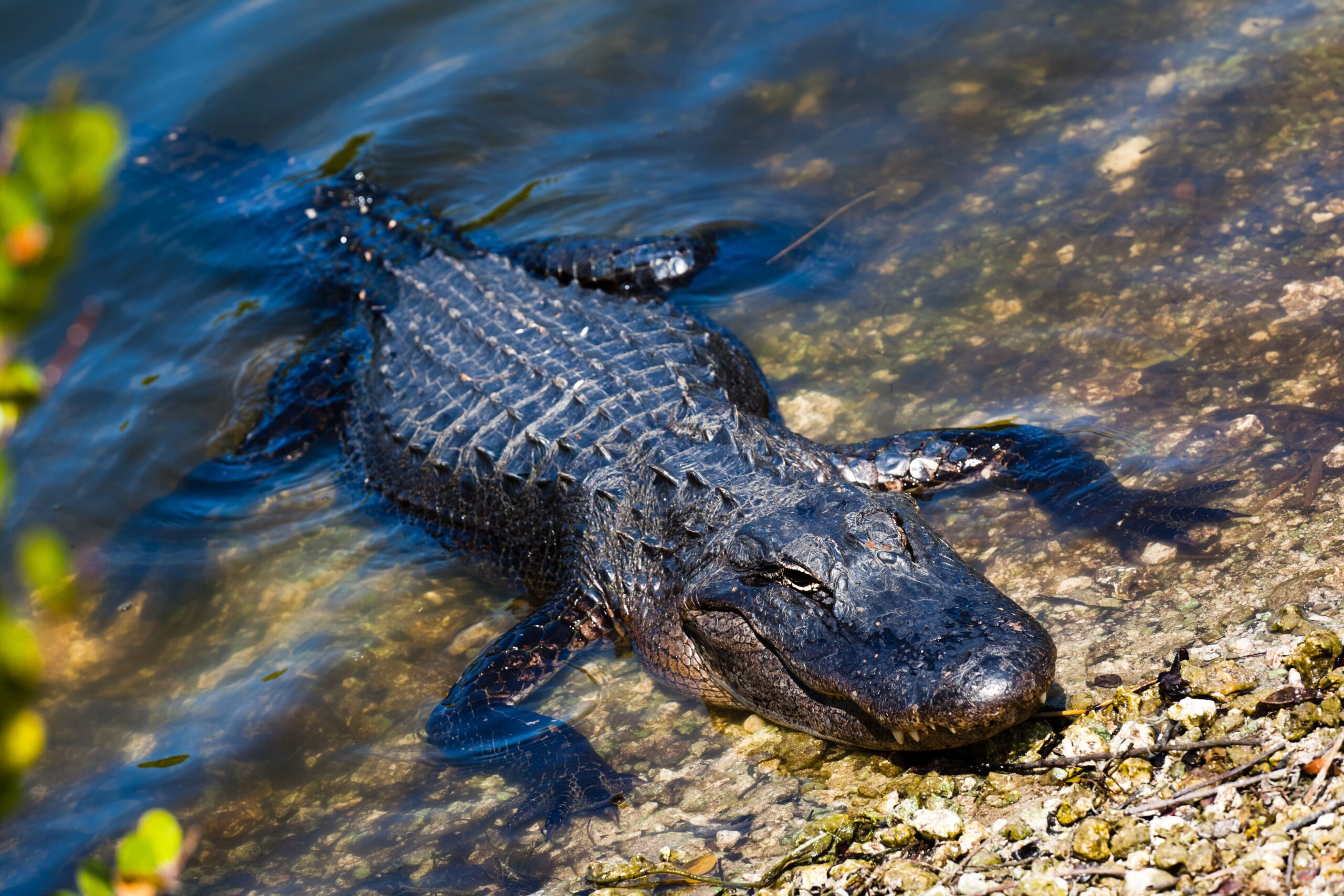
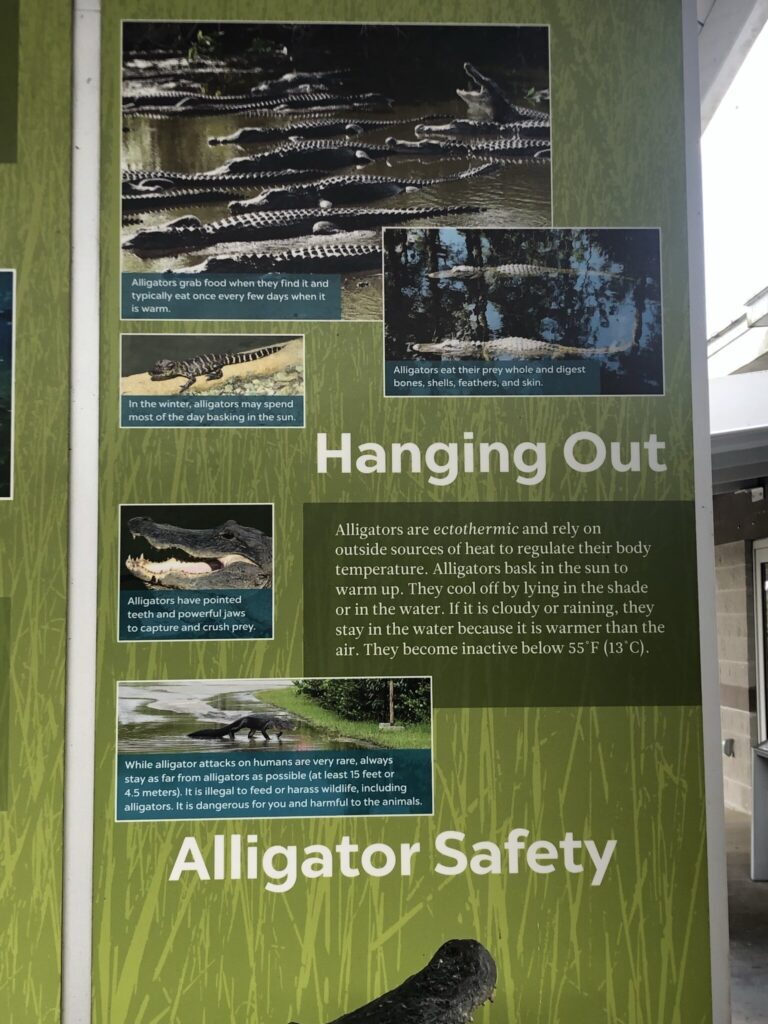
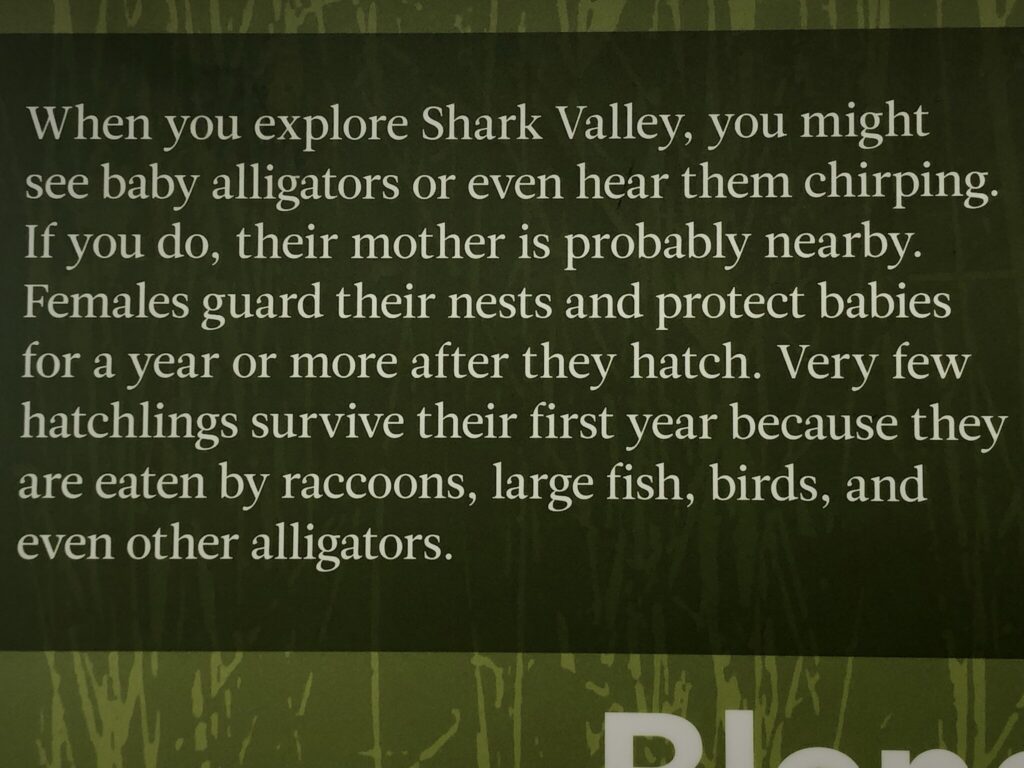
There are 2 Alligator species – American and Chinese. American Alligators live in 10 southeastern U.S. states: 1) Florida 2) Louisiana 3) Georgia 4) Alabama 5) Mississippi 6) South Carolina 7) North Carolina 8) Texas 9) Oklahoma 10) Arkansas. They can be found in rivers, ponds, swamps, and lakes.
Since alligators hide during the heat, the best time to see them at Everglades National Park is January-March. Read more on the Mama Kim’s Alligator blog to learn more!

Crocodiles
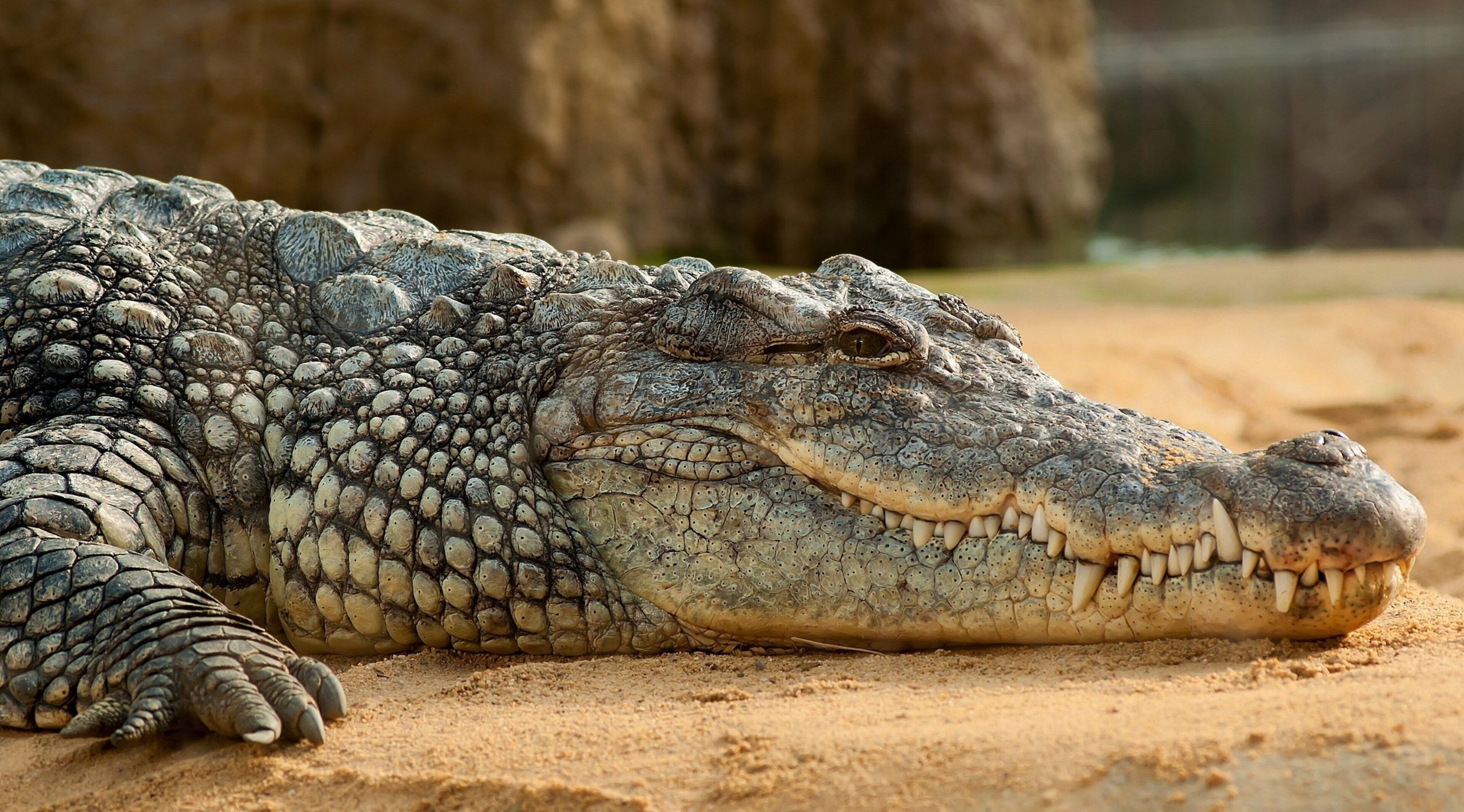
The Everglades is the only place in the U.S. where you can see the American crocodile.
Sadly, in the 1960s there were only 200 crocodiles left and they were given Endangered Species status. That number has since gone up to 2,000, and crocodiles have been promoted to Threatened.
Check out the Mama Kim’s Crocodile blog to learn more!
Bird Watching
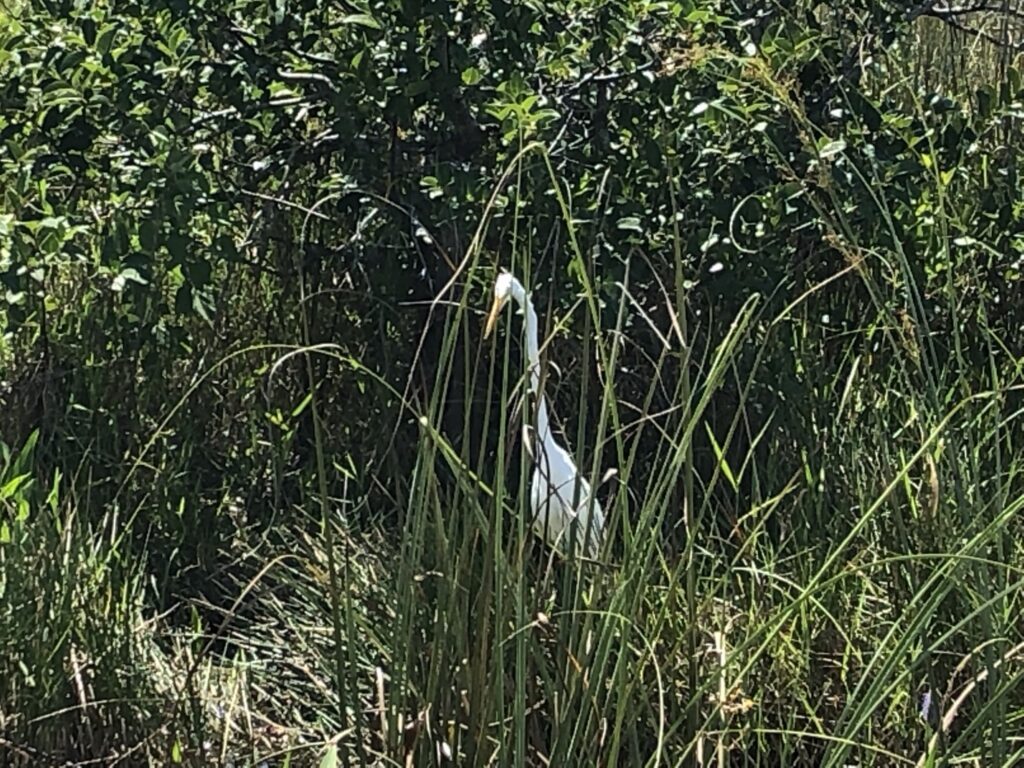
Everglades National Park is a birder’s paradise. It is the winter home of more than 360 different species of birds, including the Roseate spoonbill, Great blue heron, Egret, and Anhinga.