
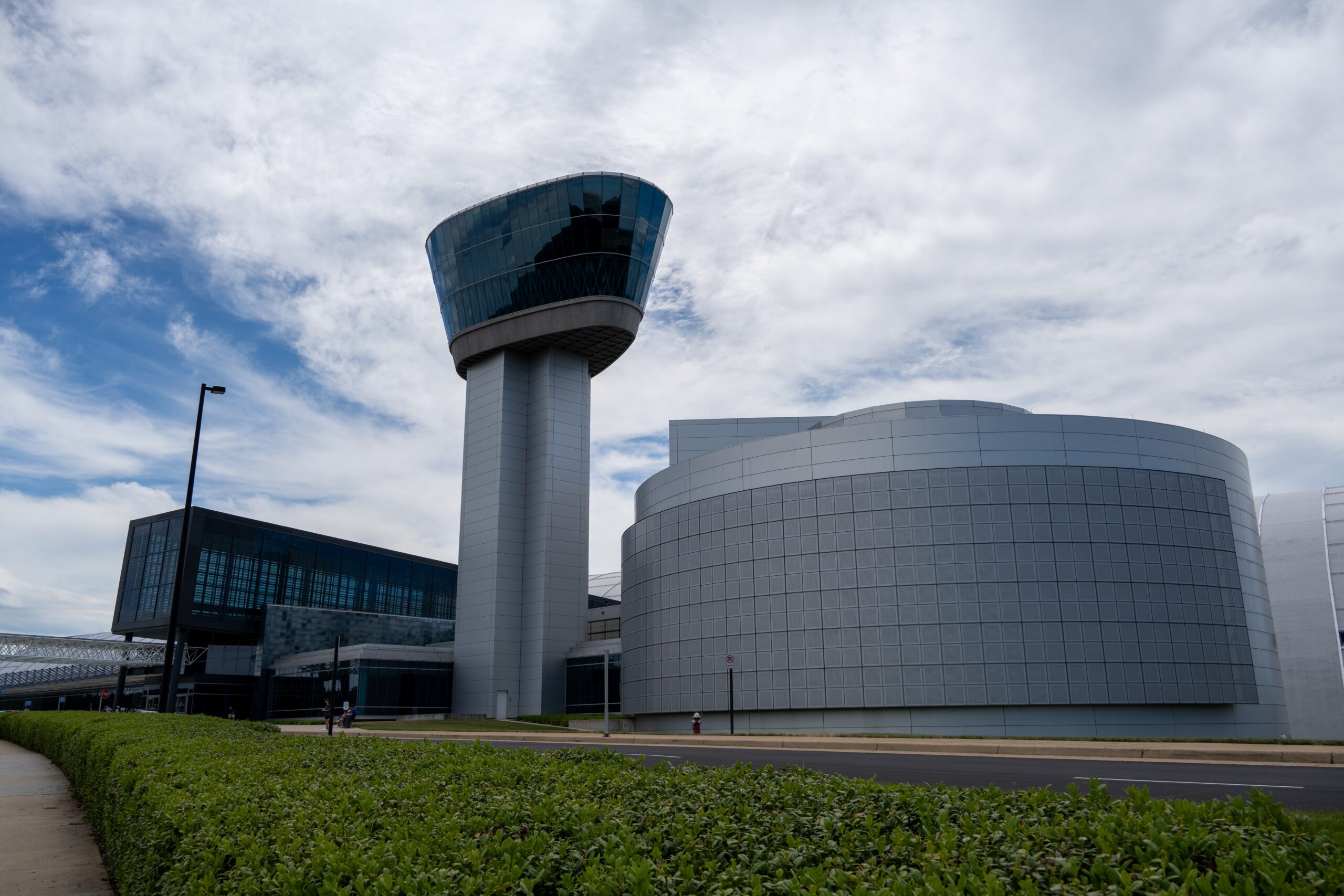
Steven F. Udvar-Hazy Center: Complete Guide (2026)
The Steven F. Udvar-Hazy Center is the Smithsonian National Air and Space Museum’s companion facility in Chantilly, VA. It houses more than 3,000 aviation and space artifacts, including over 200 aircraft and spacecraft, displayed inside 2 massive hangars.
Highlights include the Space Shuttle Discovery, Lockheed SR-71 Blackbird, Concorde, and the Boeing B-29 Superfortress Enola Gay. The museum also features an observation tower overlooking Dulles Airport, a restoration hangar, and an IMAX theater.
This blog covers everything you need to plan your visit, including admission, parking, exhibits, must-see aircraft, dining, accessibility, and practical tips.
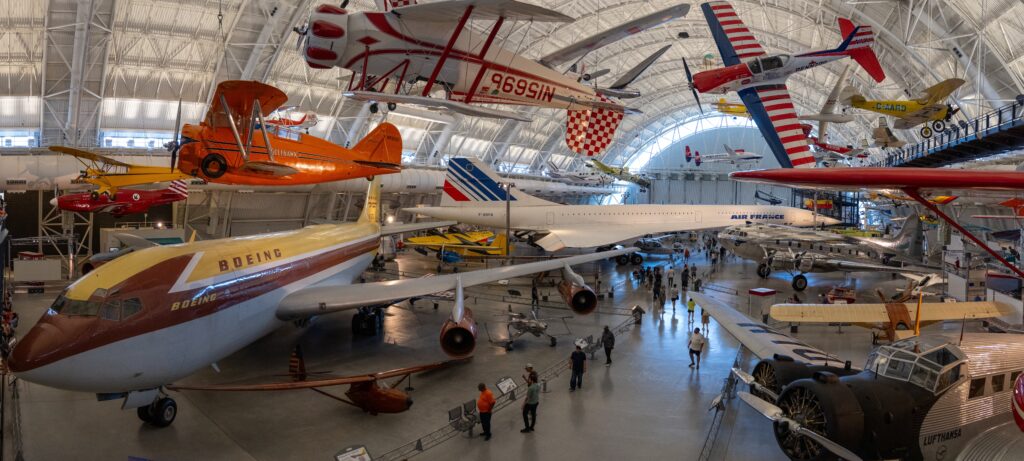
Steven F. Udvar-Hazy Center
Opening Hours: Open Daily: 10:00am-5:30pm; Closed: December 25
Admission: Free, Parking is charged per vehicle before 4:00pm.
Location: 14390 Air and Space Museum Parkway Chantilly, VA (Adjacent to Washington Dulles International Airport)
Allow 3-5 hours for your visit.
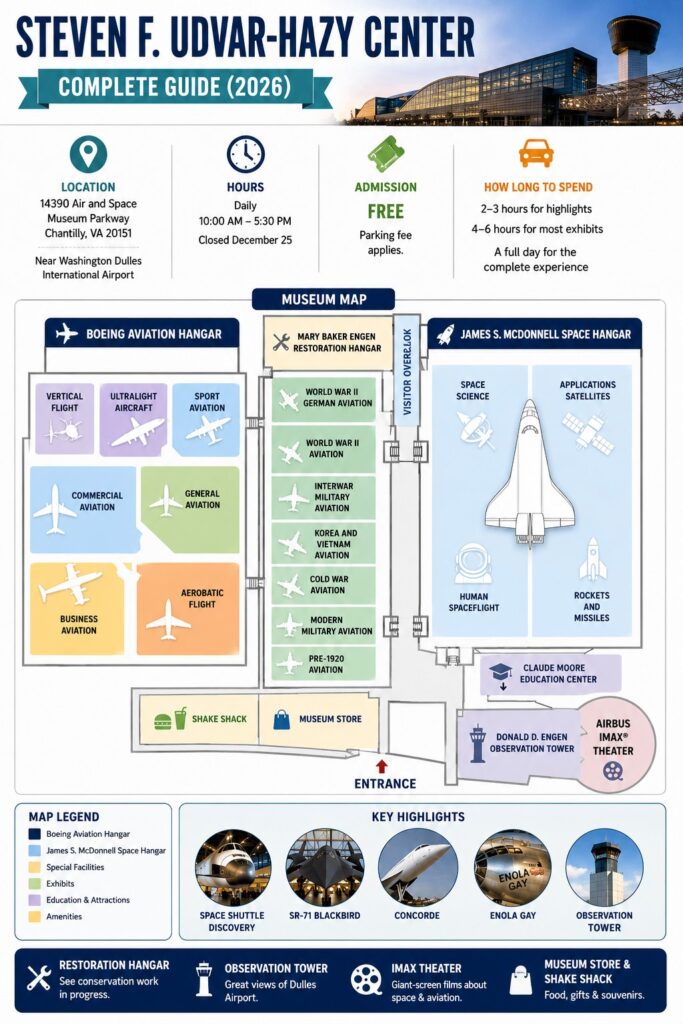
Steven F. Udvar-Hazy Center Layout
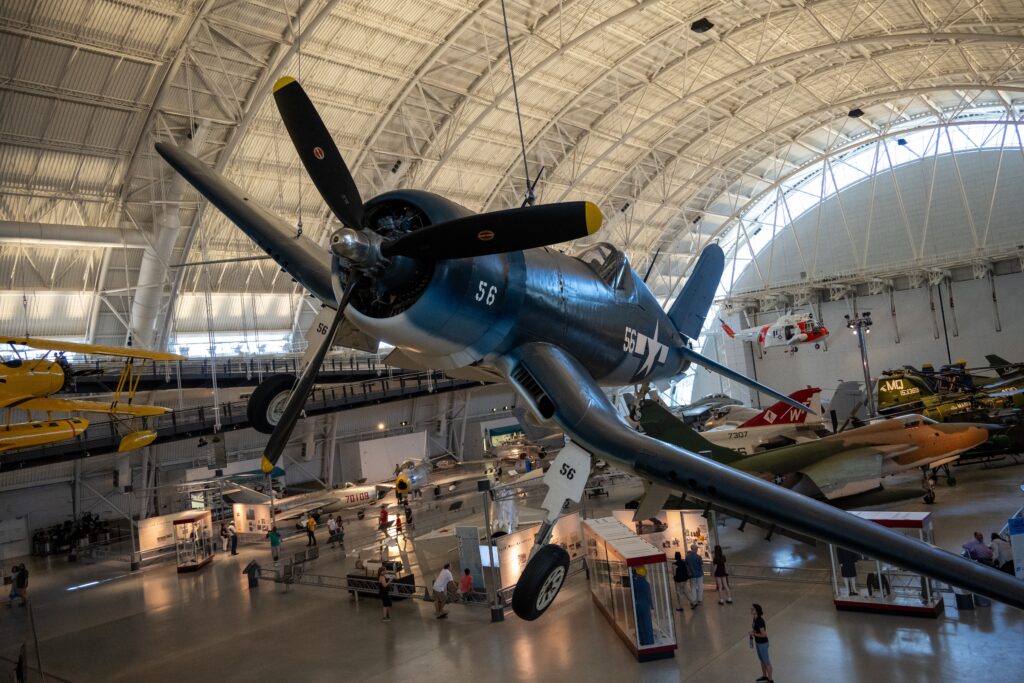
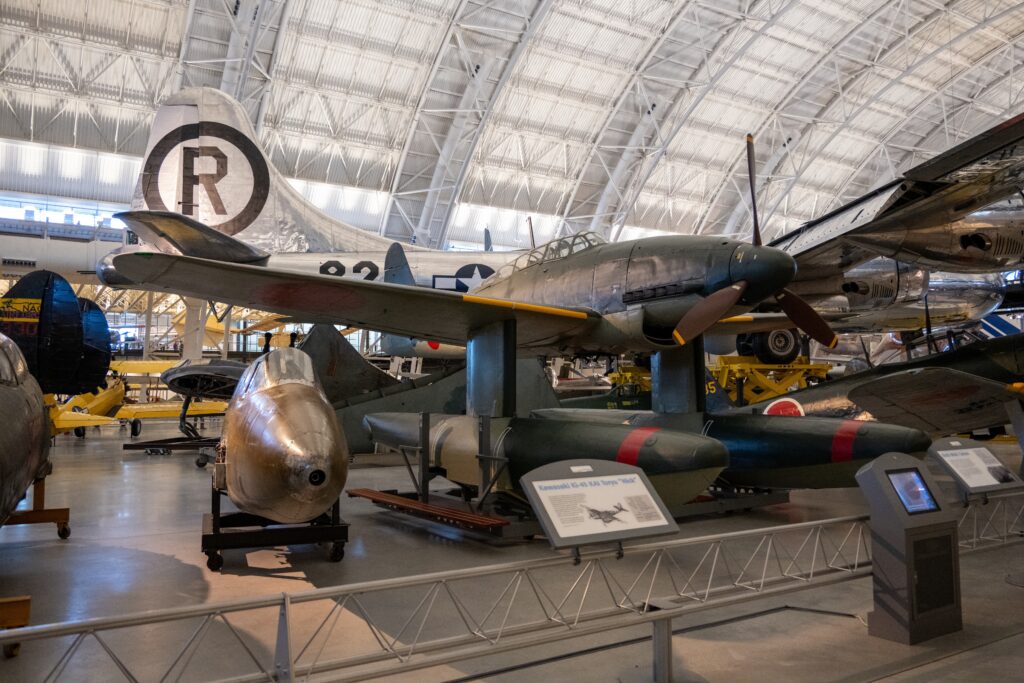
The Steven F. Udvar-Hazy Center is divided into two main exhibit areas: the Boeing Aviation Hangar and the James S. McDonnell Space Hangar. The Aviation Hangar displays hundreds of historic aircraft, while the Space Hangar houses spacecraft, rockets, satellites, and the Space Shuttle Discovery.
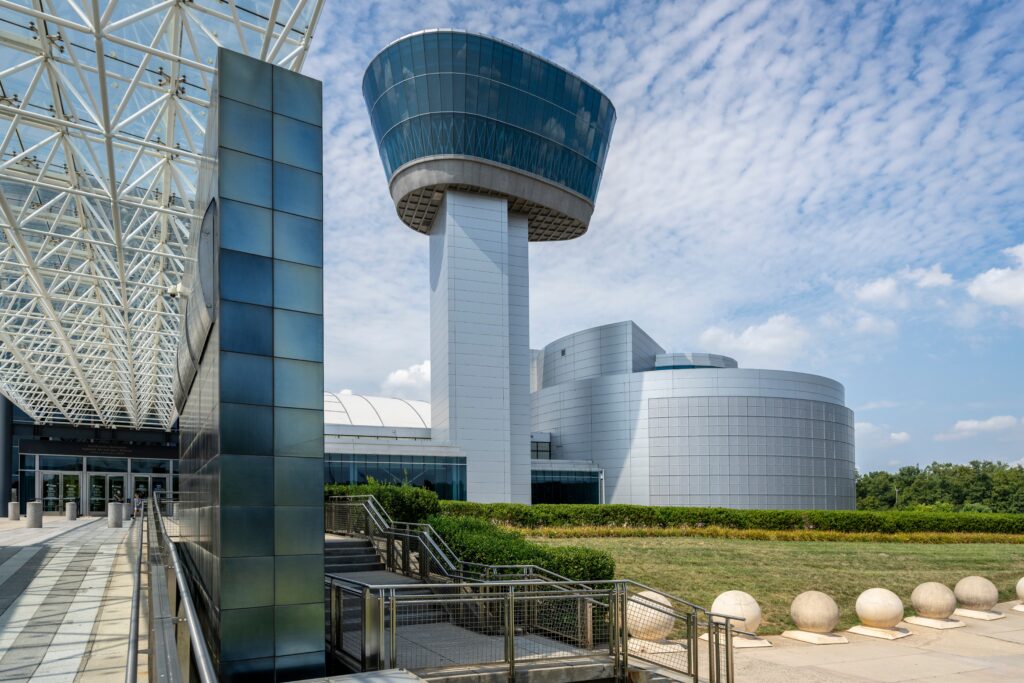
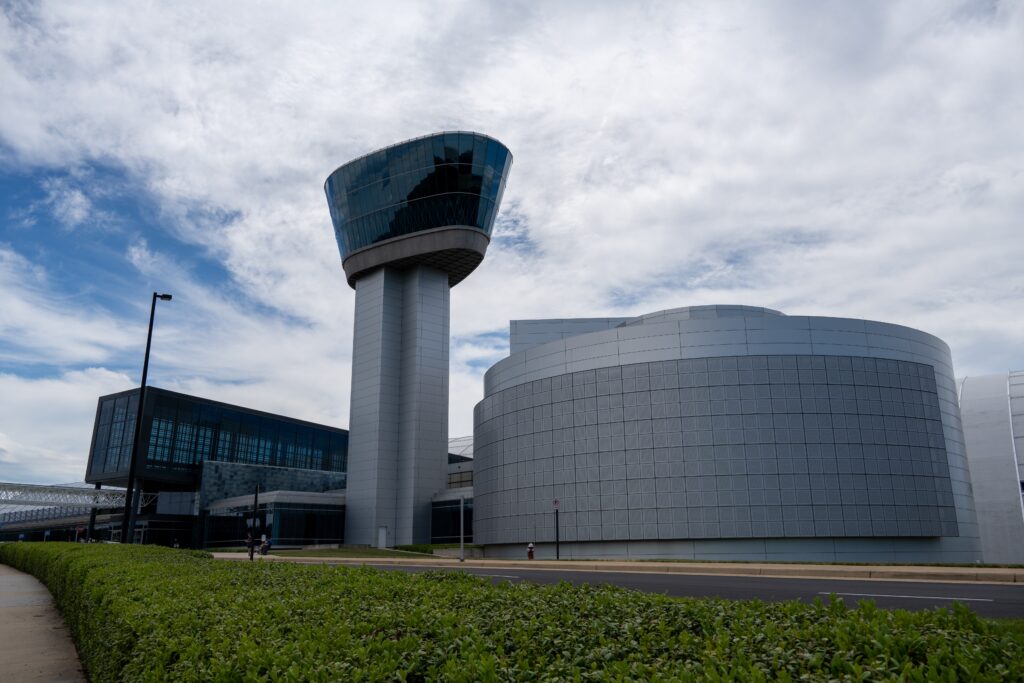
Additional areas include the Mary Baker Engen Restoration Hangar, where visitors can watch aircraft and spacecraft being restored, and the Donald D. Engen Observation Tower, which offers panoramic views of Washington Dulles International Airport and its active runways.
Finally, near the main entrance, you will find the Airbus IMAX Theater, the Shake Shack, and the Museum Store, all conveniently clustered together.
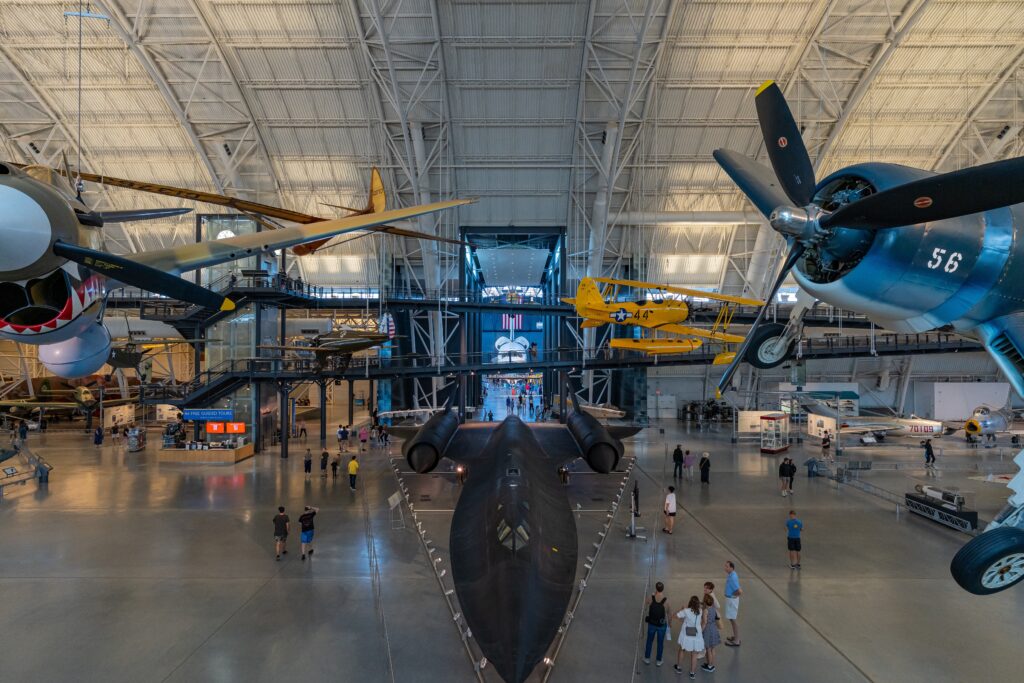
James S. McDonnell Space Hangar
The James S. McDonnell Space Hangar is home to hundreds of spacecraft, rockets, satellites, missiles, and space exploration artifacts. It tells the story of humanity’s journey beyond Earth, from the early days of the Space Race to modern space missions.
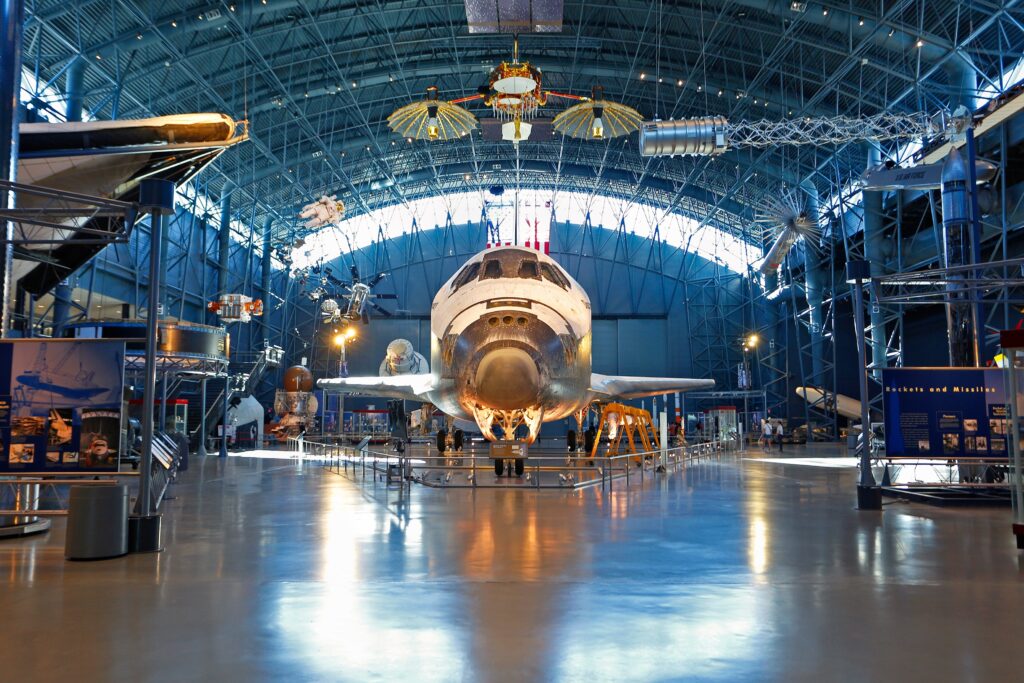
One of the hangar’s biggest highlights is the Space Shuttle Discovery, the most flown orbiter in NASA’s fleet. Other notable exhibits include the Mercury Friendship 7 capsule, the Gemini VII spacecraft, and the Apollo Lunar Module.
Boeing Aviation Hangar
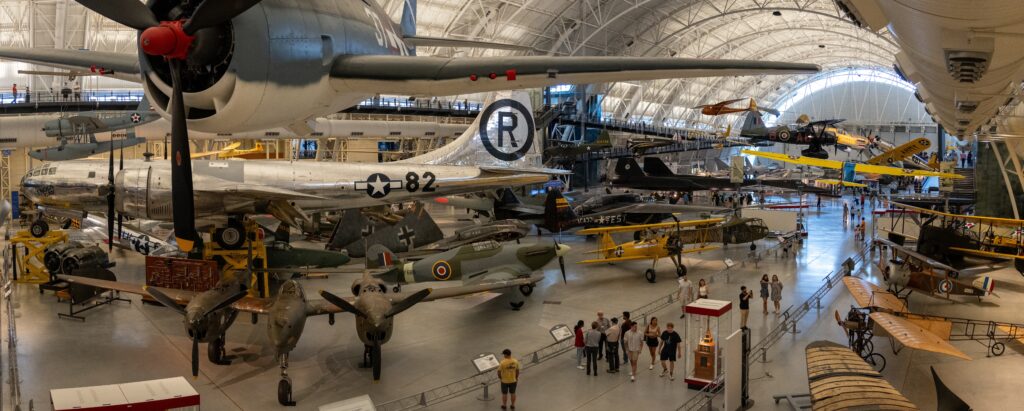
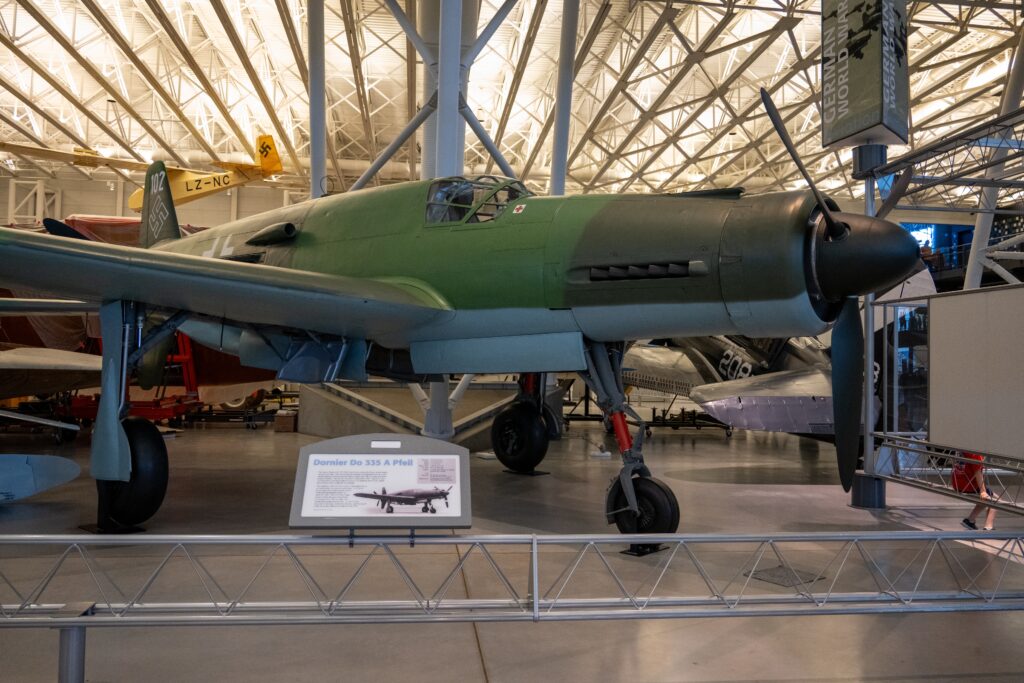
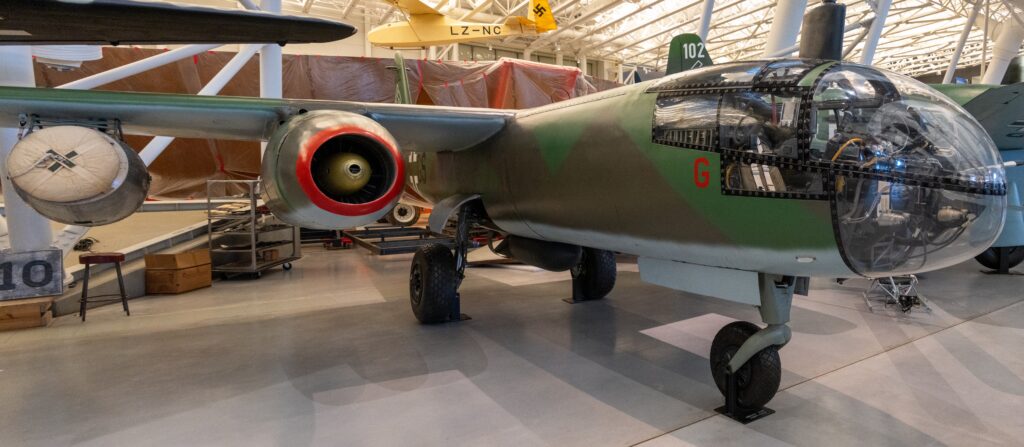
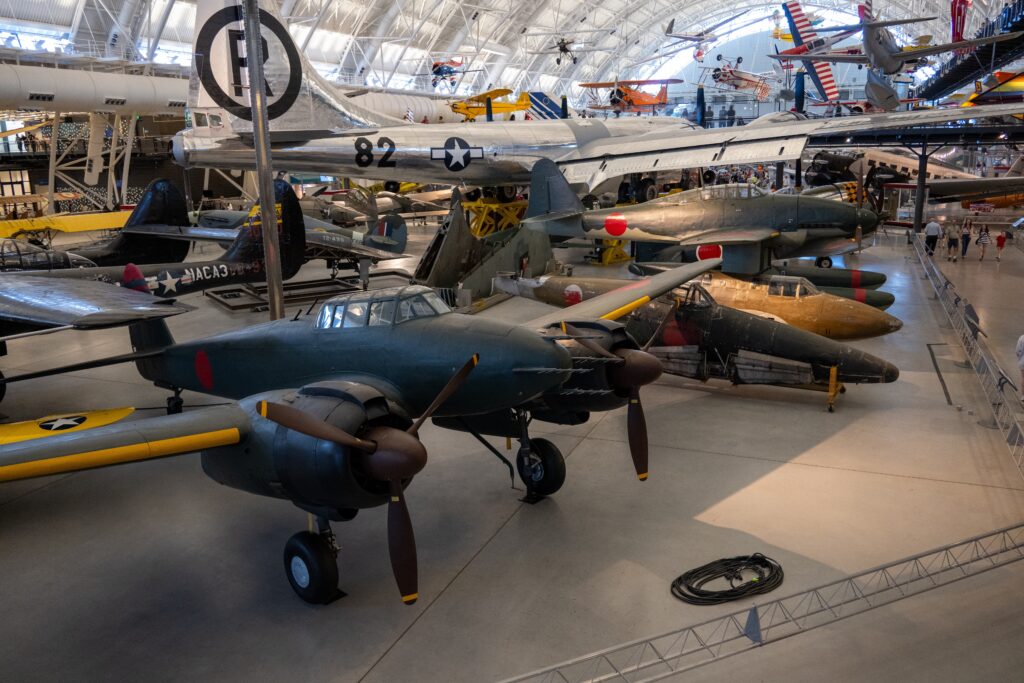
The Boeing Aviation Hangar is the heart of the Steven F. Udvar-Hazy Center. Stretching the length of three football fields and rising 10 stories high, this enormous hangar houses one of the world’s greatest collections of historic aircraft.
Inside, you’ll find aviation icons spanning more than a century of flight. Highlights include the Enola Gay, Lockheed SR-71 Blackbird, Concorde, Boeing 367-80 “Dash 80,” and dozens of other military, commercial, and experimental aircraft that transformed aviation history.
Mary Baker Engen Restoration Hangar
Mary Baker Engen Restoration Hangar allows visitors to watch Smithsonian specialists restoring historic aircraft and spacecraft.
Projects often take years to complete as conservators carefully preserve original materials while repairing decades of wear. Observation windows provide a behind-the-scenes look at the painstaking work required to keep these priceless artifacts in museum condition.
Check out my National Air and Space Museum blog!
Exhibitions at the Steven F. Udvar-Hazy Center
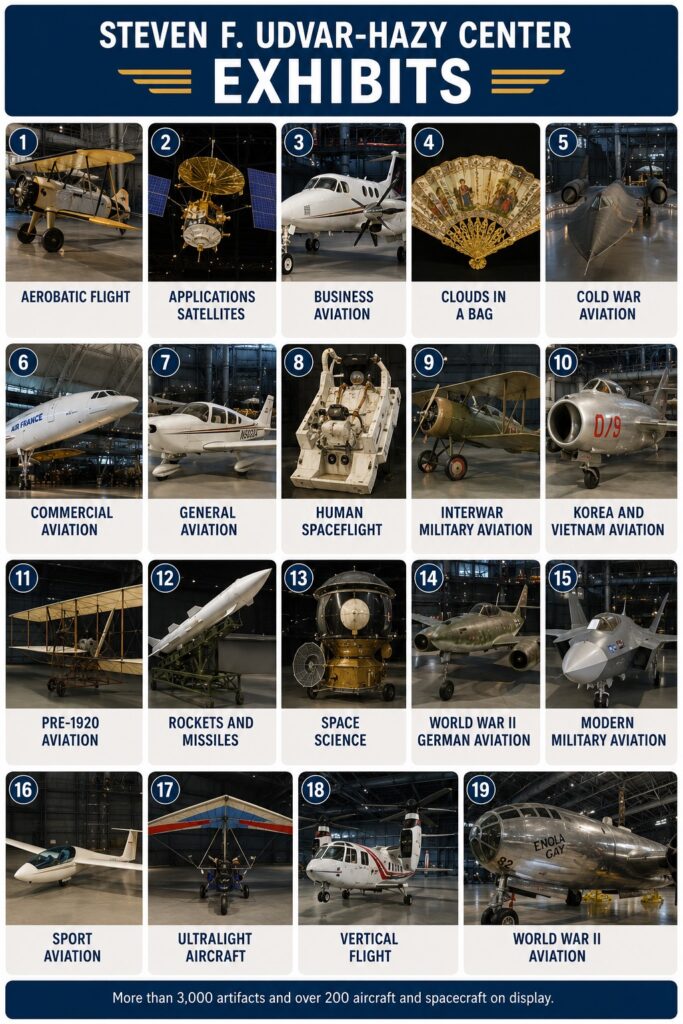
The Steven F. Udvar-Hazy Center features 19 permanent exhibitions spread across the Boeing Aviation Hangar and the James S. McDonnell Space Hangar. Together, they trace the history of flight from the Wright brothers’ first powered aircraft to modern military jets, satellites, rockets, and human spaceflight.
Exhibitions cover topics including Pre-1920 Aviation, World War II Aviation, Cold War Aviation, Commercial Aviation, General Aviation, Vertical Flight, Human Spaceflight, Space Science, and Applications Satellites. Each gallery combines historic aircraft, spacecraft, engines, and interactive displays to showcase the technological advances that shaped aviation and space exploration.
Steven F. Udvar-Hazy: 10 Must-See Exhibits
The Steven F. Udvar-Hazy Center is home to hundreds of historic aircraft and spacecraft, making it impossible to see everything in a single visit. The museum consists of two massive hangars connected by smaller galleries. If you’re short on time, these are the must-see exhibits that showcase the museum’s most significant achievements in aviation and space exploration.
1) Space Shuttle Discovery
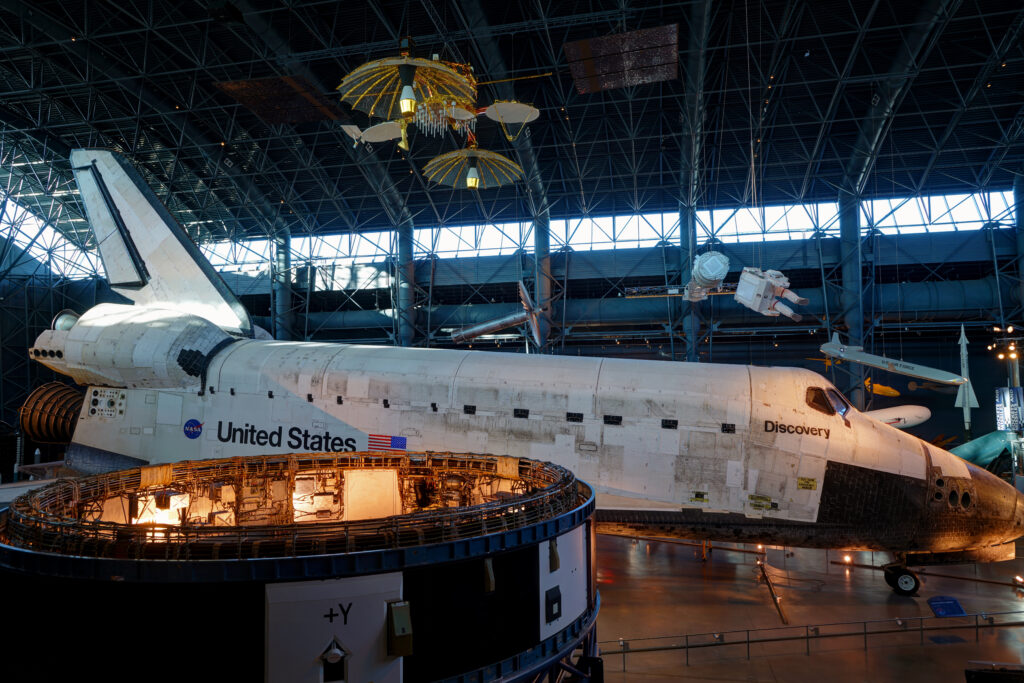
The Space Shuttle Discovery is the crown jewel of the James S. McDonnell Space Hangar and one of the most important spacecraft ever built. As the third Space Shuttle orbiter to fly, Discovery completed 39 missions between 1984 and 2011 – more than any other shuttle in NASA’s fleet.
During its remarkable career, Discovery spent 365 days in space, traveled nearly 150 million miles, and carried 251 astronauts into orbit, the highest total of any Space Shuttle. It flew every type of mission the shuttle program was designed to perform, including deploying satellites, conducting scientific research, building the International Space Station, and servicing the Hubble Space Telescope.
2) Lockheed SR-71 Blackbird
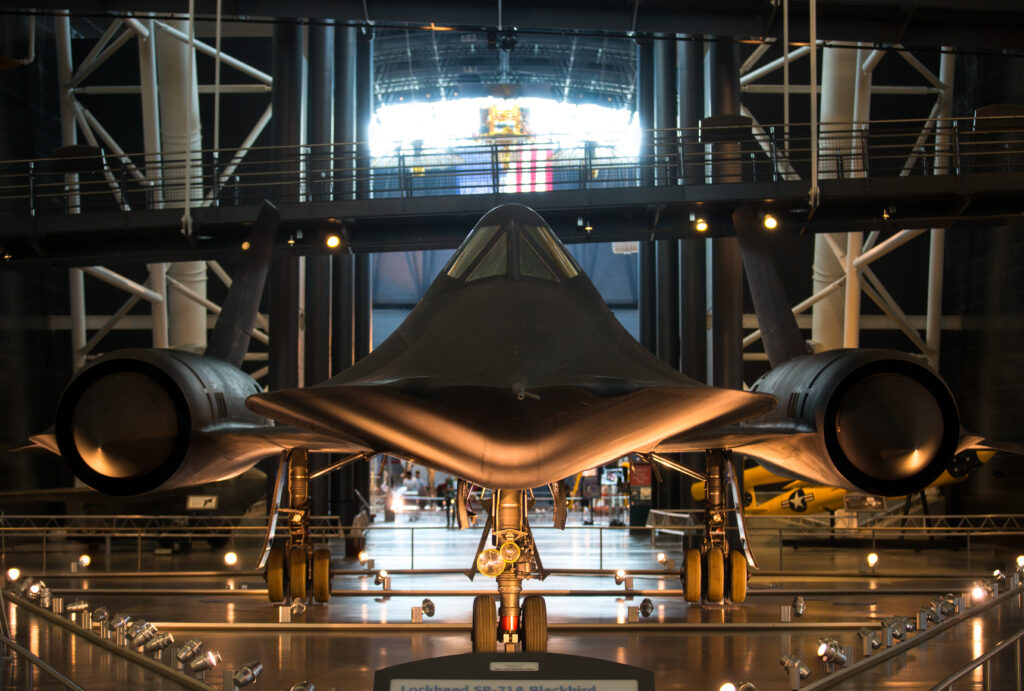
One of the most impressive aircraft at the Steven F. Udvar-Hazy Center is the Lockheed SR-71 Blackbird, the fastest air-breathing aircraft ever built.
This sleek reconnaissance aircraft first flew in 1964 during the height of the Cold War. Its mission was simple but incredibly dangerous: to gather intelligence over hostile territory while flying too high and too fast for enemy missiles or fighter jets to catch it.
The SR-71 could cruise at speeds exceeding Mach 3 (more than 2,200 mph) and soar above 85,000 feet, where the sky begins to turn dark. To withstand the tremendous heat generated by those speeds, most of the aircraft was built from titanium. Its distinctive black paint helped reduce radar detection and dissipate heat, giving the aircraft its famous nickname, the Blackbird.
The aircraft’s incredible speed and altitude allowed it to outrun threats. Throughout its operational career, no SR-71 was ever shot down by enemy forces.
On March 6, 1990, it flew from Los Angeles to Washington, D.C., in just 1 hour, 4 minutes, and 20 seconds, setting a transcontinental speed record before being retired to the Smithsonian.
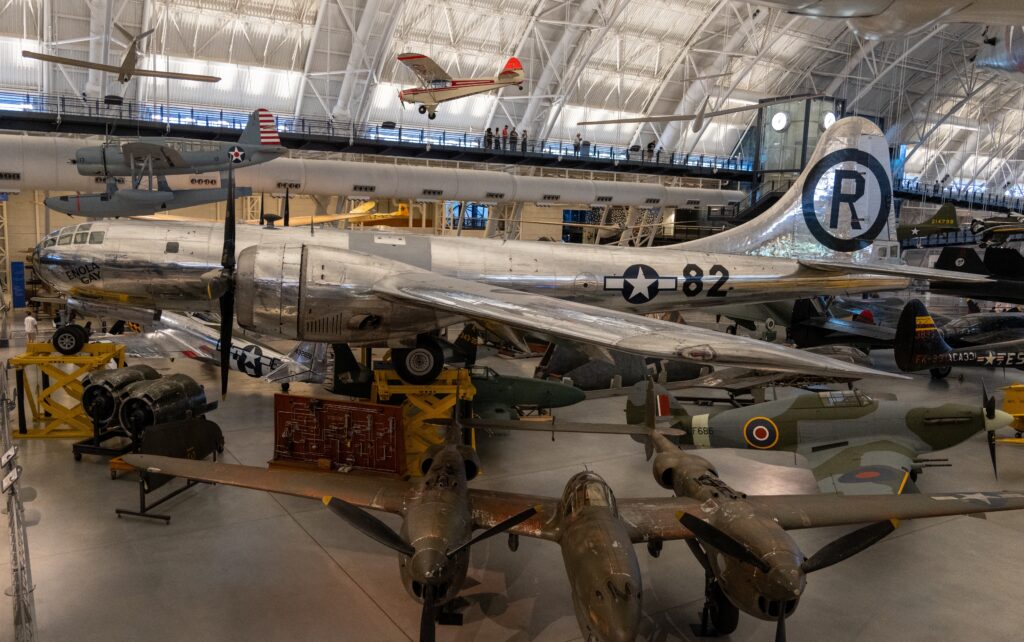
3) Enola Gay
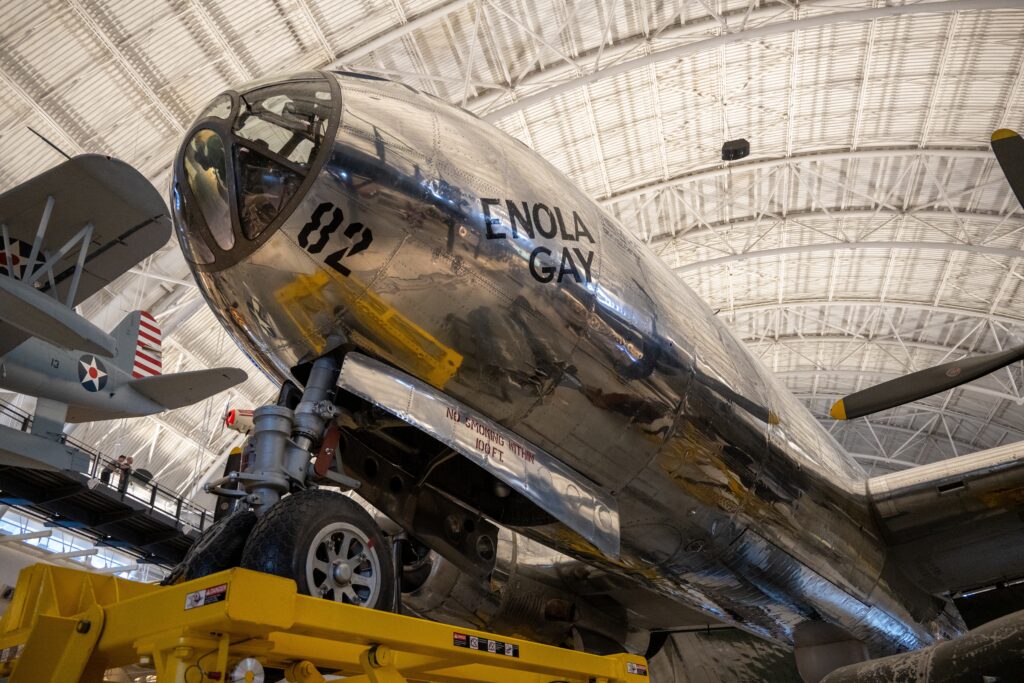
The Enola Gay is one of the most historically significant aircraft displayed at the Steven F. Udvar-Hazy Center. This Boeing B-29 Superfortress dropped the first atomic bomb used in warfare on Hiroshima on August 6, 1945. Three days later, another B-29, Bockscar, dropped a second atomic bomb on Nagasaki, and Japan surrendered on August 14, bringing World War II to an end.
The Enola Gay was named after the mother of its pilot, Colonel Paul W. Tibbets Jr. It represents both a remarkable engineering achievement and one of the most controversial missions in history.
After the war, the aircraft was preserved by the Smithsonian. It underwent an extensive restoration that took nearly 20 years and approximately 300,000 hours to complete before going on display. The fully restored Enola Gay is displayed in the Boeing Aviation Hangar.
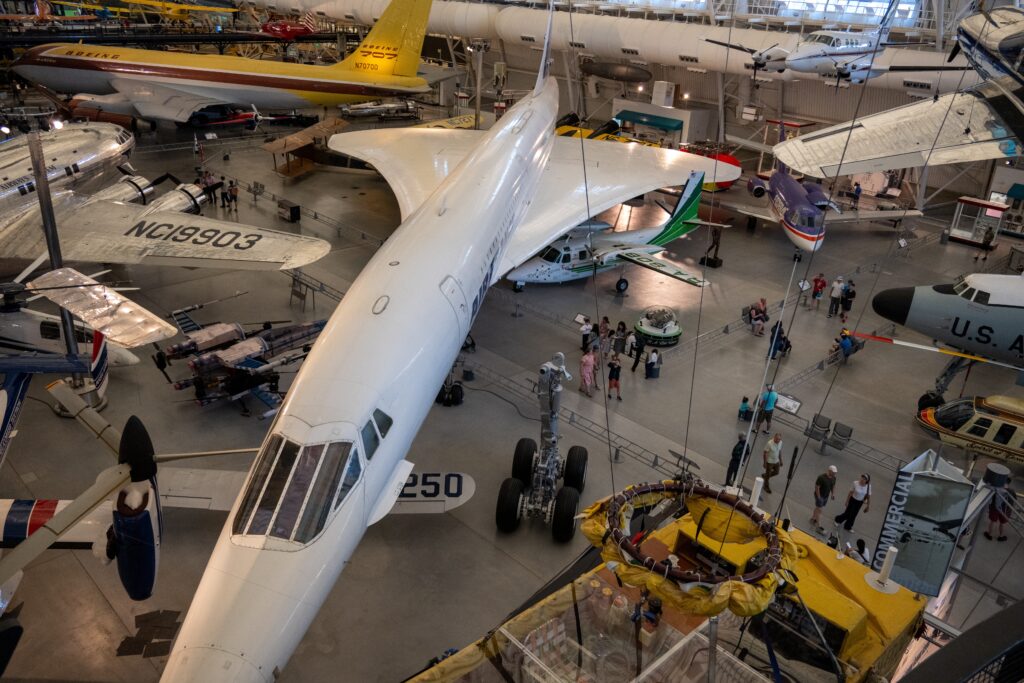
4) Concorde, Fox Alpha, Air France
The Concorde changed commercial aviation forever. For nearly 3 decades, the Concorde represented the pinnacle of luxury air travel. This elegant supersonic passenger jet carried travelers across the Atlantic at more than twice the speed of sound. The airliner could cross the Atlantic in less than four hours – cutting travel time nearly in half.
The Concorde first flew in 1969 and entered commercial service in 1976. It cruised at altitudes of 55,000 to 60,000 feet, high enough for passengers to see the curvature of the Earth. At speeds of more than 1,350 mph, the aircraft’s aluminum skin became so hot from air friction that it expanded by several inches during flight.
However, its high operating costs and expensive ticket prices meant that only a small number of travelers could afford the experience. As costs continued to rise and demand declined, all Concordes were retired in 2003.
Concorde F-BVFA (Fox Alpha) was the first Air France Concorde to begin service to New York, Washington, D.C., and Rio de Janeiro, logging 17,824 flight hours before completing its final flight on June 12, 2003.
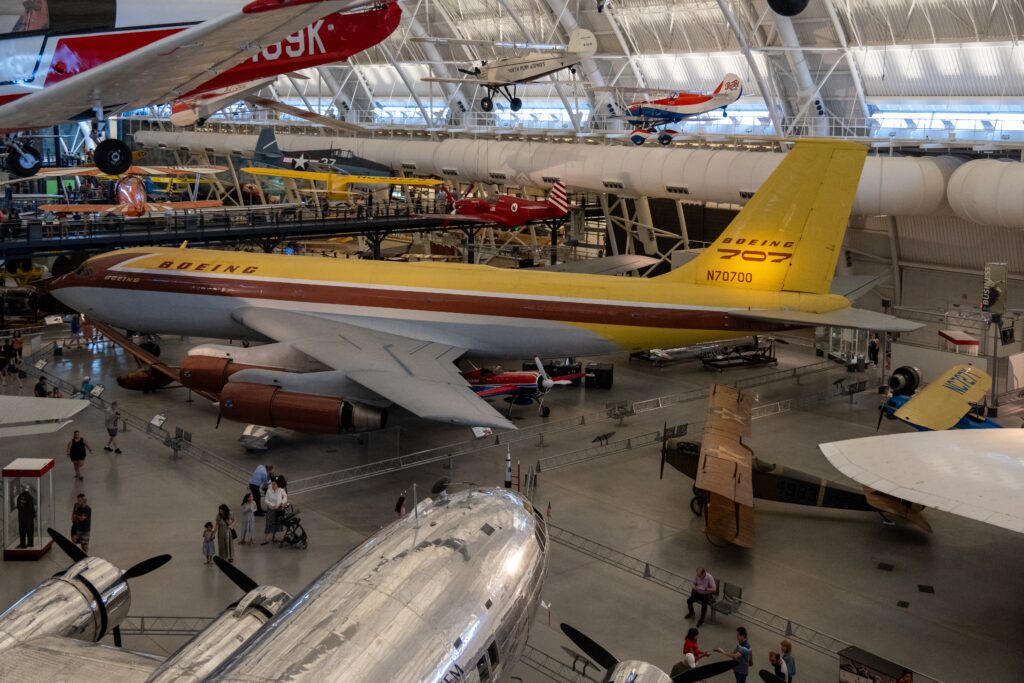
5) Boeing 367-80 “Dash 80”
The Boeing 367-80, better known as the “Dash 80,” changed the future of air travel. Its successful test flights helped launch the modern jet age and transformed commercial air travel around the world.
First flown in 1954, this prototype became the foundation for the iconic Boeing 707, America’s first successful commercial jet airliner, and the KC-135 Stratotanker, which still serves the U.S. Air Force today.
Building the Dash 80 was a huge gamble. Boeing invested $16 million of its own money without a single customer committed to buying the aircraft. That risk paid off. Faster, larger, and capable of flying more than 3,500 miles, the Dash 80 proved that jet-powered travel was the future.
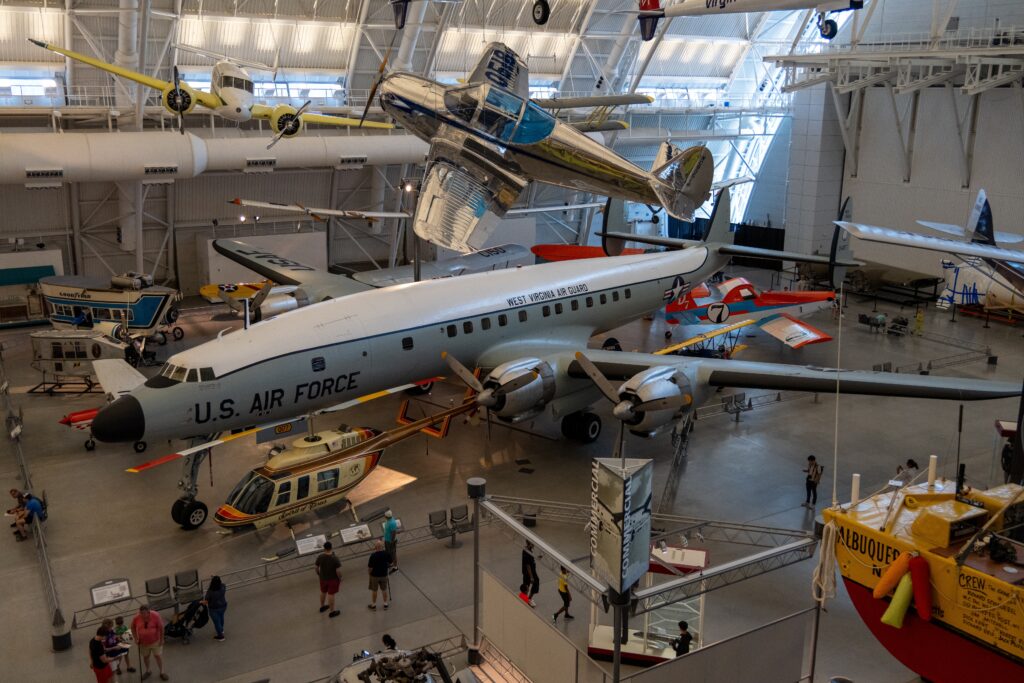
6) Lockheed Constellation
The graceful Lockheed Constellation, often called the “Connie,” is one of the most beautiful airliners ever built. Its distinctive triple-tail design makes it instantly recognizable.
During the 1940s and 1950s, the Constellation became the flagship of several major airlines and also served as a military transport. Its luxurious cabins helped define the golden age of air travel.
It was delivered to the U.S. Air Force in 1956. Connie carried troops, cargo, medical evacuations, and humanitarian aid across the Atlantic, Europe, the Caribbean, and as far as India. D
As jet aircraft like the Boeing 707 entered service, the era of piston-powered airliners came to an end. Yet the Lockheed Constellation remains a favorite among aviation enthusiasts.
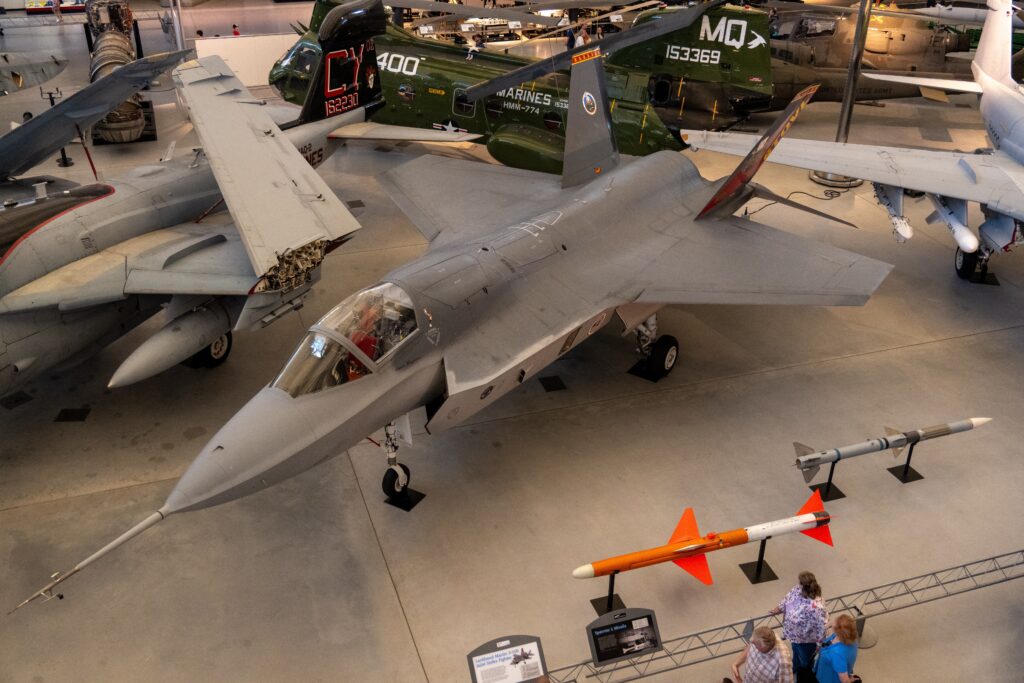
7) Lockheed Martin RQ-3 DarkStar
The RQ-3A DarkStar was an ambitious stealth drone developed by Lockheed Martin, Boeing, and the Defense Advanced Research Projects Agency (DARPA) during the 1990s. It was designed for high-altitude reconnaissance. It was intended to fly deep into hostile territory while remaining virtually invisible to enemy radar.
Unlike traditional reconnaissance aircraft, the DarkStar was an unmanned aerial vehicle (UAV) that could transmit near real-time intelligence and images to commanders via satellite links. Its sleek flying-wing design and low radar signature represented a major step forward in stealth technology and the future of military surveillance.
The first DarkStar prototype successfully flew in March 1996, but it crashed during its second flight just one month later. A redesigned prototype completed five successful flights before the program was canceled in 1999. Although it never entered operational service, many of the technologies developed for the DarkStar influenced later generations of unmanned aircraft.
8) Virgin Atlantic GlobalFlyer
The Virgin Atlantic GlobalFlyer accomplished one of aviation’s greatest feats. It proved that one pilot could fly around the world without stopping or refueling. This remarkable aircraft set several world records in 2005 and 2006, earning its place in aviation history.
On February 28, 2005, Fossett became the first person to fly solo, nonstop around the world without refueling. Departing from and returning to Salina, Kansas, he completed the journey in just over 67 hours while also setting a new around-the-world speed record. The following year, he established additional records for the longest nonstop flight and the longest closed-course flight, demonstrating the aircraft’s extraordinary range and endurance.
Built almost entirely from lightweight composite materials, the GlobalFlyer was designed to carry an enormous amount of fuel. It featured 13 fuel tanks holding nearly 2,915 gallons (11,034 liters) of fuel – about 83% of its maximum takeoff weight. This innovative design allowed it to stay airborne for days while covering more than 25,000 miles without landing.
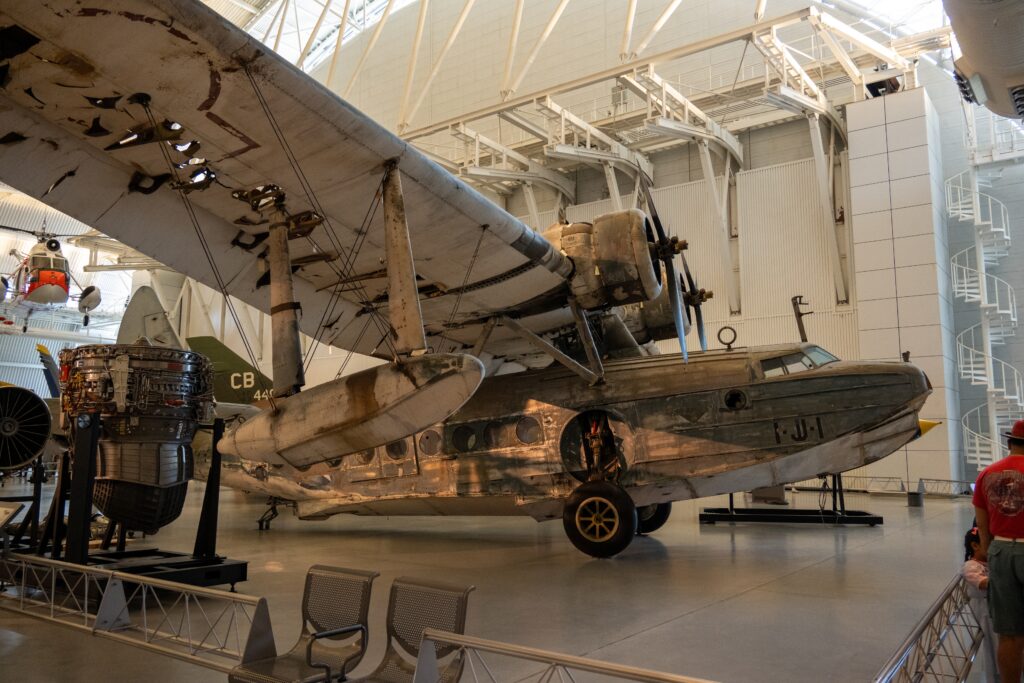
9) Sikorsky VH-3A Sea King
This presidential helicopter transported several U.S. presidents, including Richard Nixon. It became especially famous after Nixon used it to depart the White House following his resignation in 1974. The helicopter remains one of the most recognizable presidential aircraft in American history.
10) McDonnell Douglas F-4 Phantom II
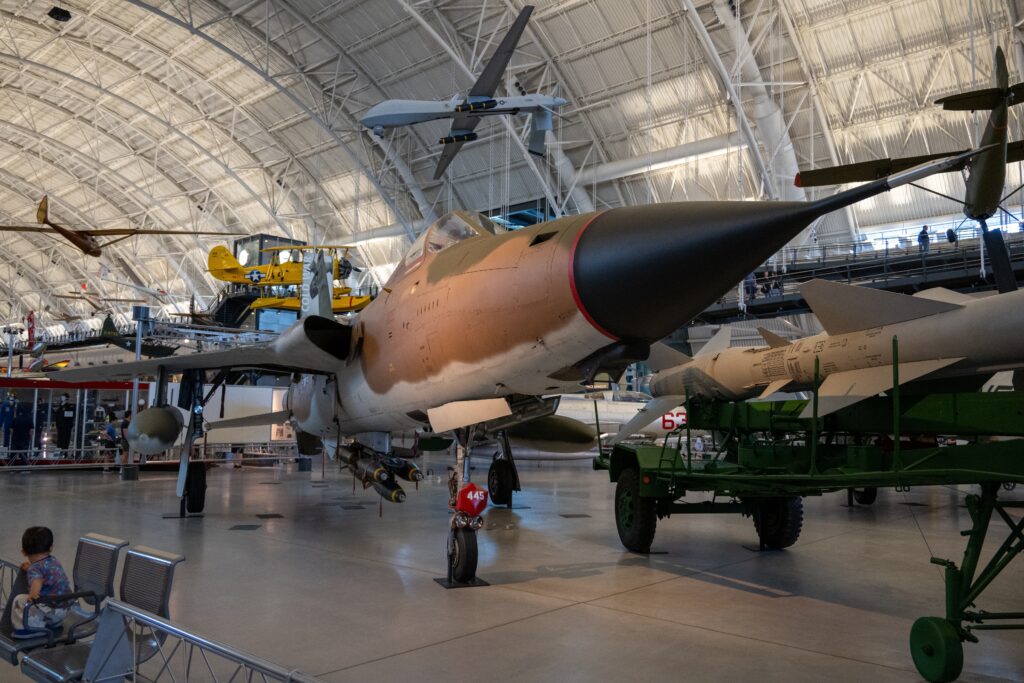
The McDonnell F-4 Phantom II was one of the most versatile fighter aircraft of the Cold War. It was flown by the U.S. Air Force, Navy, Marine Corps, and the air forces of 12 other countries. The aircraft served as a fighter, interceptor, bomber, and reconnaissance aircraft. Its speed, range, and adaptability made it one of the most successful military aircraft ever built.
The Phantom on display began its career as an F-4J with the U.S. Navy. During the Vietnam War, Cmdr. S. C. Flynn and Lt. W. H. John spotted three North Vietnamese MiGs and shot down a MiG-21 with an AIM-9 Sidewinder missile. The aircraft later flew combat air patrols and bombing support missions during Operation Linebacker II.
After being transferred to the U.S. Marine Corps, the aircraft underwent an extensive modernization program and was redesignated as the F-4S. Upgrades included smokeless engines, improved hydraulics and electronics, more maneuverable wings, and enhanced radar warning systems.
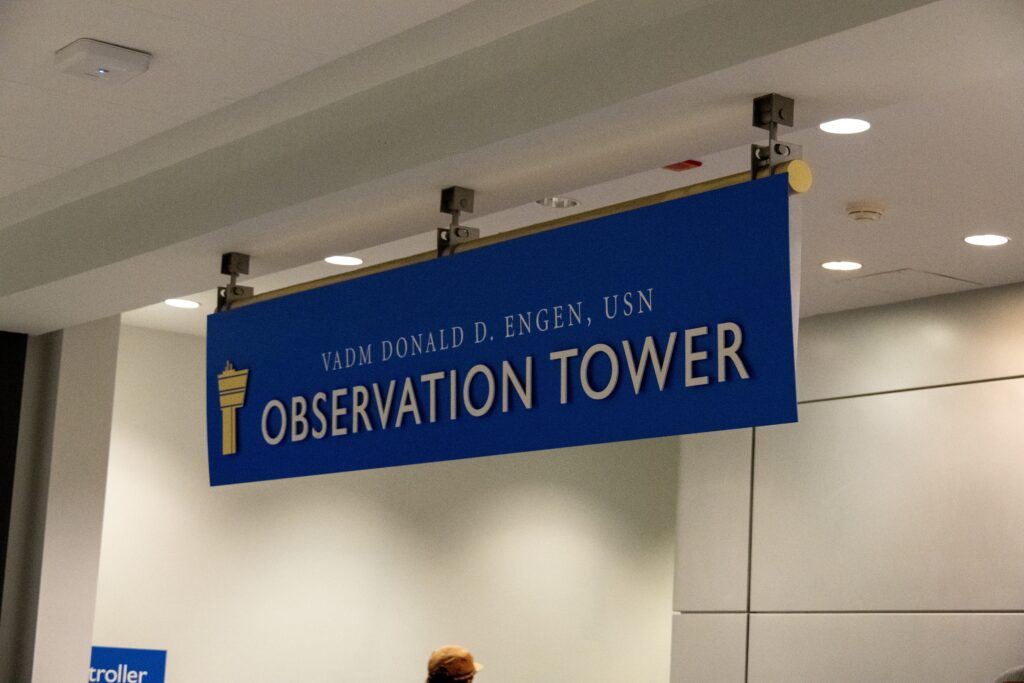
Donald D. Engen Observation Tower
The Observation Tower offers 360-degree views of Washington Dulles International Airport and the surrounding area. It’s one of the best places in the museum to watch aircraft take off and land.
The observation level also features exhibits explaining how airports operate and how the U.S. air traffic control system manages air traffic. The tower is accessible by elevator, although strollers are not permitted inside the elevator. Stroller parking is available on the ground floor. Check at the John L. Plueger Family Welcome Center for the tower’s daily operating hours.
Airbus IMAX Theater
The Airbus IMAX Theater features the largest IMAX screen in Northern Virginia, standing 6 stories tall. It shows a mix of educational documentaries, aviation and space films, and selected Hollywood releases throughout the year.
Showtimes are updated regularly, and tickets can be purchased online or at the theater. Smithsonian members receive discounted ticket prices, and group discounts are available for parties of 10 or more.
If you attend a feature-length film ending after 5:30pm, parking at the Steven F. Udvar-Hazy Center is free. For movies ending before 5:30pm, the standard $15 parking fee applies.
Museum Store
Before leaving, stop by the Museum Store, one of the best aviation-themed gift shops in the Smithsonian system. You’ll find T-shirts, books, toys, models, educational gifts, and the popular astronaut ice cream. Smithsonian members receive a 10% discount on purchases.
Check out my How to Visit the 16 Smithsonian Museums in Washington D.C. blog!
Where to Eat
The Steven F. Udvar-Hazy Center has a Shake Shack located near the museum entrance. It serves burgers, chicken sandwiches, hot dogs, pre-packaged salads and sandwiches, frozen custard, shakes, coffee, and two museum-exclusive desserts: the Constellation Crunch Concrete and the Out of This World Shake.
Shake Shack is typically open 11:00am-4:00pm on weekdays and 11:00am-5:00pm on weekends. On especially busy weekdays, it may remain open until 5:00pm.
If you prefer other dining options, you’ll find numerous restaurants within a short drive of the museum. Visitors who leave the property for a meal can re-enter without paying the parking fee again. Simply request a parking receipt when exiting and present it when you return later the same day.
How to Visit the Steven F. Udvar-Hazy Center
Located next to Washington Dulles International Airport, the museum is about 30 miles west of downtown Washington, D.C.
Unlike the National Air and Space Museum on the National Mall, the Udvar-Hazy Center is easiest to reach by car.
Driving and Parking
The Center sits just off Virginia Route 28, only minutes from Washington Dulles International Airport. It can be reached via I-66 or the Dulles Toll Road (VA-267). Driving is the easiest option.
On-site parking is $15 per vehicle, and free for any vehicle arriving after 4:00pm. The lot is large, but arrive early on weekends and holidays, as it does fill up. Accessible parking is available close to the entrance.
Travel times vary depending on traffic. Travel times are approximately:
- Washington, D.C: 45-60 minutes
- Arlington: 35 minutes
- Alexandria: 40 minutes
- Dulles Airport: 5 minutes
Public Transportation
Public transportation is available but generally takes longer than driving. Take the Metrorail’s Silver Line to the Innovation Center station, then transfer to Fairfax Connector Bus Route 983, which drops off directly in front of the museum. If you are already at Dulles Airport, buses and rideshare services can take you to the museum in just a few minutes.
Rideshare
Uber and Lyft are convenient options, especially if you’re staying near Dulles Airport or in Northern Virginia. Set your destination as 14390 Air and Space Museum Parkway, Chantilly, VA, for direct drop-off at the entrance.
Where to Stay Near the Steven F. Udvar-Hazy Center
Since the Udvar-Hazy Center sits closer to Dulles Airport than downtown D.C., I recommend staying near the airport if this is your main stop, rather than commuting out from the Mall each day.
Budget Accommodation – Hyatt Place Dulles Airport-North
A reliable, comfortable option just minutes from both the airport and the museum. Rooms are simple and modern, with a free hot breakfast included – a great value pick if the Udvar-Hazy Center is the highlight of your trip.
➡️ Click here to book your stay near Dulles!
Mid-Range Accommodation – Hilton Garden Inn Dulles North
This hotel strikes a nice balance between comfort and convenience, with an on-site restaurant and easy access to Route 28. It’s a solid home base if you’re splitting your trip between the airport, Chantilly, and a day trip into the city.
➡️ Click here to book your stay at Hilton Garden Inn Dulles North!
Luxury Accommodation – Washington Dulles Airport Marriott
For a more upscale stay, the Washington Dulles Airport Marriott offers spacious rooms, an indoor pool, and a shuttle to nearby attractions. It’s an easy, polished option if you want a few extra comforts after a long day among the hangars.
➡️ Click here to book your stay at the Washington Dulles Airport Marriott!
Frequently Asked Questions
Here are some frequently asked questions regarding the “Steven F. Udvar-Hazy Center” along with my answers.
Nope! Just like the Mall museum, general admission is free, and no passes are required. You will only need tickets for the Airbus IMAX Theater or for simulator experiences.
Give yourself 3 to 4 hours to see the highlights across both hangars. Add extra time if you want to catch an IMAX film, visit the observation tower, or take one of the free docent-led tours.
They complement each other rather than compete. Both are part of the Smithsonian’s National Air and Space Museum, but they hold different collections. The National Air and Space Museum on the National Mall focuses on the story of aviation and spaceflight through galleries and iconic artifacts. The Udvar-Hazy Center houses the Smithsonian’s largest aircraft and spacecraft, including many full-size planes that cannot fit in the Washington museum. If your schedule allows, visit both.
Absolutely. Photography for personal use is encouraged throughout most of the museum. Tripods and commercial photography require permission.
The museum is fully accessible for visitors with disabilities. Exterior ramps provide access to the main entrance, and elevators are located throughout the museum. All restrooms are wheelchair accessible, and a family/companion care restroom is available on the main floor near the lockers.
Final Thoughts
Whether you’re fascinated by military aircraft, commercial aviation, or NASA’s achievements, this museum has something to inspire every visitor. Plan to spend at least half a day exploring. You will leave with a deeper appreciation for the people and machines that changed the way we travel, explore, and understand our world.
Even if you have already visited the National Air and Space Museum in Washington, D.C., don’t skip the Udvar-Hazy Center. Its vast hangars, remarkable collection, and behind-the-scenes restoration work offer a completely different perspective on aviation and space exploration.


